What Defines Tropical Style
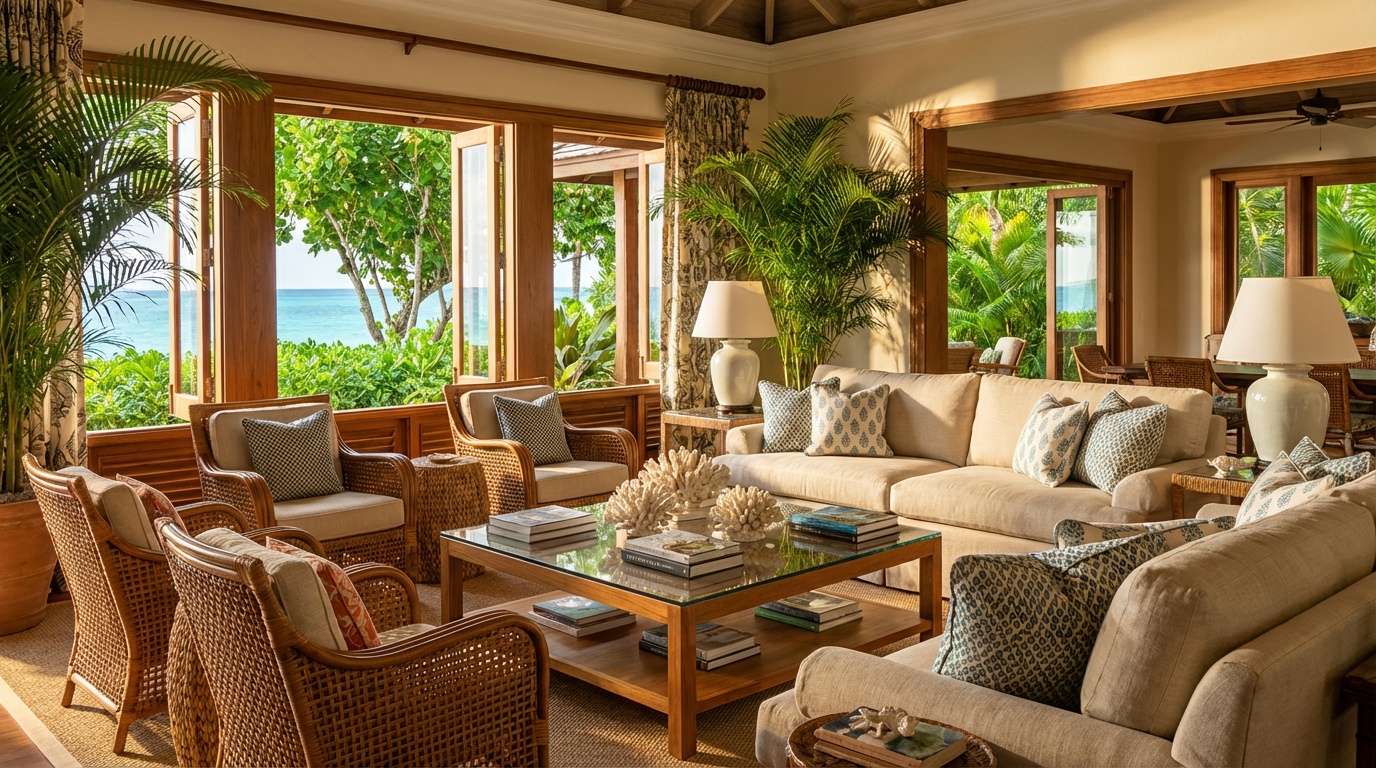
Tropical interior design emerged from the architectural and decorative traditions of warm-weather regions around the globe—from the colonial plantations of the Caribbean to the resort villas of Bali, the Hawaiian islands, and coastal Southeast Asia. This style evolved as a practical response to hot, humid climates, emphasizing natural ventilation, organic materials, and a seamless connection between indoor and outdoor living spaces.
At its core, tropical design philosophy centers on biophilic principles—the innate human connection to nature. This approach brings the outdoors in through abundant greenery, natural textures, and materials that celebrate rather than conceal their organic origins. The style embraces imperfection, finding beauty in the irregular grain of rattan, the asymmetry of live-edge wood, and the wild growth patterns of tropical plants.
What makes tropical style resonate so powerfully with modern homeowners is its inherent wellness-focused approach. In an increasingly digital, fast-paced world, tropical living rooms offer a sanctuary that promotes relaxation and mental restoration. The abundance of plants improves air quality, while natural materials and earthy color palettes create a calming environment backed by environmental psychology research.
Tropical style distinguishes itself from similar aesthetics like coastal or bohemian design through its bold embrace of lush greenery and exotic elements. While coastal design leans heavily on blues, whites, and nautical themes, tropical style incorporates richer greens, warmer wood tones, and more diverse botanical references. Unlike bohemian spaces that mix global influences eclectically, tropical design maintains a cohesive focus on warm-climate regions, creating spaces that feel like a curated escape to a specific paradise rather than a collected journey through many cultures.
What Defines Tropical Style
Essential Elements for Your Tropical Living Room
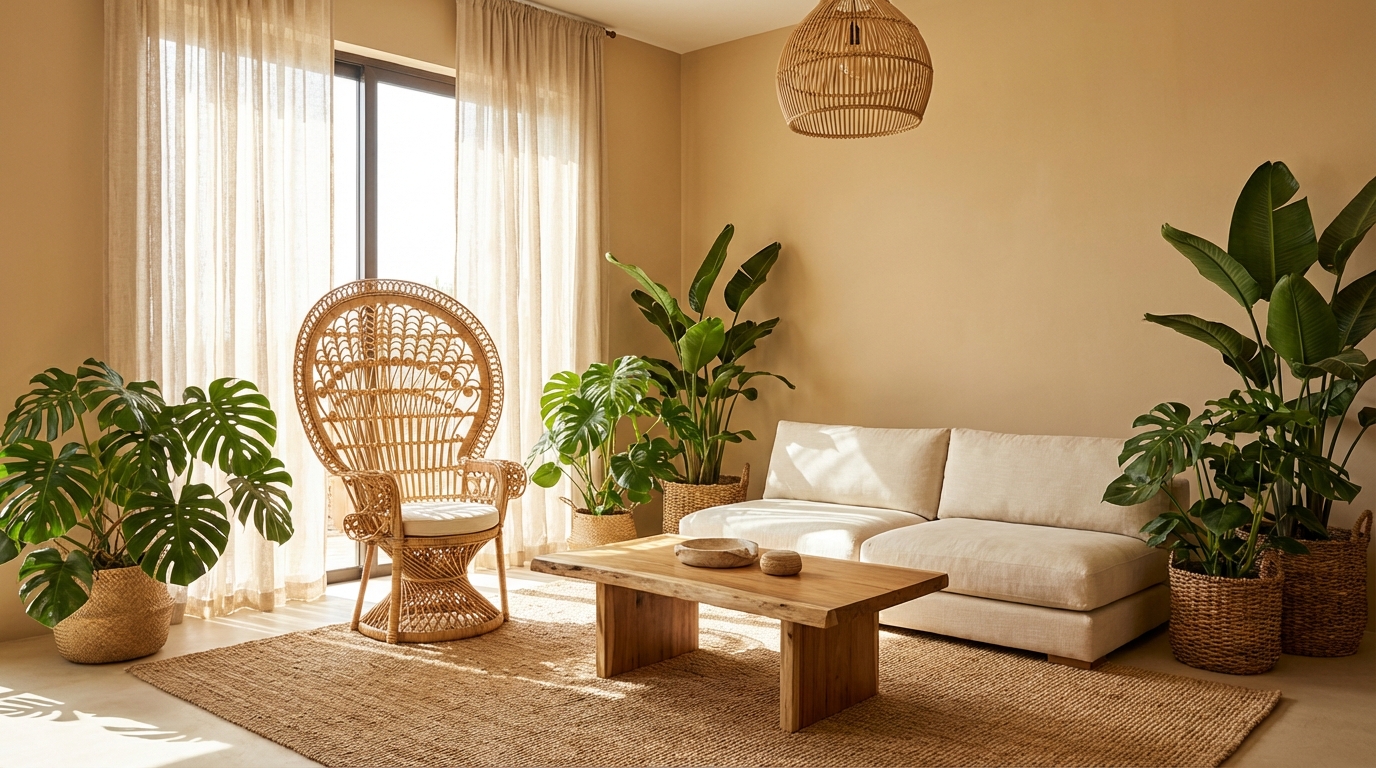
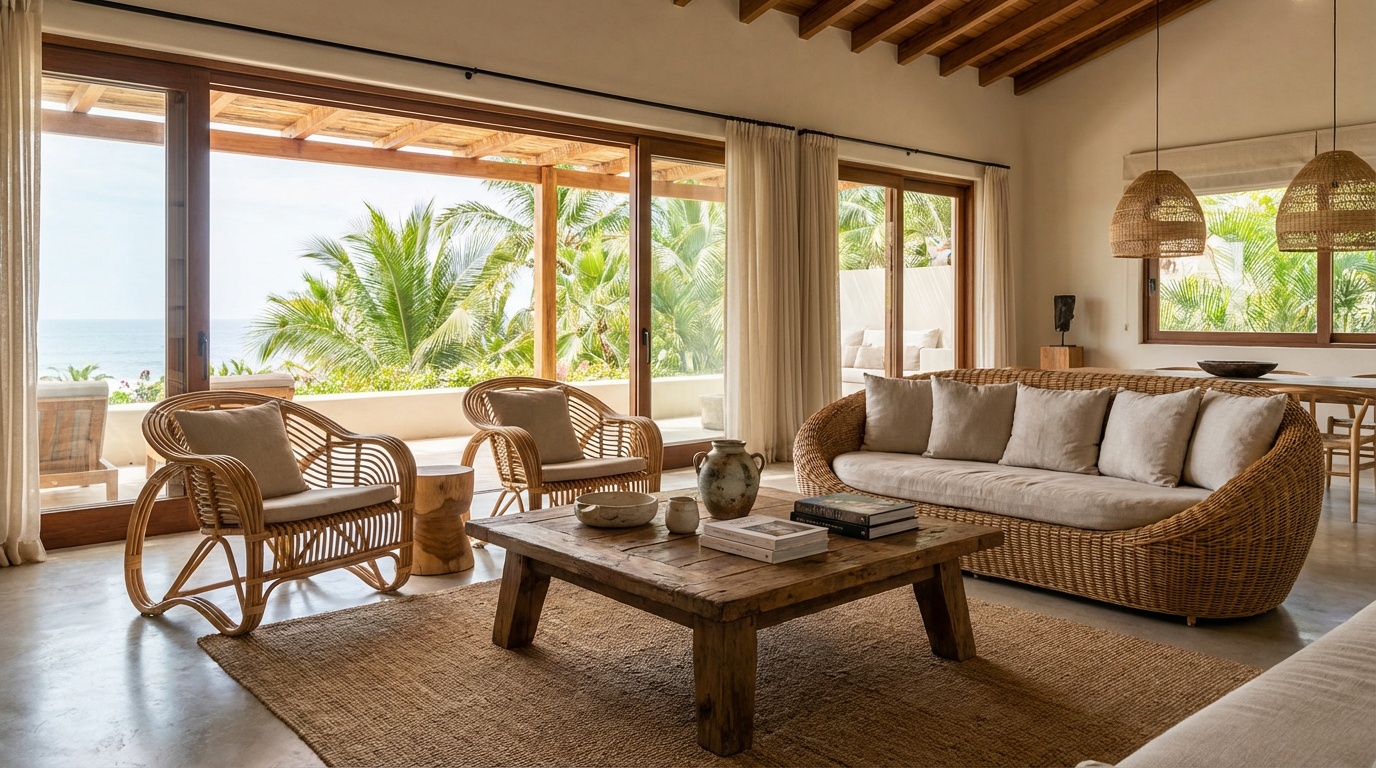
The foundation of any successful tropical living room begins with the right furniture pieces crafted from authentic materials. Rattan and wicker seating should anchor your space—look for a substantial rattan sofa or a pair of peacock chairs that make a sculptural statement. These pieces aren't just decorative; their woven construction allows air circulation, staying true to the style's climate-responsive origins.
For your main seating arrangement, consider a low-profile sofa upholstered in natural linen or cotton in neutral tones like sand, cream, or warm taupe. The silhouette should feel relaxed rather than formal—think deep seats, plush cushions, and slightly slouched backs that invite lounging. Pair this with a coffee table in natural teak, bamboo, or reclaimed wood with visible grain and organic edges. A live-edge table brings that perfect touch of unrefined nature indoors.
Essential furniture pieces include:
- A substantial rattan or wicker statement chair (peacock chair, papasan, or barrel chair)
- Low-profile upholstered sofa in natural fiber fabrics
- Coffee table in teak, mango wood, or bamboo with natural finish
- Open shelving unit in light wood or rattan for displaying plants and decor
- Woven ottoman or pouf for flexible seating
- Side tables in natural materials like wood stumps, woven baskets, or bamboo
The signature shapes of tropical design lean toward organic curves and natural forms. Avoid sharp angles and ultra-modern geometric pieces. Instead, embrace the rounded backs of rattan chairs, the flowing lines of bent bamboo, and the irregular edges of natural wood. Furniture should feel handcrafted rather than mass-produced.
Material selection is critical to authenticity. For woods, prioritize teak, bamboo, mango, acacia, and rattan—all materials native to tropical regions. These woods typically feature warm honey to medium brown tones with prominent grain patterns. For metals, stick with brass, bronze, and wrought iron in aged or antique finishes rather than chrome or polished steel. Fabric choices should emphasize natural fibers: linen, cotton, jute, and hemp in their undyed states or with botanical dyes.
The living room specifically benefits from tropical style because it transforms your primary gathering space into a stress-reducing retreat. Unlike bedrooms where tropical style creates a personal sanctuary, or kitchens where it adds warmth, the tropical living room becomes a shared escape—a conversation starter and a daily reminder to slow down and appreciate natural beauty. The abundance of texture and greenery creates visual interest without requiring expensive artwork or accessories, making it both beautiful and practical for the heart of your home.
Essential Elements for Your Tropical Living Room
Color Palettes & Combinations
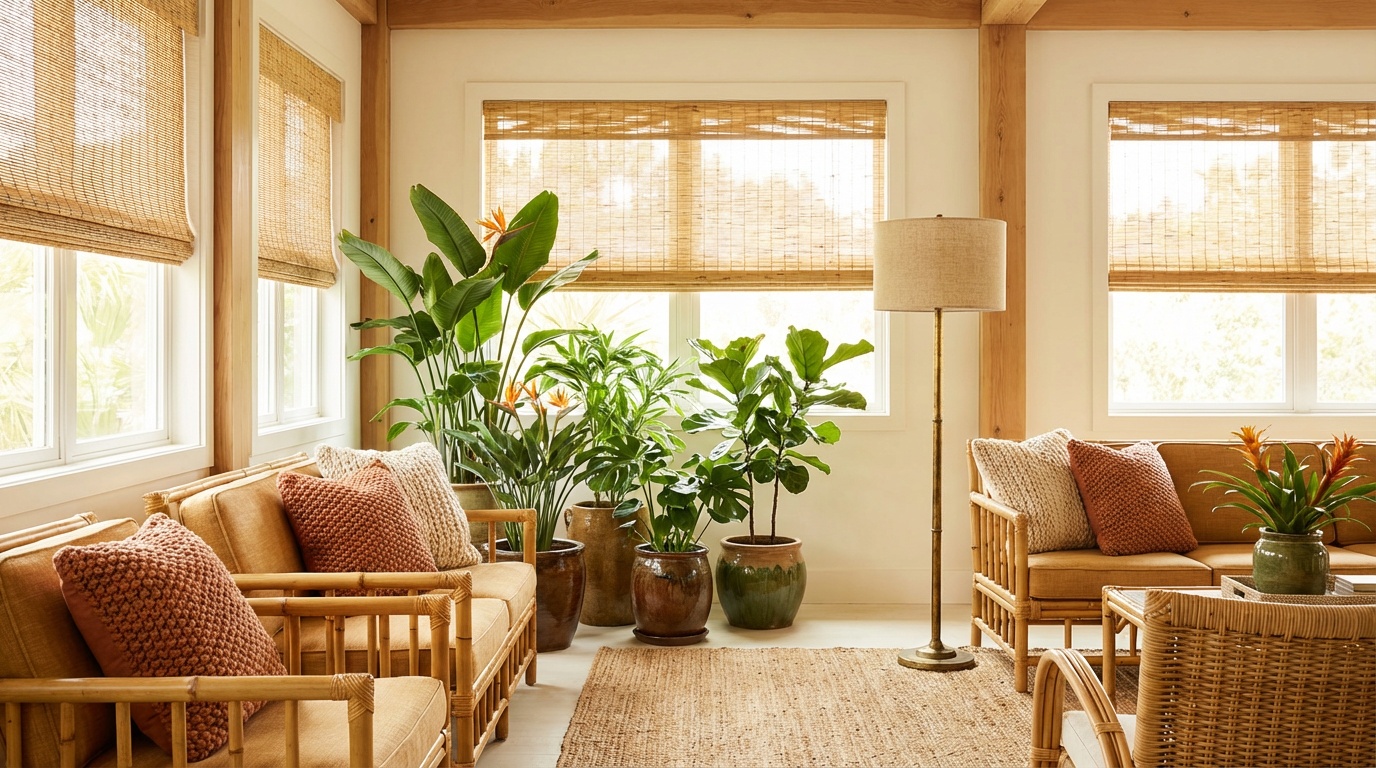
The tropical color palette draws directly from nature's most lush environments, creating layers of green anchored by warm, earthy neutrals. Your primary palette should include:
- Warm sand beige or bleached driftwood white as your dominant neutral (walls and large furniture)
- Jungle green to deep emerald in various saturated shades (plants and accent pieces)
- Warm honey teak to rich mahogany brown (wood furniture and floors)
- Soft terracotta or sun-baked clay (accent furniture and textiles)
These foundational colors create a grounded, natural base that won't overwhelm your senses. The key is maintaining a 70-20-10 distribution: 70% neutral tones, 20% greens from plants and textiles, and 10% warm accent colors.
Accent colors bring the tropical palette to life with strategic pops inspired by exotic flowers and fruits. Consider incorporating:
- Hibiscus pink or coral sunset in throw pillows
- Papaya orange or mango yellow in artwork or ceramics
- Bird of paradise orange in a single statement piece
- Deep ocean teal or lagoon blue sparingly in textiles
The secret to balancing neutrals with color lies in restraint and intention. Your walls should remain in the warm neutral family—think creamy coconut white, bamboo beige, or pale sandy tan rather than stark white or cool grays. This creates a warm envelope that makes greens appear more vibrant and prevents the space from feeling cold.
For color distribution, follow this approach: walls in warm neutrals (sand, cream, pale tan), large furniture pieces in natural wood tones and neutral upholstery (linen, cotton in cream, beige, or soft gray), and accent colors introduced through easily changeable elements like pillows, throws, artwork, and decorative objects. This strategy allows you to adjust the intensity of your tropical theme seasonally or as your taste evolves.
Seasonal variations can refresh your tropical living room throughout the year. During spring and summer, lean into brighter accents—coral, papaya, and sunny yellow—with lighter-weight cotton fabrics. As fall and winter approach, deepen your palette with richer emerald greens, warmer terracotta, and heavier linen textures. The tropical style is forgiving enough to feel appropriate year-round because it's fundamentally about bringing warmth and life indoors—something especially appealing during colder months.
Color Palettes & Combinations
Lighting & Ambiance
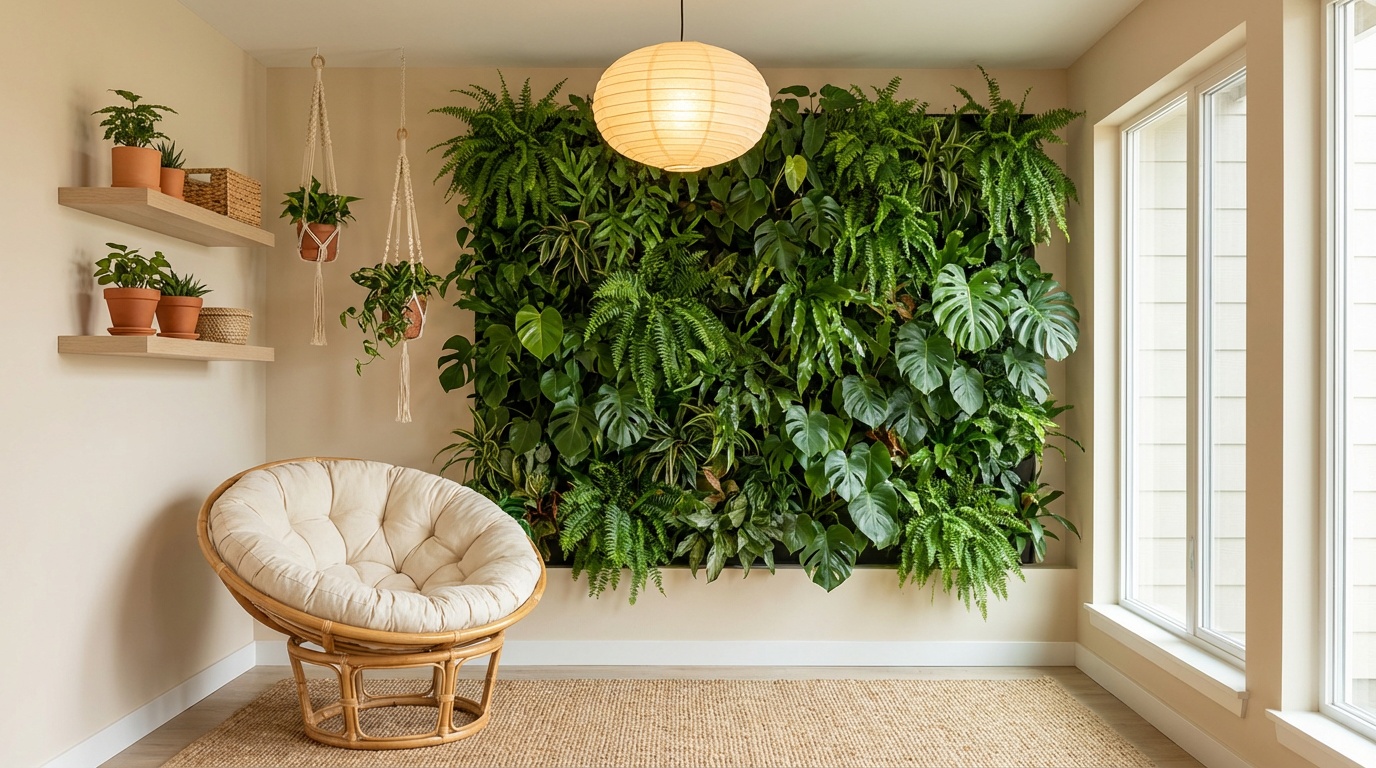
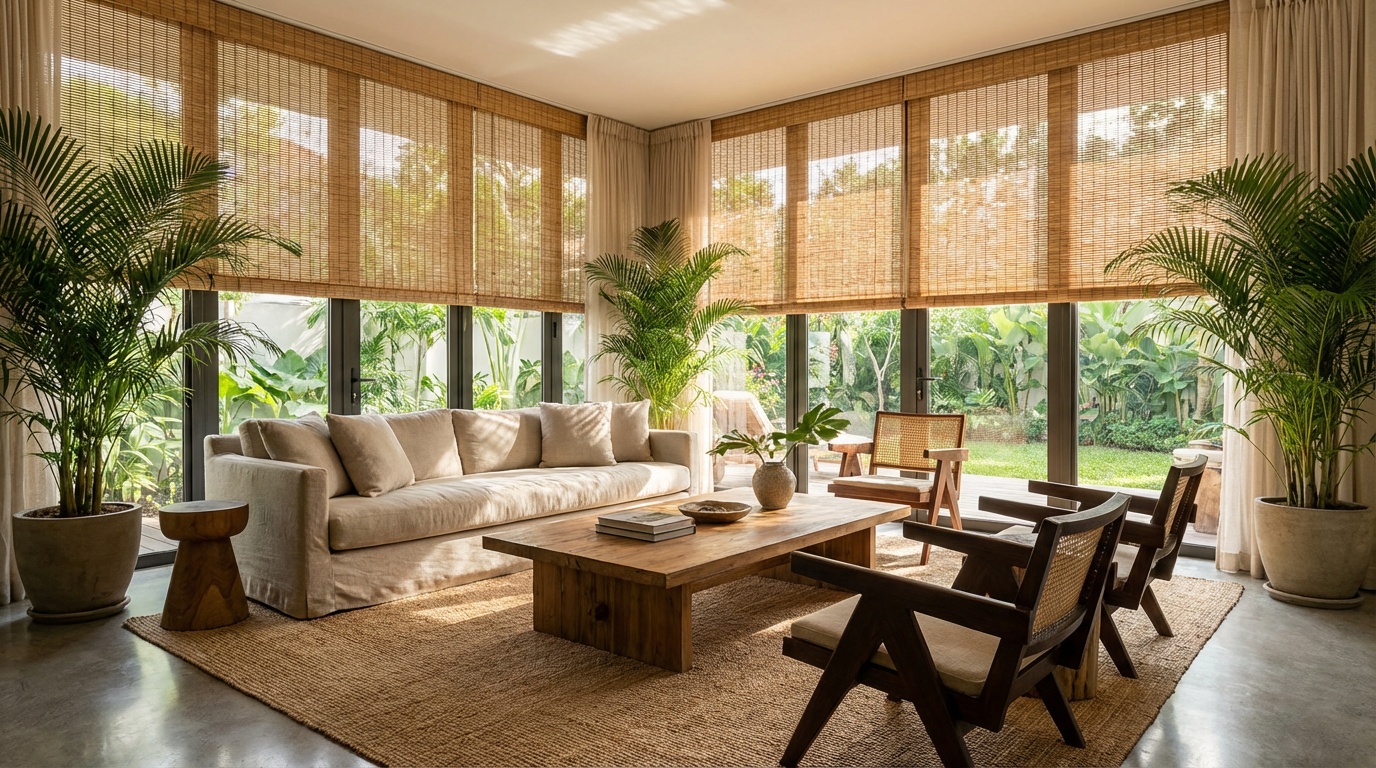
Natural light is the lifeblood of tropical design, mimicking the abundant sunshine of equatorial regions. Maximize natural lighting by keeping window treatments minimal and breezy. Instead of heavy drapes, opt for bamboo blinds, sheer linen panels, or woven matchstick shades that filter light while maintaining privacy. If your living room has limited natural light, this becomes even more critical—remove any unnecessary obstacles between windows and the room's interior, and consider adding mirrors strategically to bounce available light deeper into the space.
For artificial lighting, create multiple layers that can adapt to different times of day and activities. Your ambient lighting should feel warm and diffused rather than harsh. Consider:
- A rattan or woven pendant light as a central fixture with a warm LED bulb (2700-3000K)
- Recessed lighting with dimmer switches for adjustable overhead illumination
- Floor lamps with natural fiber shades (linen, bamboo, or rice paper) in corners to eliminate shadows
Task lighting in a tropical living room serves reading nooks and conversation areas. Look for table lamps with ceramic bases in organic shapes—think ginger jar forms, irregular pottery, or sculptural pieces inspired by natural elements. Pair these with neutral linen or bamboo shades that cast a warm glow. Position these lamps on side tables flanking your sofa or next to reading chairs.
Accent lighting creates drama and highlights your tropical elements. Use:
- Uplights positioned behind large plants to cast dramatic shadows on walls
- LED strip lighting hidden behind shelving to showcase botanical prints or decorative objects
- Lantern-style fixtures in brass or black metal with glass panels for ambient glow
The fixture styles that best complement tropical design feature natural materials and organic forms. Seek out woven pendants in rattan, seagrass, or jute that create beautiful shadow patterns when illuminated. Bamboo chandeliers or capiz shell fixtures add authentic tropical texture. For table and floor lamps, choose ceramic or wood bases with visible texture and warm, earthy glazes in terracotta, sage, or cream.
Creating the right mood and atmosphere requires thoughtful placement. Avoid the single-overhead-light trap that creates harsh, flat illumination. Instead, position 5-7 light sources throughout your living room at varying heights—overhead pendants, floor lamps, table lamps, and accent lights. This creates pools of light that invite people to gather in specific areas while maintaining cozy shadows that add depth and intimacy. During evening hours, dim your overhead lighting and rely primarily on table and floor lamps to create that resort-like ambiance where time seems to slow down.
Lighting & Ambiance
Furniture & Decor Shopping Guide
When building your tropical living room, certain pieces deserve your investment budget because they define the entire space and will last for decades. Splurge on:
- Quality rattan or wicker seating ($800-2,000) - A genuine rattan peacock chair or substantial woven sofa from brands like Serena & Lily, Article, or vintage finds will become your signature piece
- Solid wood coffee table ($600-1,500) - Invest in real teak, mango, or acacia with beautiful grain; check West Elm, CB2, or local furniture makers
- Large statement plant ($100-300) - A mature Monstera deliciosa, Bird of Paradise, or Fiddle Leaf Fig in a quality ceramic or woven planter
- Handwoven area rug ($400-1,200) - Natural jute, seagrass, or sisal in a substantial size grounds the space; try Rugs USA or The Citizenry
Budget-friendly alternatives allow you to achieve the look without breaking the bank:
- IKEA's rattan collection offers affordable chairs, shelving, and accessories that look far more expensive than their price tags
- Target's Opalhouse line frequently features tropical-inspired textiles, planters, and decor
- World Market stocks bamboo furniture, woven baskets, and global textiles at accessible prices
- Wayfair provides countless options for tropical-style furniture with frequent sales
- H&M Home and Zara Home offer seasonal tropical textiles and accessories
For vintage and secondhand finds, tropical style is perfectly suited to thrifted treasures. Scour estate sales, Craigslist, Facebook Marketplace, and vintage shops for:
- 1970s rattan furniture (currently very trendy and often underpriced at estate sales)
- Vintage ceramic planters in earthy glazes
- Woven baskets of all sizes for storage and display
- Brass accessories like candleholders, trays, and sculptural objects
- Botanical prints in vintage frames
The beauty of secondhand shopping for tropical style is that patina and wear enhance authenticity—that aged rattan chair or tarnished brass bowl looks more genuine than pristine new items.
DIY projects can dramatically reduce costs while adding personal touches:
- Macramé plant hangers (YouTube tutorials make this surprisingly easy; materials cost under $20)
- Painted terracotta pots in coordinating colors for a cohesive plant display
- Framed botanical prints using free downloadable vintage illustrations and affordable frames
- Dyed cotton cushion covers using natural dyes like turmeric or avocado for earthy tones
- Rope-wrapped vases or containers transforming plain glass into textured accents
Your shopping strategy should prioritize investing in the large, structural pieces that define the space (sofa, main seating, coffee table) while economizing on accessories and easily replaceable items (pillows, small plants, decorative objects). This approach lets you achieve the tropical look immediately while leaving room to upgrade accessories as your budget allows.
Furniture & Decor Shopping Guide
Common Mistakes to Avoid
Even with the best intentions, several pitfalls can prevent your tropical living room from reaching its full potential. Here are the top five mistakes and how to correct them:
Mistake #1: Overdoing the theme with clichéd elements
The fastest way to create a space that feels like a theme restaurant rather than a sophisticated tropical retreat is loading up on obvious tiki decor, flamingo prints, and novelty items. While a single playful element can add personality, too many kitschy pieces undermine the natural elegance that defines authentic tropical style.
The fix: Follow the 80/20 rule—80% of your space should feature sophisticated natural materials and genuine plants, while only 20% can lean into more obvious tropical motifs. If you love a palm-print pillow, balance it with solid linens and natural textures. Choose subtle botanical references over cartoon-like representations.
Mistake #2: Neglecting proper plant care and using too many faux plants
Nothing kills the tropical vibe faster than dead, dying, or obviously fake plants. While a few high-quality faux plants in hard-to-reach spots are acceptable, a living room filled entirely with plastic greenery feels lifeless and defeats the biophilic purpose of tropical design.
The fix: Commit to at least 60-70% real plants and choose varieties suited to your actual light conditions. Low-light spaces can support pothos, snake plants, and ZZ plants. If plant care intimidates you, start with just three unkillable varieties and master those before expanding. For any faux plants, invest in high-quality silk or preserved options that can pass close inspection.
Mistake #3: Choosing the wrong wood tones or mixing cool and warm elements
Tropical style requires warm-toned woods—honey, golden oak, teak, and walnut. Introducing cool-toned woods like gray-washed oak or white-painted furniture creates visual confusion and dilutes the warm, inviting atmosphere essential to the style.
The fix: Audit your existing furniture and commit to a warm wood palette. If you have cool-toned pieces you love, consider painting them in warm neutrals (cream, sand, terracotta) rather than trying to mix wood tones. Similarly, avoid cool metals like chrome and brushed nickel—stick with brass, bronze, black iron, and aged copper.
Mistake #4: Insufficient layering and texture
A common beginner mistake is choosing tropical-appropriate individual pieces but failing to create the rich, layered texture that makes the style feel complete. A rattan chair and a palm print pillow don't create a tropical room—you need depth and variety.
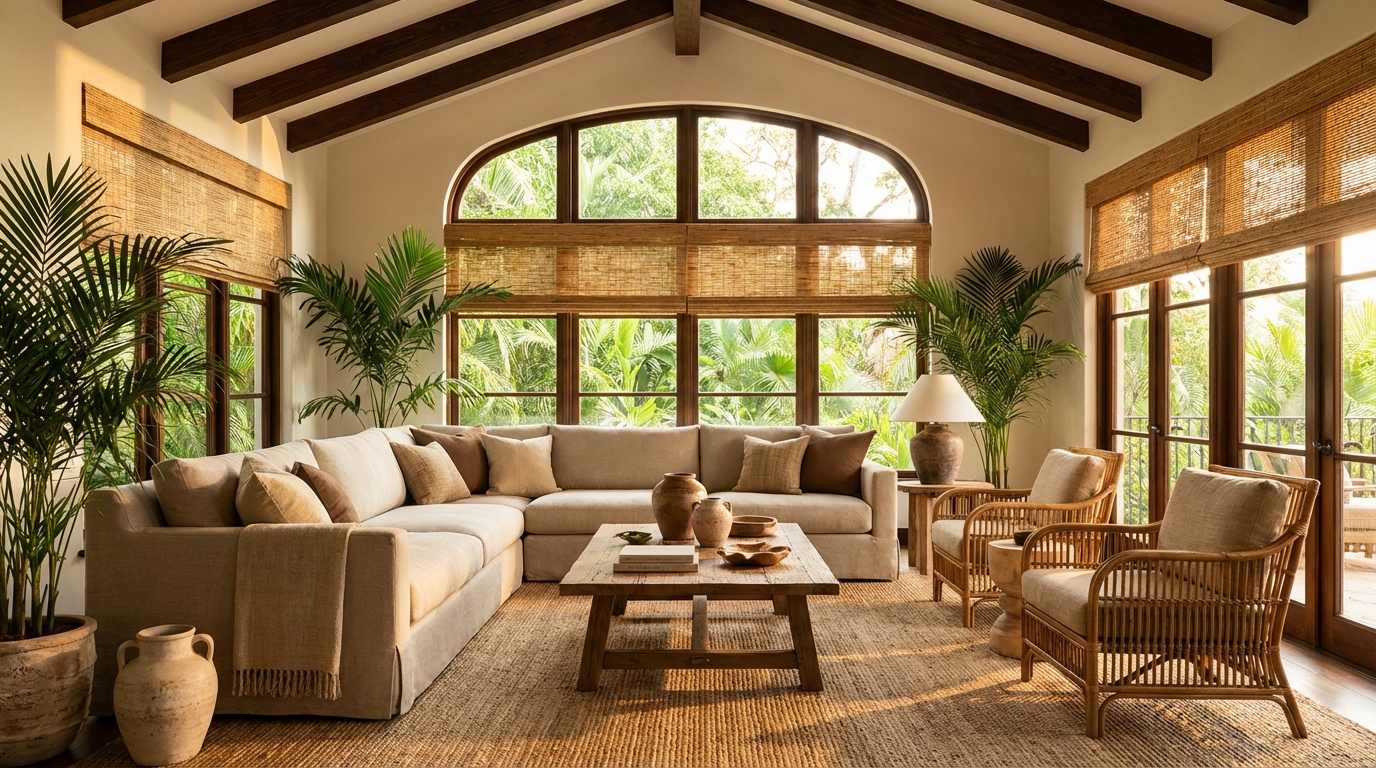
The fix: Every surface and area should incorporate at least 2-3 different textures. Layer a jute rug with a smaller woven accent rug, top your sofa with linen, cotton, and chunky knit pillows in varying sizes, combine smooth ceramic planters with rough woven baskets, and mix polished wood surfaces with raw-edge pieces. Walk through your space and identify any areas that feel flat or one-dimensional, then add contrasting texture.
Mistake #5: Ignoring scale and proportion in plant selection
Adding only small plants on shelves or choosing one massive plant that overwhelms the space both create imbalance. Tropical style requires varied plant heights and sizes to mimic the layered growth of actual jungle environments.
The fix: Follow the high-medium-low principle. Include at least one large floor plant (4-6 feet tall) like a Bird of Paradise or Monstera, several medium plants (2-3 feet) on plant stands or side tables, and smaller plants on shelves and surfaces. This creates visual interest at multiple eye levels and makes your space feel more dynamic and alive.
Signs your space is missing the mark:
- The room feels more like a beach house than a tropical retreat (too much blue and white, not enough green)
- Everything looks brand new and coordinated (tropical style needs some organic irregularity)
- The space feels cluttered rather than lush (too many small decorative items, not enough breathing room)
- It reads as "themed" rather than designed (too literal with tropical motifs)
The balance between over-styling and under-styling is delicate. Under-styled tropical rooms feel incomplete—a single palm plant and rattan chair don't create the immersive experience. Over-styled spaces become overwhelming and busy. Aim for curated abundance—plenty of plants, varied textures, and layered elements, but with intentional negative space and a cohesive color palette that prevents visual chaos.
Common Mistakes to Avoid
Styling for Different Budgets & Spaces
Tropical style adapts beautifully to various spatial and financial constraints with smart planning. Let's explore how to achieve this look regardless of your starting point.
Small Space Adaptations:
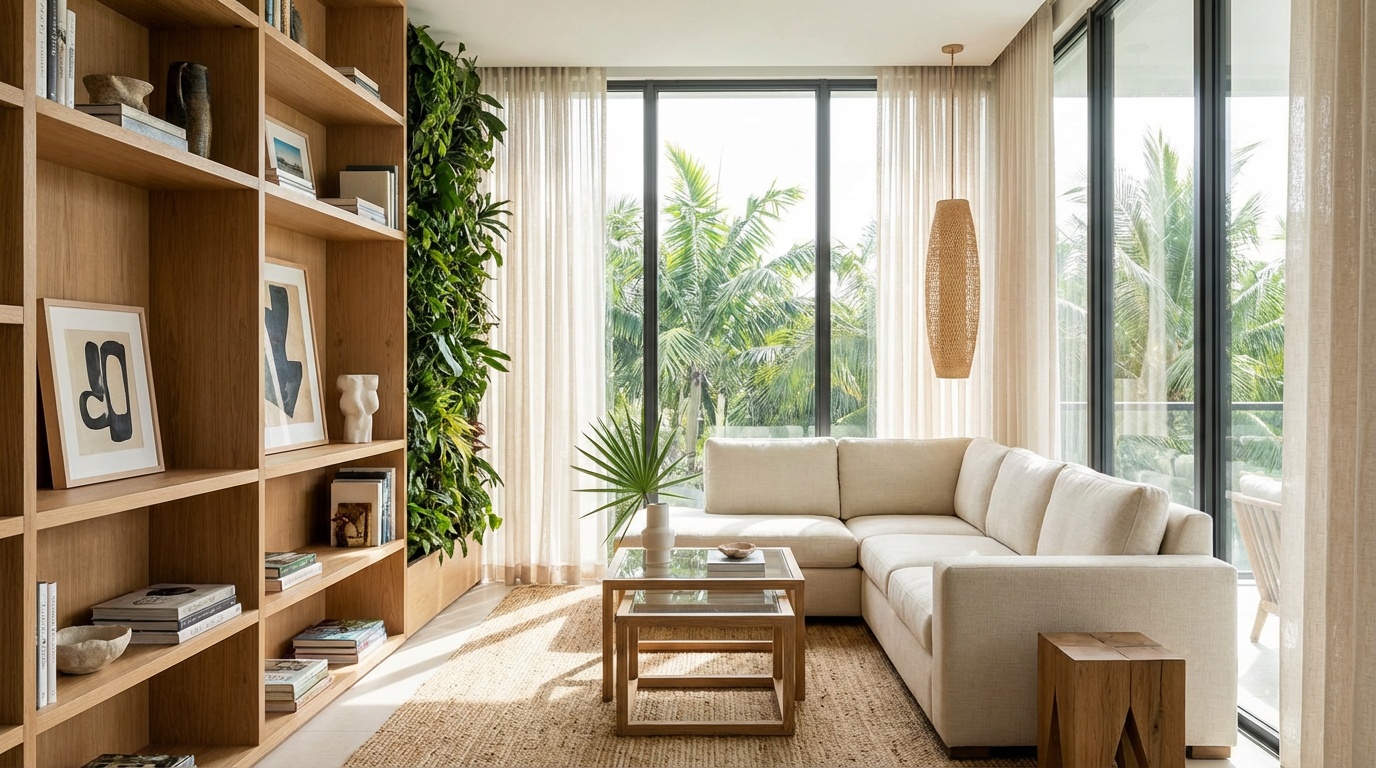
Compact living rooms can absolutely embrace tropical style without feeling cramped. The key is vertical emphasis and strategic editing:
- Use tall, narrow plants like Snake Plants or Dracaena instead of wide, bushy varieties
- Choose wall-mounted planters and hanging plants to maximize floor space
- Select furniture with visible legs (rather than skirted sofas) to maintain visual openness
- Opt for a single statement rattan chair instead of a full rattan sofa
- Use mirrors with natural wood frames to reflect light and greenery, doubling the visual impact
- Keep the color palette lighter (cream, sand, pale green) to prevent the space from feeling heavy
In a small living room, less is genuinely more—focus on 5-7 well-chosen plants and a few key furniture pieces rather than trying to include every tropical element.
Rental-Friendly Approaches:
Creating a tropical living room without permanent changes is entirely possible:
- Focus your investment on movable furniture and plants rather than built-ins
- Use removable wallpaper in botanical prints for an accent wall (brands like Tempaper or Spoonflower)
- Employ large area rugs to cover less-than-ideal flooring
- Add floor and table lamps to supplement poor overhead lighting without rewiring
- Use tension rods with bamboo shades or linen curtains to improve windows
- Create gallery walls with Command strips to avoid nail holes
- Choose large potted plants that make impact without permanent installation
Budget Tier Transformations:
Under $500 transformation:
- 5-7 affordable tropical plants in basic nursery pots ($100-150)
- Natural jute area rug from Rugs USA or IKEA ($100-150)
- Set of 4-6 throw pillows in tropical colors/patterns from Target or H&M Home ($60-100)
- Bamboo or matchstick window shades ($40-60)
- Collection of thrifted baskets for storage and plant covers ($30-50)
- DIY macramé plant hangers and botanical print art ($20-40)
This budget focuses on accessories and plants while working with existing furniture, assuming you already have basic seating.
$500-2,000 transformation:
- Everything from the under-$500 list
- One quality rattan statement chair from Article or vintage source ($400-800)
- Solid wood coffee table from West Elm or CB2 ($400-600)
- Upgrade to ceramic planters and larger statement plants ($150-250)
- Better quality area rug in larger size ($200-400)
- Improved lighting with rattan pendant or floor lamp ($150-250)
This mid-range budget allows for one or two furniture investments that truly anchor the tropical aesthetic.
$2,000+ transformation:
- Complete furniture refresh including quality rattan or neutral upholstered sofa ($1,200-2,000)
- Multiple statement furniture pieces (coffee table, side tables, chairs) ($800-1,500)
- Extensive plant collection including mature specimens ($300-500)
- High-quality textiles and custom pillows ($200-400)
- Designer lighting fixtures ($300-600)
- Art and accessories from specialty retailers ($200-400)
With this budget, you can create a fully realized tropical living room with investment pieces that will last decades.
Phased Transformation Timeline:
If budget is tight, implement your tropical living room in stages:
Phase 1 (Month 1-2): Start with plants and textiles—the lowest-cost, highest-impact changes. Add 5-7 plants, new throw pillows, and an area rug. This immediately shifts the atmosphere.
Phase 2 (Month 3-4): Upgrade lighting—add a rattan pendant or floor lamps with natural shades. Improve window treatments with bamboo shades or linen curtains.
Phase 3 (Month 5-6): Invest in your first major furniture piece—either a statement rattan chair or a new coffee table in natural wood.
Phase 4 (Month 7-9): Add secondary furniture and accessories—side tables, plant stands, baskets, and decorative objects.
Phase 5 (Month 10-12): If needed, upgrade your main seating to complete the transformation.
This gradual approach prevents financial strain while allowing you to live with each change and adjust your vision as you go. You might discover that your coastal living room preferences blend beautifully with tropical elements, creating a hybrid style uniquely yours.
Styling for Different Budgets & Spaces
Bringing Your Vision to Life
The gap between inspiration and reality often feels overwhelming when designing a tropical living room. You've saved countless Pinterest images and bookmarked Instagram posts, but how do these curated visions translate to your actual space with its unique dimensions, lighting, and existing features?
Before making any purchases or commitments, visualization is your most powerful tool. Seeing how tropical elements will actually look in your specific living room—with your particular wall color, flooring, and natural light—prevents costly mistakes and builds confidence in your design decisions.
This is where RoomStudioAI transforms your design process from guesswork to certainty. Rather than imagining how that rattan chair might look in your corner or whether tropical style will work with your existing architecture, you can see it instantly. Simply upload a photo of your current living room, and RoomStudioAI's advanced AI technology reimagines your space in complete tropical style—showing you exactly how the color palette, furniture, plants, and textures come together in your actual room.
The beauty of using RoomStudioAI is the freedom to experiment without risk. Wondering if you should go bold with deep jungle greens or keep things lighter with sandy neutrals? Generate both versions and compare them side-by-side. Curious whether your small living room can handle tropical style or if it will feel cramped? See it rendered before moving a single piece of furniture. This eliminates the anxiety of committing to a new style and the potential waste of buying pieces that don't work together.
For homeowners and renters alike, seeing is believing. When you can visualize your tropical living room transformation, you'll know exactly which elements to prioritize, which colors work best with your lighting, and how to balance plants with furniture in your specific space. This clarity streamlines your shopping, focuses your budget, and ensures that every purchase moves you closer to your vision rather than creating a collection of mismatched tropical-ish items.
The transformation from ordinary living room to tropical paradise is more accessible than you might think. With the right guidance, a clear vision, and tools like RoomStudioAI to bridge imagination and reality, you can create a space that feels like a daily vacation—a lush, welcoming retreat that nourishes your wellbeing and delights everyone who enters.
Start your tropical living room journey today by uploading a photo to RoomStudioAI and seeing your space transformed instantly. The free AI design tool lets you explore tropical style risk-free, giving you the confidence to bring paradise home. Your personal oasis is just a click away—why wait to start living in the space you've been dreaming about?