What Defines Coastal Style
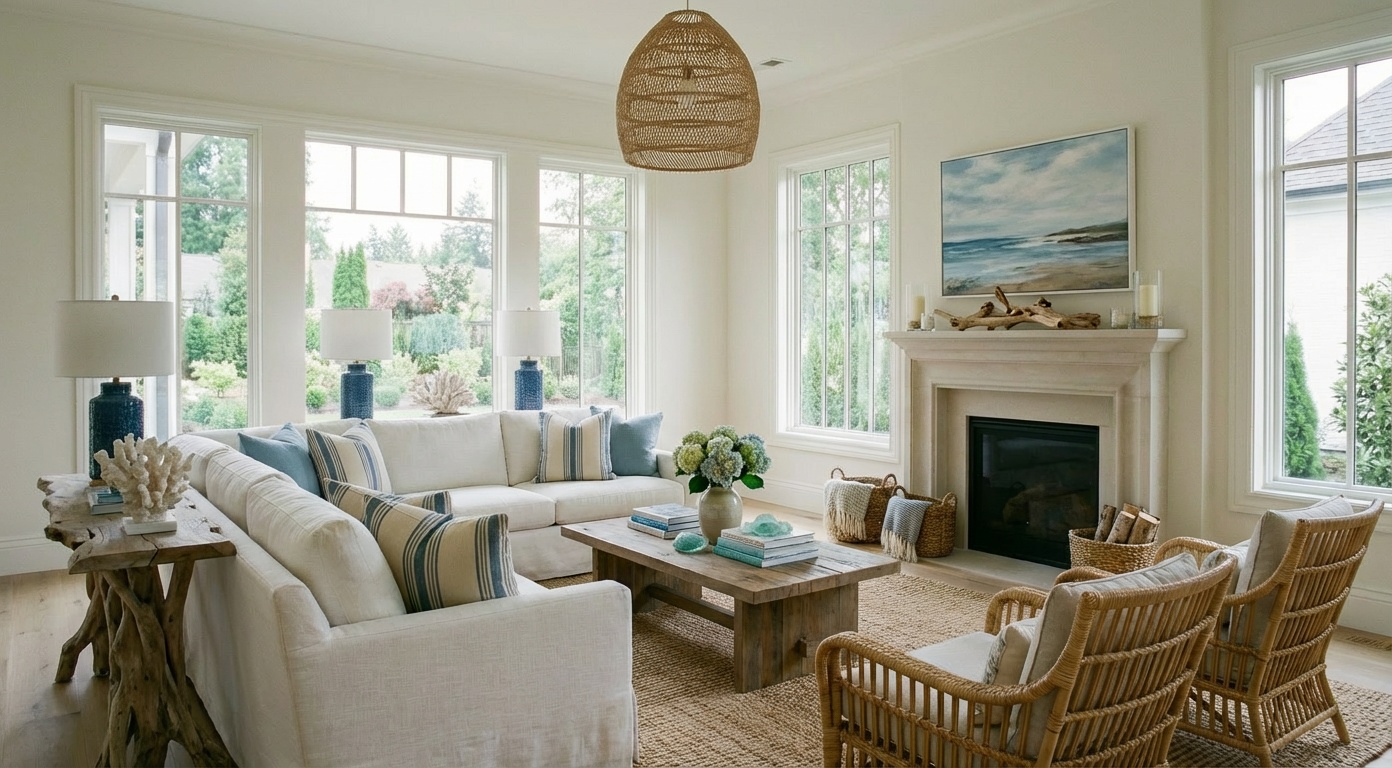
Coastal design is more than just nautical stripes and seashell collections—it's a sophisticated design philosophy rooted in the natural beauty of seaside environments. At its core, coastal style celebrates light, air, and the organic textures found along the shoreline, creating spaces that feel open, breathable, and inherently relaxing.
The origins of coastal design can be traced back to the beach cottages and seaside estates of New England, the Hamptons, and coastal California, where homeowners sought to blur the boundaries between indoor and outdoor living. These homes were designed to maximize ocean views, capture sea breezes, and withstand the harsh salt air—practical considerations that evolved into a distinct aesthetic characterized by weathered woods, natural fibers, and sun-bleached palettes.
What makes coastal style particularly relevant today is its alignment with contemporary design values. In an increasingly hectic world, people crave spaces that promote tranquility and connection to nature. Coastal design delivers both while remaining remarkably versatile—it works equally well in a beachfront bungalow, a suburban family room, or an urban apartment. The style has evolved beyond its traditional roots to embrace modern minimalism, incorporating cleaner lines and more curated approaches while maintaining its essential warmth and livability.
Coastal style distinguishes itself from nautical design (which leans heavily on maritime symbols like anchors and rope) and tropical design (which emphasizes lush greenery and bold patterns) through its subtle, organic approach. Where nautical can feel themed and tropical can feel busy, coastal design achieves a refined balance—it suggests the beach without shouting about it, creating an atmosphere that's sophisticated yet utterly unpretentious.
What Defines Coastal Style
Essential Elements for Your Coastal Living Room
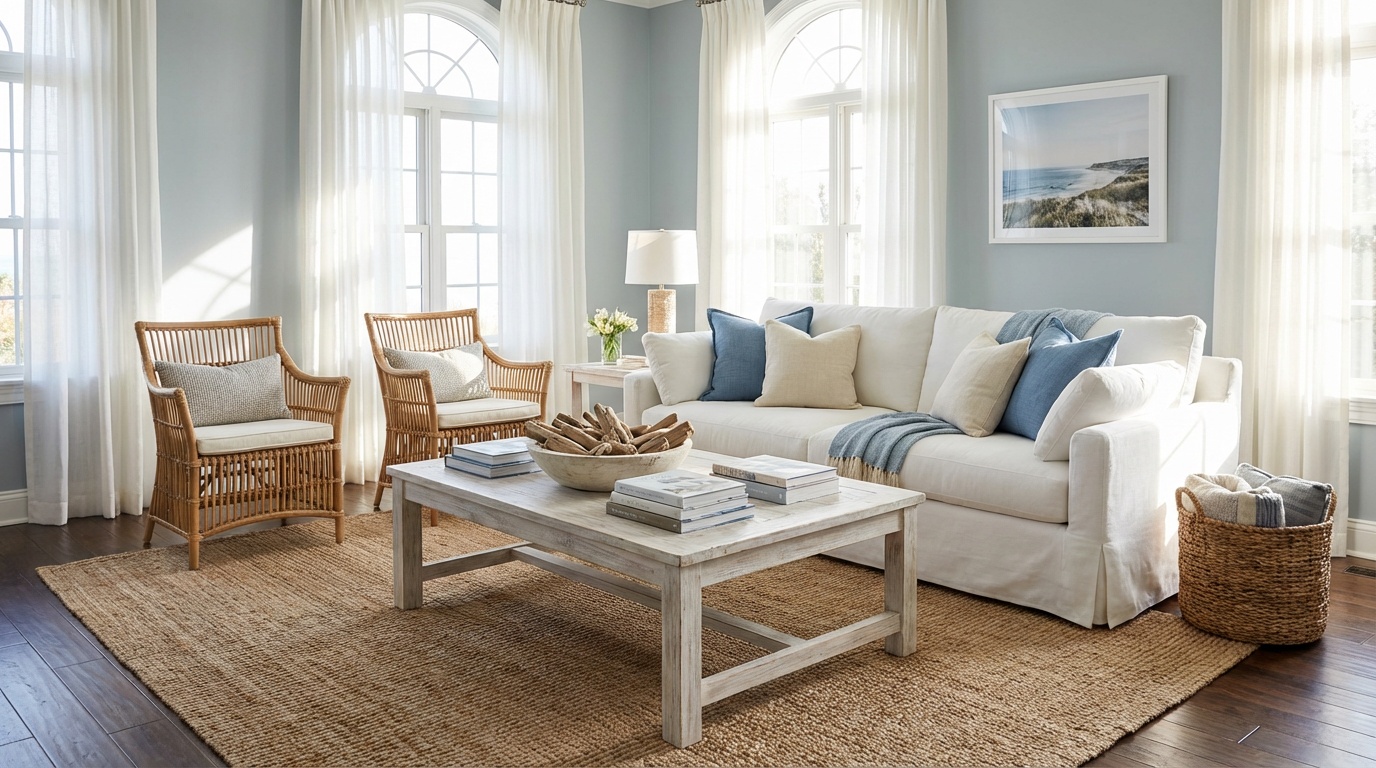
Creating an authentic coastal living room starts with selecting the right foundational pieces. Your sofa should be the anchor of the space—look for deep-seated designs upholstered in durable, natural fabrics like linen, cotton duck, or performance fabrics in shades of white, cream, sand, or soft blue. Slipcovered sofas are particularly coastal, offering both the relaxed aesthetic and practical washability that suits beach-inspired living.
For seating beyond the sofa, consider woven rattan or wicker chairs with plush cushions, or upholstered armchairs in natural linen. These pieces add textural interest while maintaining the light, airy feel essential to coastal design. A weathered wood coffee table—perhaps in reclaimed teak or whitewashed oak—serves as both a functional centerpiece and a nod to driftwood and boardwalks.
Material selection is crucial in coastal design. Woods should appear sun-bleached, weathered, or naturally light—think white oak, ash, pine, or bamboo. Avoid heavy, dark woods like mahogany or walnut, which feel too formal and weighty. For metals, choose finishes that suggest the seaside: brushed nickel, oil-rubbed bronze, or even verdigris copper that mimics the patina of ocean air.
Fabric choices should emphasize natural fibers and relaxed textures. Linen is the coastal fabric par excellence—it wrinkles beautifully, breathes well, and has an inherently casual elegance. Layer in cotton, jute, sisal, and seagrass through rugs, throw pillows, and window treatments. Avoid anything overly formal like silk or velvet, which contradicts the laid-back coastal ethos.
The living room particularly benefits from coastal style because it's typically the most social space in the home. Coastal design's emphasis on comfort, conversation, and connection makes it ideal for a room designed for gathering. The light palette helps smaller living rooms feel more spacious, while the natural materials and textures prevent larger spaces from feeling cold or impersonal.
Key furniture silhouettes in coastal design tend toward relaxed, organic shapes rather than rigid, formal lines. Look for sofas with rolled arms or track arms (avoid tufting and ornate details), coffee tables with simple turned legs or organic live edges, and accent tables with woven or slatted details that allow visual lightness.
Essential Elements for Your Coastal Living Room
Color Palettes & Combinations
The coastal color palette draws directly from the seaside landscape, creating a cohesive scheme that feels both intentional and effortless. Your primary palette should center on soft, sun-washed neutrals: creamy whites like "sea salt" or "sailcloth," warm sandy beiges like "dune grass" or "weathered sandstone," soft grays reminiscent of "morning fog" or "oyster shell," and gentle blues from "pale sky" to "faded denim."
These aren't stark, cool whites or crisp navy blues—coastal colors have warmth and depth, as if they've been gently faded by sun and salt air. Think of the difference between a bright white sail and a piece of driftwood that's been bleached by the elements. That weathered, organic quality is what you're after.
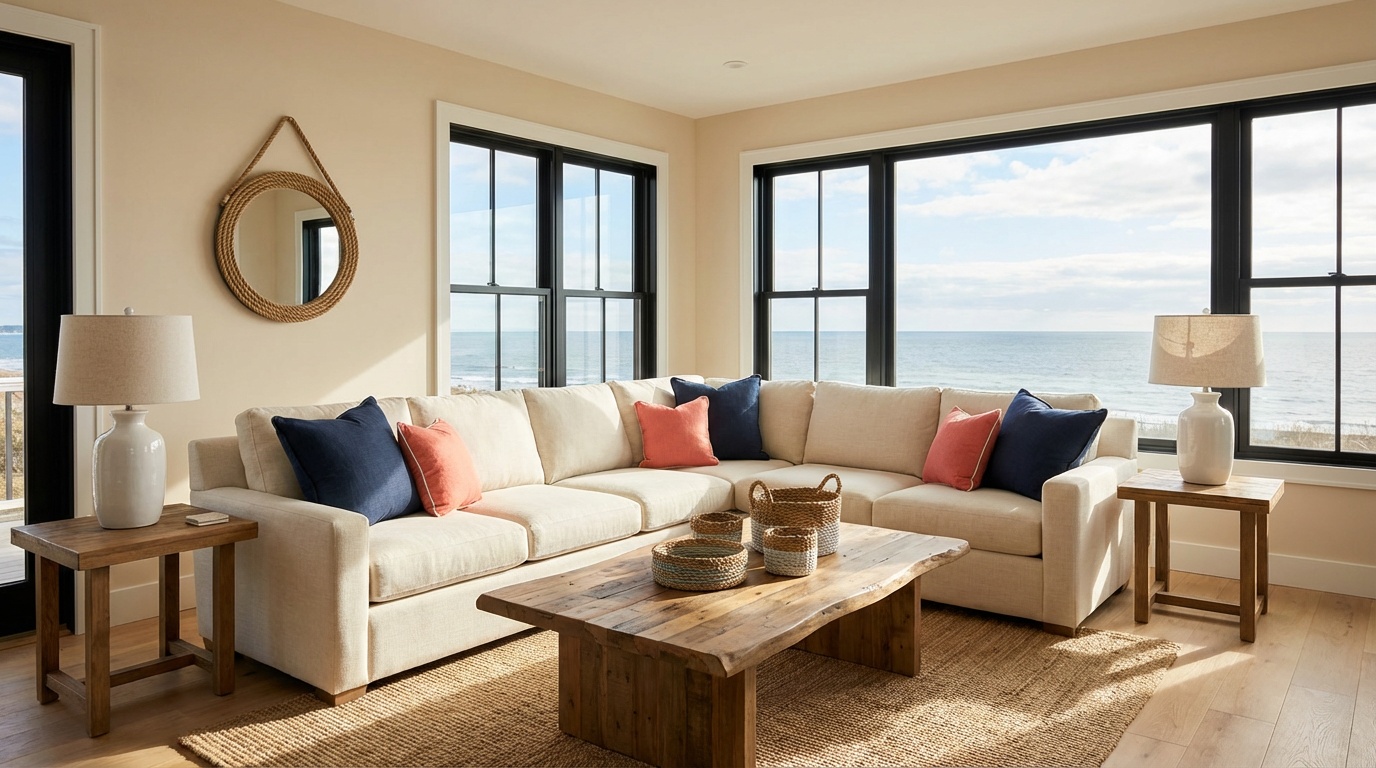
For accent colors, look to the ocean itself for inspiration. Seafoam green, aqua, turquoise, and soft coral work beautifully as pops of color in throw pillows, artwork, or decorative accessories. These should be used sparingly—coastal design is about restraint and allowing the eye to rest. Too many accent colors can make the space feel busy and undermine the calming effect you're trying to achieve.
When distributing color throughout your coastal living room, follow this general guideline: walls should be your lightest, most neutral tones (whites, creams, or very pale grays), creating a bright, airy backdrop. Your largest furniture pieces should occupy the middle range of your palette—sandy beiges, soft grays, or faded blues. Reserve your brightest or most saturated colors for the smallest elements—a coral throw pillow, a turquoise vase, or artwork featuring deeper ocean blues.
Balancing neutrals with color is an art in coastal design. A good rule of thumb is the 80/20 principle: 80% of your room should be neutral tones, with 20% dedicated to your accent colors. This creates visual interest without overwhelming the serene foundation that makes coastal style so appealing.
Coastal color palettes can shift subtly with the seasons. In summer, you might incorporate brighter whites, clearer blues, and touches of coral or sunny yellow. As fall and winter approach, warm up the palette with more beiges, taupes, softer grays, and deeper ocean blues. This seasonal flexibility keeps your space feeling fresh year-round while maintaining its essential coastal character.
Color Palettes & Combinations
Lighting & Ambiance
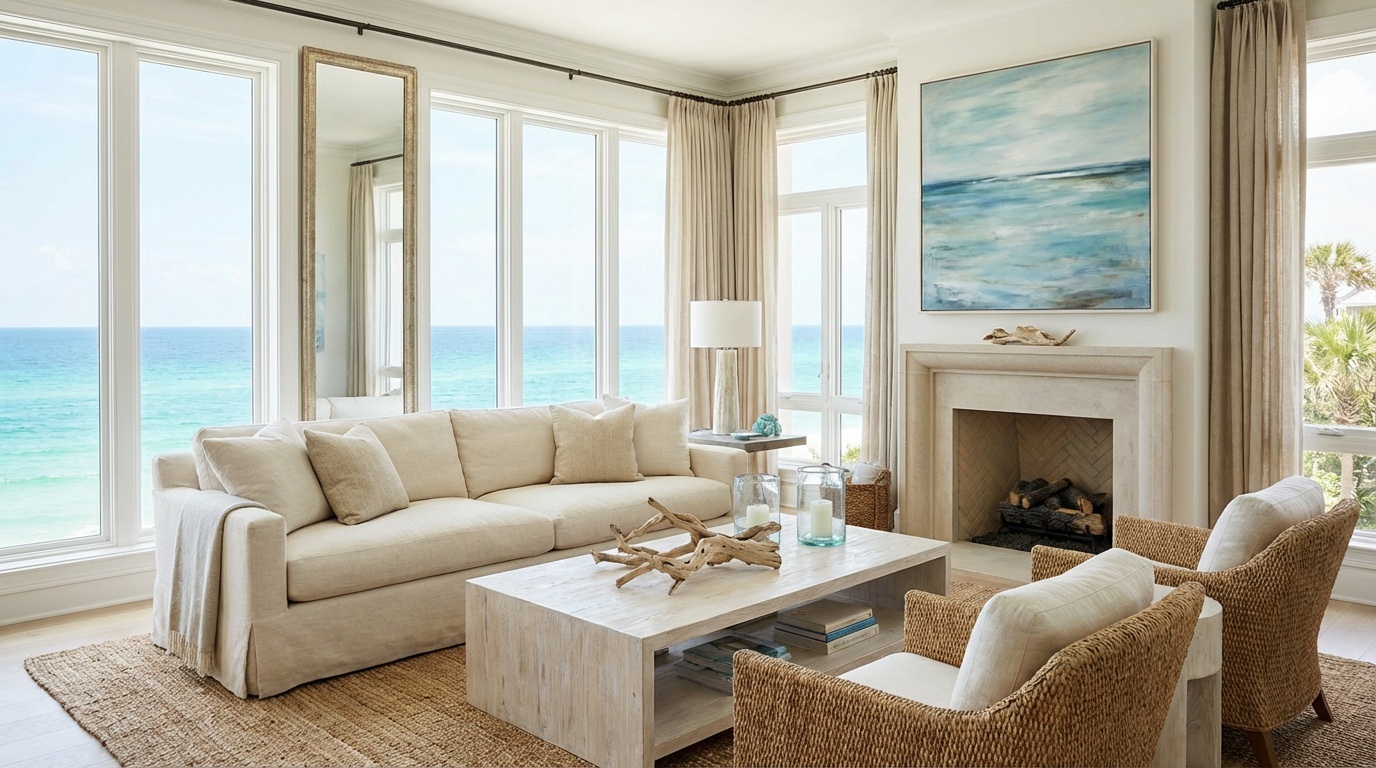
Lighting is perhaps the most critical element in coastal design—after all, the style is fundamentally about capturing and celebrating natural light. Maximize natural light by keeping window treatments minimal and light-filtering. Sheer white linen curtains, woven bamboo shades, or simple shutters allow sunlight to flood the space while providing privacy when needed. Avoid heavy drapes or dark curtains that block the bright, airy feeling essential to coastal rooms.
Position your furniture to take advantage of natural light sources. Place seating areas near windows where possible, and avoid blocking windows with tall furniture pieces. If your living room lacks abundant natural light, use mirrors strategically to reflect and amplify whatever light you have—a large mirror opposite a window can effectively double the perceived brightness of the space.
For artificial lighting, coastal living rooms require layered illumination that can adapt to different times of day and activities. Start with ambient lighting that provides overall illumination—this might be a statement ceiling fixture like a woven rattan pendant, a driftwood chandelier, or a simple white drum shade. These fixtures should feel organic and relaxed rather than formal or ornate.
Task lighting is essential for reading and conversation areas. Table lamps with ceramic bases in white, blue, or natural textures (like rope-wrapped or driftwood-inspired designs) work beautifully on side tables flanking a sofa. Choose lampshades in natural linen or white fabric that diffuse light softly rather than creating harsh shadows.
Accent lighting adds depth and atmosphere to your coastal living room. Wall sconces with nautical-inspired details (like simple brass or nickel fixtures with clear glass shades) can highlight artwork or architectural features. Consider rope-wrapped sconces or fixtures with weathered metal finishes that suggest maritime lanterns without being overtly themed.
The key to coastal lighting is creating warm, welcoming ambiance that mimics the quality of natural daylight. Use warm white LED bulbs (2700-3000K) rather than cool white, which can feel harsh and clinical. Install dimmer switches wherever possible, allowing you to adjust lighting levels from bright and energizing during the day to soft and intimate in the evening.
Candles are a wonderful addition to coastal living rooms, adding both ambient light and a sensory element. Group pillar candles in hurricane glass holders on your coffee table or mantel, or use unscented white candles in varying heights to create a relaxed, beach-bonfire atmosphere.
Lighting & Ambiance
Furniture & Decor Shopping Guide
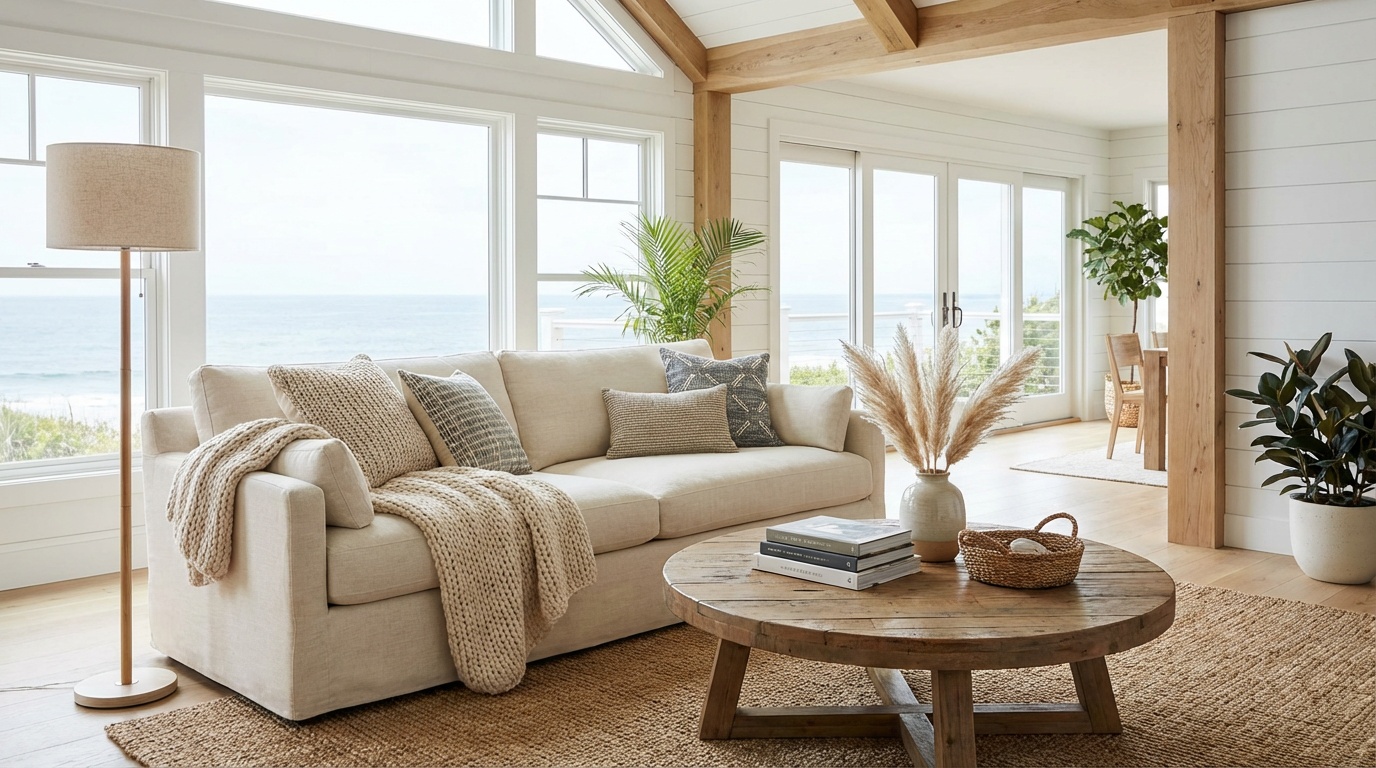
When budgeting for your coastal living room transformation, certain pieces are worth the investment. A high-quality sofa is paramount—this is your most-used piece of furniture, and investing in solid construction, comfortable cushions, and durable fabric will pay dividends for years. Look for hardwood frames, eight-way hand-tied springs, and performance fabrics that can withstand real life. Brands like Serena & Lily, Pottery Barn, and even more affordable options like Article offer excellent coastal-appropriate sofas.
Your coffee table is another investment-worthy piece. A solid wood table in a weathered or whitewashed finish will serve as the anchor of your seating area and withstand daily use. Consider this a long-term piece that can transition through various design updates.
For budget-friendly alternatives, Target's Threshold line and IKEA offer surprisingly good coastal-appropriate pieces at accessible price points. IKEA's EKTORP sofa with a white slipcover is a coastal design staple that costs a fraction of designer alternatives. HomeGoods and TJ Maxx are treasure troves for affordable accent pillows, throws, and decorative accessories in coastal colors and textures.
Online retailers have made coastal shopping easier than ever. Wayfair offers an enormous selection at various price points, while Overstock and Joss & Main frequently run sales on coastal furniture and decor. For more curated, upscale options, explore Serena & Lily, Coastal Living's shop, and Ballard Designs.
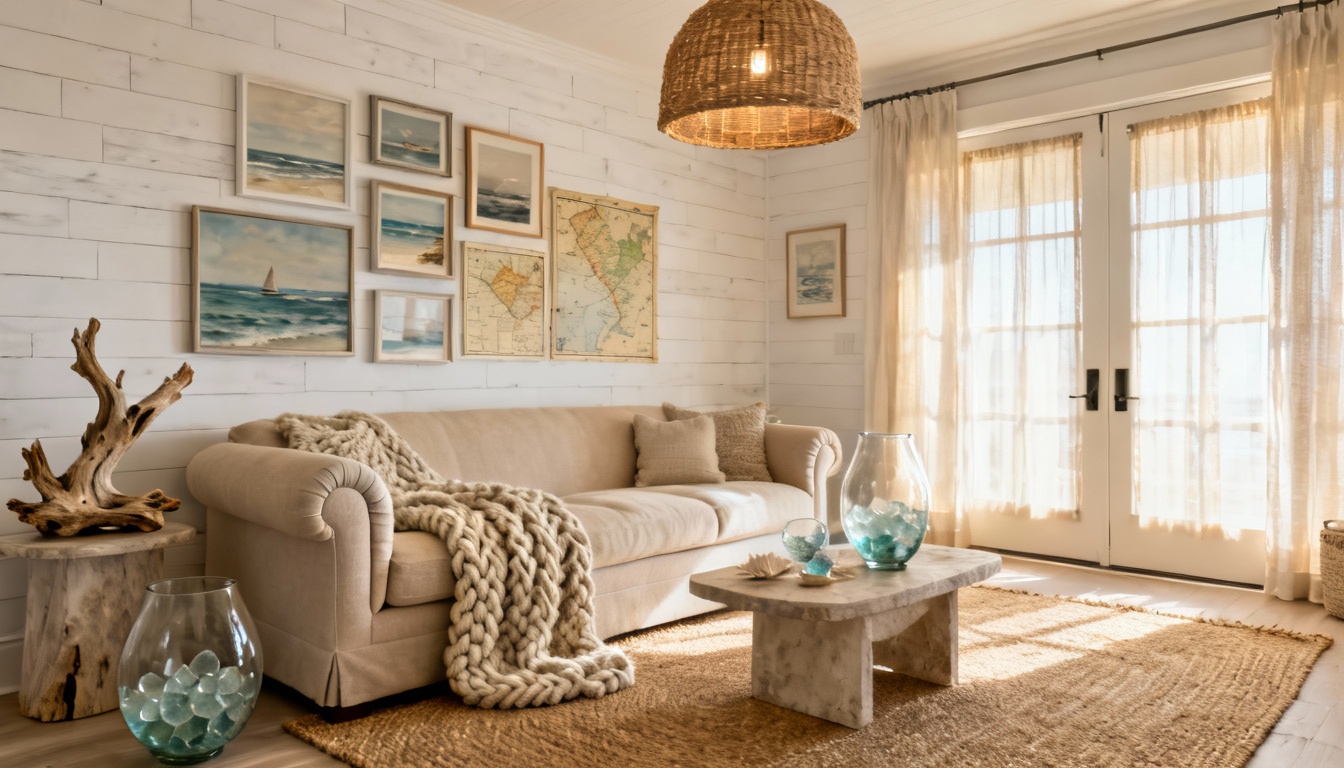
Vintage and secondhand shopping can yield incredible coastal finds. Estate sales and antique shops in coastal areas often have authentic weathered furniture, vintage oars, maritime art, and other treasures that bring genuine character to your space. Look for old wooden crates (perfect as side tables), vintage maps and charts, weathered shutters (great as wall decor), and ceramic lamps in classic coastal colors.
DIY projects can help you achieve the coastal look affordably. Whitewashing or liming existing wood furniture creates that sun-bleached effect without buying new pieces. Create your own artwork by framing pressed seagrass, sea fans, or vintage coastal maps. Make throw pillows from canvas drop cloths or grain sacks for an authentic, textured look. Fill glass jars or bowls with collected shells, sand, or beach glass for free, personal decor.
Furniture & Decor Shopping Guide
Common Mistakes to Avoid
The most pervasive mistake in coastal design is going overboard with nautical themes. A living room filled with anchor pillows, ship wheels, rope details, and seashell everything quickly crosses from sophisticated coastal into themed kitsch. The solution is restraint—choose one or two subtle nautical references at most, and let natural materials and colors do the heavy lifting. True coastal style suggests the beach; it doesn't announce it with a megaphone.
Another common pitfall is using colors that are too bright or saturated. Coastal design is about soft, weathered hues, not primary colors. That brilliant royal blue or vivid turquoise might seem beachy, but it lacks the sun-faded quality that makes coastal palettes so soothing. If your colors look like they came straight from a crayon box, dial them back to more muted, complex tones. Add white or gray to your mental paint mixing to achieve that perfectly imperfect coastal patina.
Many people make the mistake of choosing furniture that's too formal or heavy. Ornate traditional pieces, dark woods, and fussy details contradict coastal design's relaxed, breezy nature. If your living room feels stuffy or formal, you've missed the mark. The fix is to lighten up—literally. Choose furniture with visible legs (rather than skirted pieces), opt for lighter wood tones, and embrace casual fabrics like linen over formal ones like silk.
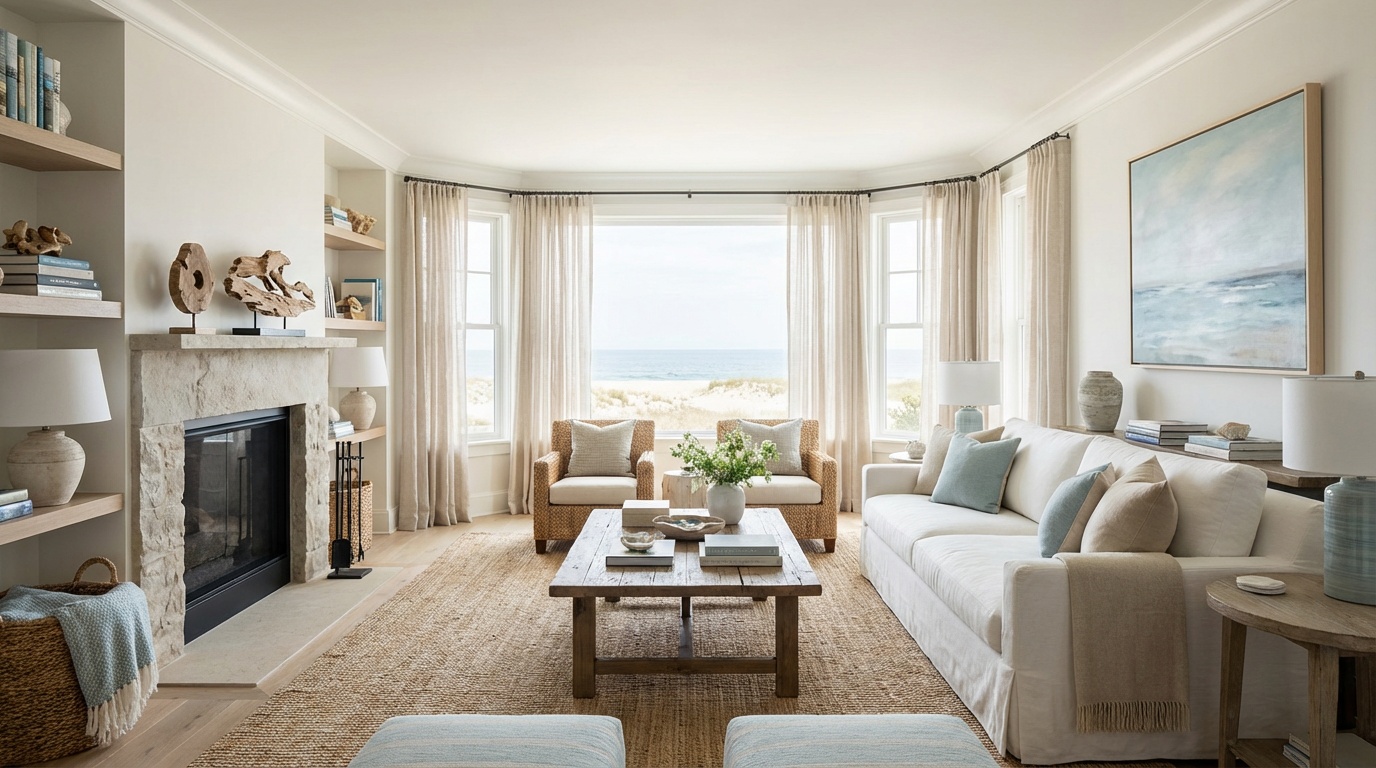
Neglecting texture is a subtle but significant error. Because coastal palettes are relatively neutral, texture becomes essential for creating visual interest and depth. A room that's all smooth surfaces in similar colors will feel flat and boring. Layer in woven baskets, jute rugs, linen pillows, chunky knit throws, and weathered wood to create the rich, tactile quality that makes coastal spaces feel inviting.
Finally, there's the balance between over-styling and under-styling. Over-styling happens when every surface is crowded with decor, creating visual clutter that undermines the calm, uncluttered feeling coastal design should evoke. Under-styling, on the other hand, leaves your space feeling sparse and unfinished. The sweet spot is curated simplicity—each piece should have purpose and breathing room. Group items in odd numbers, leave negative space, and edit ruthlessly. If something doesn't contribute to the peaceful, beachy feeling you're creating, it doesn't belong.
Signs your coastal living room is missing the mark include: it feels themed rather than designed, colors are too bright or too cool, the space feels dark or heavy, there's no textural variation, or it's so cluttered you can't relax. The good news? All of these issues are fixable with thoughtful editing and adjustment.
Common Mistakes to Avoid
Styling for Different Budgets & Spaces
Coastal style is remarkably adaptable to small spaces, making it ideal for apartments and cozy living rooms. The light color palette naturally makes small rooms feel larger, while the emphasis on uncluttered surfaces prevents cramped feelings. In a small coastal living room, choose a loveseat or apartment-sized sofa rather than a full sectional, and opt for furniture with exposed legs to create visual lightness and allow light to flow underneath.
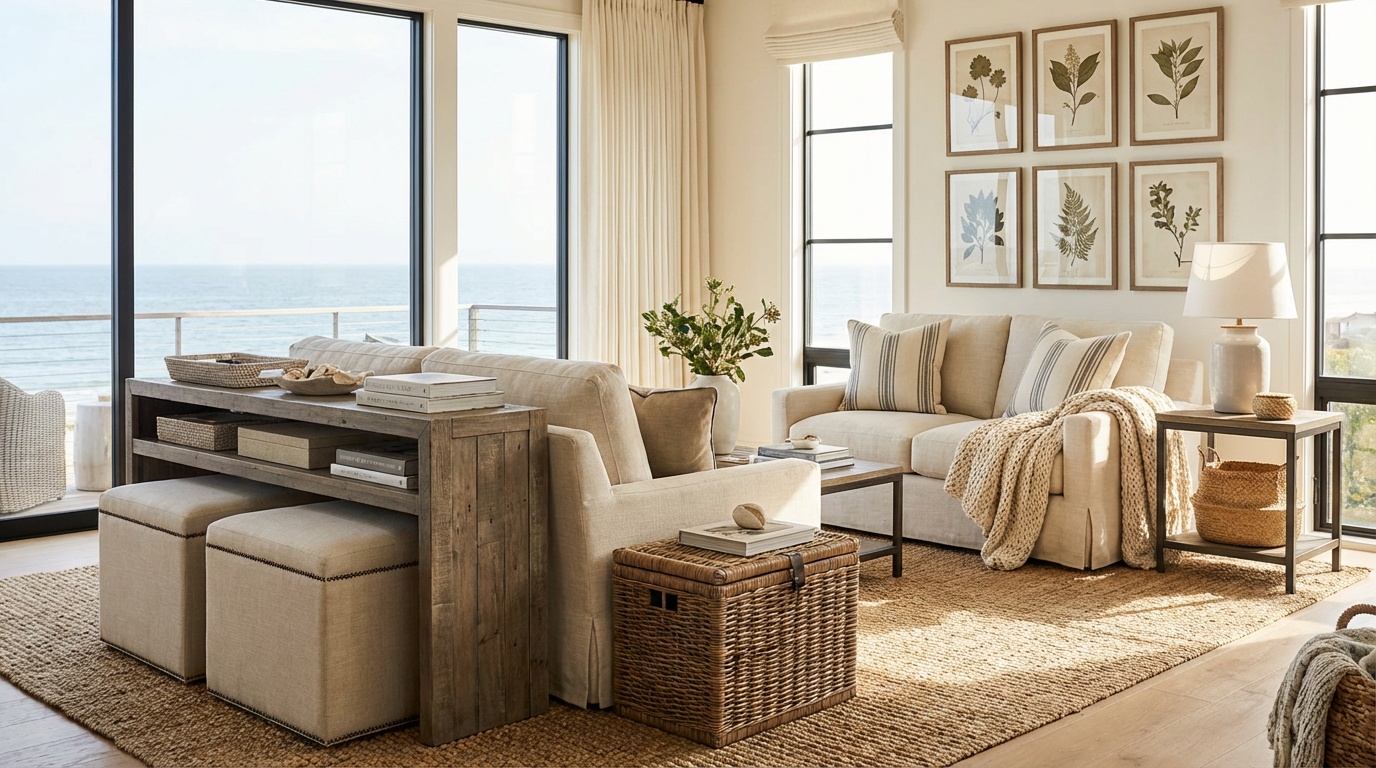
Multi-functional furniture is your friend in small coastal spaces. An ottoman that provides both storage and seating, nesting tables that can be tucked away when not needed, and wall-mounted shelves that don't consume floor space all help maximize your square footage. Keep the color palette very light and cohesive—this isn't the place for bold accent colors, which can make small spaces feel choppy.
For renters who can't paint walls or make permanent changes, coastal style is wonderfully achievable. Focus on furniture, textiles, and portable decor to create the look. A large jute or sisal rug can define your living area and introduce coastal texture. Slipcovered furniture in white or natural linen transforms the look of existing pieces. Removable peel-and-stick wallpaper in subtle coastal patterns (like soft stripes or grasscloth textures) can create an accent wall without damaging surfaces.
Budget tier: Under $500 Start with paint if you own your space—a gallon of soft white or pale blue for an accent wall costs under $50 and makes a dramatic impact. Invest in a large jute rug ($100-150), add white or cream slipcovers to existing furniture ($100-200), and update throw pillows in coastal colors and textures ($50-100). DIY artwork using frames from thrift stores and printed coastal photography or maps ($50), and add a few budget-friendly accessories like white ceramic vases, woven baskets, and candles ($50-100).
Budget tier: $500-$2000 At this level, you can invest in a quality coffee table or a pair of accent chairs. Add new window treatments in sheer linen ($150-300), upgrade lighting with a statement pendant or new table lamps ($200-400), invest in a really good area rug ($300-500), and add higher-quality throw pillows and a chunky knit throw ($150-200). Consider one investment piece like a beautiful driftwood mirror or piece of coastal artwork ($200-400).
Budget tier: $2000+ This budget allows for a complete transformation. Invest in a high-quality sofa with performance fabric ($1500-3000), add multiple seating pieces like accent chairs or a loveseat ($800-1500), purchase solid wood furniture pieces including coffee and side tables ($600-1200), install custom window treatments ($400-800), and fully accessorize with artwork, lighting, rugs, and decor ($500-1000). This tier lets you create a cohesive, magazine-worthy coastal living room.
Phasing your transformation over time makes even modest budgets work harder. Month 1: Paint and declutter. Month 2: Add a rug and update pillows. Month 3: Invest in one major furniture piece. Month 4: Update lighting. Month 5: Add artwork and accessories. This approach prevents overwhelm and allows you to live with changes before making additional investments.
If you're working with an existing space that has elements of traditional living room design, you can gradually transition toward coastal by lightening your palette, swapping heavy fabrics for natural fibers, and introducing organic textures.
Styling for Different Budgets & Spaces
Bringing Your Vision to Life
The most challenging aspect of any design project is visualizing how all the elements will work together in your actual space. You might love that whitewashed coffee table in the showroom, but will it work with your existing sofa and rug? Will that soft blue paint color look right with your natural light? These uncertainties can lead to expensive mistakes or decision paralysis that keeps you from moving forward.
This is where visualization becomes invaluable. Before committing to purchases, paint colors, or furniture arrangements, seeing your coastal living room design come to life helps you make confident decisions and avoid costly errors. You can experiment with different shades of white, try various furniture layouts, and test whether that jute rug works with your existing pieces—all before spending a single dollar.
RoomStudioAI transforms this visualization process from difficult to effortless. Simply upload a photo of your current living room, select "coastal" as your desired style, and watch as AI technology reimagines your space with all the elements we've discussed—soft, weathered palettes, natural textures, organic materials, and that breezy, light-filled atmosphere that defines coastal design. You'll instantly see how coastal style translates to your specific room with its unique dimensions, lighting, and architectural features.
The beauty of using RoomStudioAI is the ability to experiment risk-free. Try different variations of coastal style—from crisp and modern to warm and traditional. See how various color palettes work in your space. Visualize different furniture arrangements. This experimentation phase, which would traditionally require expensive consultations or painstaking mood boards, happens in seconds.
Once you've visualized your perfect coastal living room, you'll have a clear roadmap for your transformation. You'll know exactly which paint colors to choose, what furniture styles will work, and how to arrange everything for maximum impact. This clarity makes the shopping and implementation phases dramatically easier and more successful.
Whether you're working with a modest budget and phasing your transformation over time, or ready to completely reimagine your space, starting with visualization sets you up for success. Try RoomStudioAI to see your coastal living room vision come to life—you might be surprised at how achievable your dream space really is.
Your coastal living room is more than just a design choice—it's an investment in daily tranquility, a space that welcomes you home with the calming essence of the seaside. With the principles, tips, and resources outlined in this guide, you have everything you need to create a coastal living room that's authentically you, beautifully designed, and perfectly suited to your life. The ocean is calling—it's time to bring its peaceful beauty home.