What Defines Mid-Century Modern Style
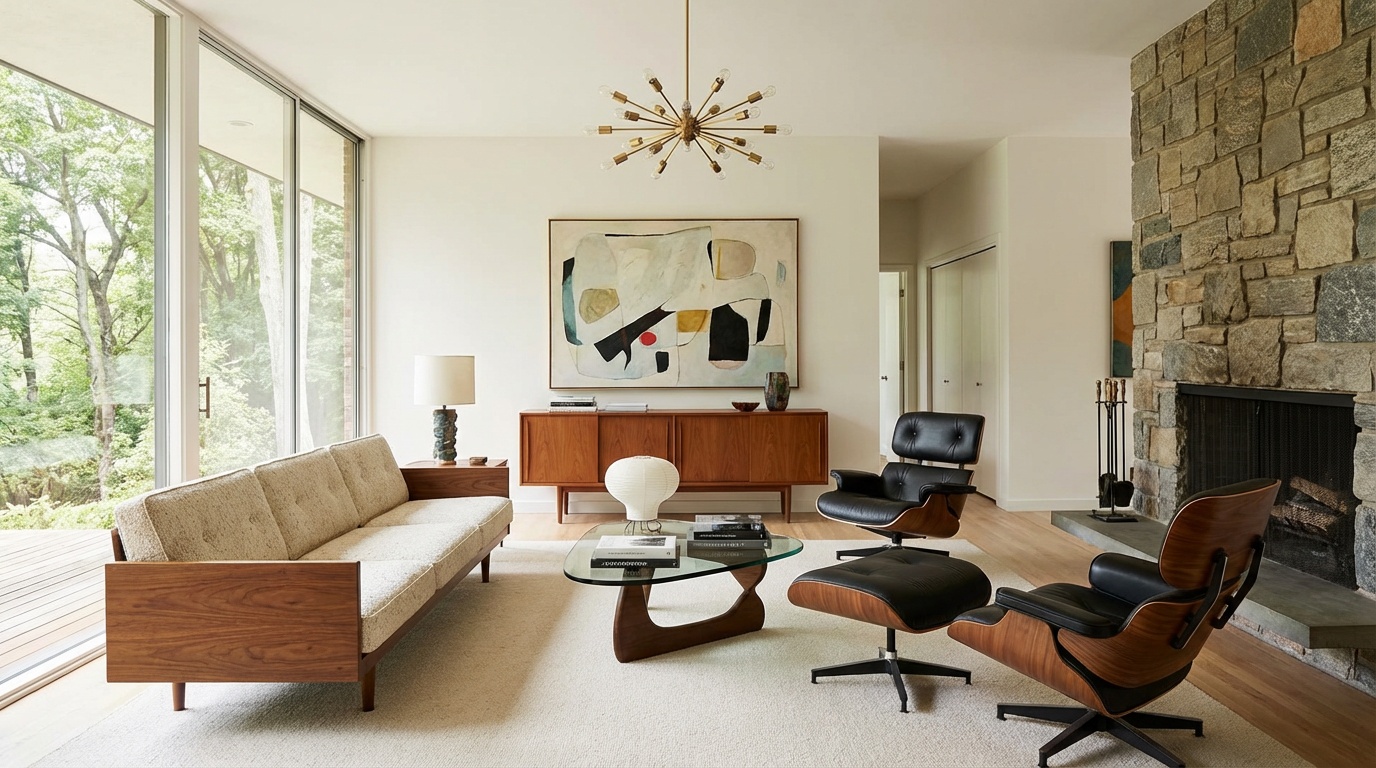
Mid-century modern design emerged in the post-World War II era, roughly spanning from the mid-1940s through the late 1960s. This revolutionary design movement was born from a desire to rebuild and reimagine domestic life after the war, embracing new materials, manufacturing techniques, and a fundamentally optimistic vision of the future. Designers like Charles and Ray Eames, Eero Saarinen, and George Nelson pioneered furniture that was both beautiful and accessible, rejecting the ornate excess of previous decades in favor of clean lines, organic forms, and functional simplicity.
The philosophy behind mid-century modern design centers on the idea that good design should be available to everyone, not just the wealthy elite. This democratic approach led to innovations in mass production and the use of new materials like molded plywood, fiberglass, and tubular steel. The movement also emphasized a strong connection between indoor and outdoor spaces, incorporating large windows, open floor plans, and natural materials that blurred the boundaries between home and nature.
Today's homeowners are drawn to mid-century modern style for several compelling reasons. First, its emphasis on functionality and minimalism aligns perfectly with contemporary desires for uncluttered, purposeful living spaces. In an age of information overload and constant stimulation, the calm, ordered aesthetic of mid-century design offers a visual respite. Second, the style's timeless quality means investments in authentic or reproduction pieces retain their value and never look dated. Finally, mid-century modern design celebrates craftsmanship and quality materials, appealing to those who appreciate well-made furniture that can last for generations.
What distinguishes mid-century modern from other minimalist or contemporary styles is its warmth and organic quality. Unlike stark modernism or industrial design, mid-century modern incorporates natural wood tones, curved forms inspired by nature, and pops of vibrant color. It's also more playful than Scandinavian minimalism, embracing bold geometric patterns and sculptural furniture pieces that serve as conversation starters. The style strikes a perfect balance between form and function, where every piece is beautiful to look at but also supremely comfortable and practical for daily life.
What Defines Mid-Century Modern Style
Essential Elements for Your Mid-Century Modern Living Room
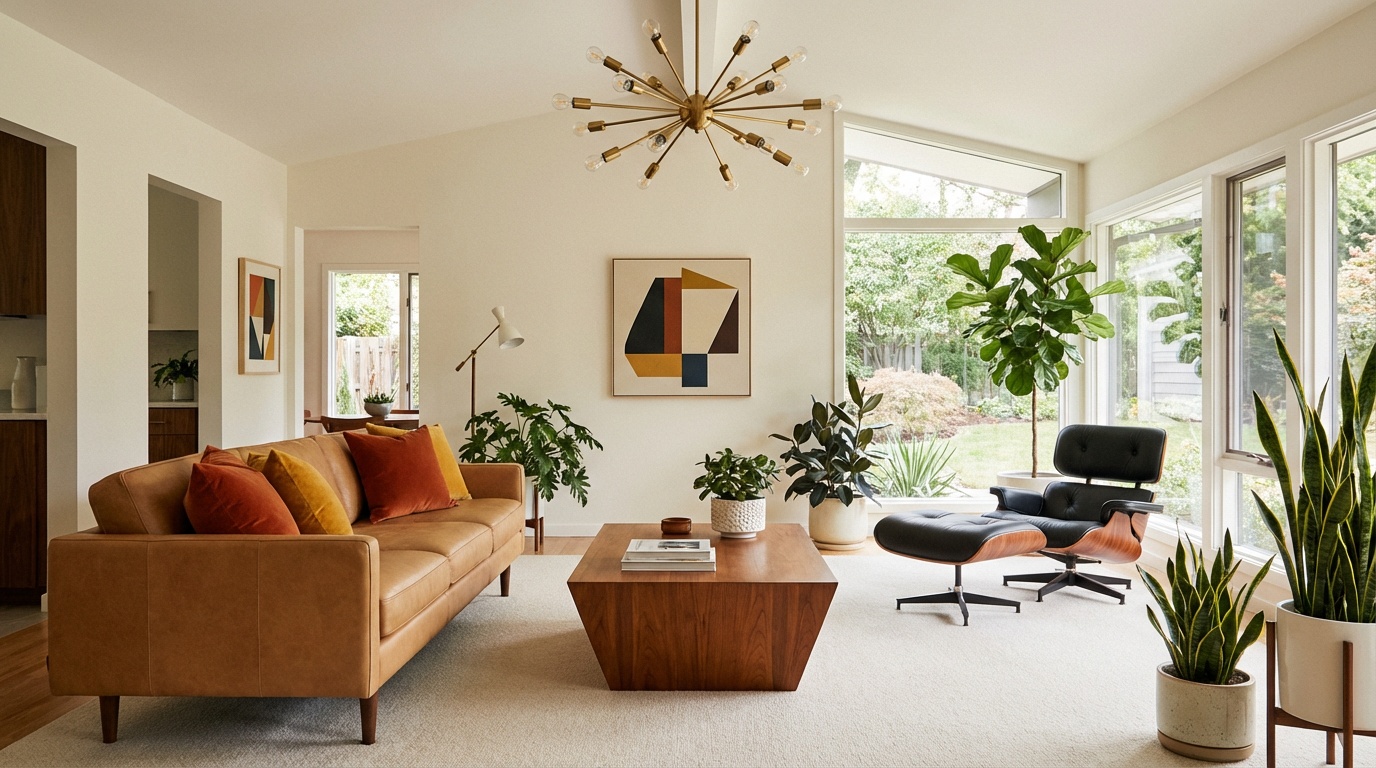
The foundation of any mid-century modern living room starts with the right furniture pieces. A low-profile sofa with tapered wooden legs is perhaps the most iconic element—look for pieces upholstered in leather, tweed, or textured linen in colors like camel, olive green, or burnt orange. The sofa should have clean lines without excessive tufting or ornamentation, and those characteristic angled wooden legs (often made from walnut or teak) are non-negotiable.
Pair your sofa with a sculptural lounge chair, ideally something that makes a statement. The Eames Lounge Chair is the gold standard, but similar silhouettes featuring molded plywood, leather cushioning, and that distinctive reclined posture work beautifully. If budget is a concern, look for chairs with similar proportions and the signature combination of organic curves with geometric precision.
Your coffee table should feature natural wood with visible grain patterns—walnut, teak, and rosewood are period-appropriate choices. Look for designs with interesting geometric bases, hairpin legs, or sculptural supports. Many mid-century coffee tables feature lower shelves or magazine racks, combining form with practical storage. Consider pieces with contrasting materials like wood paired with glass, marble, or metal accents.
Credenzas and sideboards are essential for both storage and style in a mid-century modern living room. These long, low pieces typically feature sliding doors, tapered legs, and beautiful wood grain. They're perfect for housing electronics, books, and bar supplies while providing a surface for displaying art, plants, and decorative objects. The horizontal lines of a credenza also help anchor the room and create visual balance.
Key materials that define the mid-century modern aesthetic include warm-toned woods (especially walnut, teak, and oak), brass and bronze metals for accents and hardware, natural leather that develops a beautiful patina over time, and textured fabrics like bouclé, tweed, and linen. Avoid anything too shiny, plastic-looking (unless it's an authentic vintage piece), or overly distressed. The materials should feel natural, honest, and well-crafted.
The living room particularly benefits from mid-century modern design because the style was specifically developed with living spaces in mind. The low-profile furniture creates an open, airy feeling that makes rooms feel larger, while the emphasis on conversation groupings and comfortable seating encourages gathering and connection. The style's integration of entertainment centers and storage also addresses the practical needs of modern living without sacrificing aesthetics.
Essential Elements for Your Mid-Century Modern Living Room
Color Palettes & Combinations
The quintessential mid-century modern color palette begins with warm, natural wood tones as your foundation—think rich walnut, golden teak, and honey oak. These woods provide warmth and organic texture that grounds the entire space. For walls, warm whites and soft creams create a neutral backdrop that lets furniture and art take center stage, while also maximizing the natural light that's so important to the style.
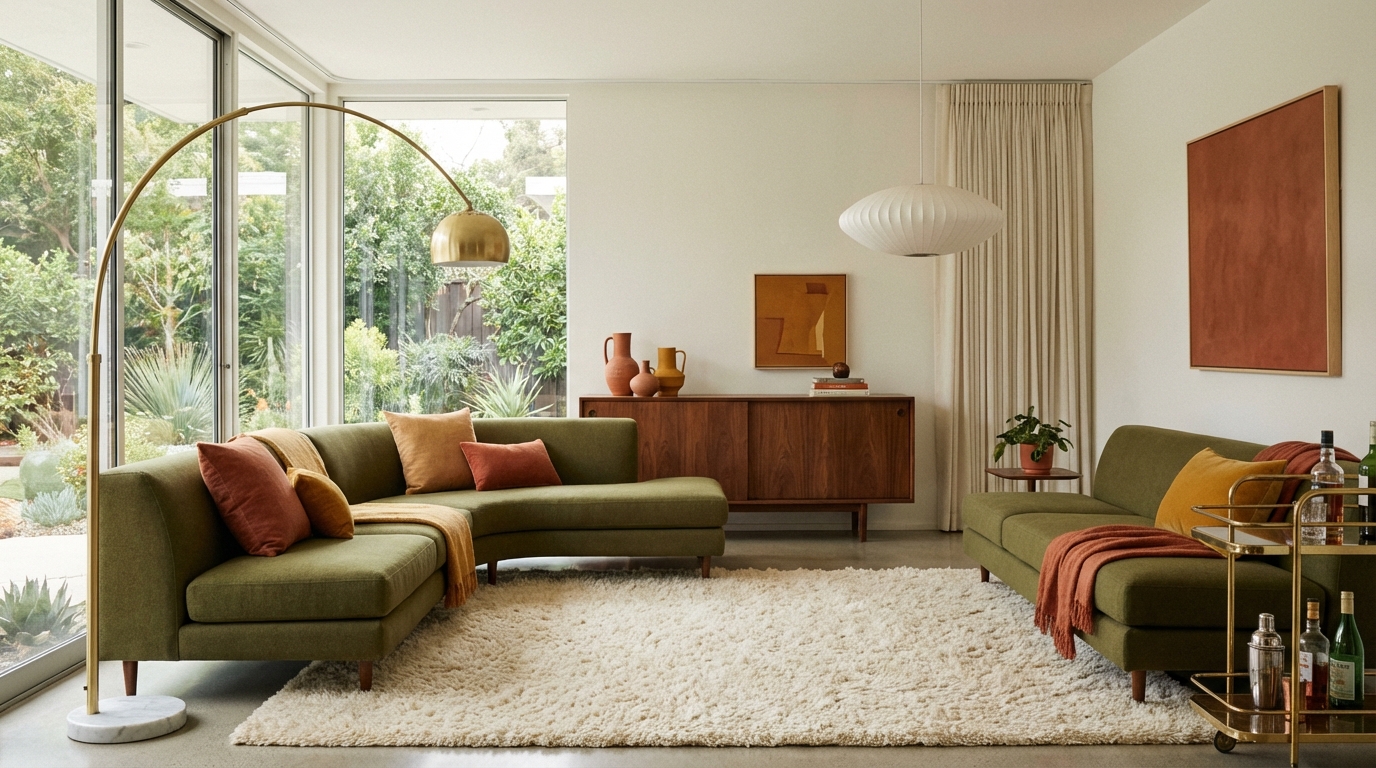
Neutral upholstery colors form the backbone of most mid-century modern living rooms. Camel brown, charcoal gray, olive green, and warm taupe are all period-appropriate choices that work beautifully with wood tones. These earthy neutrals create a sophisticated, cohesive look while remaining versatile enough to accommodate changing accent colors and seasonal updates.
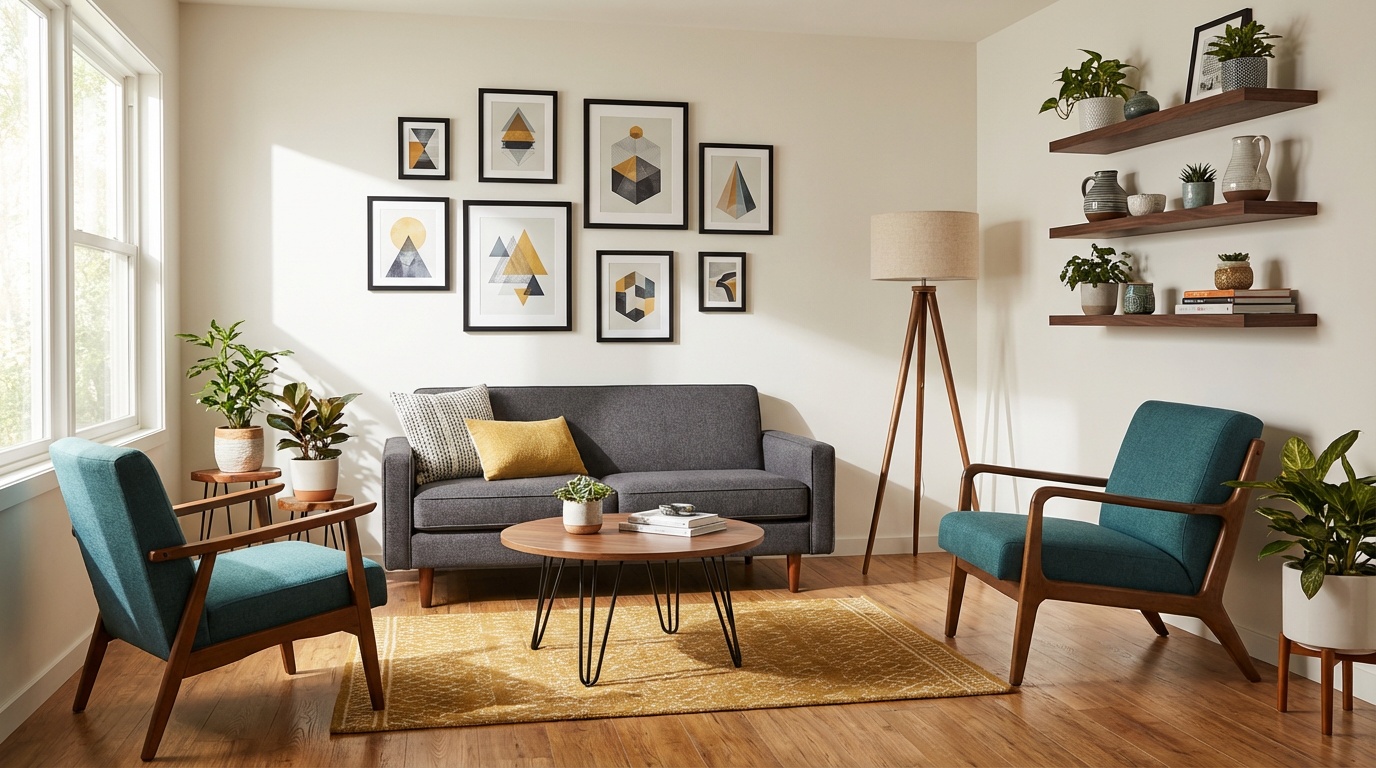
Where mid-century modern really comes alive is in its accent colors. The style embraces bold, saturated hues inspired by the optimism of the postwar era. Burnt orange, mustard yellow, teal blue, and avocado green are signature colors that add personality and energy. Don't be afraid of these vibrant tones—they're essential to authentic mid-century style. However, use them strategically through throw pillows, artwork, a single accent chair, or decorative objects rather than overwhelming the space.
For a more subdued approach, consider a palette of dusty sage, terracotta, ochre, and muted coral. These softer versions of classic mid-century colors feel more contemporary while still honoring the style's roots. They work particularly well in smaller spaces or rooms with limited natural light, where deeper colors might feel too heavy.
When distributing color throughout your living room, follow the 60-30-10 rule: 60% should be your dominant neutral (walls and large furniture pieces), 30% your secondary color (often a slightly bolder neutral or wood tone), and 10% your accent colors (artwork, pillows, throws, and decorative accessories). This creates visual balance while preventing the space from feeling too busy or chaotic.
Consider how colors shift with the seasons and lighting conditions. Natural light brings out the warmth in wood tones and makes bold colors sing, while artificial lighting in the evening creates a cozier, more intimate atmosphere. You might incorporate seasonal textiles like lighter linens in summer and richer wools in winter, adjusting your accent colors accordingly—perhaps leaning toward cooler teals and yellows in warmer months and warmer oranges and olive tones in fall and winter.
Color Palettes & Combinations
Lighting & Ambiance
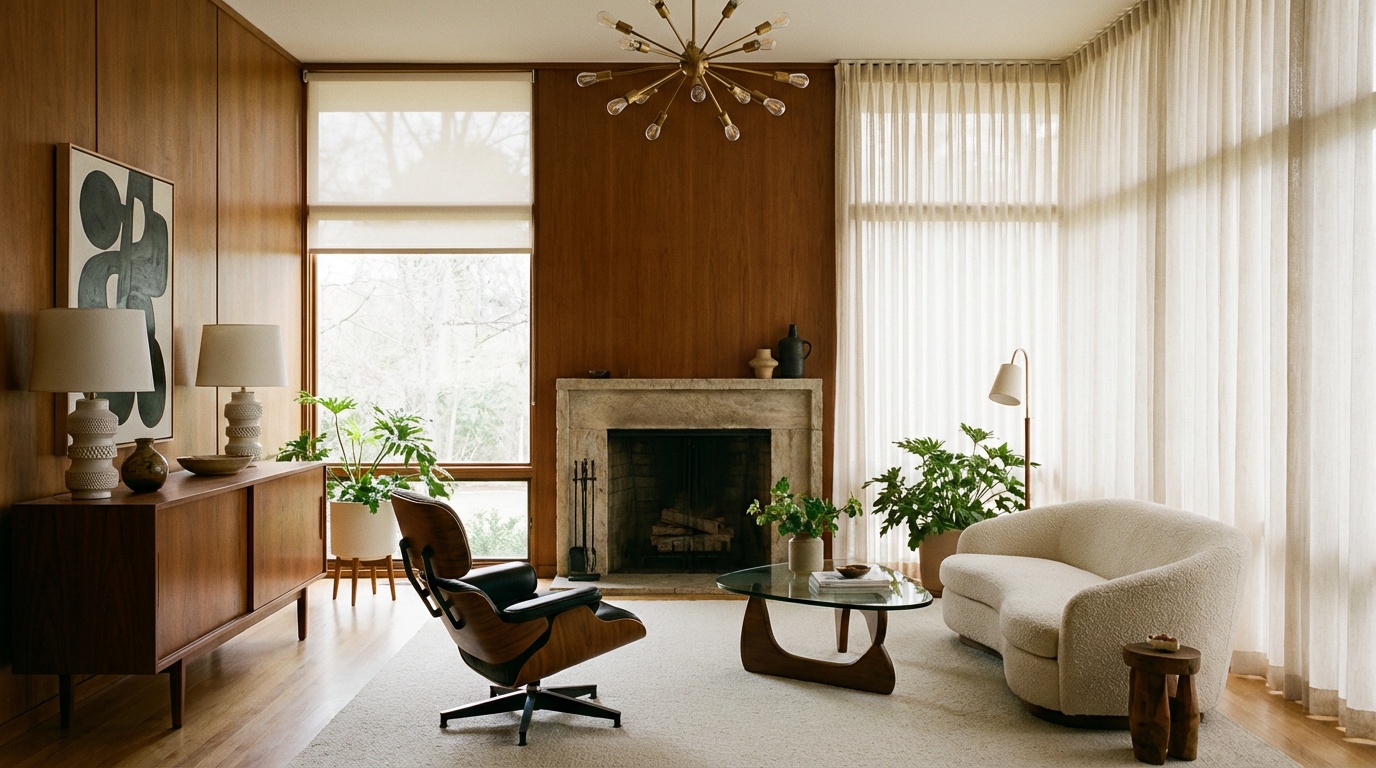
Natural light is fundamental to mid-century modern design, reflecting the era's emphasis on connecting interior spaces with the outdoors. If your living room has large windows, celebrate them—avoid heavy drapes in favor of simple roller shades, sheer curtains, or leaving windows completely bare if privacy allows. The goal is to maximize sunlight during the day, creating that bright, airy feeling characteristic of the style. If your windows are smaller, use mirrors strategically to reflect and amplify available natural light.
Artificial lighting in a mid-century modern living room should be layered and intentional. Start with ambient lighting that provides overall illumination—this might be a statement ceiling fixture like a Sputnik chandelier, a George Nelson bubble lamp, or a sculptural pendant with brass or wood details. These fixtures should be functional but also serve as artistic focal points that reinforce your design aesthetic.
Arc floor lamps are quintessentially mid-century modern and perfect for living rooms. Their sweeping curves and ability to direct light over seating areas make them both beautiful and practical. Look for designs with marble bases, brass or black metal arms, and adjustable heads. Position an arc lamp behind your sofa to illuminate reading areas without requiring side tables or taking up floor space.
Task lighting comes from table lamps and reading lights positioned near seating areas. Choose lamps with tripod bases, tapered wooden bodies, or ceramic forms in period-appropriate colors. Shades should be simple—drum shapes or tapered cones in white, cream, or natural linen work best. Avoid anything too fussy or ornate. Place these lamps on side tables, credenzas, or plant stands to create pools of light that make the space feel intimate and inviting in the evening.
Accent lighting highlights artwork, architectural features, or plants. Picture lights, small spotlights, or even LED strip lighting hidden behind credenzas can create visual interest and depth. The key is subtlety—the lighting itself shouldn't be the focus, but rather what it illuminates.
Creating the right ambiance means thinking about how your living room functions at different times of day. During daylight hours, pull back curtains and let natural light dominate. As evening approaches, begin layering in artificial light, starting with ambient fixtures and adding task lighting as needed. Use dimmer switches wherever possible to adjust light levels for different activities—brighter for entertaining, softer for movie nights or quiet evenings. The interplay of different light sources creates depth and warmth that makes your living room feel welcoming and well-designed.
Lighting & Ambiance
Furniture & Decor Shopping Guide
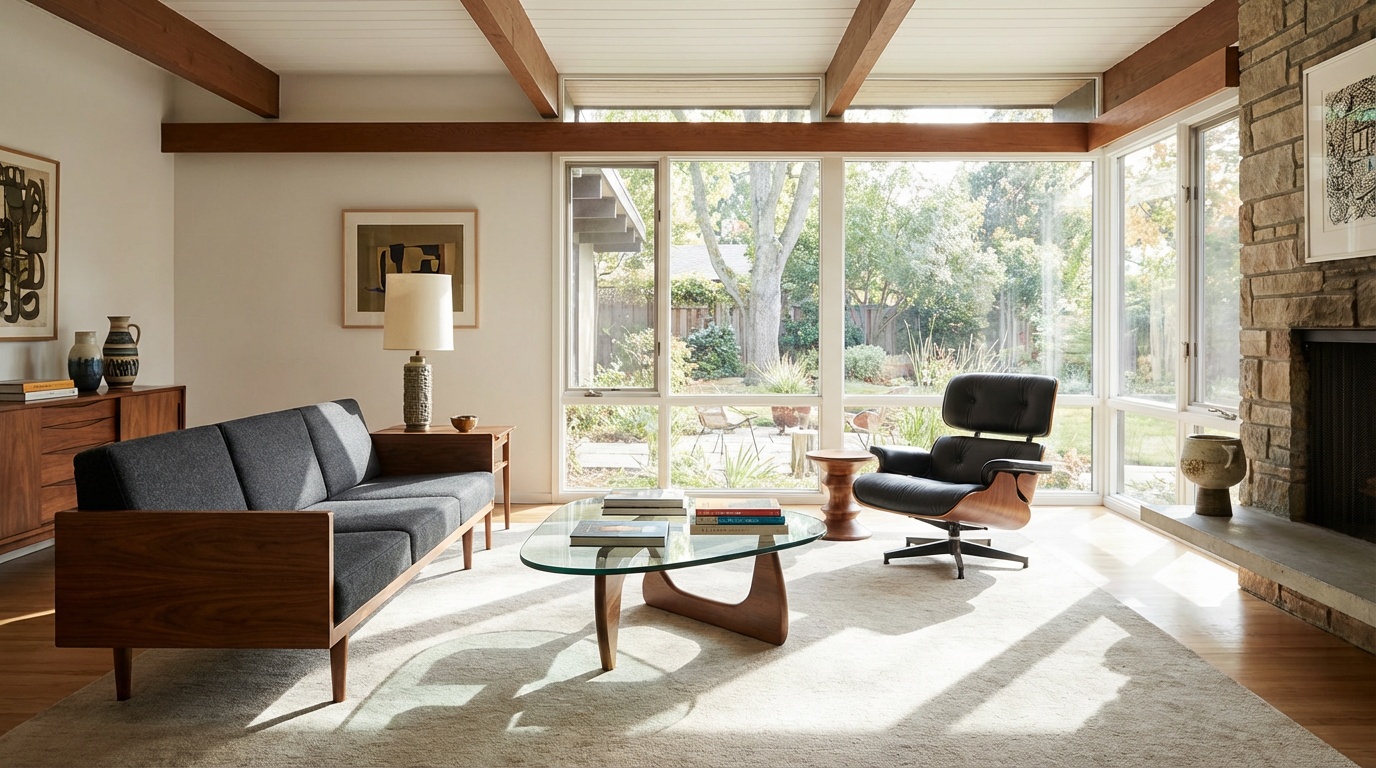
When building your mid-century modern living room, certain pieces are worth the investment. A quality sofa is paramount—you'll use it daily, and it sets the tone for the entire space. If you can afford an authentic vintage piece or a high-quality reproduction from manufacturers like Joybird, Article, or West Elm's mid-century line, prioritize this purchase. Similarly, a statement lounge chair becomes a family heirloom when chosen well. Even if you can't afford an original Eames, investing in a well-made replica with genuine leather and quality construction will serve you for decades.
Your coffee table and credenza are also worth splurging on if possible. These wood pieces develop character over time, and quality craftsmanship is immediately apparent. Look for solid wood construction (not veneer), dovetail joints, and smooth-operating drawers and doors. These pieces often become the most treasured items in your home.
For budget-friendly alternatives, retailers like IKEA, Target's Project 62 line, Wayfair, and Amazon offer surprisingly good mid-century inspired pieces at accessible price points. While they may not have the longevity of investment pieces, they allow you to achieve the look while saving for higher-quality items. Focus budget purchases on accent pieces—side tables, plant stands, and decorative accessories—while investing more in the furniture you'll use most.
Where to shop depends on your budget and preferences. For authentic vintage pieces, explore estate sales, Craigslist, Facebook Marketplace, and local vintage furniture stores. Sites like Chairish, 1stDibs, and Etsy offer curated vintage selections with the convenience of online shopping. For new furniture with mid-century styling, try Article, West Elm, CB2, Joybird, AllModern, and Design Within Reach (for higher-end investment pieces).
Vintage and secondhand finds that work particularly well include wooden credenzas and sideboards (often available at reasonable prices), ceramic lamps and vases, brass accessories, vintage artwork and prints, and bar carts. These items add authenticity and character that new pieces can't replicate. Don't worry if they need minor refinishing—light scratches and patina are part of the appeal, though you should avoid pieces with structural damage or major repairs needed.
Furniture & Decor Shopping Guide
Common Mistakes to Avoid
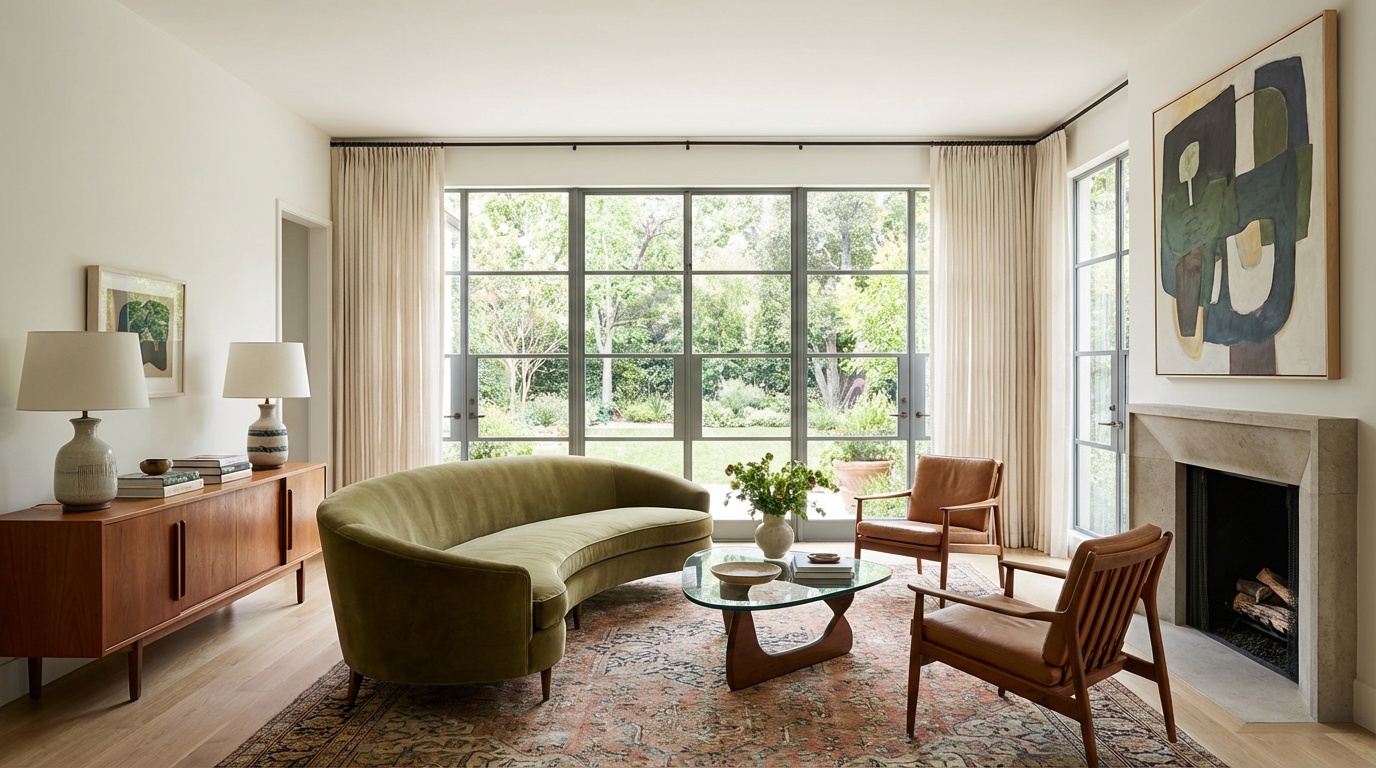
One of the most frequent mistakes when designing a mid-century modern living room is mixing too many wood tones. While variety can add interest, pairing cherry with walnut with oak with pine creates visual chaos. Instead, choose one or two complementary wood tones and stick with them throughout the space. If you inherit pieces in different woods, consider refinishing them or using them in different rooms. The cohesiveness of matching wood tones is essential to the clean, intentional aesthetic of mid-century modern design.
Another common error is over-accessorizing. Mid-century modern style celebrates negative space and clean lines, which means every object should be intentional. If your coffee table is covered with books, candles, trays, and decorative objects, you've gone too far. Similarly, avoid crowding walls with too much artwork or filling every corner with furniture. The fix is simple: edit ruthlessly. Display only your favorite pieces, rotate accessories seasonally, and embrace empty space as a design element in itself. Remember, in mid-century modern design, less truly is more.
A third mistake is choosing the wrong scale furniture for your space. Mid-century modern pieces tend to have lower profiles than traditional furniture, which is part of their appeal. However, in a room with high ceilings, exclusively low furniture can make the space feel bottom-heavy and unbalanced. Conversely, oversized furniture in a small space overwhelms the room and contradicts the style's emphasis on airiness. The solution is to vary heights thoughtfully—use tall plants, floor-to-ceiling curtains, or vertical artwork to draw the eye upward in high-ceilinged rooms, and choose appropriately scaled furniture for smaller spaces.
Many people also make the mistake of neglecting the lighting. They might have beautiful furniture but rely on a single overhead fixture or mismatched lamps that don't align with the aesthetic. Without proper lighting, even the best-designed room falls flat. Fix this by investing in period-appropriate lighting fixtures that serve as both functional light sources and design statements. Layer your lighting as discussed earlier, and don't underestimate the impact of a stunning Sputnik chandelier or sculptural floor lamp.
Finally, some designers go too matchy-matchy, creating a space that feels more like a showroom than a home. While cohesiveness is important, a living room should reflect the people who live there. The fix is to incorporate personal touches—family photos in simple frames, books you actually read, plants you care for, or artwork that speaks to you personally. Mix in a few pieces from other eras or styles if they have personal significance. The goal is a curated collection that tells your story, not a museum recreation of 1965. For more inspiration on balancing personal style with design aesthetics, check out these contemporary living room ideas.
Signs your space is missing the mark include feeling cold or sterile (add warmth through textiles, plants, and wood tones), feeling cluttered or chaotic (edit and simplify), or feeling like a costume rather than a comfortable home (incorporate more personal elements and ensure furniture is actually comfortable for your lifestyle).
Common Mistakes to Avoid
Styling for Different Budgets & Spaces
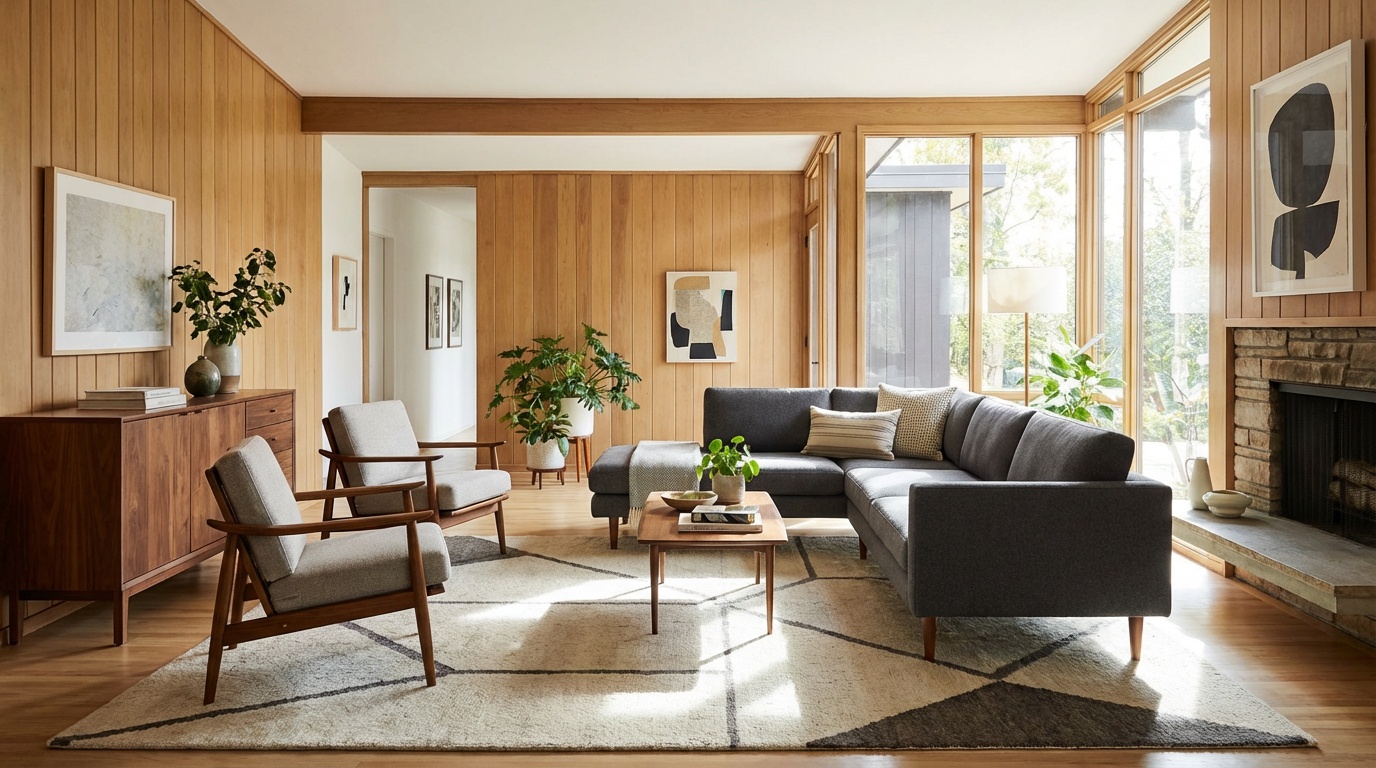
Small living rooms can absolutely embrace mid-century modern style—in fact, the design approach is particularly well-suited to compact spaces. The low-profile furniture creates visual openness, making rooms feel larger than they are. Choose a streamlined sofa rather than a bulky sectional, and opt for pieces with exposed legs that allow light to flow underneath, creating an airy feeling. A credenza provides ample storage while taking up less visual space than a traditional entertainment center. Use multifunctional pieces like nesting tables that can be tucked away when not needed, and consider wall-mounted shelving to maximize floor space.
For rental-friendly approaches, focus on furniture and accessories rather than permanent changes. You can achieve an authentic mid-century modern look without painting walls, changing flooring, or making structural modifications. Invest in a quality area rug to define your space and add warmth without altering the existing flooring. Use freestanding pieces like credenzas, bookcases, and room dividers to create zones within open layouts. Removable wallpaper in geometric mid-century patterns can transform an accent wall without violating lease agreements. Focus on lighting, textiles, and furniture that you can take with you when you move.
If you're working with a budget under $500, prioritize a few key pieces and build from there. Start with a vintage credenza from Facebook Marketplace or an estate sale ($150-300), add a budget-friendly coffee table from IKEA or Target ($50-100), invest in one statement lighting piece like an arc floor lamp ($80-150), and allocate remaining funds to textiles and accessories—throw pillows in mid-century colors, a geometric area rug, and a few plants in simple ceramic pots. You can use existing seating temporarily while saving for a proper mid-century sofa.
With a budget of $500-2000, you can make significant progress toward a fully realized mid-century modern living room. Allocate $600-800 for a quality sofa from Article, Joybird's sale section, or a well-maintained vintage piece. Spend $200-400 on a coffee table and side table, $200-300 on lighting (one statement piece plus one or two smaller lamps), $150-250 on a vintage credenza or storage piece, and reserve $200-300 for textiles, artwork, and accessories. At this budget level, you can furnish a complete living room with pieces you'll keep for years.
For those with $2000+ to invest, you can create a truly stunning space with investment-quality pieces. Consider an authentic vintage or designer sofa ($1000-1500), a statement lounge chair like an Eames reproduction ($500-800), quality wood furniture including a credenza and coffee table ($600-1000), designer lighting fixtures ($300-500), and high-end textiles and artwork ($400-600). At this level, focus on pieces with lasting value—solid wood construction, genuine leather, and designs that will remain beautiful and functional for decades. You might also explore Scandinavian living room ideas for complementary design elements that work well with mid-century modern aesthetics.
To phase your transformation over time, start with the largest furniture pieces that have the most visual impact—your sofa and coffee table. Next, add storage and a statement lighting piece. In phase three, incorporate accent chairs, additional lighting, and textiles. Finally, layer in artwork, plants, and accessories. This approach spreads the cost over several months or years while ensuring each addition meaningfully contributes to the overall design. Take time between phases to live with your space and understand what it needs before making additional purchases.
Styling for Different Budgets & Spaces
Bringing Your Vision to Life
Before investing in furniture and decor, visualization is crucial. It's difficult to imagine how different pieces will work together, whether colors will complement your existing space, or how a particular style will feel in your actual living room. This is where technology becomes invaluable—being able to see your design vision before committing financially saves money, reduces stress, and ensures you'll love the final result.
RoomStudioAI offers exactly this capability, allowing you to transform your living room into a mid-century modern haven before purchasing a single item. Simply upload a photo of your current space, select the mid-century modern style, and watch as artificial intelligence reimagines your room with authentic design elements—the perfect sofa, complementary lighting, appropriate color palettes, and those essential wood tones that define the aesthetic.
The beauty of using RoomStudioAI is the ability to experiment risk-free. Try different color combinations—maybe you're torn between a camel leather sofa and olive green upholstery. See both options visualized in your actual space with your specific lighting and architectural features. Wondering if that bold burnt orange accent wall will work, or if you should stick with neutral walls and colorful accessories? Generate both versions and compare them side by side.
This visualization tool is particularly valuable when working with challenging spaces—awkward layouts, limited natural light, or architectural features that seem difficult to work around. RoomStudioAI helps you see solutions you might not have considered, optimizing furniture placement and suggesting design elements that work with your space's unique characteristics rather than against them.
You can also use the tool to communicate your vision with partners, roommates, or family members who will share the space. Rather than describing what you imagine or scrolling through Pinterest photos of other people's homes, show them your actual living room transformed. This makes decision-making collaborative and ensures everyone feels invested in the final design.
The free AI design tool removes the guesswork from interior design, democratizing access to professional-quality visualization that was once available only to those who could afford interior designers. Whether you're starting from scratch or refreshing an existing space, whether you have a generous budget or need to make every dollar count, seeing your vision come to life digitally first ensures you'll create a mid-century modern living room you'll love for years to come.
Start your transformation today by uploading a photo of your living room to RoomStudioAI. Experiment with mid-century modern styling and discover how this timeless aesthetic can work in your unique space. You might be surprised by the possibilities—and inspired to bring your dream living room to life sooner than you thought possible. The mid-century modern living room you've been envisioning is just a click away.