What Defines Traditional Style
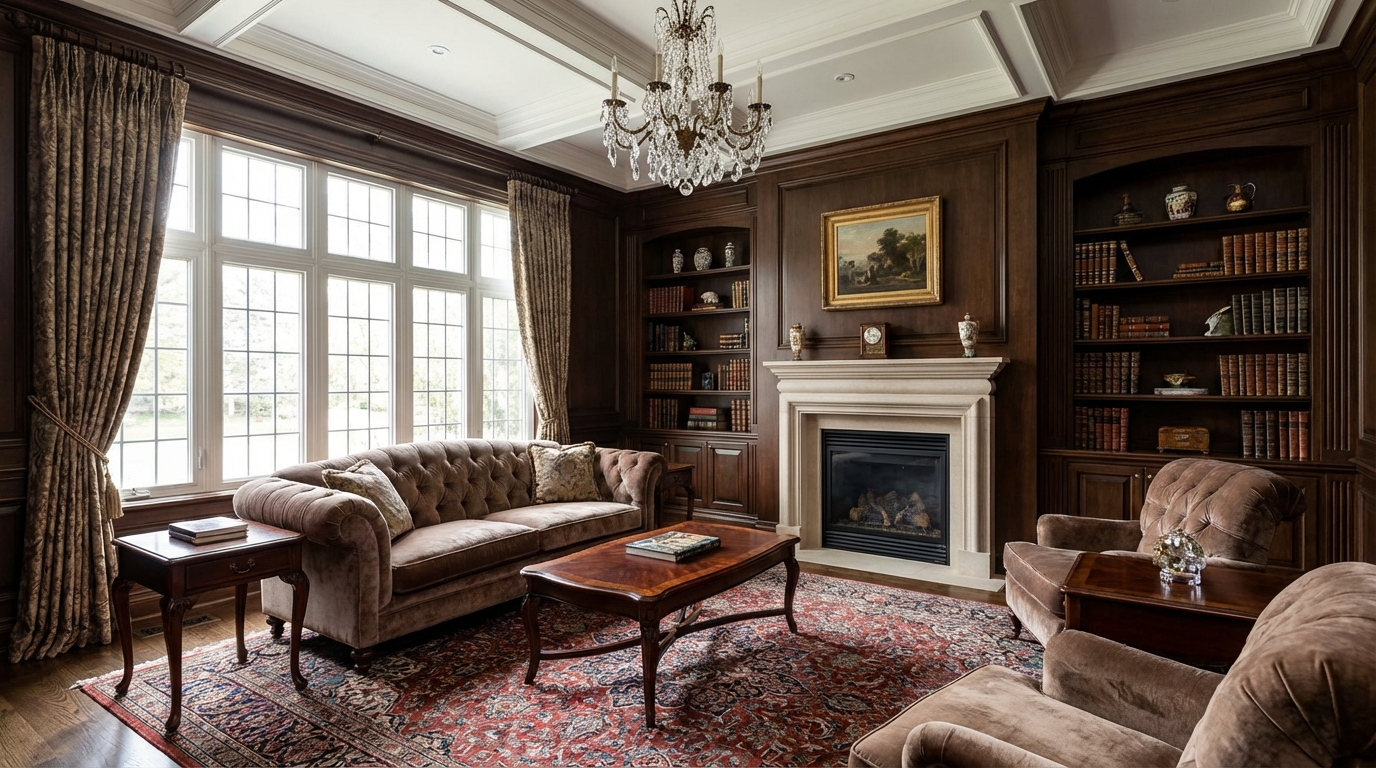
Traditional interior design is rooted in European sensibilities from the 18th and 19th centuries, drawing inspiration from English and French country estates, Georgian architecture, and Victorian elegance. This style celebrates craftsmanship, symmetry, and a sense of permanence that stands in stark contrast to the fleeting trends of contemporary design. Traditional rooms tell stories through their carefully curated furnishings, layered textiles, and attention to architectural detail.
The philosophy behind traditional design centers on creating spaces that honor the past while serving present-day needs. It's about investing in quality pieces that will last generations rather than chasing seasonal fads. Traditional interiors embrace ornamentation without excess, pattern without chaos, and formality without stuffiness. The result is a living room that feels both refined and genuinely welcoming.
Historically, traditional style evolved during periods when craftsmanship was paramount and furniture was built to be handed down through families. Cabinetmakers like Thomas Chippendale and George Hepplewhite created pieces that defined an era, and their influence remains visible in traditional furniture today. The style matured through various movements—from the ornate carvings of Victorian design to the more restrained elegance of Georgian interiors—creating a rich vocabulary of design elements we now recognize as classically traditional.
So why does traditional design continue to resonate with modern homeowners? In an increasingly fast-paced, digitally-driven world, traditional living rooms offer sanctuary and stability. They provide visual rest through familiar forms and time-tested color combinations. For families, these spaces create a sense of heritage and continuity. For design enthusiasts, traditional style offers endless opportunities to collect meaningful pieces and layer in personal history. Unlike minimalist trends that can feel cold or stark, traditional rooms embrace abundance in a carefully orchestrated way—more is more, but it's curated more.
What distinguishes traditional style from similar aesthetics like transitional or classic design? Traditional interiors lean heavily into ornamentation, pattern mixing, and historical references. While transitional design bridges traditional and contemporary by simplifying details, true traditional style celebrates carved wood details, tufted upholstery, and layered window treatments. Compared to farmhouse or cottage styles that share some DNA, traditional design is more formal and refined, favoring mahogany over distressed pine and silk damask over casual linen.
What Defines Traditional Style
Essential Elements for Your Traditional Living Room
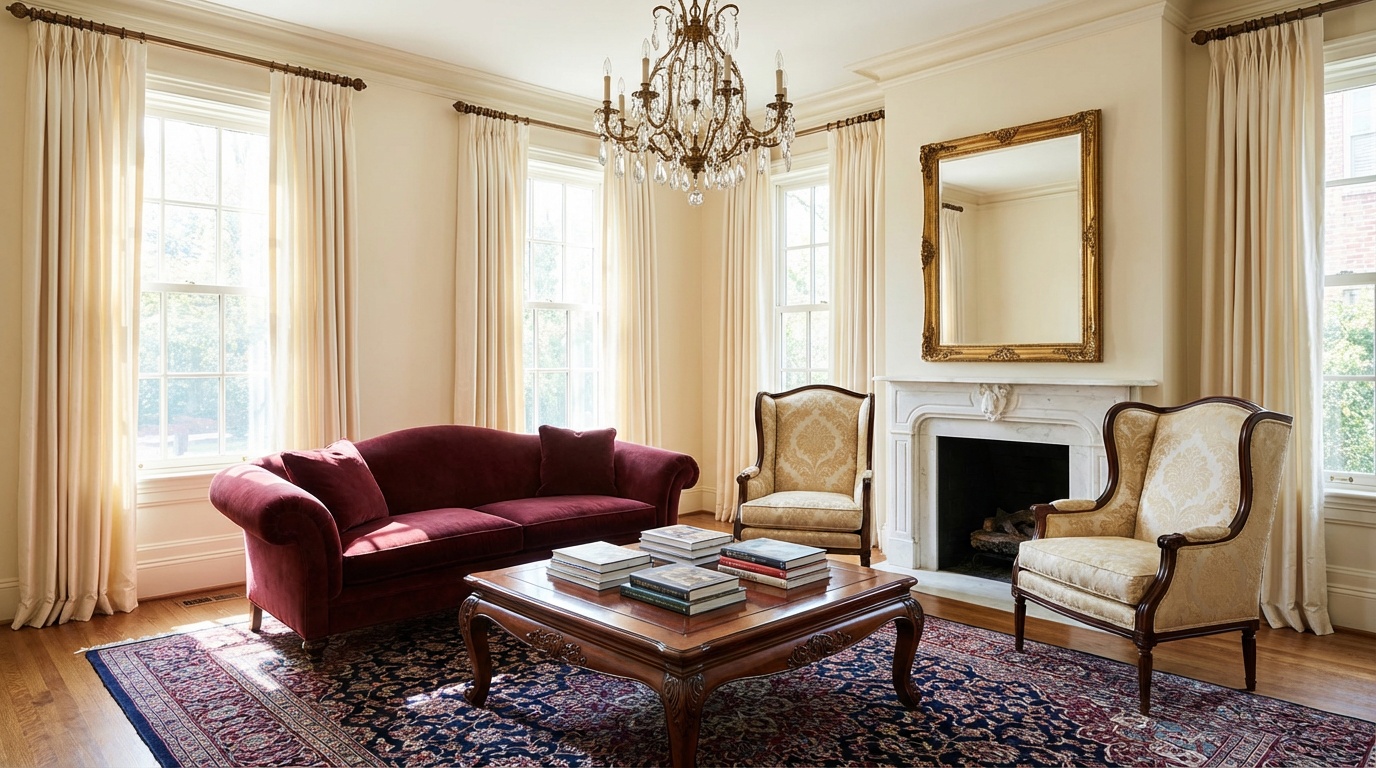
The foundation of any traditional living room begins with a substantial sofa upholstered in quality fabric. Look for pieces with rolled arms, turned legs, and either a camelback silhouette or a classic Lawson-style frame. The best traditional sofas feature eight-way hand-tied springs and hardwood frames—construction methods that ensure longevity. For upholstery, consider durable fabrics like velvet, damask, or tapestry weaves in rich jewel tones or classic neutrals. A sofa length of 84-96 inches works well for most living rooms, providing ample seating without overwhelming the space.
Complementing your sofa, you'll want a pair of matching armchairs or wing chairs to create conversational balance. Wing chairs, with their distinctive high backs and side panels originally designed to block drafts, are quintessentially traditional. Choose chairs upholstered in a coordinating but not identical fabric to your sofa—perhaps a patterned damask if your sofa is solid, or vice versa. The symmetry of matching chairs flanking a fireplace or positioned across from a sofa creates the visual harmony traditional design craves.
Wood furniture pieces are non-negotiable in traditional living rooms. A substantial coffee table in cherry, mahogany, or walnut with carved details or inlay work anchors your seating arrangement. Look for pieces with lower shelves for displaying coffee table books and decorative objects. Side tables or end tables should echo the coffee table's wood tone and level of ornamentation. Traditional living rooms often include additional wood pieces like a console table behind the sofa, a secretary desk in the corner, or built-in bookcases flanking the fireplace.
The fireplace serves as the natural focal point in traditional living rooms, even if it's non-functional. If you're fortunate enough to have an original mantel, preserve and restore it. If not, adding a wood or stone mantel surround instantly elevates the traditional quotient of your space. Flank the fireplace with matching sconces or candlesticks, and layer the mantel with a mirror, artwork, or decorative objects arranged symmetrically.
Textiles bring traditional living rooms to life through layering and pattern mixing. Start with area rugs—traditional Persian, Oriental, or Aubusson rugs in rich colors ground the space and define the seating area. Layer in throw pillows featuring damask, toile, stripes, and florals, ensuring patterns share a common color palette even as they vary in scale. Window treatments should be substantial: think floor-length drapery panels in silk or velvet, possibly topped with decorative valances or cornices. Don't shy away from fringe, tassels, and tiebacks—these details are traditional hallmarks.
Living rooms particularly benefit from traditional style because this aesthetic was essentially designed for formal receiving rooms and parlors. The emphasis on comfortable yet elegant seating arrangements that facilitate conversation aligns perfectly with how we use living rooms today. Traditional design's focus on creating a polished, put-together appearance makes your living room the showpiece of your home—the space that makes the best first impression and provides the most versatile backdrop for entertaining, relaxing, and everyday living.
Essential Elements for Your Traditional Living Room
Color Palettes & Combinations
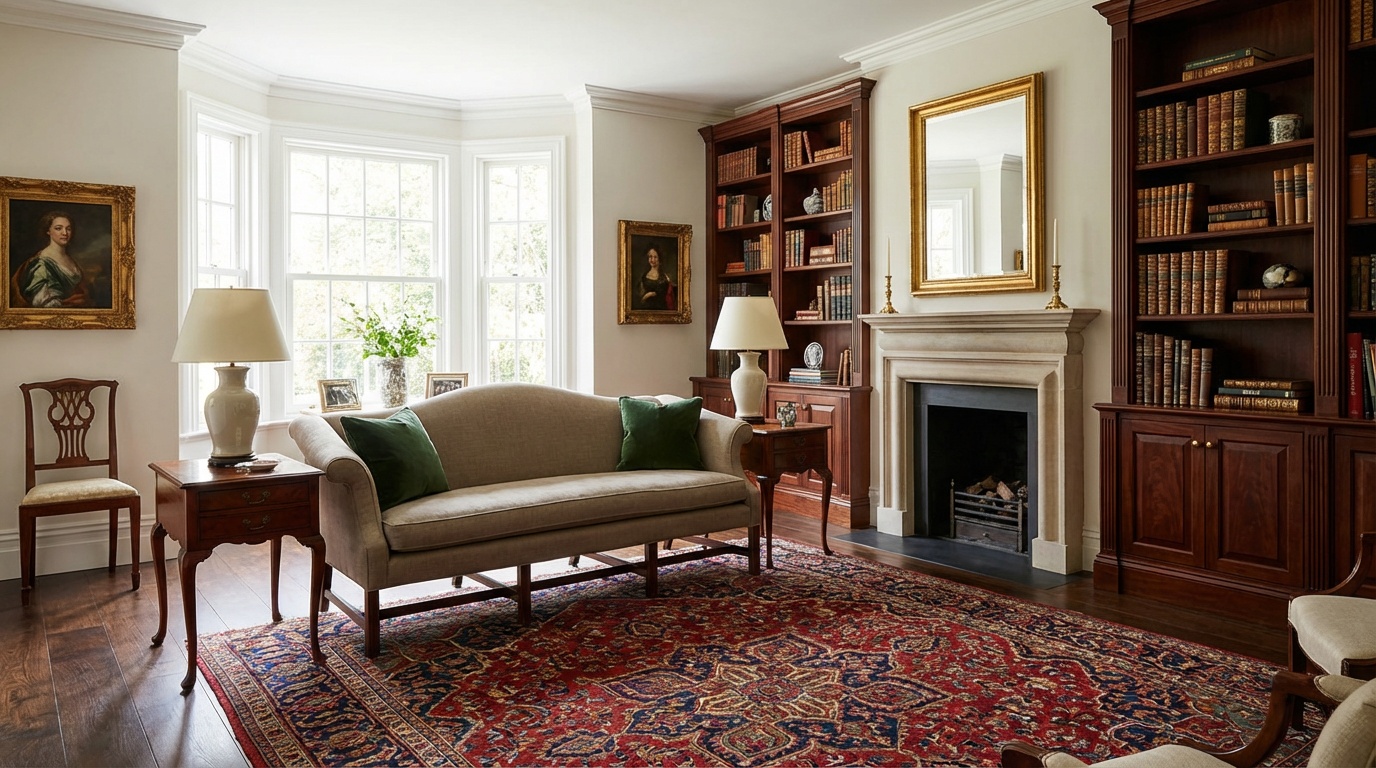
Traditional living rooms embrace rich, saturated colors that create warmth and depth. The primary palette typically centers on warm neutrals as a foundation: think creamy ivory, warm taupe, and soft greige for walls and larger upholstered pieces. These neutrals provide a sophisticated backdrop that allows wood tones and accent colors to shine without competing.
Layered into this neutral foundation, traditional design welcomes deep jewel tones: burgundy wine, forest green, navy blue, and golden amber. These colors appear in upholstery, drapery, and area rugs, adding richness without overwhelming the space. A traditional living room might feature a burgundy velvet sofa against taupe walls, with forest green drapery and a Persian rug that ties all the colors together. The key is using these saturated hues in substantial doses rather than timid touches—traditional design has confidence.
For accent colors, look to metallic golds and bronzes, terracotta, sage green, and dusty rose. These shades work beautifully in throw pillows, artwork, and decorative accessories. Gold particularly plays a starring role in traditional interiors, appearing in picture frames, lamp bases, mirror frames, and decorative objects. The warmth of gold complements the rich wood tones and jewel-toned fabrics perfectly.
Balancing neutrals with color requires thoughtful distribution. A good rule of thumb: 60% neutral, 30% primary accent color, 10% secondary accents. In practice, this might mean ivory walls and a taupe sofa (60%), navy drapery and a navy-patterned area rug (30%), and burgundy throw pillows plus gold accessories (10%). This proportion prevents the space from feeling either washed out or overly busy.
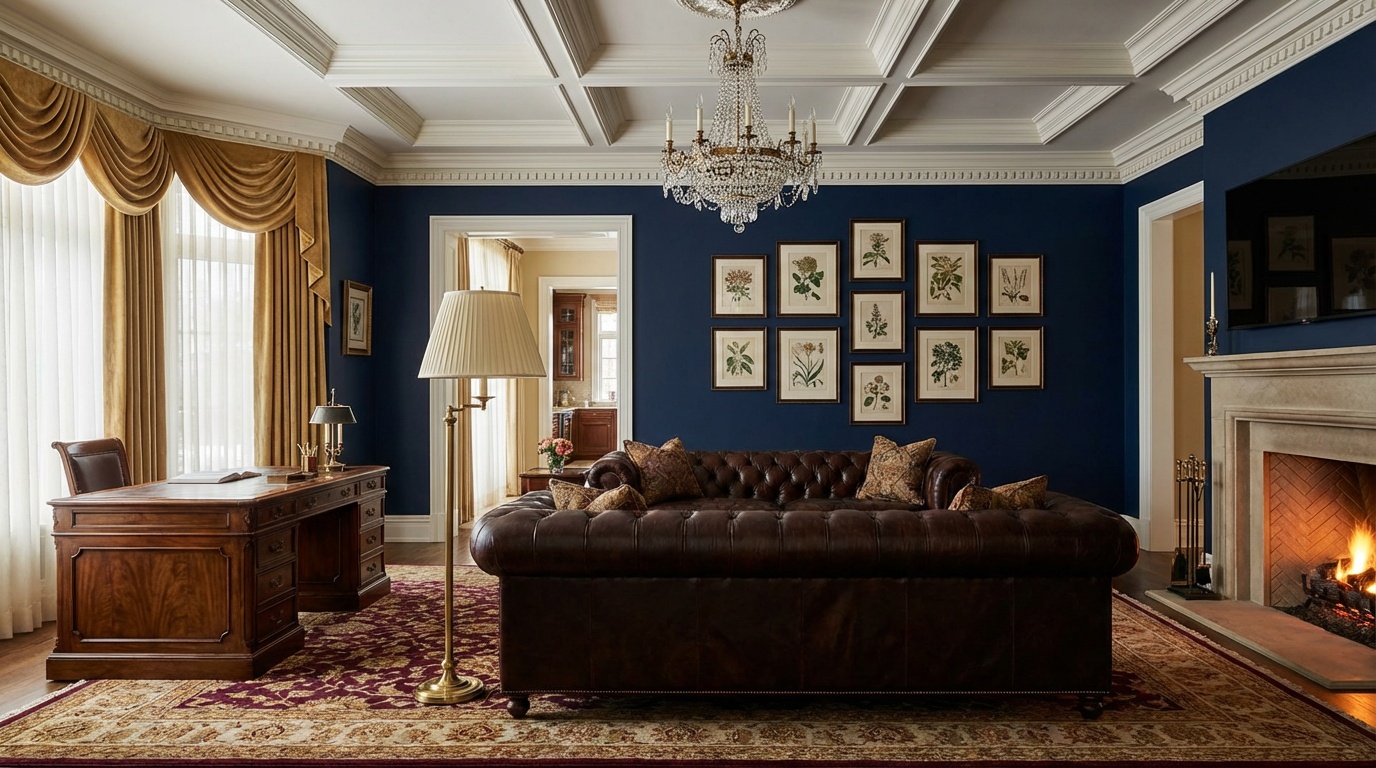
Wall colors in traditional living rooms tend toward warm, enveloping shades rather than stark whites. Consider colors like Benjamin Moore's "Revere Pewter," "Pale Oak," or for more drama, "Hale Navy" or "Hunter Green." These create a cocooning effect that makes the room feel intimate and refined. Furniture upholstery can go bolder—this is where your burgundies, forest greens, and golds shine. Decor and accessories provide opportunities for both pattern and additional color layers through artwork, books, ceramics, and fresh flowers.
Traditional color palettes adapt beautifully to seasons. In autumn and winter, lean into the deeper jewel tones with burgundy and forest green taking center stage, complemented by rich gold accents and heavier velvet textures. For spring and summer, lighten the palette by emphasizing the ivory and taupe neutrals, introducing more sage green and dusty rose, and swapping velvet for lighter-weight fabrics while maintaining the same color families. This seasonal rotation keeps your traditional living room feeling fresh without requiring a complete redesign.
Color Palettes & Combinations
Lighting & Ambiance
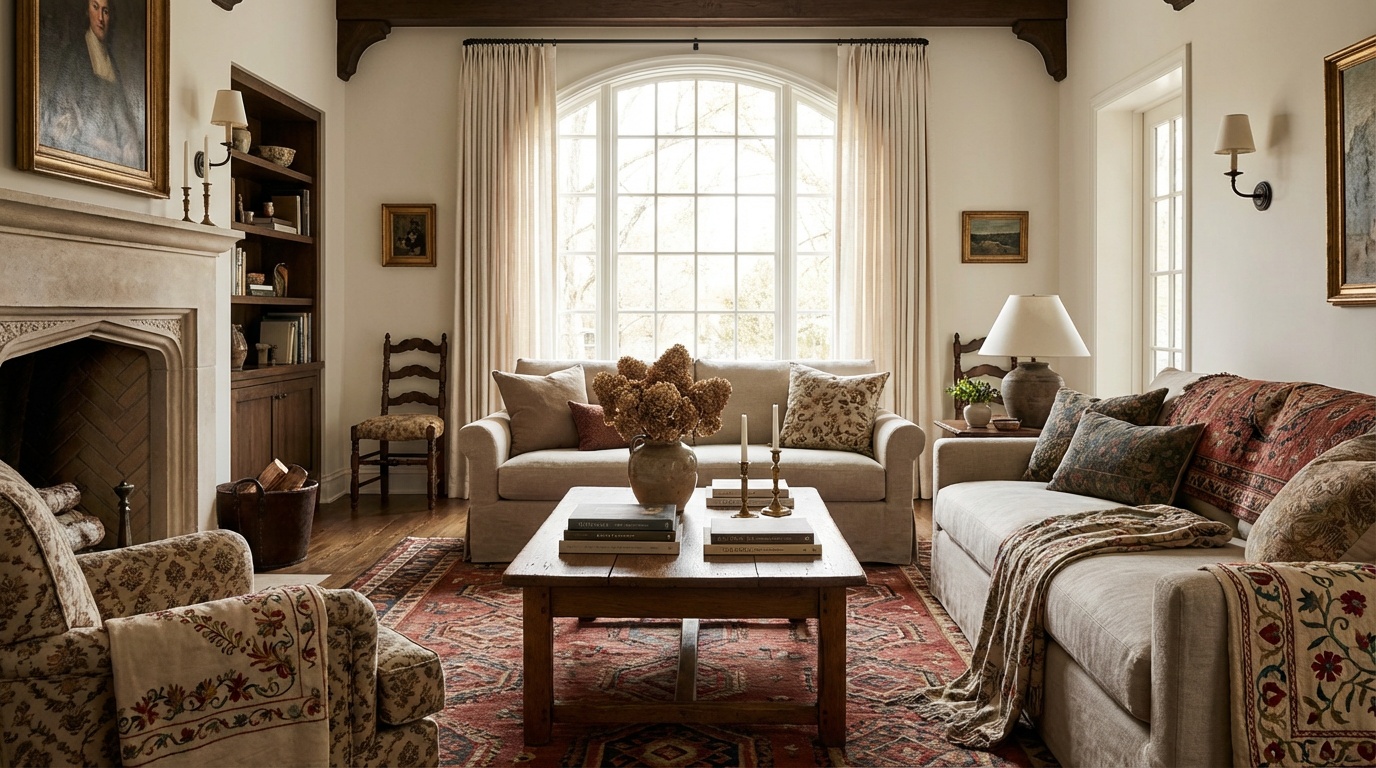
Natural lighting in traditional living rooms should feel filtered and gentle rather than stark and bright. If you have large windows—a blessing in any living room—dress them with substantial drapery that can be drawn to control light levels. Sheer underlayers or lace panels allow diffused natural light while maintaining privacy, creating the soft, romantic quality traditional interiors favor. Position seating to take advantage of natural light for reading without placing upholstered pieces in direct sun that might fade fabrics.
Artificial lighting in traditional spaces requires careful layering of multiple sources at different heights. Start with ambient lighting from a central chandelier or pendant fixture. Traditional chandeliers feature crystal, brass, or bronze finishes with candle-style lights—think Georgian or French-inspired designs with graceful arms and decorative elements. Size your chandelier appropriately: add the room's length and width in feet, and that number in inches should be your chandelier's diameter (a 12x14 room needs a 26-inch chandelier).
Task lighting comes from table lamps and floor lamps positioned near seating areas for reading and conversation. Traditional lamps feature ceramic, porcelain, or brass bases with fabric shades—often in cream or ivory to cast warm light. Candlestick-style lamps, urn-shaped bases, and lamps with decorative finials all work beautifully. Place matching lamps symmetrically on end tables flanking a sofa, or use a single substantial lamp on a console table. Aim for 3-way bulbs that allow you to adjust brightness based on the time of day and activity.
Accent lighting adds drama and highlights architectural features. Wall sconces flanking a fireplace or artwork create visual interest and additional light layers. Picture lights mounted above important paintings draw the eye and create gallery-quality presentation. If you have built-in bookcases, consider adding interior lighting to showcase treasured objects and books. Use LED strip lighting or small puck lights that won't generate heat near valuable items.
Creating the right ambiance through lighting placement means thinking about how the room functions at different times. During daytime, you might rely primarily on natural light supplemented by a single lamp. As evening approaches, turn on multiple lamps before the chandelier to create pools of warm light throughout the room. For entertaining, the chandelier on a dimmer provides overall illumination while accent lighting creates intimate pockets. The goal is avoiding harsh overhead lighting alone—traditional rooms should never feel like they're lit by a single ceiling fixture. Instead, aim for warm, layered light that makes everyone look good and creates inviting shadows and depth.
Dimmer switches are essential for traditional living rooms, allowing you to adjust lighting to match the mood. Install them on your chandelier, wall sconces, and even some lamp circuits. Choose warm white bulbs (2700K-3000K) rather than cool daylight tones—traditional spaces demand the golden glow of warm lighting that makes wood tones richer and creates a welcoming atmosphere.
Lighting & Ambiance
Furniture & Decor Shopping Guide
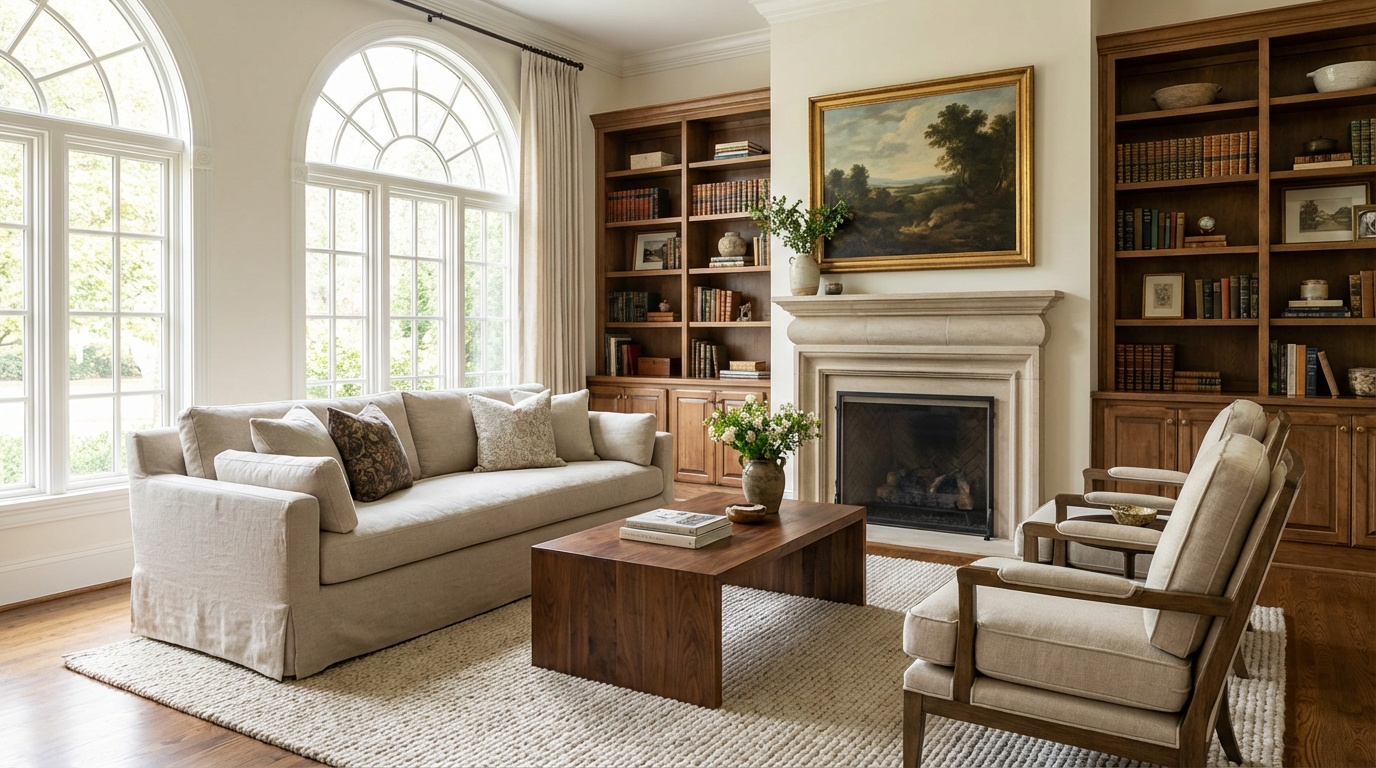
When building a traditional living room, certain pieces warrant investment for quality and longevity. Your sofa tops this list—expect to spend $2,000-5,000 for a well-constructed traditional sofa with hardwood frame and eight-way hand-tied springs. Brands like Ethan Allen, Hickory Chair, and Stickley offer heirloom-quality pieces built to last decades. Similarly, invest in your area rug; a genuine hand-knotted Persian or Oriental rug will appreciate in value and withstand generations of use. Budget $1,500-10,000+ depending on size and age.
Wood furniture pieces—your coffee table, end tables, and console—also deserve investment. Look for solid wood construction (not veneer over particleboard) with dovetail joinery in drawers and quality hardware. Estate sales, antique shops, and auction houses often yield better values than retail for traditional wood furniture. A genuine antique side table in mahogany might cost $300-800 but will outlast a $400 retail piece made from composite materials.
For budget-friendly alternatives, several retailers excel at traditional style at accessible price points. Pottery Barn, Ballard Designs, and Wayfair offer traditional-inspired furniture that captures the aesthetic without the investment price tag. Their upholstered pieces may not have eight-way hand-tied springs, but they feature traditional silhouettes and fabrics at $800-1,500 for sofas. Target's Threshold line and HomeGoods provide affordable traditional accessories—lamps, mirrors, and decorative objects that look far more expensive than they are.
Online shopping for traditional furniture works well at Chairish, 1stDibs, and Etsy for vintage and antique finds. These platforms connect you with dealers nationwide, dramatically expanding your options beyond local shops. Search for specific furniture styles ("Chippendale side table" or "camelback sofa") to find authentic pieces. For new traditional furniture with extensive customization, Joss & Main, Birch Lane, and Frontgate offer good selections with frequent sales.
Vintage and secondhand shopping is particularly rewarding for traditional design because the style embraces pieces with history. Hunt for vintage lamps at estate sales—rewire them for safety and add a new shade for a fraction of retail cost. Antique mirrors, artwork in gilt frames, brass candlesticks, and ceramic ginger jars all enhance traditional living rooms and cost significantly less secondhand. Facebook Marketplace and Craigslist can yield incredible finds if you're patient and quick to respond to new listings.
DIY projects that achieve traditional style affordably include:
- Reupholstering thrift store chairs in traditional fabrics like damask or velvet
- Building a faux fireplace surround from lumber and molding to create a focal point
- Creating custom drapery panels from fabric remnants (traditional patterns often go on clearance)
- Painting furniture in traditional colors and distressing lightly for an aged appearance
- Framing vintage botanical prints or book pages in thrifted gold frames for gallery walls
When shopping, prioritize pieces in this order: sofa, area rug, coffee table, lighting, window treatments, then accessories. This ensures your foundational pieces are solid before adding decorative layers. Many designers recommend living with the basics for a few weeks before adding accessories—you'll better understand what the room needs once you're using the space daily.
Furniture & Decor Shopping Guide
Common Mistakes to Avoid
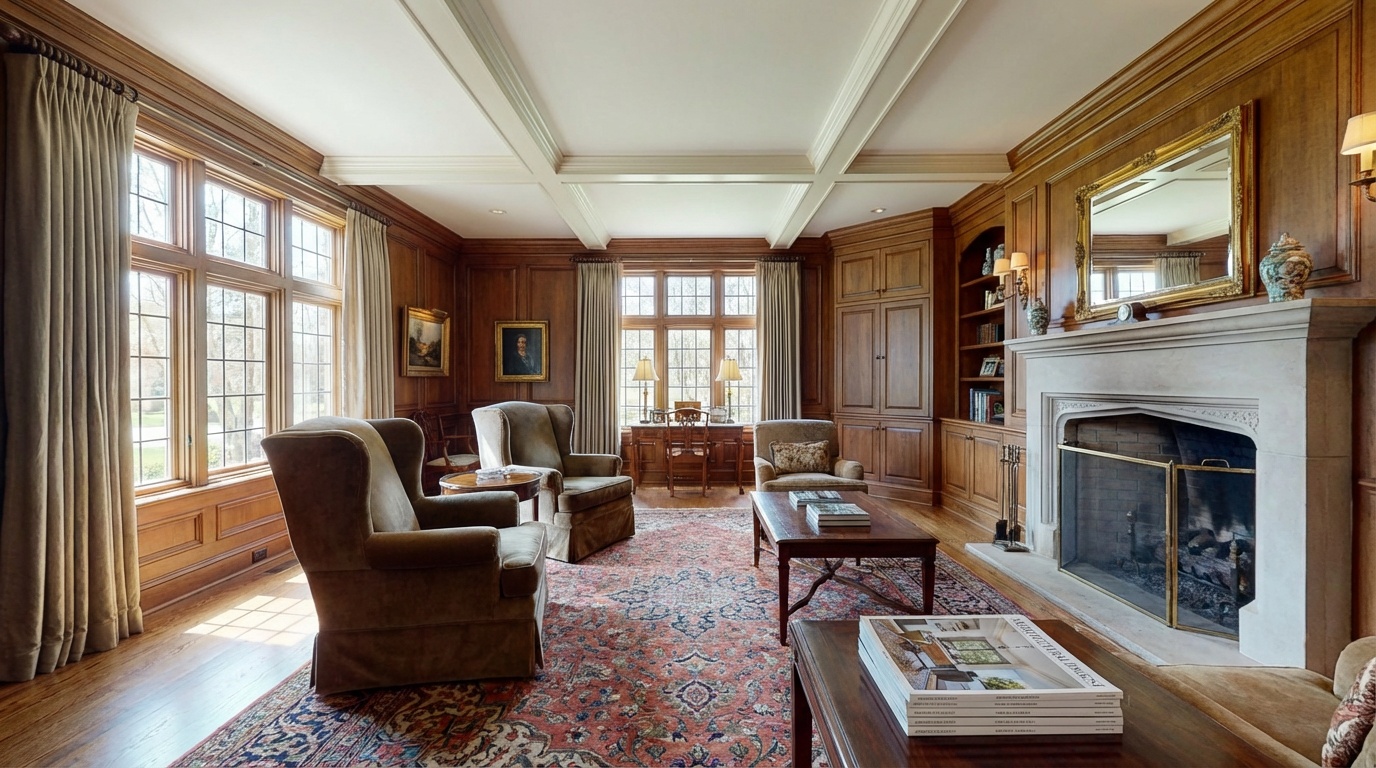
The most frequent mistake in traditional living room design is creating a museum rather than a living space. Traditional doesn't mean untouchable or overly formal to the point of discomfort. If your living room feels like a space you can't actually use—where you're afraid to sit on the sofa or set down a drink—you've gone too far. The fix: incorporate practical elements like ottomans that serve as coffee tables, machine-washable slipcovers for high-use pieces, and strategically placed side tables for drinks and remotes. Traditional style should enhance your life, not restrict it.
Another common error is matching everything too precisely, creating a room that looks like it came from a single catalog page. Traditional design thrives on collected-over-time layering, not matchy-matchy furniture sets. When everything coordinates too perfectly, the space lacks soul and visual interest. The solution: mix wood tones rather than matching them exactly, combine patterns in the same color family but different scales, and incorporate pieces from different eras and sources. Your grandmother's side table can sit beautifully next to a new sofa—that's the magic of traditional design.
Skimping on window treatments undermines traditional style faster than almost anything else. Bare windows or cheap, flimsy curtains read as unfinished regardless of how beautiful your furniture is. Traditional living rooms require substantial drapery—floor-length panels in quality fabrics, properly hung from ceiling height to elongate the room. If custom drapery exceeds your budget, ready-made panels from Pottery Barn or West Elm in traditional fabrics work well. Add curtain rings and decorative rods in bronze or brass, and ensure panels puddle slightly on the floor or just kiss it for the right proportions.
The fourth mistake is ignoring scale and proportion, particularly in smaller living rooms. Oversized furniture overwhelms a modest space, while too-small pieces look lost in a grand room. Traditional furniture tends toward substantial sizing, so adaptation is necessary for smaller spaces. Choose a loveseat instead of a full sofa, opt for armless chairs that provide seating without bulk, and select a coffee table with an open lower shelf rather than solid sides to maintain visual flow. Use mirrors strategically to expand the sense of space—a large mirror over the fireplace or behind a console table reflects light and creates depth.
Finally, neglecting the ceiling represents a missed opportunity in traditional design. Historical interiors featured decorative ceiling treatments—coffered ceilings, ceiling medallions, crown molding—that added architectural interest overhead. Modern traditional living rooms should acknowledge the fifth wall. Add crown molding if your room lacks it (even simple profiles make an impact), install a ceiling medallion around your chandelier, or paint the ceiling a shade darker than walls for a cocooning effect. These details signal attention to traditional design principles and elevate the entire space.
Signs your traditional living room is missing the mark include: it feels cold rather than welcoming, patterns clash rather than coordinate, the space looks cluttered rather than collected, or it feels dated rather than timeless. Over-styling manifests as too many accessories competing for attention, while under-styling leaves the room feeling bare and unfinished. The sweet spot features edited groupings of meaningful objects, negative space for the eye to rest, and enough pattern and texture to create visual interest without chaos.
Common Mistakes to Avoid
Styling for Different Budgets & Spaces
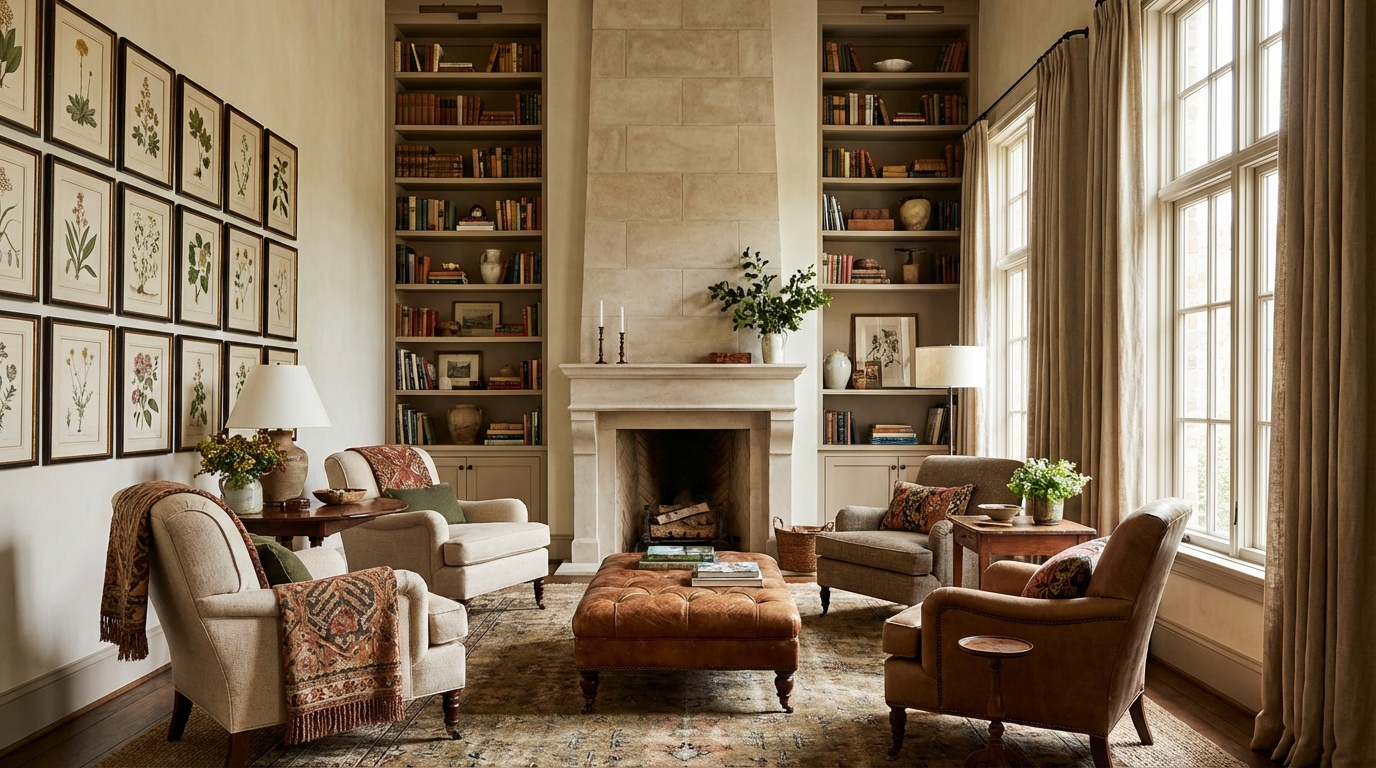
Small living rooms can absolutely embrace traditional style with smart adaptations. The key is editing for scale while maintaining traditional elements. Choose a loveseat (60-72 inches) instead of a full sofa, or opt for a traditional-style apartment sofa with rolled arms but a slimmer profile. Use a pair of armless slipper chairs instead of bulky wing chairs—they provide seating without visual weight. Select a glass-top coffee table with traditional carved wood base to maintain style while creating visual openness.
In small spaces, vertical emphasis helps traditional style work. Draw the eye upward with floor-to-ceiling drapery, tall bookcases, and artwork hung higher on walls. Use wallpaper on a single accent wall to add traditional pattern without overwhelming the room. Mirrors become essential—place a large mirror opposite a window to reflect light and double the sense of space. Choose furniture with exposed legs rather than skirted pieces to show more floor, making the room feel larger.
For renters who can't make permanent changes, traditional style remains achievable through furniture and textiles. Invest in a quality traditional sofa you'll take with you, and build around it with portable pieces. Use area rugs to define the space and add traditional pattern—they'll move with you. Removable wallpaper in traditional patterns like damask or toile creates impact without violating lease terms. Focus your budget on furniture and accessories rather than built-ins or permanent architectural changes.
Budget tier transformations help you plan your traditional living room investment:
Under $500:
- Slipcover existing sofa in traditional fabric ($150-200)
- Add traditional throw pillows in damask and velvet ($80-100)
- Purchase area rug from RugsUSA or Wayfair ($150-200)
- Thrift lamps and rewire; add new shades ($80-100)
- DIY drapery from fabric remnants ($50-80)
$500-2,000:
- Purchase quality traditional coffee table ($300-500)
- Invest in genuine Persian or Oriental rug ($400-800)
- Buy ready-made traditional drapery panels and hardware ($200-300)
- Add new table lamps from Pottery Barn or Ballard Designs ($150-250)
- Purchase wing chair or traditional armchair secondhand ($300-500)
- Accessories: mirrors, artwork, decorative objects ($150-200)
$2,000+:
- Invest in quality traditional sofa ($2,000-3,500)
- Purchase hand-knotted area rug ($1,500-3,000)
- Custom window treatments professionally made ($800-1,500)
- Quality wood coffee and end tables ($800-1,200)
- Traditional chandelier or pendant ($400-800)
- Pair of upholstered armchairs ($1,200-2,000)
- Professional accessories and styling ($500-1,000)
Phasing your transformation over time makes traditional style accessible regardless of budget. Start with the foundation: sofa and area rug (months 1-3). These anchor pieces set the tone for everything else. Next, add essential tables and lighting (months 4-6)—you need surfaces and light to function comfortably. Then layer in seating and window treatments (months 7-9), followed by accessories and artwork (months 10-12). This approach spreads costs while allowing you to live with pieces and understand what the room truly needs.
As you collect pieces over time, maintain a vision board or design file with paint chips, fabric swatches, and inspiration images. This ensures new purchases coordinate with existing pieces and your overall vision. Traditional style's timeless nature means pieces purchased years apart will still work together if they share the same design language.
Styling for Different Budgets & Spaces
Bringing Your Vision to Life
Before investing in furniture, paint, or decor, the smartest step is visualizing your traditional living room transformation. This prevents costly mistakes and helps you commit to design decisions with confidence. Traditionally, this meant hiring an interior designer to create renderings or attempting to imagine how pieces would look together—both imperfect solutions.
Today's technology offers a better approach. RoomStudioAI empowers you to see your living room transformed into traditional style instantly, without any design experience required. Simply upload a photo of your current living room, select "traditional" as your desired style, and watch as AI-powered visualization shows you how traditional design elements would look in your specific space. This isn't generic inspiration—it's your actual room reimagined with traditional furniture, colors, and decor.
The advantage of visualization tools like RoomStudioAI is risk-free experimentation. Wondering if burgundy walls would overwhelm your small living room? Test it virtually before buying paint. Curious whether a large Persian rug would work with your existing furniture? See it in your space before spending thousands. Unsure if traditional style suits your home's architecture? Upload photos and find out instantly. This eliminates the guesswork and buyer's remorse that often accompanies interior design projects.
RoomStudioAI is particularly valuable for traditional design because this style requires careful coordination of multiple elements. The tool shows how wood tones, upholstery fabrics, wall colors, and accessories work together in your specific lighting and architectural context. You'll see whether your vision translates to reality before making any purchases, saving time, money, and frustration.
Getting started takes minutes. Visit RoomStudioAI's website and upload a clear photo of your living room from a corner angle that shows as much of the space as possible. Select "traditional" from the style options, and within seconds, you'll receive a professionally-rendered visualization of your traditional living room transformation. The free tool lets you experiment with different variations and approaches, helping you refine your vision before committing to any changes.
Once you've visualized your ideal traditional living room and refined your plan, create an action list prioritizing changes from most to least impactful. Start with the elements that make the biggest visual difference—typically paint, major furniture pieces, and window treatments—then work toward smaller details. Keep your RoomStudioAI visualization as your north star, referencing it when shopping to ensure purchases align with your vision.
Remember that creating a beautiful traditional living room is a journey, not a destination. The most authentic traditional spaces evolve over years as you discover perfect pieces, inherit family treasures, and refine your personal interpretation of the style. Give yourself permission to take time, make thoughtful choices, and enjoy the process of creating a living room that honors timeless design principles while reflecting your unique story.
Your traditional living room awaits—a space of warmth, elegance, and enduring beauty that will welcome you home for years to come. Start visualizing your transformation today with RoomStudioAI's free design tool, and take the first step toward the classic living room you've always imagined.