What Defines Scandinavian Style
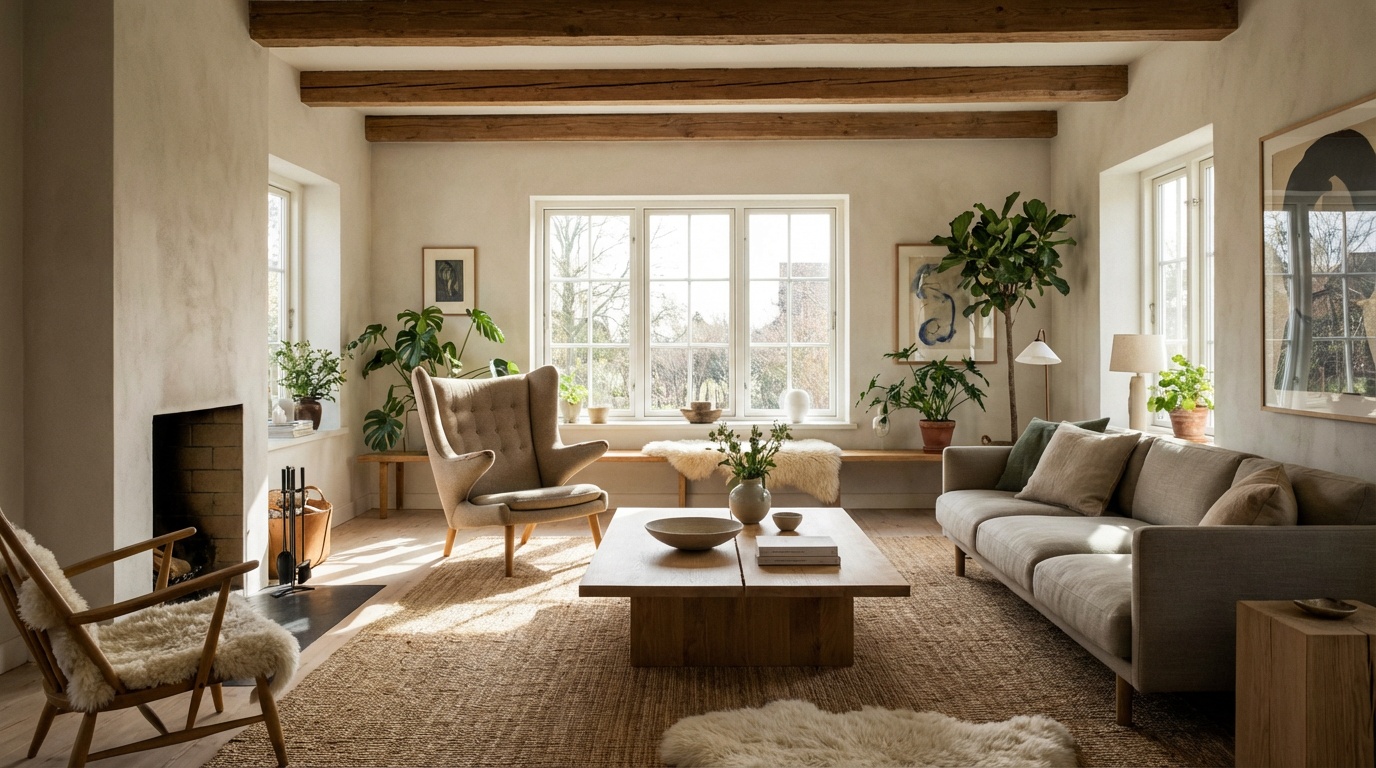
Scandinavian design emerged in the 1950s from the Nordic countries of Denmark, Norway, Sweden, Finland, and Iceland, born out of a democratic design movement that believed beautiful, functional design should be accessible to everyone, not just the wealthy. This philosophy, known as "democratic design," fundamentally shaped the aesthetic we know and love today—one that prioritizes simplicity, utility, and beauty in equal measure.
The harsh Nordic climate and long, dark winters heavily influenced this design approach. With limited daylight for much of the year, Scandinavian designers became masters at maximizing natural light, incorporating reflective surfaces, and creating warm, inviting spaces that combat the cold and darkness outside. The result is an interior style that feels both airy and cozy—a seemingly contradictory combination the Danes call "hygge" (pronounced hoo-gah), which roughly translates to a feeling of contentment and well-being through enjoying life's simple pleasures.
Today, Scandinavian style resonates with modern homeowners because it addresses contemporary concerns perfectly. In our increasingly cluttered, fast-paced world, the minimalist approach offers visual calm and mental clarity. The emphasis on sustainability and quality over quantity aligns with growing environmental consciousness. The focus on functionality appeals to those living in smaller urban spaces where every square foot matters. And the warm, human-centered approach provides a welcome antidote to the cold, sterile minimalism that dominated earlier decades.
What distinguishes Scandinavian design from similar minimalist styles is its inherent warmth. Unlike stark, austere minimalism, Scandinavian interiors embrace natural textures, organic materials, and layered textiles that create coziness. Where Japanese minimalism might feel zen and meditative, Scandinavian design feels lived-in and welcoming. The color palette leans toward soft, muted tones rather than pure whites and blacks, and there's always room for personality through carefully curated decorative objects, artwork, and plants.
What Defines Scandinavian Style
Essential Elements for Your Scandinavian Living Room
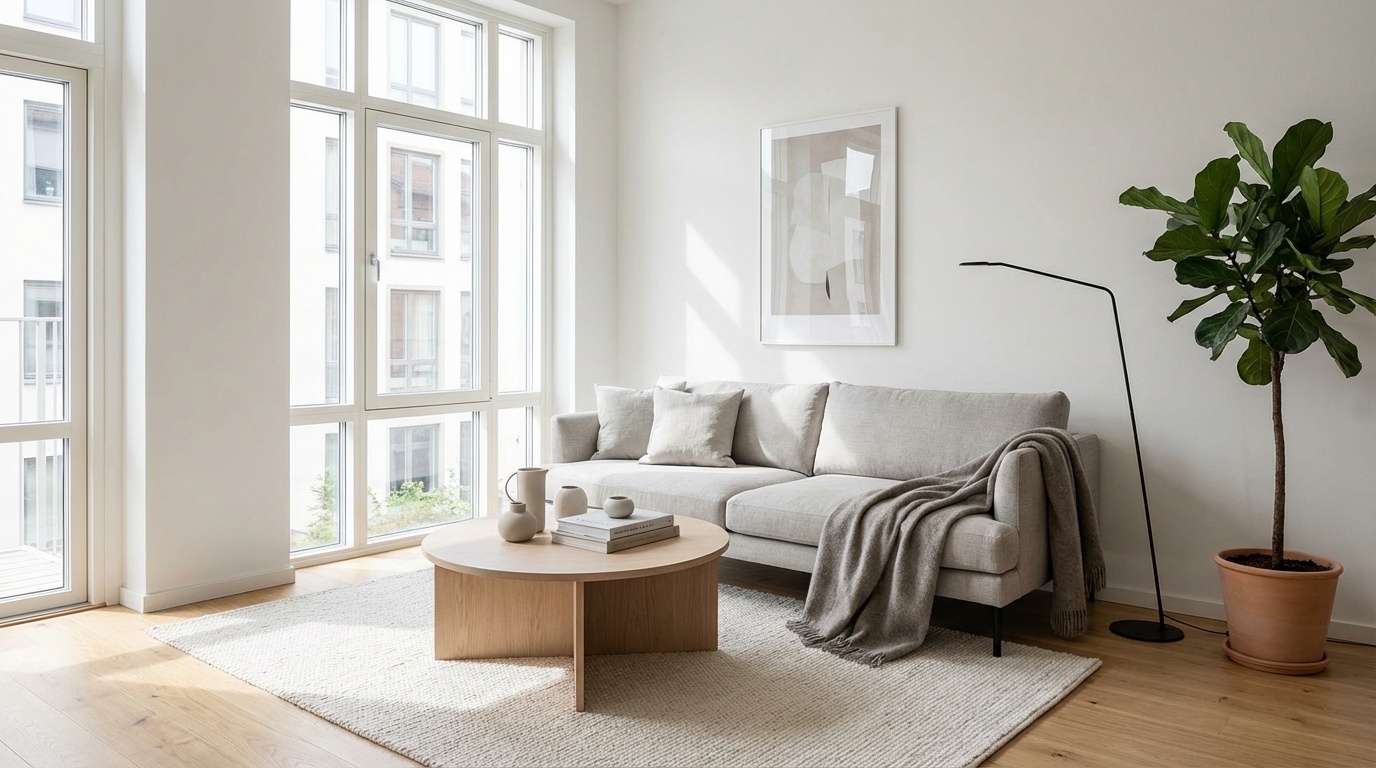
Creating an authentic Scandinavian living room starts with selecting the right foundational pieces. The sofa is your most important investment—look for clean-lined designs with low profiles, tapered wooden legs, and neutral upholstery in linen, cotton, or wool. A classic three-seater in light grey, oatmeal, or soft beige serves as the perfect anchor. Avoid overstuffed, bulky sofas; Scandinavian design favors streamlined silhouettes that don't overwhelm the space.
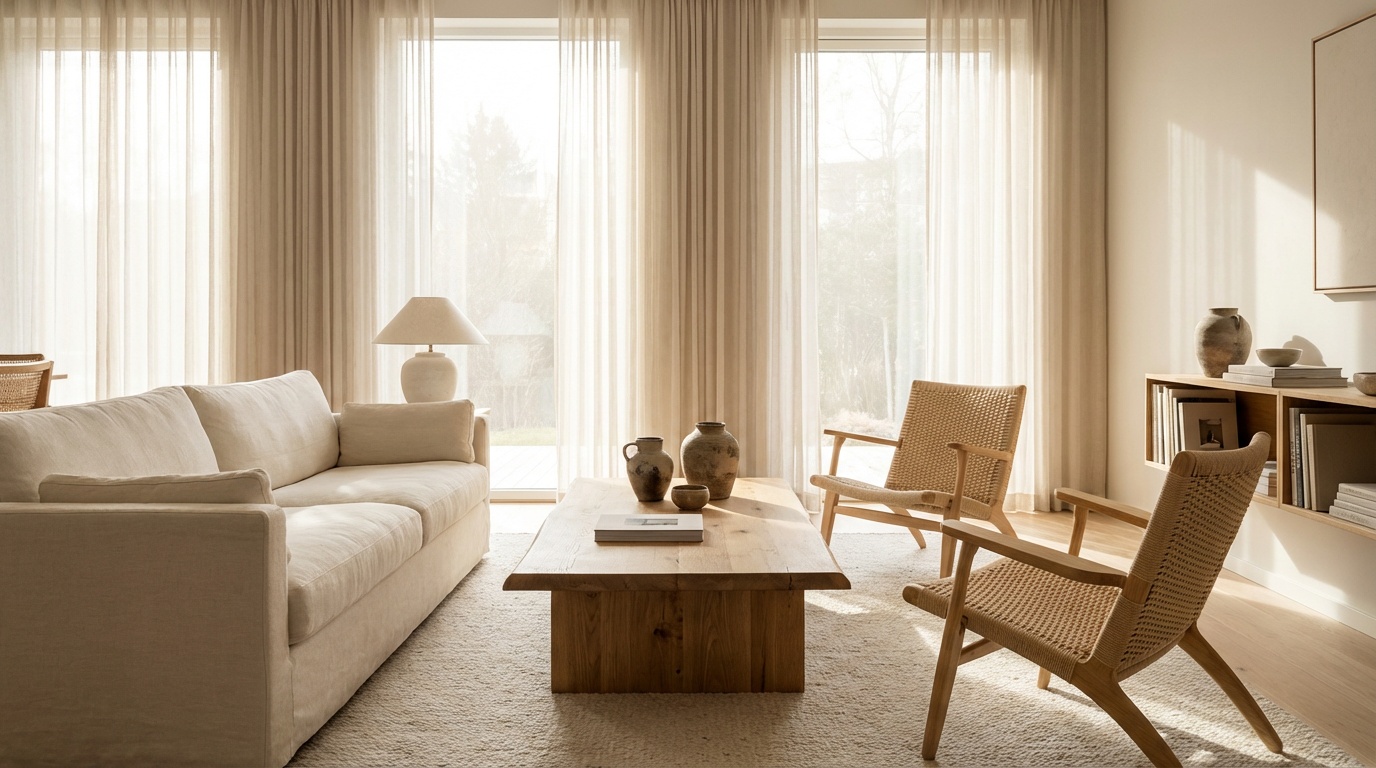
A coffee table in light wood is non-negotiable. Opt for designs in pale oak, ash, or birch with simple, functional forms—whether that's a round table with splayed legs, a rectangular design with clean edges, or a sculptural piece that doubles as art. The wood should have a natural, matte finish that showcases the grain rather than a high-gloss treatment.
For additional seating, consider a lounge chair or two in molded plywood, bentwood, or upholstered fabric. Iconic pieces like the Egg Chair, Swan Chair, or Wishbone Chair exemplify Scandinavian design, but many affordable alternatives capture the same aesthetic. The key is finding chairs with organic curves, visible wood elements, and a sense of sculptural beauty.
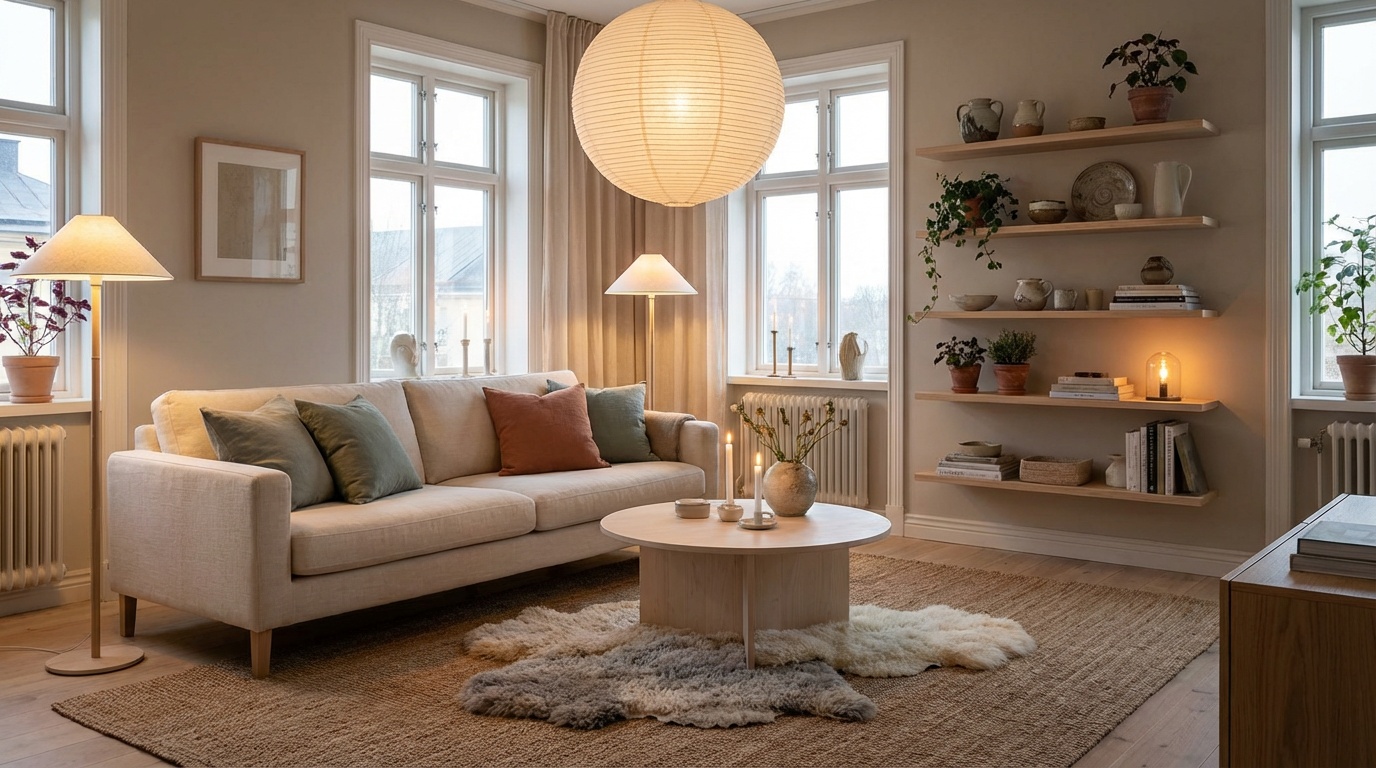
Open shelving or a minimalist bookshelf in light wood provides both storage and display space without visual heaviness. Choose designs with clean horizontal and vertical lines, avoiding ornate details or dark, imposing structures. These pieces should feel like they're barely there, allowing your books, plants, and decorative objects to take center stage.
Materials matter enormously in Scandinavian design. Light woods—particularly oak, ash, beech, and birch—dominate furniture choices. Metals should be minimal and matte, typically in brass, copper, or black steel for light fixtures and hardware. Fabrics lean heavily toward natural fibers: linen for curtains and throw pillows, wool for blankets and rugs, cotton for upholstery, and sheepskin or cowhide for texture and warmth.
The living room benefits particularly well from Scandinavian principles because it's where we gather, relax, and recharge. The uncluttered aesthetic creates a sense of spaciousness even in smaller rooms, the neutral palette provides a calming backdrop for daily life, and the emphasis on comfortable, quality seating makes the space genuinely inviting rather than just visually appealing.
Essential Elements for Your Scandinavian Living Room
Color Palettes & Combinations
The quintessential Scandinavian color palette begins with a foundation of soft whites and warm greys. Think "cloud white" rather than stark white, "dove grey" rather than charcoal, and "warm linen" for those creamy neutral tones. These colors should have subtle warmth to them—cool, blue-toned whites can feel sterile, while warmer whites with hints of cream, beige, or grey create the welcoming atmosphere Scandinavian design is known for.
Light wood tones function as a neutral in Scandinavian spaces, adding warmth without actual color. "Pale honey oak," "natural ash," and "whitewashed pine" bring organic warmth that prevents the space from feeling too cold or clinical. These wood tones should appear throughout the room in flooring, furniture, and accessories.
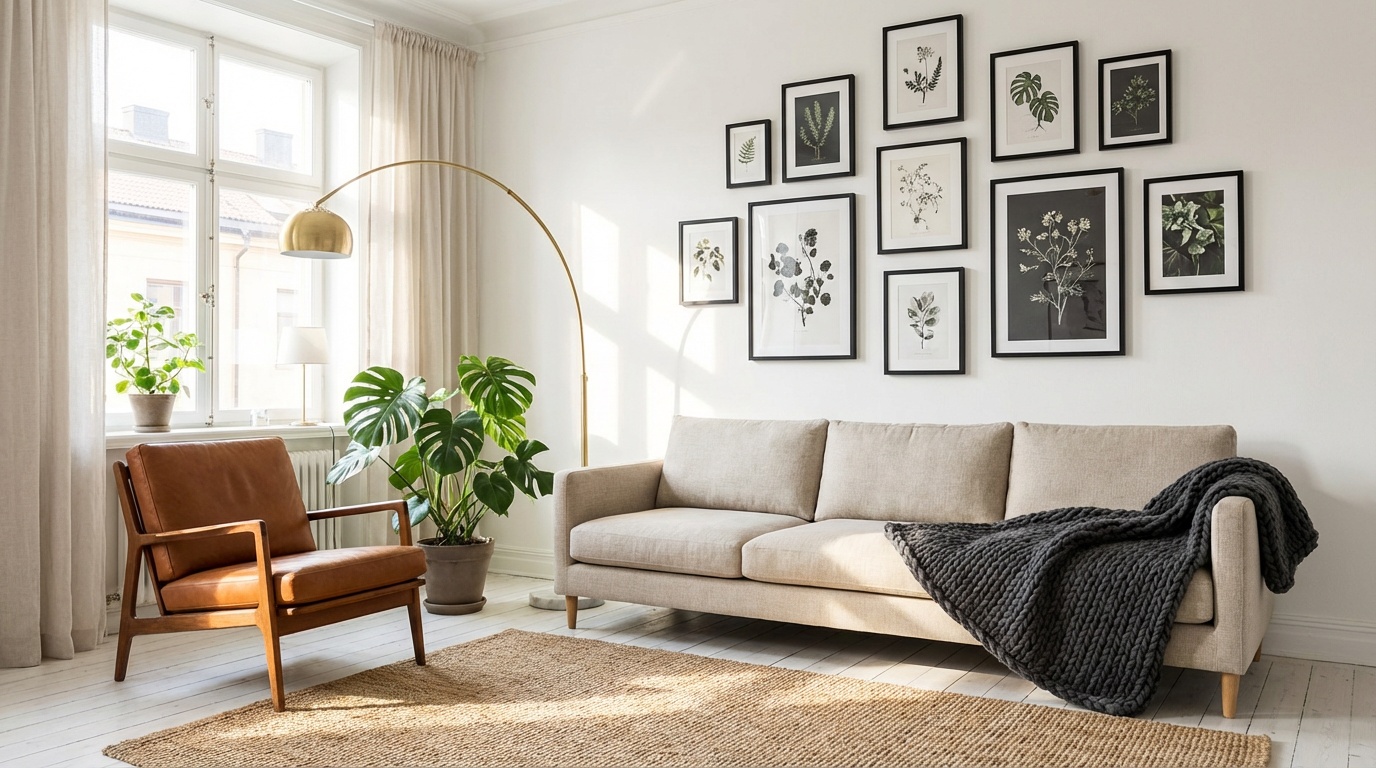
For subtle depth, incorporate muted earth tones like "dusty sage," "soft terracotta," "warm taupe," and "misty blue-grey." These colors appear in textiles, artwork, and smaller furniture pieces, adding visual interest while maintaining the serene atmosphere. The key is choosing desaturated versions of these colors—nothing too bright or bold.
Accent colors in Scandinavian design tend toward nature-inspired hues: deep forest green, warm rust, soft blush pink, or muted mustard yellow. These appear sparingly in throw pillows, blankets, artwork, or a single accent chair. The 80-20 rule works well here: 80% neutrals and light tones, 20% muted accent colors.
When distributing color throughout your living room, walls should remain in the soft white to warm grey family, creating a light-reflective backdrop. Large furniture pieces stay neutral—your sofa, coffee table, and shelving in whites, greys, beiges, and natural wood. Textiles and accessories provide your opportunity for those muted accent colors and deeper tones that add personality and coziness.
Scandinavian design does shift slightly with the seasons. Winter palettes lean heavier into warm greys, deep greens, and rich textures—think chunky knit blankets in charcoal, evergreen velvet pillows, and candlelight. Summer palettes lighten up with more whites, pale blues, and natural linens, creating an airier, breezier feel. This seasonal flexibility keeps the space feeling fresh year-round without requiring major overhauls.
Color Palettes & Combinations
Lighting & Ambiance
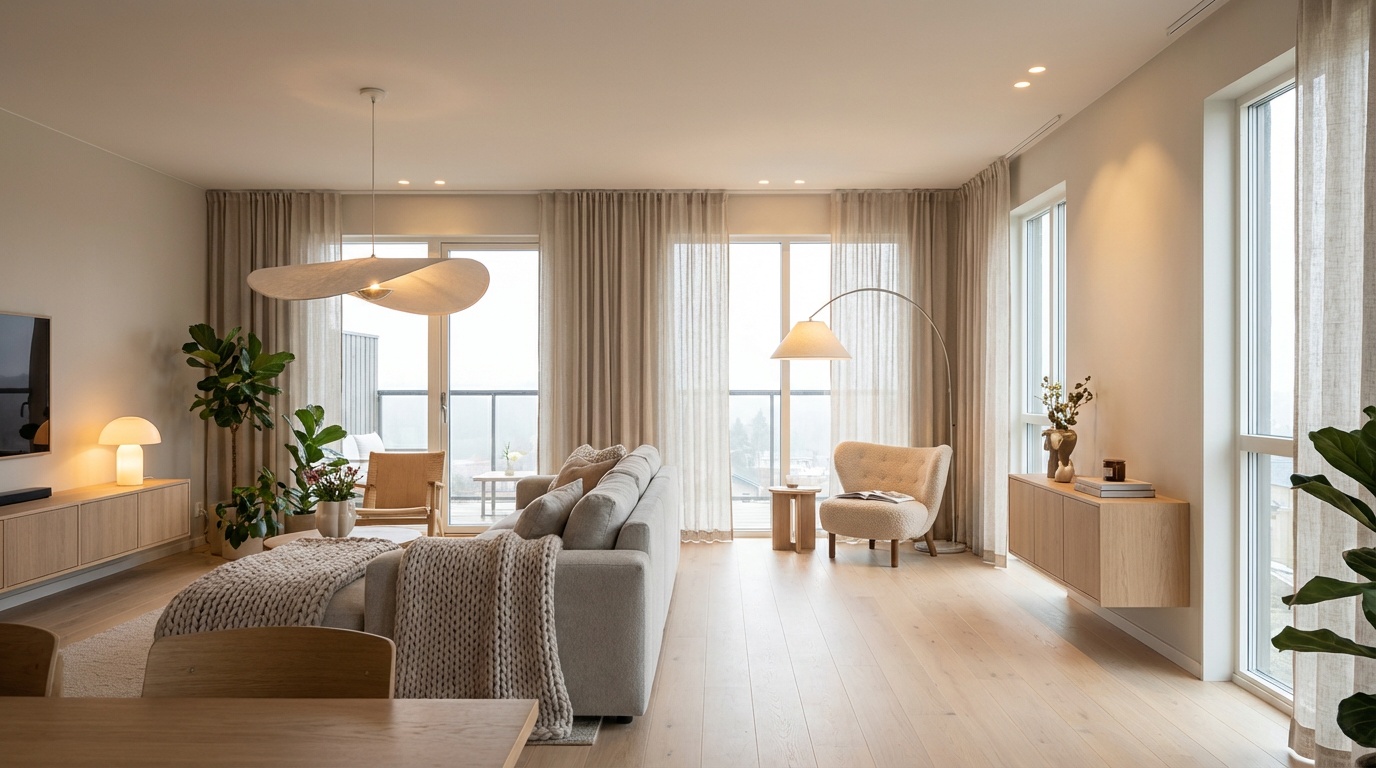
Given Scandinavia's limited daylight, maximizing natural light is paramount. Keep window treatments minimal—sheer linen curtains or simple roller shades that can be fully opened during daylight hours work best. Avoid heavy drapes, dark colors, or anything that blocks precious sunlight. If privacy isn't a concern, consider leaving windows completely bare.
Position your furniture to take advantage of natural light rather than blocking it. Place your sofa and chairs to face windows when possible, and avoid placing tall furniture pieces directly in front of light sources. Mirrors strategically placed opposite or adjacent to windows will bounce light deeper into the room, effectively doubling your natural illumination.
For artificial lighting, Scandinavian design employs a layered approach that creates warmth and flexibility. Ambient lighting comes from ceiling fixtures—think simple pendant lights with sculptural shapes in white, brass, or black metal, or flush-mount fixtures with clean lines. Avoid ornate chandeliers or anything too decorative; the fixture itself should be beautiful in its simplicity.
Task lighting includes floor lamps and table lamps positioned where you actually need light—beside the sofa for reading, next to a chair, or on a sideboard. Arc floor lamps with adjustable heads are particularly popular in Scandinavian interiors, as are tripod floor lamps in wood and metal. Table lamps should have simple bases in ceramic, wood, or metal with linen or paper shades.
Accent lighting creates atmosphere and highlights specific features. This might include LED strips under shelving, picture lights for artwork, or candles (lots and lots of candles). Scandinavians are among the world's highest per-capita candle consumers, and for good reason—candlelight creates instant hygge.
The key to Scandinavian lighting is using warm white bulbs (2700-3000K) rather than cool white or daylight bulbs. This warm glow mimics candlelight and creates a cozy atmosphere, especially important during dark winter months. Install dimmers wherever possible to adjust lighting levels throughout the day and create different moods.
Fixture styles should be sculptural yet simple—think of lighting as functional art. The PH lamp series, Nelson Bubble lamps, and simple paper lanterns all exemplify Scandinavian lighting design. Materials typically include metal, wood, paper, glass, and fabric, with clean lines and organic shapes taking precedence over ornate details.
Lighting & Ambiance
Furniture & Decor Shopping Guide
When investing in Scandinavian style, certain pieces deserve your budget. A quality sofa in a timeless silhouette and durable natural fabric will serve you for decades—this is worth splurging on. Similarly, a solid wood coffee table and iconic lounge chair are investment pieces that actually appreciate in value if you choose well-designed classics.
For budget-friendly alternatives, IKEA remains the obvious choice for accessible Scandinavian design. Their STOCKHOLM, LISABO, and EKENÄSET collections offer excellent quality-to-price ratios. Article, Joybird, and West Elm provide mid-range options that capture Scandinavian aesthetics without designer price tags. For specific pieces, the IKEA KARLSTAD sofa (or its successor) offers clean lines at a fraction of designer prices, while their LACK coffee table in white or birch veneer provides simple functionality.
Online retailers like Hem, Muuto, and HAY offer authentic Scandinavian design at various price points. Burrow and Floyd provide modular, minimalist furniture that ships flat and works beautifully in Scandinavian spaces. For lighting, IKEA's RANARP and HEKTAR collections offer industrial-Scandinavian vibes affordably, while Schoolhouse Electric and Rejuvenation provide higher-end options.
The vintage and secondhand market is treasure trove for Scandinavian design. Mid-century pieces from the 1950s-1970s—the golden age of Scandinavian design—can be found at estate sales, vintage shops, and online marketplaces. Look for teak furniture from Danish makers, bent plywood chairs, and ceramic table lamps. Even if pieces need refinishing, solid wood furniture from this era was built to last and can be restored to beauty.
DIY projects can help achieve the look affordably. Painting existing furniture in soft white or warm grey instantly Scandinavian-izes it. Sewing simple linen pillow covers in neutral tones costs a fraction of buying them. Creating a gallery wall with affordable prints in simple frames adds personality without breaking the bank. Macramé plant hangers and simple wooden shelves are weekend projects that add authentic Scandinavian touches.
For textiles, H&M Home and Zara Home offer affordable linen and cotton textiles in perfect Scandinavian colors. Parachute and Cultiver provide higher-quality linen options. Rugs from Ruggable, IKEA, and Lorena Canals work well for budget-conscious shoppers, while Armadillo & Co and The Citizenry offer investment-worthy pieces in natural fibers.
Furniture & Decor Shopping Guide
Common Mistakes to Avoid
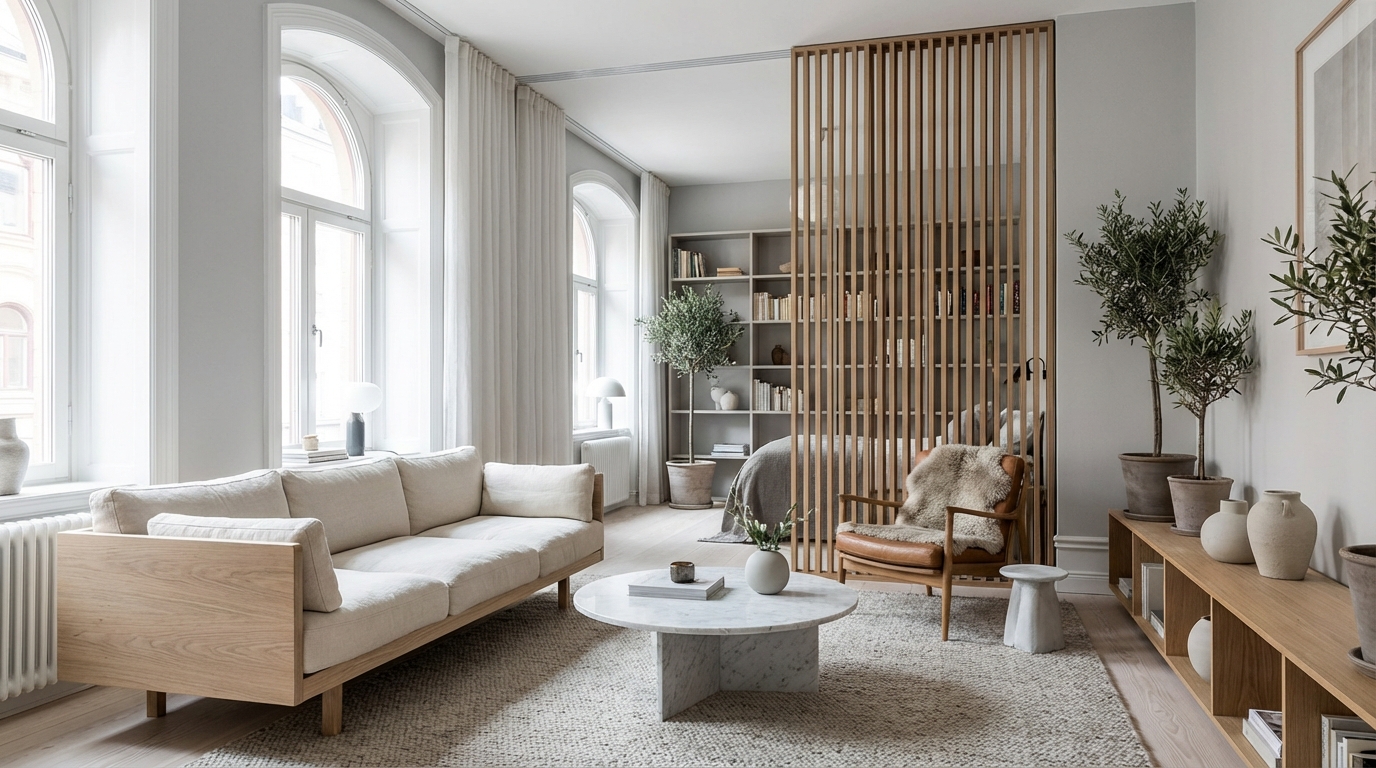
The biggest mistake people make with Scandinavian design is making it too cold and sterile. In pursuit of minimalism, they strip away all warmth, personality, and texture, creating a space that feels more like a showroom than a home. The fix: layer in textiles generously. Add wool throws, linen pillows, a chunky knit blanket, and a natural fiber rug. Include warm wood tones, plants, and personal objects. Scandinavian design should feel lived-in and cozy, not empty.
Second, choosing furniture that's too small or too sparse leaves the room feeling incomplete and uncomfortable. While Scandinavian design embraces negative space, you still need adequate, comfortable seating and functional furniture. The fix: invest in appropriately-sized, quality pieces rather than filling the room with small, cheap furniture. One excellent sofa beats three mediocre chairs.
Third, neglecting lighting layers results in flat, uninviting spaces. A single overhead light doesn't create the warm ambiance Scandinavian design requires. The fix: incorporate multiple light sources at different heights—ceiling fixture, floor lamp, table lamp, and candles. Use warm bulbs and dimmers to create flexibility and atmosphere.
Fourth, using purely cool tones without warm elements creates that sterile feeling. Cool greys, blue-whites, and silver accents can feel unwelcoming without balance. The fix: ensure your whites have warm undertones, incorporate honey-toned woods, and add warm metals like brass or copper. Even your grey textiles should lean warm rather than cool.
Fifth, over-styling with too many decorative objects contradicts Scandinavian principles of simplicity. Cluttered shelves, excessive throw pillows, and too many accessories create visual noise. The fix: edit ruthlessly. Display only objects you truly love, group items in odd numbers, and leave plenty of negative space. Quality over quantity always.
Signs your space is missing the mark include: feeling cold when you enter, visual clutter that makes you feel anxious, furniture that's uncomfortable to actually use, poor lighting that makes tasks difficult, or a sense that the room is staged rather than lived-in. The balance between under-styling and over-styling comes down to this: include enough elements to make the space feel warm and personal, but not so many that the eye doesn't know where to rest.
Common Mistakes to Avoid
Styling for Different Budgets & Spaces
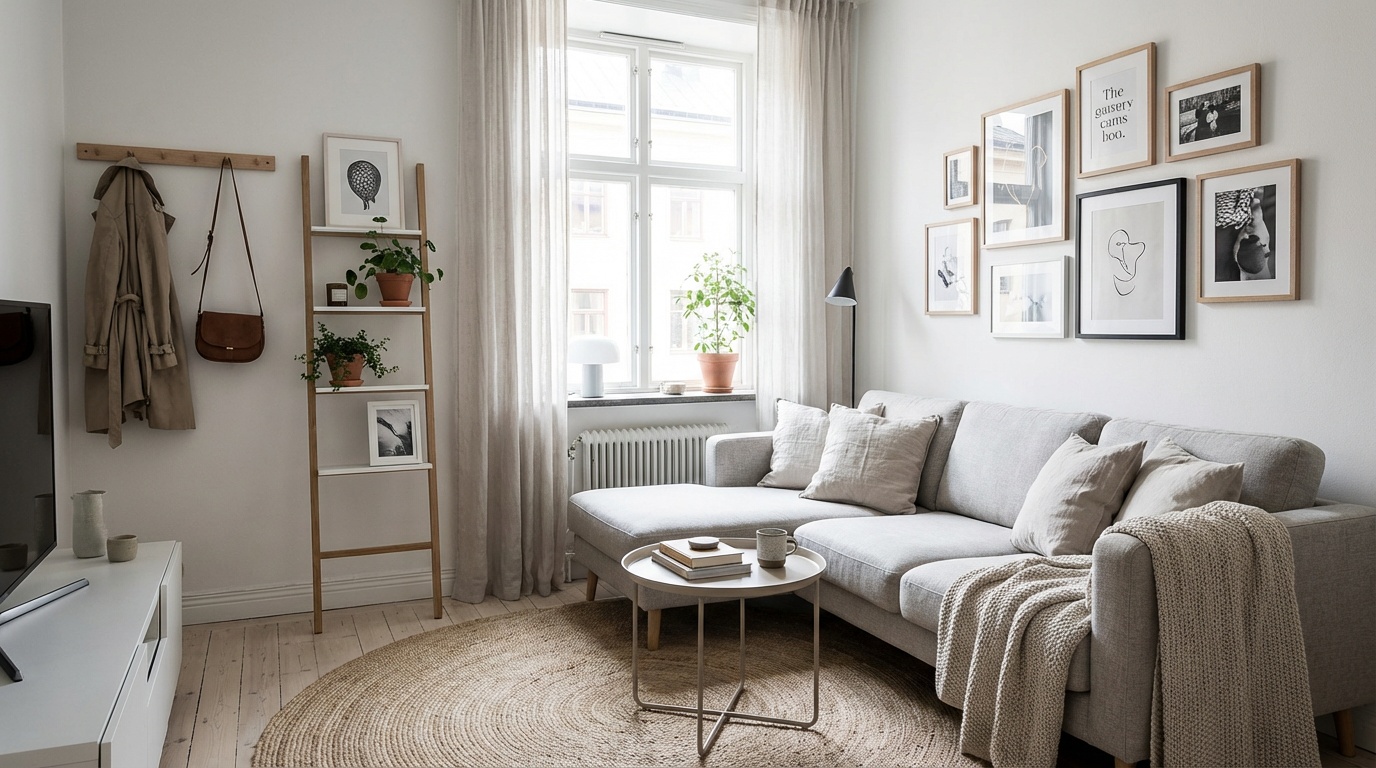
Small living rooms actually benefit from Scandinavian design principles. The light color palette makes spaces feel larger, the minimal furniture approach prevents overcrowding, and the emphasis on functionality ensures every piece earns its place. For small space adaptations, choose a streamlined sofa without bulky arms, opt for a round coffee table that's easier to navigate around, use wall-mounted shelving to free up floor space, and incorporate mirrors to visually expand the room.
Rental-friendly approaches include focusing on movable elements rather than permanent changes. Invest in furniture and textiles you can take with you, use removable wallpaper or large-scale art instead of paint, add plug-in wall sconces instead of hardwired fixtures, and layer rugs over less-than-ideal flooring. Many Scandinavian design elements—furniture, lighting, textiles—are inherently portable, making this style ideal for renters.
For transformations under $500, focus on high-impact, low-cost changes: paint walls in warm white (or use what's there if it's already light), add an affordable linen sofa cover, incorporate budget-friendly textiles (throws, pillows, curtains), hang simple floating shelves, add plants in simple pots, and swap out light bulbs for warm white. Even this modest budget can shift your space significantly toward Scandinavian style.
With $500-2000, you can invest in key pieces: a quality sofa or have your existing one reupholstered, purchase a solid wood coffee table, add a statement floor lamp, invest in a good area rug in natural fibers, and upgrade window treatments to linen curtains. This budget allows for a few investment pieces mixed with budget-friendly accessories.
A $2000+ budget enables a complete transformation: invest in that designer sofa you've been eyeing, purchase multiple quality furniture pieces (coffee table, side tables, lounge chair), commission custom built-in shelving, invest in high-end lighting fixtures, and splurge on luxury textiles and artwork. At this level, you can create a truly elevated Scandinavian living room with pieces that will last decades.
Styling for Different Budgets & Spaces
Bringing Your Vision to Life
Before purchasing a single item, start with visualization. The costliest mistake in interior design is buying pieces that don't work together or don't fit your space. Traditionally, this meant creating mood boards, drawing floor plans, and using your imagination—methods that left plenty of room for expensive errors.
This is where RoomStudioAI transforms the design process. Instead of guessing how Scandinavian style will look in your actual living room, you can see it instantly. Simply upload a photo of your current space, select "Scandinavian" as your desired style, and watch as AI technology reimagines your room with authentic Nordic design elements—the light wood furniture, neutral color palette, cozy textiles, and minimalist aesthetic that defines the style.
The ability to experiment risk-free is invaluable. Want to see how a lighter wall color would change the feel? Curious whether your space can handle darker accent colors? Wondering if a different furniture arrangement would work better? RoomStudioAI lets you try countless variations without moving a single piece of furniture or spending a dollar on paint. You can explore different interpretations of Scandinavian style—from ultra-minimalist to more textured and cozy—to find the exact approach that resonates with you.
This visualization becomes your roadmap for purchasing decisions. Once you see your living room transformed, you'll know exactly what pieces to prioritize, what colors to choose, and how elements should work together. You can even show the visualizations to salespeople when furniture shopping, ensuring you find pieces that match your vision.
The tool is particularly helpful for understanding how Scandinavian design adapts to your specific space. Every room has unique characteristics—ceiling height, natural light, architectural features—and seeing how the style works with your specific dimensions and conditions removes guesswork. You might discover that your north-facing room needs warmer tones than typical Scandinavian palettes, or that your high ceilings allow for larger-scale furniture than you initially thought.
Beyond Scandinavian style, you can compare how your space would look in different aesthetics. Maybe you're torn between Scandinavian and minimalist living room ideas, or curious how it compares to mid-century modern. Seeing these styles side-by-side in your actual space makes the decision clear.
The best part? RoomStudioAI offers free design visualizations, making professional-quality interior design accessible to everyone—a philosophy that aligns perfectly with Scandinavian design's democratic roots. There's no risk, no commitment, just instant inspiration and practical guidance for creating the living room of your dreams.
Ready to see your living room transformed? Head to RoomStudioAI, upload a photo of your space, and discover how Scandinavian design can bring light, warmth, and timeless style to your home. Your journey to a more beautiful, functional, and serene living room starts with simply seeing the possibilities. After all, the Scandinavian approach to design—and to life—is about making beauty accessible, functional, and genuinely enjoyable every single day. Why not start today?