What Defines Shabby Chic Style
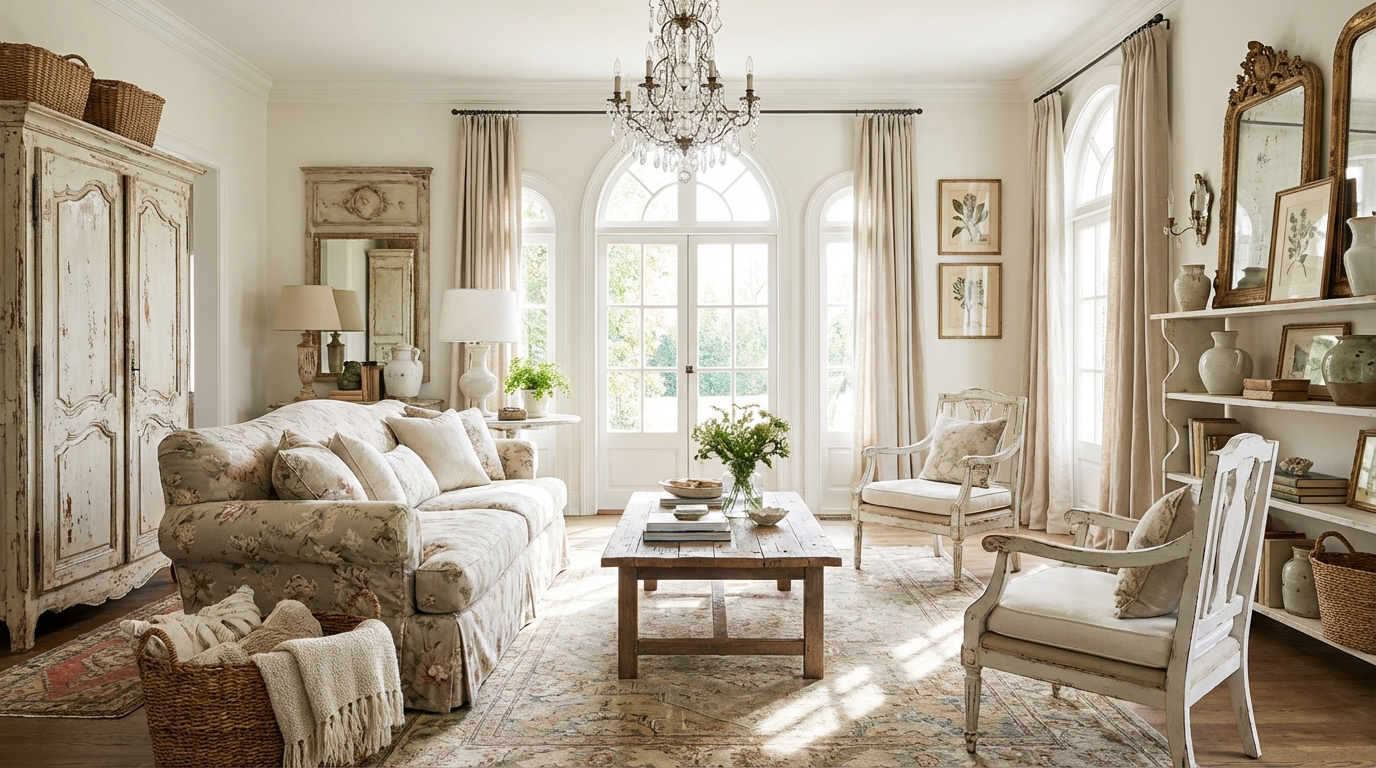
Shabby chic is more than just a design trend—it's a design philosophy that celebrates imperfection, embraces history, and finds beauty in the worn and weathered. At its core, shabby chic style combines the elegance of vintage furnishings with a relaxed, comfortable aesthetic that rejects the overly formal in favor of the personally meaningful.
The term "shabby chic" was coined by British designer Rachel Ashwell in the late 1980s, though the aesthetic itself draws from much older traditions. Ashwell's vision combined her love of flea market finds, vintage linens, and distressed furniture with a distinctly feminine sensibility. The style quickly gained popularity as homeowners tired of the stark minimalism and heavy traditionalism that dominated interior design at the time.
Historically, shabby chic draws inspiration from English country cottages, French provincial homes, and the romantic aesthetics of the Victorian era. It's a style born from resourcefulness—the idea that beautiful homes could be created by repurposing and reimagining existing pieces rather than constantly buying new. This connection to sustainability and mindful consumption is one reason the style resonates so strongly with modern homeowners today.
What makes shabby chic particularly appealing in our current era is its inherent warmth and humanity. In a world of mass-produced furniture and cookie-cutter interiors, shabby chic celebrates uniqueness and personal history. Each piece tells a story—whether it's a genuinely antique armoire passed down through generations or a newly distressed coffee table that mimics vintage charm. The style creates spaces that feel collected over time rather than designed in a single shopping trip.
Key characteristics that distinguish shabby chic from similar styles include:
- Distressed finishes: Furniture with chipped paint, visible wear, and weathered surfaces that suggest age and use
- Soft, romantic color palettes: Predominantly whites, creams, and pastels rather than bold or dark colors
- Vintage and antique elements: Genuine or reproduction pieces from earlier eras, particularly Victorian, French provincial, and cottage styles
- Feminine details: Ruffles, lace, floral patterns, and curved lines that create a gentle, romantic atmosphere
- Comfortable elegance: The marriage of refined pieces with cozy, lived-in comfort—never too formal or precious
- Layered textures: Multiple fabrics, finishes, and materials creating visual and tactile interest
Unlike farmhouse style, which tends toward rustic simplicity and natural wood tones, shabby chic emphasizes painted finishes and more ornate details. It differs from French country style in its lighter color palette and more distressed aesthetic, and from cottage style in its more refined, elegant approach to vintage elements.
What Defines Shabby Chic Style
Essential Elements for Your Shabby Chic Living Room
Creating an authentic shabby chic living room requires careful selection of furniture pieces that balance vintage charm with practical comfort. The living room is perhaps the ideal space for this style, as it naturally accommodates the mix of seating, storage, and decorative elements that make shabby chic shine.
Must-have furniture pieces for your shabby chic living room:
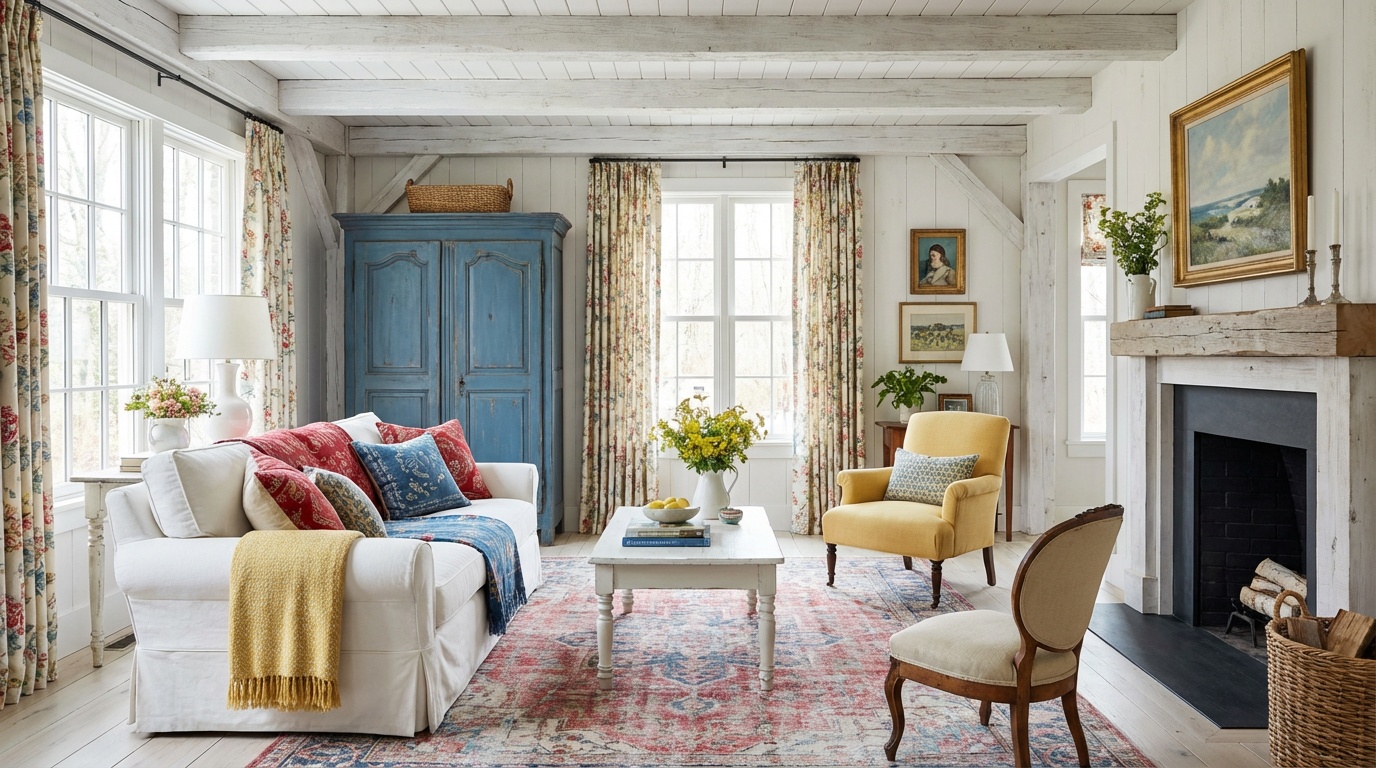
Slipcovered sofa: A comfortable sofa draped in washable white or cream linen or cotton slipcovers is the cornerstone of shabby chic living rooms. Look for pieces with rolled arms, turned legs, and generous cushions. The slipcover should appear slightly rumpled and lived-in rather than crisp and tailored.
Distressed coffee table: Choose a wooden coffee table with visible wear—chipped paint revealing layers beneath, weathered surfaces, or intentionally distressed finishes. White or cream painted wood is classic, but soft gray or pale blue also works beautifully.
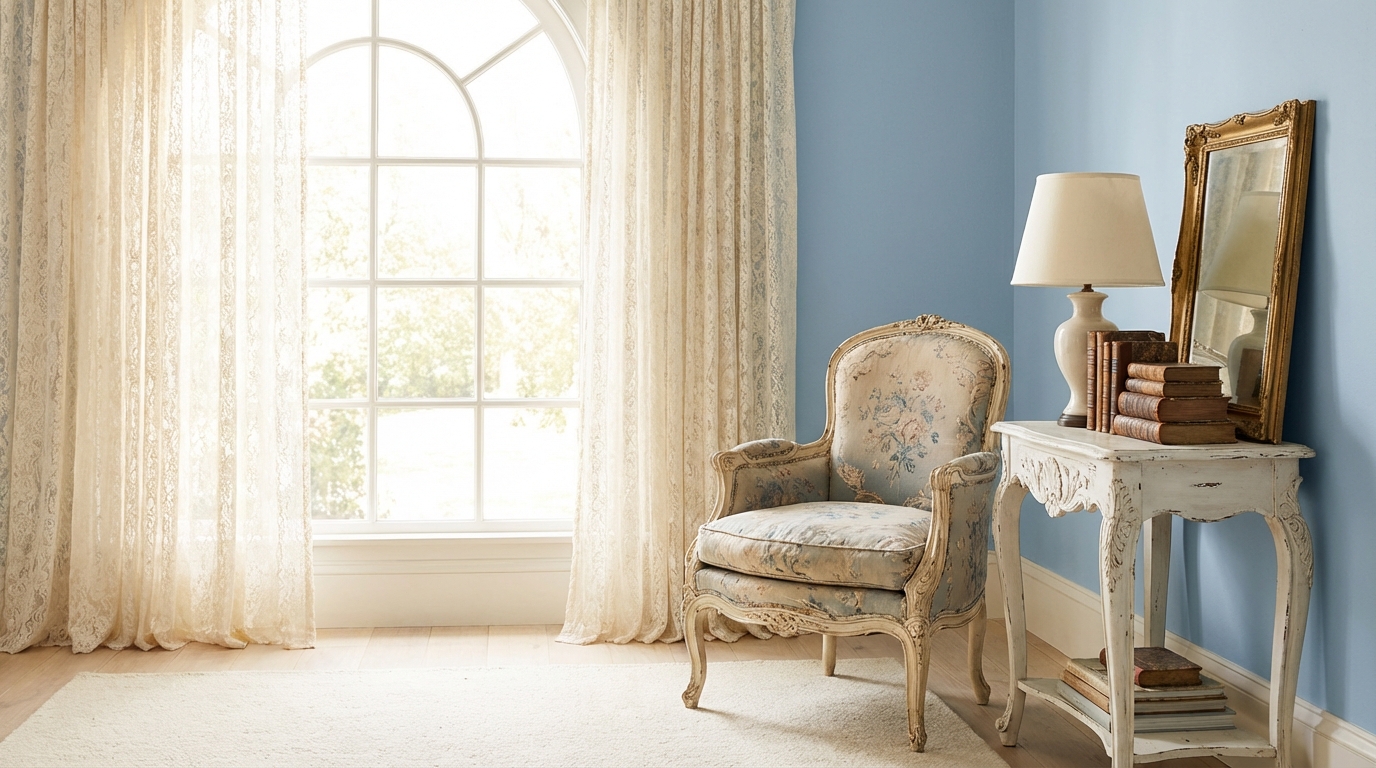
Vintage armchair or bergère: At least one statement seating piece with character—perhaps a French-style bergère chair with carved wood frame and upholstered seat, or a Victorian-era armchair reupholstered in faded floral fabric or ticking stripe.
Painted wood cabinet or armoire: For storage and visual impact, include a larger piece like a painted armoire, china cabinet, or bookcase. The finish should show age—whether genuine or artfully created—with areas of wear at edges and corners.
Vintage side tables: Mismatched end tables add character. Look for pieces with turned legs, decorative details, and painted finishes in complementary shades.
Signature shapes and silhouettes that define the shabby chic look include curved lines over angular ones, ornate carved details, cabriole legs, turned spindles, and romantic arches. Furniture should have a sense of history and craftsmanship, avoiding the clean-lined modern aesthetic entirely.
Key materials that work best in shabby chic living rooms:
- Woods: Pine, oak, and other softwoods that show distressing well; always painted or whitewashed rather than stained
- Metals: Wrought iron, aged brass, and distressed silver for accents and hardware
- Fabrics: Linen, cotton, vintage-inspired florals, ticking stripes, toile, lace, and eyelet; natural fibers over synthetics
- Finishes: Chalk paint, milk paint, and other matte finishes that can be distressed and aged
Essential Elements for Your Shabby Chic Living Room
Color Palettes & Combinations
The shabby chic color palette is perhaps the most defining element of the style—soft, romantic, and predominantly light. Getting the colors right is essential to achieving an authentic look that feels cohesive rather than cluttered.
Primary color palette for shabby chic living rooms:
- Soft white: Not stark bright white, but warmer shades like ivory, cream, or antique white that have subtle yellow or gray undertones
- Pale gray: Think "weathered driftwood" or "dove gray"—soft, neutral grays that read almost as warm neutrals
- Blush pink: Very pale, dusty rose tones that suggest faded vintage fabrics rather than bright modern pink
- Powder blue: Gentle, grayed-down blue like "robin's egg" or "duck egg blue" that appears faded and vintage
These colors should form the foundation of your living room, appearing on walls, major furniture pieces, and large fabric elements.
Accent colors that complement shabby chic style:
- Dusty sage green: Soft, muted green that looks like aged garden furniture
- Lavender: Pale, grayed purple that adds gentle color without overwhelming
- Butter yellow: Very soft, creamy yellow that adds warmth
- Vintage rose: Deeper than blush but still muted, like antique roses
These accent colors should appear sparingly—in throw pillows, small decorative items, or floral patterns within the primary palette.
Balancing neutrals with pops of color: The key to shabby chic color success is maintaining a ratio of approximately 70% neutrals (whites, creams, soft grays) to 30% soft colors (pastels and muted tones). This ensures the space feels light and airy while still having visual interest. Even your "pops" of color should be relatively soft—shabby chic never includes bright, saturated hues.
Color distribution strategy:
- Walls: Soft white, cream, or very pale gray to maximize light and create a neutral backdrop
- Large furniture: Predominantly white or cream with one or two pieces in pale blue or soft gray
- Upholstery: White or cream on primary seating, with accent chairs in soft florals or pastels
- Textiles: Layer whites and creams with gentle patterns in blush, blue, and sage
- Decorative accents: This is where you can introduce slightly deeper (but still muted) tones
Seasonal variations: While the core palette remains consistent, you can adjust accessories seasonally. Spring might emphasize blush pinks and soft greens with fresh florals. Summer could lean into whites and blues for a breezier feel. Fall might introduce more sage and lavender tones with dried flowers. Winter can embrace more cream and gray with white-on-white layering.
The overall effect should be a room that feels like it's bathed in soft, diffused light regardless of the actual lighting conditions—a dreamy, romantic quality that's unmistakably shabby chic.
Color Palettes & Combinations
Lighting & Ambiance
Lighting plays a crucial role in shabby chic living rooms, creating the soft, romantic ambiance that defines the style. The goal is to achieve a warm, inviting glow that makes the space feel like a sanctuary.
Natural lighting optimization is paramount in shabby chic design. These spaces thrive on natural light, which enhances the soft color palette and creates an airy, open feeling:
- Use sheer, lightweight curtains in white linen or cotton that filter rather than block sunlight
- Hang curtains high and wide to maximize the window's apparent size
- Consider vintage lace panels or eyelet curtains for additional texture while maintaining light flow
- Keep window treatments simple—avoid heavy drapes or dark colors that would darken the space
- Position mirrors strategically to reflect and amplify natural light throughout the room
Artificial lighting layers should create a warm, multi-dimensional glow:
Ambient lighting provides overall illumination:
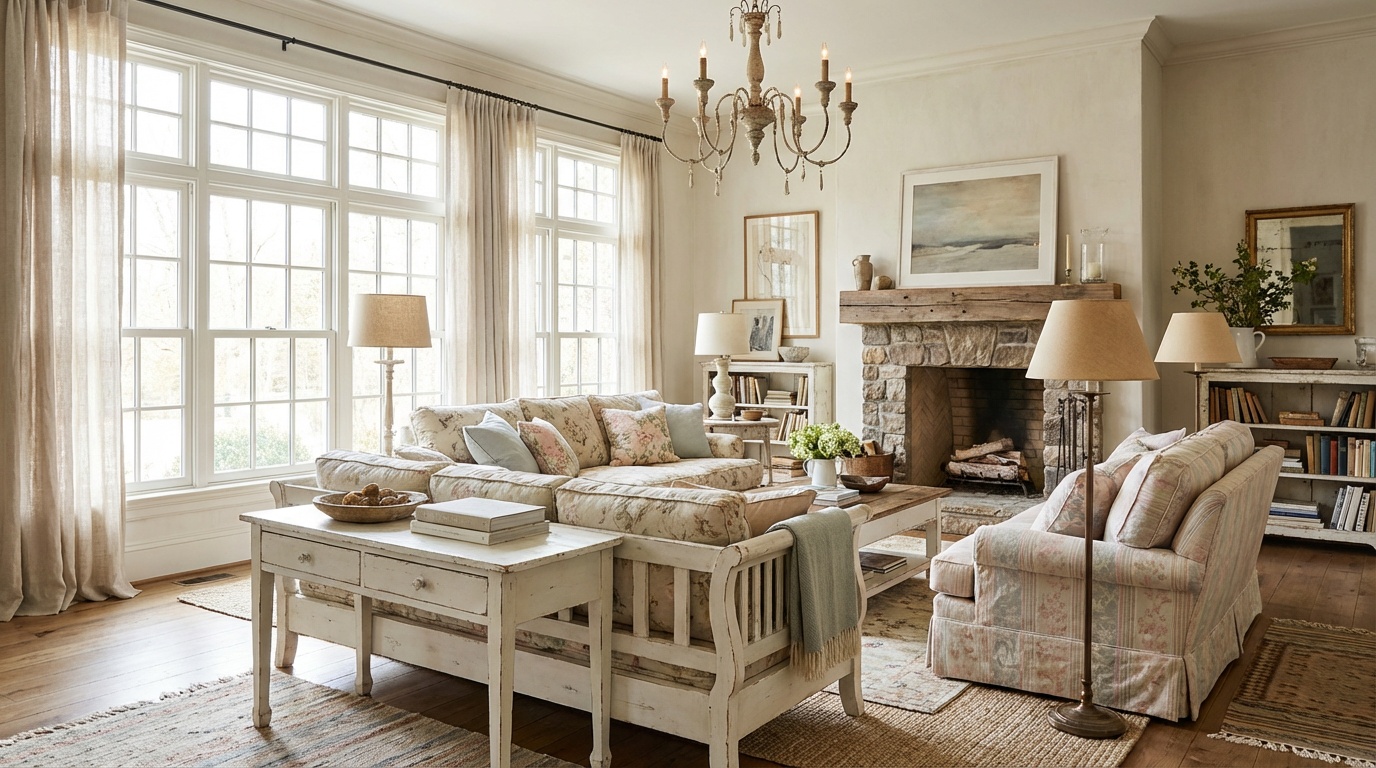
- Vintage or vintage-style chandeliers with crystal drops, painted metal frames, or distressed wood elements
- Ceiling fixtures should feel ornate but not overly formal—think French country chandelier rather than grand ballroom statement piece
- Consider painted white or cream fixtures to blend with the ceiling while still providing decorative interest
Task lighting for reading and activities:
- Table lamps with ceramic or painted bases in soft colors
- Vintage-style lamp bases with fabric shades in white, cream, or soft floral patterns
- Adjustable floor lamps with aged brass or painted finishes for reading corners
Accent lighting to highlight features:
- Small picture lights for artwork or mirrors
- Candles (real or LED) in vintage candlesticks and holders
- String lights or fairy lights woven into shelving or draped along mantels for added sparkle
Specific fixture styles that complement shabby chic design:
- Crystal chandeliers with painted white or cream metal frames
- Candlestick-style chandeliers with multiple arms
- Ceramic table lamps with floral details or vintage shapes
- Painted metal sconces with fabric or beaded shades
- Vintage glass pendant lights in mercury glass or milk glass
- Ornate floor lamps with carved wood or painted metal bases
All fixtures should have a sense of age or vintage character—avoid anything too modern, industrial, or minimalist. Hardware and finishes should be aged brass, distressed white, soft silver, or painted to match your color palette.
Creating mood and atmosphere through strategic placement:
- Layer multiple light sources at different heights rather than relying on a single overhead fixture
- Use dimmer switches to adjust ambient lighting for different times of day and activities
- Place lamps on side tables flanking the sofa to create symmetrical, balanced lighting
- Position a floor lamp in a reading corner to create a cozy nook
- Use candles grouped on coffee tables, mantels, or shelving to add romantic flickering light in evenings
- Choose warm white bulbs (2700-3000K) rather than cool white to enhance the cozy, romantic feeling
The overall lighting scheme should create a soft, flattering glow that makes the space feel welcoming at any time of day. Harsh shadows, bright spots, or cold lighting will work against the shabby chic aesthetic.
Lighting & Ambiance
Furniture & Decor Shopping Guide
Creating a shabby chic living room doesn't require an unlimited budget, but it does require knowing where to invest, where to save, and where to look for the perfect pieces.
Key investment pieces worth splurging on:
The sofa: This is your most-used piece and the visual anchor of the room. Invest in quality construction and comfortable cushions. Budget: $1,200-2,500 for a quality piece that will last.
One statement antique: Whether it's a genuine vintage armoire, an antique mirror, or a beautiful bergère chair, one authentic piece adds instant credibility and character. Budget: $300-1,000+.
Quality lighting: A beautiful chandelier or a pair of excellent table lamps will elevate the entire space. Budget: $200-800 for a statement chandelier.
Budget-friendly alternatives and dupes:
- New furniture with distressed finishes costs far less than genuine antiques while achieving a similar look
- Slipcovers can transform an existing sofa for $100-300 versus buying new
- Reproduction vintage-style pieces from mainstream retailers offer the look at a fraction of antique prices
- DIY distressing of secondhand furniture creates custom pieces for minimal cost
Where to shop:
For new furniture and decor:
- IKEA: Surprisingly good for basics to customize (think white slipcover sofas, simple tables to distress)
- HomeGoods/TJ Maxx: Excellent for decorative accessories, mirrors, and occasional finds
- Target's Threshold line: Affordable vintage-inspired pieces and textiles
- Pottery Barn: Higher-end but quality vintage-inspired furniture
- Wayfair: Wide selection of shabby chic-style furniture at various price points
- World Market: Good for affordable vintage-style accessories and textiles
For vintage and secondhand finds:
- Local estate sales: Best source for genuine antiques at reasonable prices
- Flea markets and antique malls: Great for unique pieces and decorative items
- Facebook Marketplace: Excellent for secondhand furniture to refinish
- Chairish and 1stDibs: Higher-end vintage and antique pieces (online)
- Etsy: Both vintage originals and handmade shabby chic items
- Habitat for Humanity ReStore: Surprisingly good for old furniture and architectural salvage
Vintage and secondhand finds that work particularly well:
- Wooden furniture with good bones that can be painted and distressed
- Vintage mirrors with ornate frames
- Old picture frames to create gallery walls
- Vintage textiles like lace curtains, embroidered linens, and quilts
- Antique or vintage lighting fixtures
- Old books with beautiful covers for decorative stacking
- Vintage china and ceramics for display
- Architectural salvage like corbels, moldings, or shutters
DIY projects to achieve the look affordably:
- Distressing furniture: Buy inexpensive wood furniture and create an aged look with paint, sanding, and wax
- Making slipcovers: Sew simple slipcovers from painter's drop cloths or affordable linen
- Creating gallery walls: Frame vintage prints, botanical illustrations, or family photos in thrifted frames painted white
- Painting and distressing picture frames: Transform mismatched frames into a cohesive collection
- Refinishing tables: Sand and paint existing tables in soft shabby chic colors
- Making throw pillows: Sew pillow covers from vintage linens, lace, or affordable fabric
- Aging new items: Use techniques like dry brushing, crackling, and antiquing to make new pieces look vintage
The key to budget-friendly shabby chic is patience—building the look over time by hunting for deals, DIYing where possible, and investing strategically in key pieces that will anchor the space.
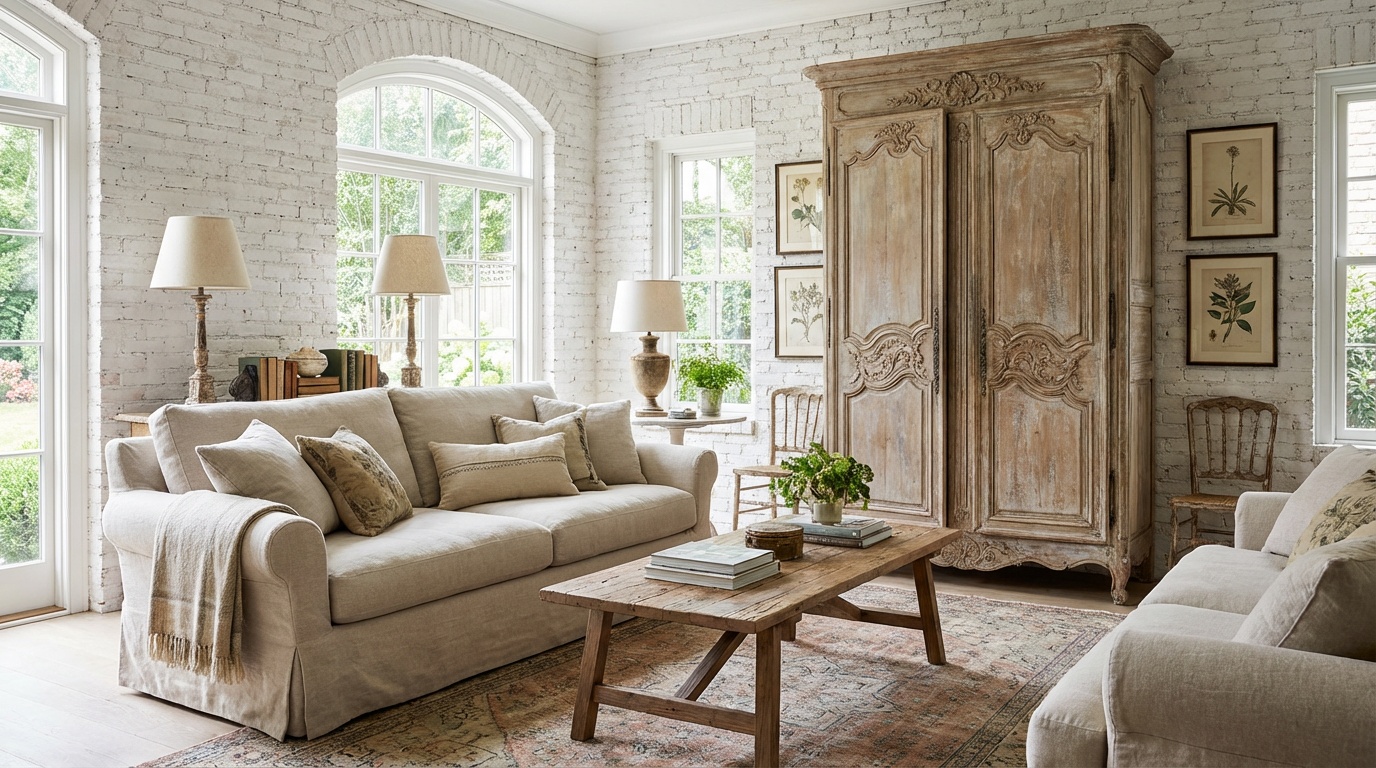
Furniture & Decor Shopping Guide
Common Mistakes to Avoid
Even with the best intentions, it's easy to veer off course when creating a shabby chic living room. Here are the most common mistakes and how to avoid them:
Mistake #1: Going too cluttered or "grandma's attic"
Shabby chic should feel curated and romantic, not like a dusty antique shop. The problem occurs when you add too many vintage items, too much pattern, or too many decorative objects.
How to fix it: Edit ruthlessly. Follow the principle of "less is more" even with vintage pieces. Leave breathing room on surfaces, limit patterns to 2-3 per space, and ensure there's plenty of white or neutral space to balance decorative elements. If a room feels chaotic, remove 20-30% of the accessories.
Mistake #2: Using colors that are too bright or saturated
Bright pinks, bold blues, or saturated colors will instantly destroy the soft, romantic shabby chic aesthetic.
How to fix it: Stick to muted, grayed-down, or pastel versions of colors. If a color looks fresh and vibrant, it's too bright for shabby chic. Everything should appear slightly faded, as if washed and sun-bleached over time. When in doubt, add more white and cream to dilute any color that feels too strong.
Mistake #3: Over-distressing or creating an artificial look
Distressing should look natural and authentic, as if the wear happened organically over decades of use. Heavy-handed distressing looks fake and forced.
How to fix it: When distressing furniture, focus on areas that would naturally wear—edges, corners, around handles and knobs. Use restraint and build gradually. Study genuinely old pieces to see where natural wear occurs. Less is more—you can always add more distressing, but it's hard to undo excessive distressing.
Mistake #4: Mixing in too many modern or industrial elements
A sleek modern coffee table or industrial metal shelving will clash dramatically with shabby chic's romantic aesthetic.
How to fix it: Be strict about maintaining the vintage, romantic feel throughout the space. If you need modern functionality (like a TV), disguise it in a vintage cabinet or armoire. Choose pieces that could have existed 50-100 years ago, even if they're contemporary reproductions. If you love mixing styles, consider a different aesthetic like transitional living room design that intentionally blends traditional and modern.
Mistake #5: Neglecting comfort for aesthetics
Shabby chic should be inviting and comfortable, not just pretty to look at. Furniture that's too delicate, seating that's uncomfortable, or a space that feels too precious to actually use misses the point.
How to fix it: Prioritize comfort in seating choices. Use soft, washable fabrics that can handle real life. Include plenty of pillows and throws. Make sure the space feels lived-in and welcoming. The "shabby" part of shabby chic means embracing imperfection and use—your living room should invite you to curl up and relax, not worry about disturbing the perfect arrangement.
Signs your space is missing the mark:
- The room feels dark or heavy (too many dark woods or insufficient light)
- It looks like a themed costume rather than a cohesive design
- The space feels cluttered and overwhelming
- Colors appear too bright, bold, or modern
- Everything looks brand new without any sense of history
- The room feels formal and untouchable rather than comfortable
Finding the right balance: Shabby chic exists in the sweet spot between over-styling (too many ruffles, too much distressing, too many vintage items) and under-styling (not enough character, too plain, lacking the vintage elements that define the style). Aim for a collected-over-time look with plenty of white space, soft colors, and genuine comfort.
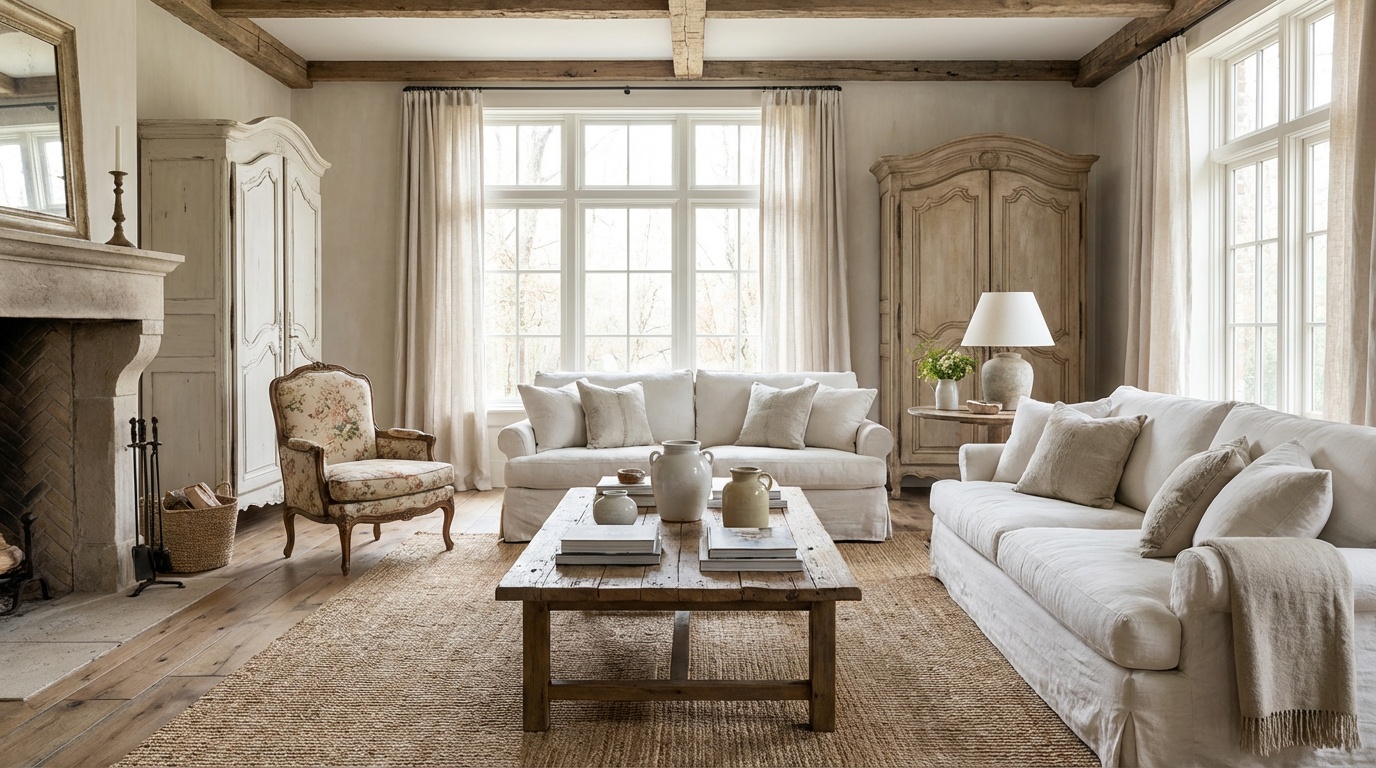
Common Mistakes to Avoid
Styling for Different Budgets & Spaces
Shabby chic is remarkably adaptable to different spaces and budgets. Here's how to make it work for your specific situation:
Small space adaptations and solutions:
Shabby chic can work beautifully in small living rooms when approached thoughtfully:
- Emphasize white and light colors to make the space feel larger and airier
- Choose furniture with legs rather than skirted pieces to maintain visual space underneath
- Use mirrors strategically to reflect light and create the illusion of more space
- Select smaller-scale furniture like apartment-sized sofas and petite armchairs
- Limit large furniture pieces to essentials—one sofa, one accent chair, one coffee table
- Maximize vertical space with tall, narrow cabinets rather than wide, low pieces
- Keep accessories minimal in small spaces to avoid clutter
- Use multi-functional pieces like storage ottomans or side tables with drawers
Rental-friendly approaches:
You can create a shabby chic living room without making permanent changes:
- Focus on furniture and decor rather than architectural changes
- Use removable wallpaper or large artwork instead of paint if you can't paint walls
- Choose freestanding pieces rather than built-ins
- Layer rugs to add pattern and texture without changing flooring
- Use command hooks for hanging lightweight mirrors and artwork
- Invest in quality furniture and textiles you can take with you
- Transform existing furniture with slipcovers rather than replacing
Budget tiers for transformation:
Under $500 transformation:
- White slipcover for existing sofa or DIY drop cloth slipcover: $100-150
- Two vintage-style table lamps from thrift stores, painted: $40-60
- Throw pillows in shabby chic fabrics: $80-100
- Secondhand coffee table refinished with chalk paint: $50-75
- Sheer white curtains: $40-60
- Decorative accessories (vintage frames, candlesticks, small mirror): $80-100
- Area rug in soft neutral: $100-150
This budget focuses on textiles, paint, and accessories to transform existing furniture.
$500-2,000 transformation:
- New slipcovered sofa or quality secondhand sofa with custom slipcover: $600-1,000
- Vintage or reproduction armchair: $200-400
- Distressed coffee table: $150-300
- Pair of quality table lamps: $100-200
- Chandelier or statement lighting: $150-300
- Curtains and window treatments: $100-200
- Decorative accessories and textiles: $200-400
- Area rug: $150-300
This budget allows for some new furniture purchases combined with vintage finds and quality accessories.
$2,000+ transformation:
- High-quality slipcovered sofa: $1,200-2,000
- Vintage bergère or statement chair: $400-800
- Distressed coffee table and side tables: $400-600
- Genuine antique armoire or cabinet: $500-1,200
- Statement chandelier: $300-600
- Quality table and floor lamps: $300-500
- Custom or designer curtains: $300-500
- Large area rug: $400-800
- Decorative accessories, artwork, mirrors: $500-1,000
This budget allows for investment pieces, genuine antiques, and high-quality reproductions.
Phasing the transformation over time:
You don't need to complete your shabby chic living room overnight. Here's a strategic approach:
Phase 1 (Months 1-2): Start with paint and textiles
- Paint walls in soft white or cream
- Add or make slipcovers for existing furniture
- Update curtains to sheer white or cream
- Add throw pillows and soft textiles
Phase 2 (Months 3-4): Update lighting
- Install a vintage-style chandelier or statement light
- Add table lamps with appropriate style
- Update lampshades to coordinate
Phase 3 (Months 5-6): Invest in key furniture
- Purchase or refinish a coffee table
- Add one statement vintage piece
- Update or add an accent chair
Phase 4 (Months 7-9): Layer in accessories
- Add mirrors and artwork
- Incorporate vintage decorative items
- Style shelves and surfaces
- Add an area rug if needed
Phase 5 (Ongoing): Continue collecting
- Hunt for vintage finds to add character
- Replace temporary solutions with better pieces as budget allows
- Refine and edit as your style evolves
This phased approach allows you to spread costs over time while seeing immediate improvements at each stage.
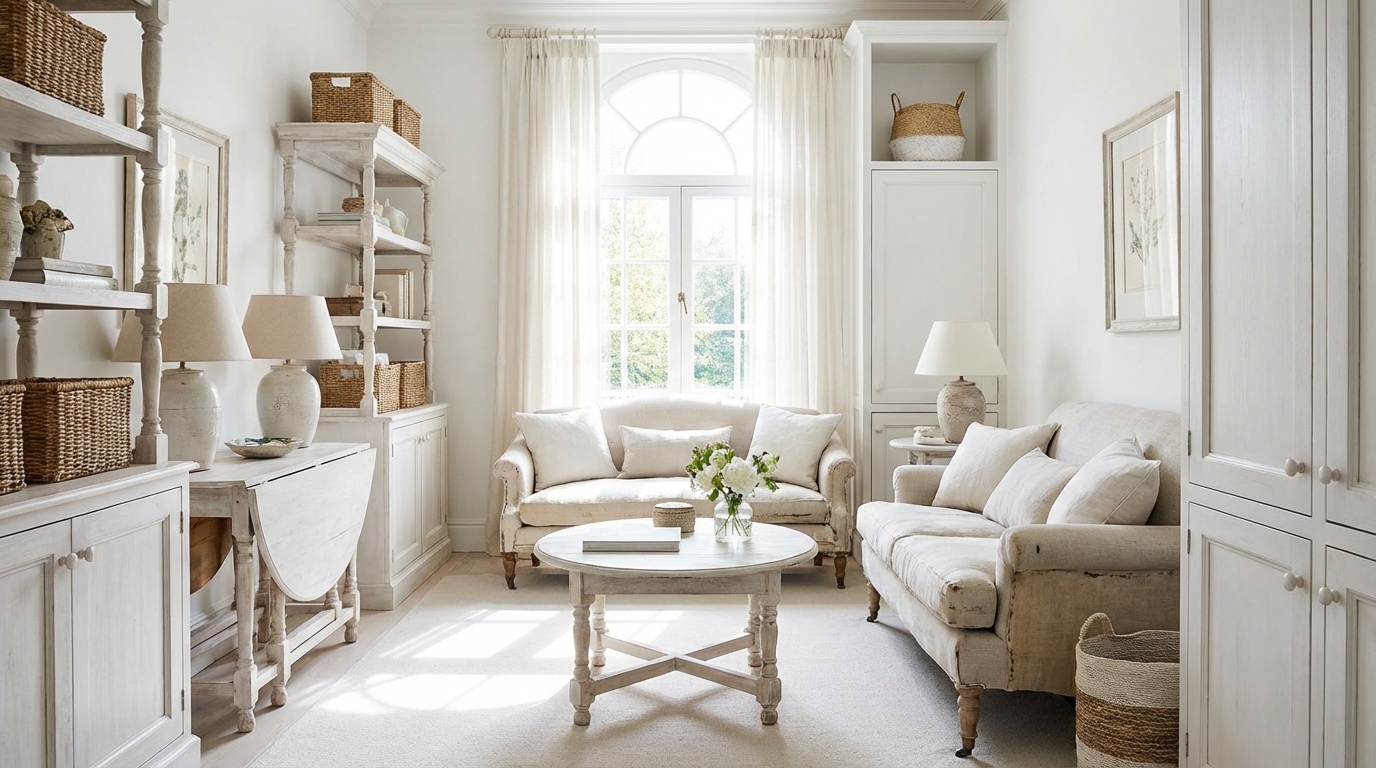
Styling for Different Budgets & Spaces
Bringing Your Vision to Life
Transforming your living room into a shabby chic sanctuary is exciting, but it can also feel overwhelming. Where do you start? How do you know if your ideas will work together? What if you invest in furniture and realize it doesn't create the look you imagined?
This is where visualization becomes invaluable. Before purchasing a single piece of furniture or committing to a paint color, seeing your space transformed can save you from expensive mistakes and give you confidence in your design decisions.
RoomStudioAI offers an innovative solution that brings your shabby chic vision to life instantly. Rather than relying on your imagination or trying to piece together inspiration photos that don't quite match your actual space, you can see your specific living room transformed into the shabby chic style you're dreaming of.
Here's how it works:
- Upload a photo of your current living room - Just take a quick snapshot with your phone
- Select "Shabby Chic" as your desired style - The AI understands the specific elements that define this aesthetic
- See your space transformed instantly - Within seconds, you'll see your actual room reimagined with shabby chic furniture, colors, and decor
- Experiment with variations - Try different approaches to find the perfect balance for your space
- Use the visualization as your shopping guide - Know exactly what pieces and colors to look for
This technology is particularly valuable for shabby chic design because the style requires such careful balance. You can see whether that distressed white coffee table will work with your existing flooring, whether the soft pink accent wall will feel too dark in your space's natural light, or whether you need more vintage elements to achieve the authentic look you want.
The free AI design tool removes the guesswork from interior design. Instead of buying pieces and hoping they'll work together, you can plan your entire transformation with confidence. You'll avoid common mistakes like choosing colors that are too bright, adding too many elements, or missing key pieces that would complete the look.
For homeowners on a budget, this is especially valuable—you can experiment virtually before spending real money, ensuring every purchase moves you closer to your dream space. For those tackling a phased transformation, you can visualize the end goal to stay motivated and on track even when implementing changes gradually.
Whether you're starting from scratch or updating an existing living room, whether you have a generous budget or need to work with what you have, seeing your vision come to life before you begin gives you the confidence and clarity to create a shabby chic living room that's uniquely yours.
Ready to see your living room transformed? Visit RoomStudioAI today and upload a photo of your space. In seconds, you'll see the shabby chic living room of your dreams—and you'll have a clear roadmap for making it reality. The romantic, vintage-inspired sanctuary you've been imagining is closer than you think. Start visualizing your transformation now, and take the first step toward the shabby chic living room you'll love coming home to every single day.