What Defines Transitional Style
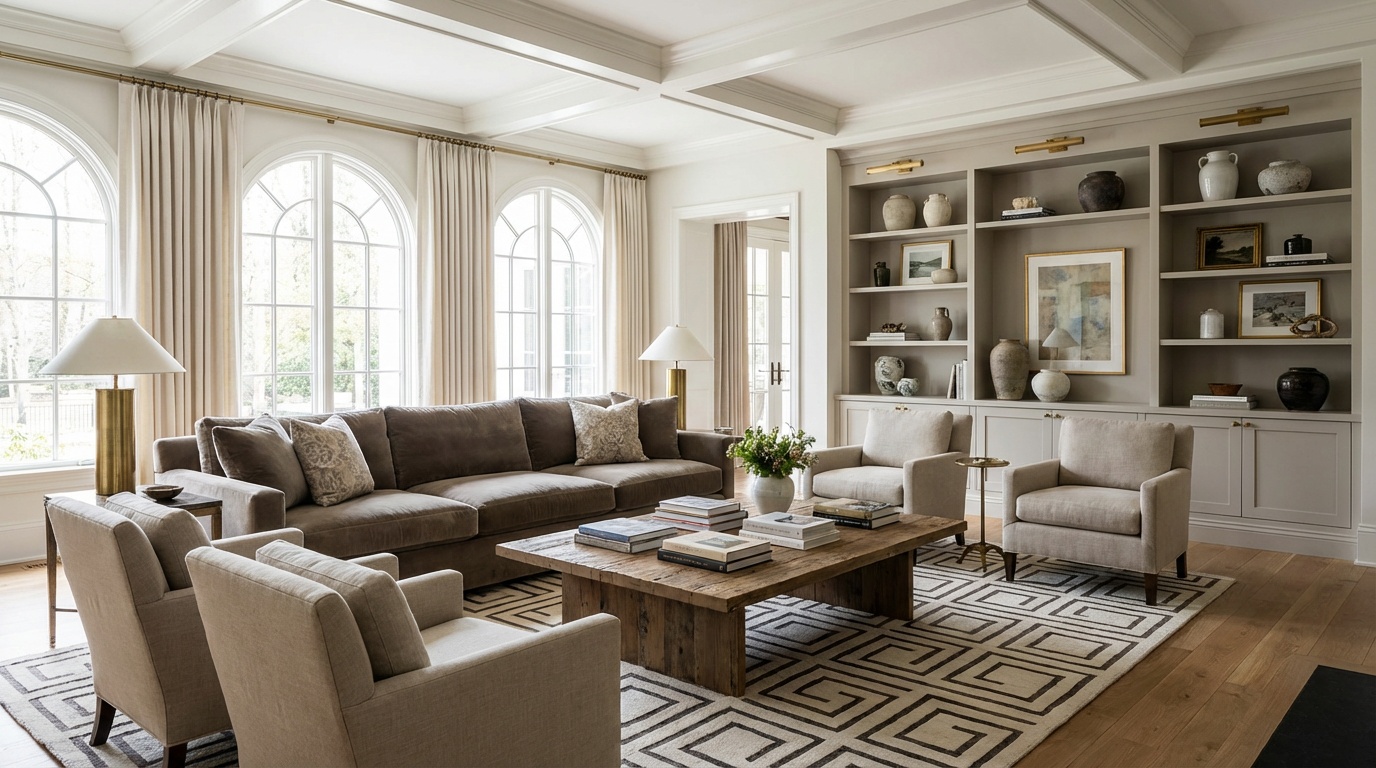
Transitional design emerged in the 1950s and 1960s as homeowners began seeking spaces that bridged the gap between traditional formality and modern minimalism. This style philosophy centers on creating harmonious balance—taking the best elements from both design worlds and blending them into cohesive, livable spaces. Unlike strict adherence to period-specific design rules, transitional style celebrates flexibility and personal interpretation.
At its core, transitional design operates on several key principles. First, it emphasizes neutral color palettes as a foundation, allowing texture and subtle contrasts to create visual interest. Second, it favors clean lines and simple silhouettes over ornate detailing, but doesn't shy away from curves and comfortable proportions. Third, it values quality materials and craftsmanship while maintaining an uncluttered, edited aesthetic. Finally, transitional spaces prioritize functionality and comfort without sacrificing sophistication.
This style resonates deeply with modern homeowners because it offers incredible versatility and longevity. Unlike trend-driven design approaches that feel dated within a few years, transitional living rooms maintain their appeal across decades. They accommodate changing lifestyles, from young professionals to growing families to empty nesters, without requiring complete overhauls. The style also provides a perfect canvas for personalizing with accessories, artwork, and textiles—you can shift the mood from more traditional to more contemporary simply by swapping out accent pieces.
What distinguishes transitional from similar styles? While modern design often feels stark and minimalist, and traditional design can feel heavy with ornamentation, transitional achieves a middle path. It incorporates traditional elements like tufted upholstery or classic furniture shapes but renders them in contemporary fabrics and finishes. It uses modern materials like metal and glass but warms them with wood tones and soft textiles. The result is a living room that feels both current and timeless, formal enough for entertaining yet comfortable enough for everyday living.
What Defines Transitional Style
Essential Elements for Your Transitional Living Room
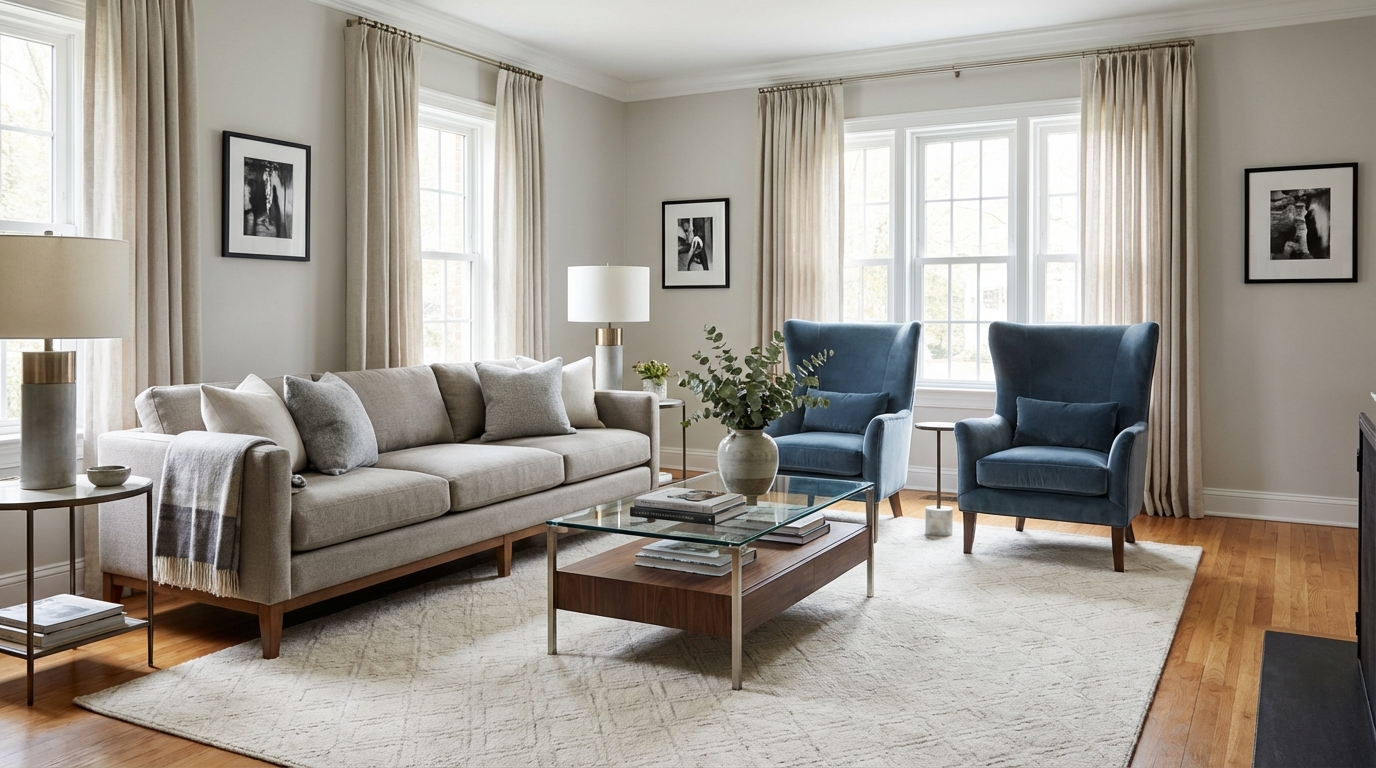
Creating an authentic transitional living room starts with selecting the right foundational furniture pieces. A quality sofa serves as your anchor—look for pieces with clean, straight arms or subtle curves, raised on exposed legs rather than skirted bases. Upholster in durable, neutral fabrics like linen, cotton-linen blends, or performance fabrics in colors like warm gray, greige, or soft taupe. Avoid overly ornate tufting or elaborate nailhead trim, but a subtle button-tufted back or track arms with minimal detailing work beautifully.
Your coffee table should blend materials thoughtfully. Consider pieces that combine a wooden top with metal legs, or a stone surface with a wooden base. The shape can be rectangular, round, or oval, but keep the design relatively simple. Glass tops work well when paired with substantial bases to prevent the space from feeling too airy. Aim for a height that's proportional to your seating—typically 16-18 inches.
Accent chairs provide an opportunity to introduce subtle pattern or a complementary texture. Look for chairs with exposed wood frames in medium to dark finishes, upholstered seats and backs, and classic shapes like wingbacks or barrel chairs rendered in simplified forms. A pair of matching chairs creates symmetry, while a single statement chair adds visual interest without overwhelming the space.
For case goods and storage, select pieces in quality hardwoods like oak, walnut, or maple with simple hardware. A media console, bookshelf, or sideboard should feature clean lines, minimal ornamentation, and finishes that coordinate with other wood tones in the room. Mixing wood finishes is acceptable in transitional design, but keep them within a similar undertone family (all warm or all cool).
Key materials that define transitional living rooms include:
- Woods: Medium to dark stains in oak, walnut, cherry, or maple with visible grain
- Metals: Brushed nickel, aged brass, oil-rubbed bronze, or matte black in simple finishes
- Fabrics: Linen, cotton, velvet, leather, and performance fabrics in solid colors or subtle patterns
- Stone: Marble, granite, or travertine for accent tables or fireplace surrounds
- Glass: Clear or lightly tinted for tables, mirrors, or lighting fixtures
The living room particularly benefits from transitional style because it's typically the most-used, most-visible space in the home. This style creates a welcoming environment for both daily family activities and formal entertaining, making it incredibly practical for real-world living.
Essential Elements for Your Transitional Living Room
Color Palettes & Combinations
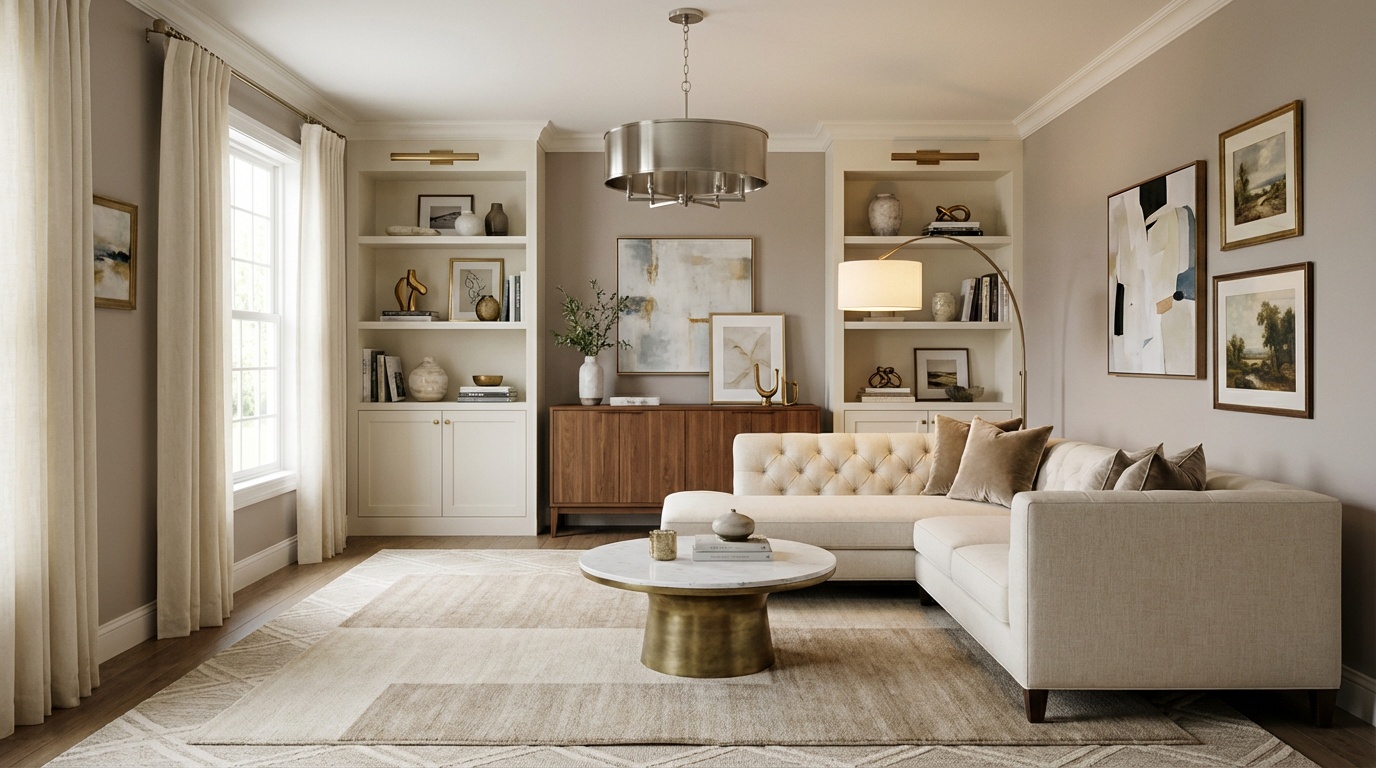
Transitional living rooms thrive on sophisticated neutral foundations with carefully chosen accent colors. Your primary palette should center on three to four main colors that create a cohesive, calming backdrop:
- Warm greige or soft taupe for walls, creating a neutral envelope that works with both warm and cool tones
- Creamy ivory or warm white for trim, ceilings, and larger upholstered pieces
- Charcoal gray or warm espresso for grounding elements like media consoles, accent chairs, or window treatments
- Warm honey oak or medium walnut for wood furniture and flooring
These neutrals provide incredible versatility, but transitional design isn't about being boring. Accent colors breathe life into the space without overwhelming the balanced aesthetic. Consider these sophisticated accent options:
- Dusty sage or soft eucalyptus green for pillows, throws, or artwork
- Muted navy or slate blue for an accent chair or area rug
- Warm terracotta or burnt sienna for ceramic accessories or textile accents
- Soft blush or warm gray-pink for subtle feminine touches
- Deep plum or aubergine for richer, jewel-tone moments
Balancing neutrals with color requires restraint and intentionality. Follow the 60-30-10 rule: 60% of the room in your dominant neutral (walls, large furniture), 30% in your secondary color (area rug, curtains, secondary upholstery), and 10% in accent colors (pillows, artwork, accessories). This distribution creates visual interest without chaos.
For wall colors, stick with your neutral base—this allows flexibility in changing accent colors over time without repainting. Furniture should primarily fall within your neutral palette, with perhaps one accent chair in a deeper tone. Reserve your boldest accent colors for easily changeable elements like throw pillows, artwork, vases, and decorative objects.
Transitional style adapts beautifully to seasonal variations. In fall and winter, layer in warmer accent colors like rust, burgundy, and chocolate brown through textiles and accessories. For spring and summer, lighten the palette with soft blues, greens, and more white and cream elements. This flexibility keeps your living room feeling fresh year-round without requiring major changes.
Color Palettes & Combinations
Lighting & Ambiance
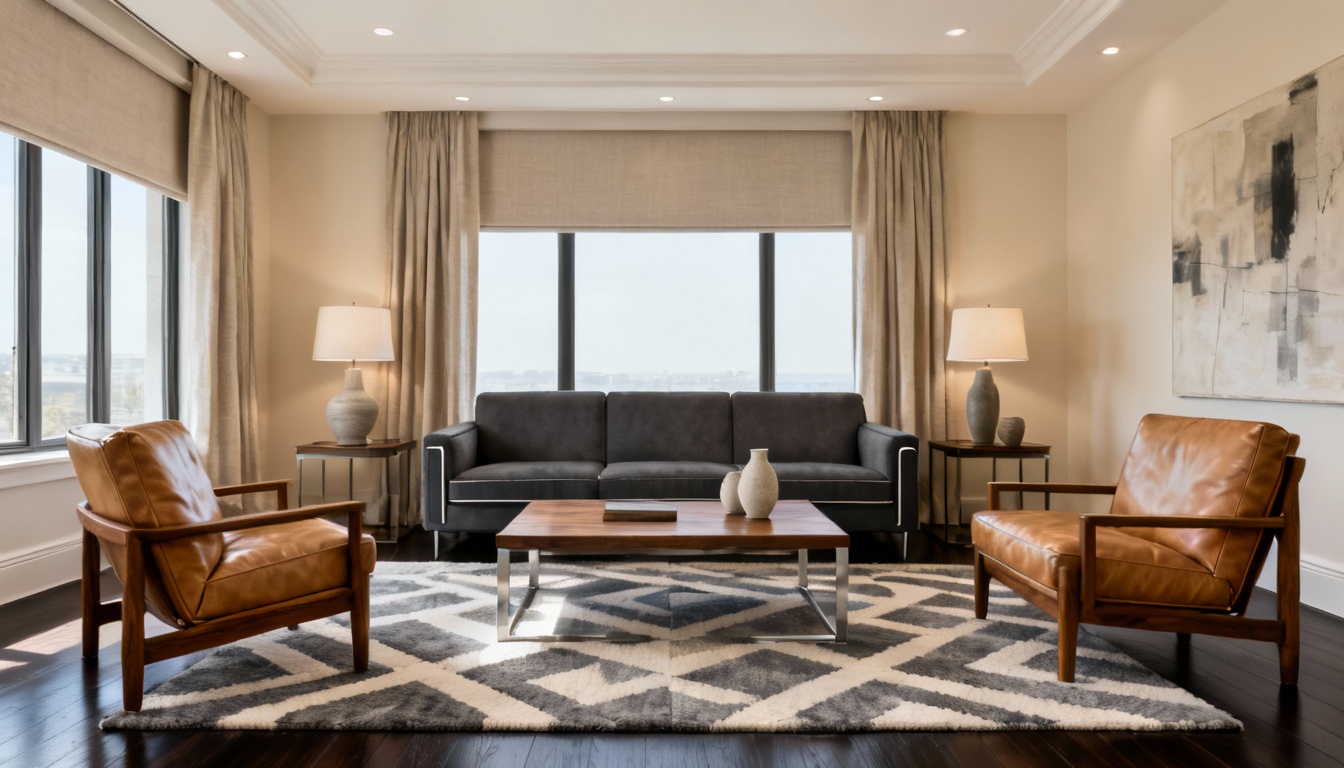
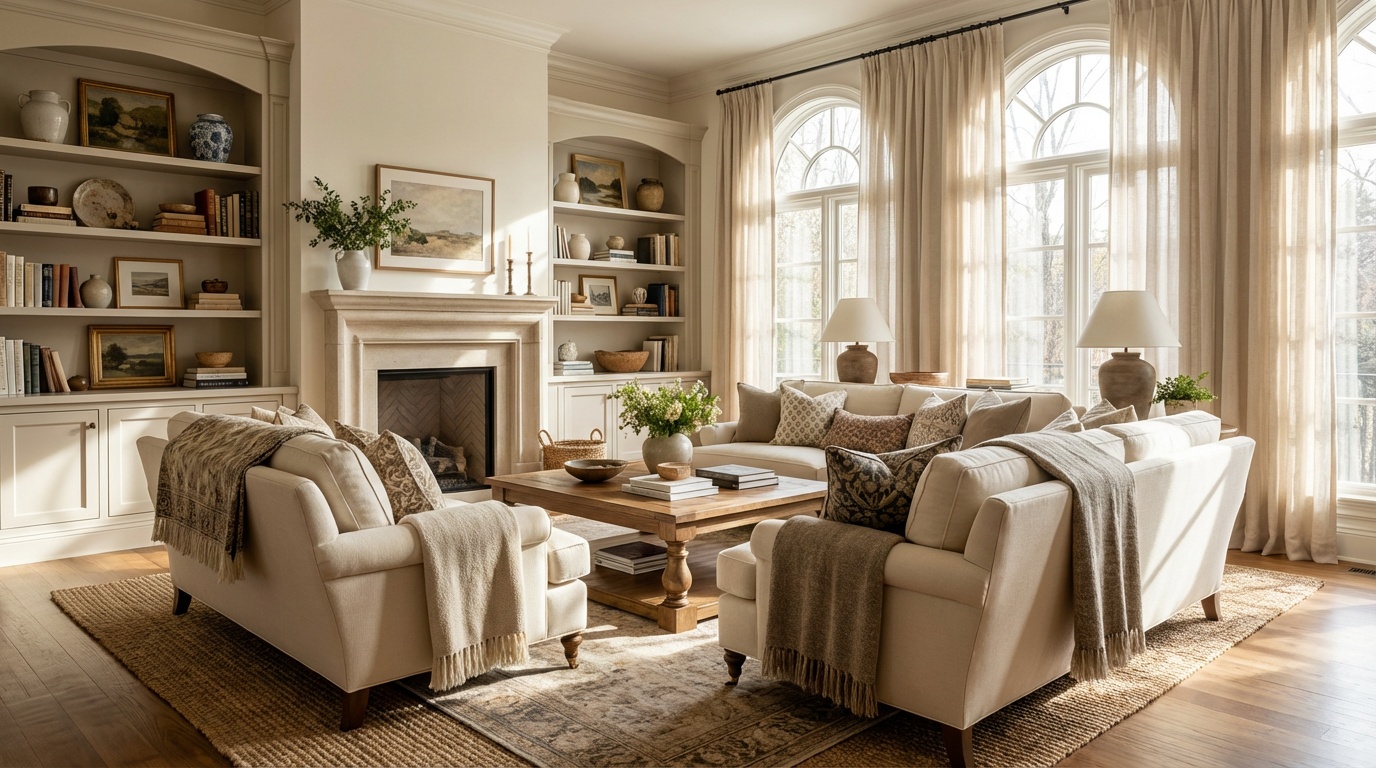
Lighting makes or breaks a transitional living room's atmosphere. Start by maximizing natural light—this style celebrates bright, airy spaces. Keep window treatments simple and functional: linen or cotton drapery panels in neutral tones, mounted high and wide to maximize light when open. Layer with cellular shades or simple roller shades for privacy and light control. Avoid heavy, ornate drapery treatments that skew too traditional.
Artificial lighting in transitional spaces requires thoughtful layering across three categories:
Ambient lighting provides overall illumination. A statement chandelier or semi-flush ceiling fixture serves as both functional lighting and a focal point. Look for fixtures that blend materials—a drum shade chandelier with metal accents, a modern geometric fixture in warm brass, or a simplified traditional form in updated finishes. Recessed lighting on dimmers provides flexible ambient light without visual clutter. Aim for fixtures that feel current but not aggressively trendy.
Task lighting addresses specific activities. Position floor lamps beside reading chairs—select designs with clean lines, perhaps a metal arc lamp or a traditional lamp base with a simple drum shade. Table lamps on end tables or consoles should come in pairs for symmetry, featuring ceramic, glass, or metal bases in coordinating finishes. The shade should be simple: linen drum shades in white or cream work universally.
Accent lighting creates depth and drama. Use picture lights to highlight artwork, LED strip lighting in built-in shelving, or small accent lamps on bookcases. These layers add warmth and dimension, preventing the space from feeling flat or one-dimensional.
Fixture styles that complement transitional design include:
- Drum shade chandeliers with metal or wood accents
- Linear suspension fixtures in brushed metals
- Updated traditional forms: simplified lanterns, geometric pendants, or modern interpretations of classic shapes
- Floor lamps with tripod bases or simple arc designs
- Table lamps with ceramic, glass, or metal bases and linen shades
Creating the right mood involves strategic placement and control. Install dimmers on all overhead lighting to adjust intensity throughout the day. Position lamps to create pools of light in conversation areas, making the space feel intimate and inviting. Use warm white bulbs (2700-3000K) rather than cool white to maintain the room's warmth. Consider the interplay between natural and artificial light—your space should transition seamlessly from day to night lighting.
Lighting & Ambiance
Furniture & Decor Shopping Guide
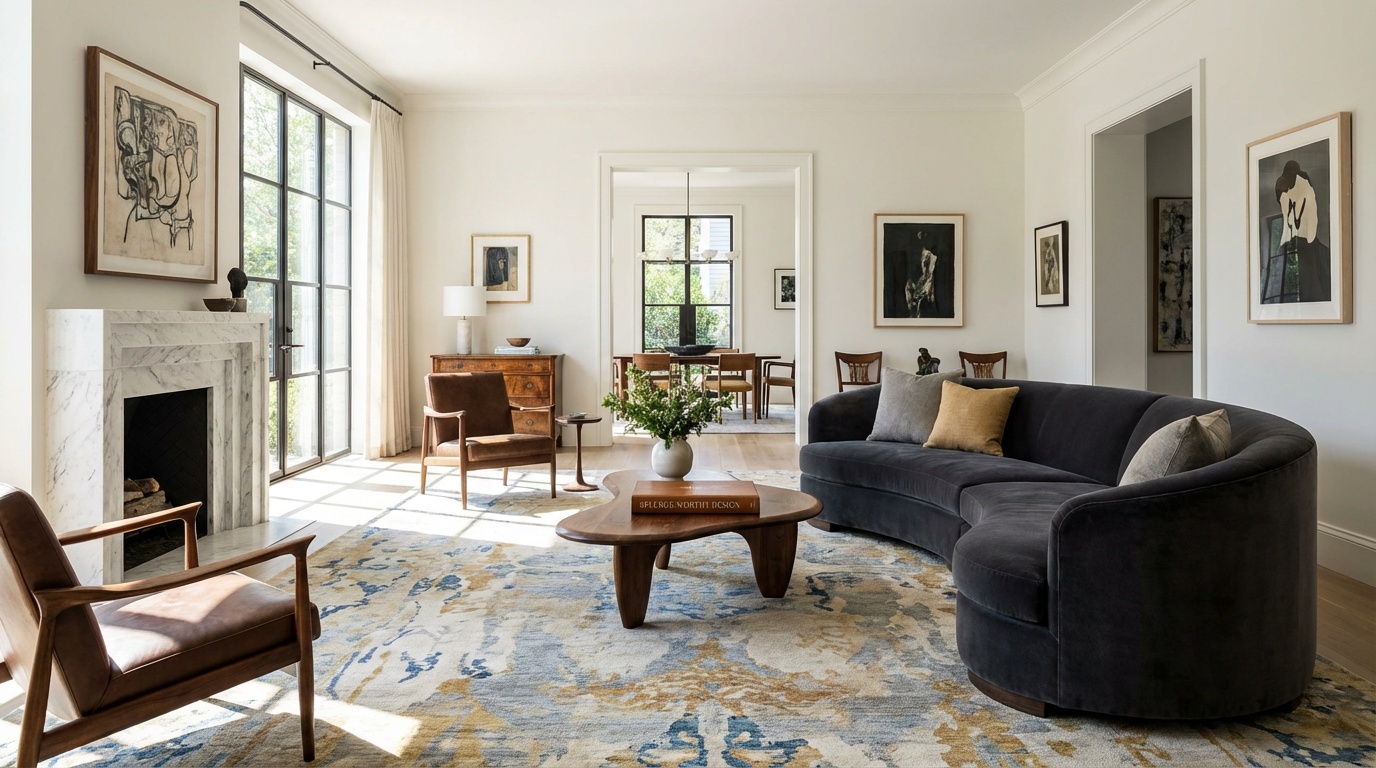
Knowing where to invest your budget makes all the difference in achieving an authentic transitional look. Splurge-worthy investment pieces include:
Your sofa: This anchors the entire room and receives heavy use. Invest in quality construction, eight-way hand-tied springs, and durable upholstery. Budget $1,500-$4,000 for a quality piece that lasts 10-15 years.
A statement area rug: A high-quality wool or wool-blend rug in a transitional pattern grounds the space. Invest $800-$2,500 for an 8x10 or 9x12 rug that withstands traffic and maintains its appearance.
Accent chairs: Quality upholstered chairs with solid wood frames justify their cost through longevity and comfort. Budget $600-$1,200 per chair.
Lighting fixtures: A beautiful chandelier or statement floor lamp elevates the entire space. Invest $300-$1,000 in your primary fixture.
Budget-friendly alternatives allow you to achieve the look without breaking the bank:
- IKEA offers surprisingly sophisticated sofas and chairs in neutral colors that work well in transitional spaces (Kivik, Ektorp, Strandmon lines)
- Target's Threshold and Studio McGee collections provide affordable case goods, lighting, and accessories
- West Elm during sales offers mid-range furniture with transitional appeal
- Wayfair and Overstock carry countless options at various price points—filter for "transitional" style
- HomeGoods and TJ Maxx offer treasure-hunt shopping for accessories, lamps, and decorative objects
For online shopping with extensive transitional selections:
- Pottery Barn and Crate & Barrel epitomize transitional style
- Joss & Main offers curated sales on transitional pieces
- Article provides modern-leaning transitional furniture at mid-range prices
- Serena & Lily for coastal-transitional pieces
- Ballard Designs for traditional-leaning transitional items
Vintage and secondhand finds add character and value. Look for:
- Mid-century modern wood case goods that blend beautifully with transitional style
- Traditional upholstered chairs for reupholstering in contemporary fabrics
- Antique mirrors, artwork, and decorative objects that add history
- Quality wood coffee tables and side tables that just need refinishing
Shop estate sales, Facebook Marketplace, Craigslist, and Chairish for these treasures.
DIY projects to achieve the look affordably:
- Reupholster thrifted chairs in contemporary neutral fabrics
- Paint or stain existing wood furniture to coordinate with your palette
- Create custom artwork using canvas, paint, and simple abstract techniques
- Sew simple pillow covers in coordinating fabrics
- Update lamp shades on existing lamps with new linen drum shades
- Build simple floating shelves for display and storage
These projects allow you to customize pieces to your exact specifications while saving significantly compared to purchasing new.
Furniture & Decor Shopping Guide
Common Mistakes to Avoid
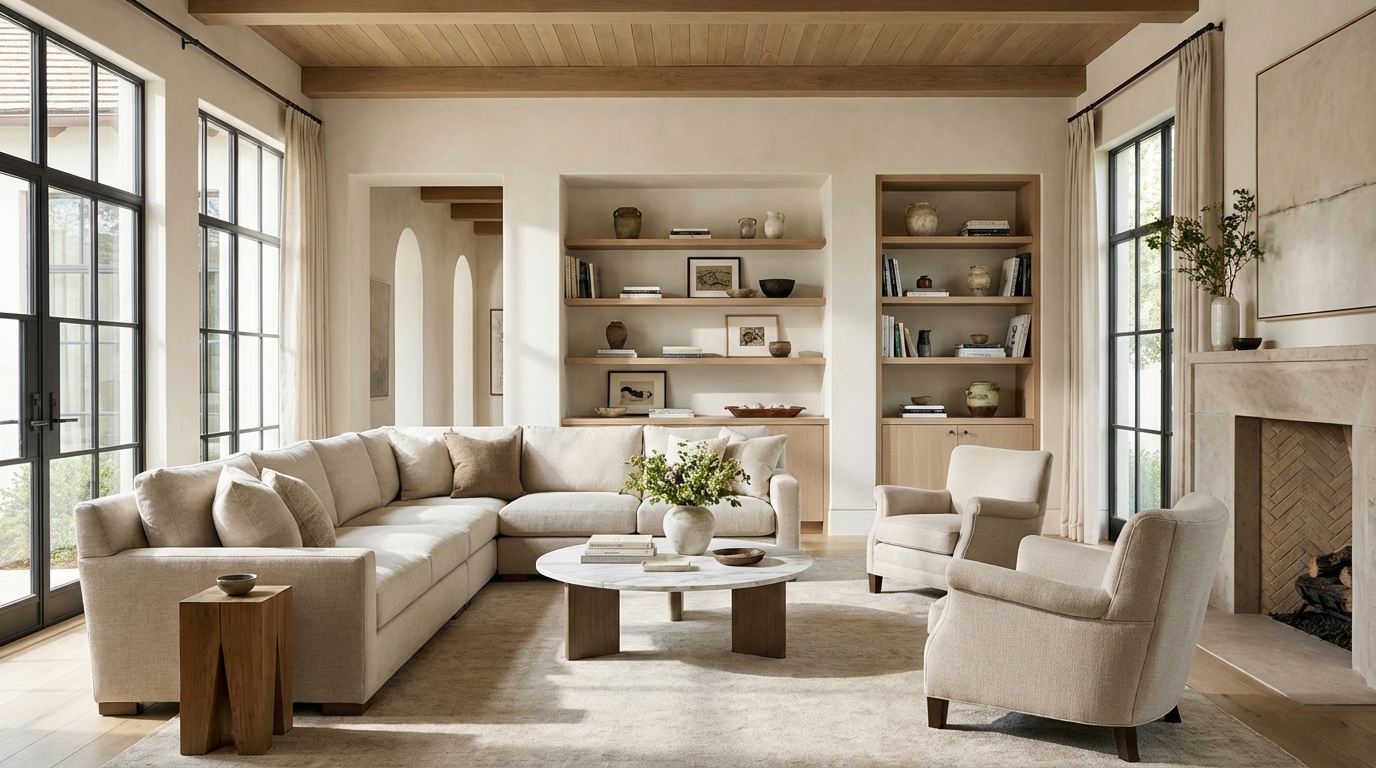
Even with the best intentions, certain missteps can throw off your transitional living room's balance. Here are the top five mistakes and how to correct them:
Mistake 1: Skewing too far traditional or too modern
The hallmark of transitional design is balance. When your space feels too traditional (heavy drapery, ornate furniture, dark woods), it loses the fresh, current feeling. When it skews too modern (stark white walls, all hard surfaces, minimal comfort), it feels cold and unwelcoming.
Fix it: Audit your space. If it feels too traditional, remove ornate accessories, lighten window treatments, and add contemporary lighting or a modern accent chair. If it's too modern, warm it up with traditional wood furniture, layered textiles, and softer accessories.
Mistake 2: Neglecting texture
A neutral color palette without varied textures feels flat and boring. Many people choose all smooth surfaces—leather sofa, glass coffee table, flat-weave rug—and wonder why the space lacks dimension.
Fix it: Layer multiple textures intentionally. Combine smooth leather with nubby linen, add a chunky knit throw, choose a wool rug with subtle texture, incorporate woven baskets, and display ceramic or wood accessories. Texture creates visual interest without adding color or pattern.
Mistake 3: Poor scale and proportion
Oversized furniture in small spaces or undersized pieces in large rooms disrupts the balanced feeling transitional design requires. A massive sectional in a small living room or tiny accent chairs in a sprawling space both miss the mark.
Fix it: Measure carefully before purchasing. Your sofa should be proportional to the room—typically 75-85 inches for average living rooms, 90+ inches for larger spaces. Coffee tables should be about two-thirds the sofa length. Leave adequate walking space (30-36 inches) around furniture. Use painter's tape on the floor to visualize furniture footprints before buying.
Mistake 4: Ignoring the power of editing
Transitional style requires restraint. Overcrowding surfaces with accessories, hanging too much artwork, or including too many furniture pieces creates visual chaos that contradicts the style's serene foundation.
Fix it: Edit ruthlessly. Follow the "less is more" principle—group accessories in odd numbers (3 or 5), leave negative space on surfaces, and remove at least 20% of what you initially place. Your eye should have places to rest.
Mistake 5: Mixing too many wood tones carelessly
While transitional design allows mixed wood finishes, combining too many different tones or undertones creates a disjointed appearance. A honey oak coffee table, cherry media console, and walnut side tables might clash rather than coordinate.
Fix it: Limit yourself to two, maximum three, wood tones. Keep them within the same undertone family (all warm or all cool). Distribute each tone throughout the room rather than clustering them—if your coffee table is walnut, place walnut picture frames on the opposite side of the room to create visual flow.
Signs your space is missing the mark: It feels too formal or too casual for your lifestyle, you're uncomfortable having guests over, the room doesn't photograph well, or you find yourself constantly rearranging trying to make it "feel right."
The balance between over-styling and under-styling requires honest assessment. An over-styled room has too many accessories, competing focal points, and no visual rest areas. An under-styled room feels incomplete, with bare walls, minimal accessories, and a temporary appearance. Aim for the middle ground: intentional styling that looks effortless and curated without appearing sparse or cluttered.
Common Mistakes to Avoid
Styling for Different Budgets & Spaces
Transitional design adapts beautifully to various constraints, making it accessible regardless of your living room's size or your budget.
Small space adaptations:
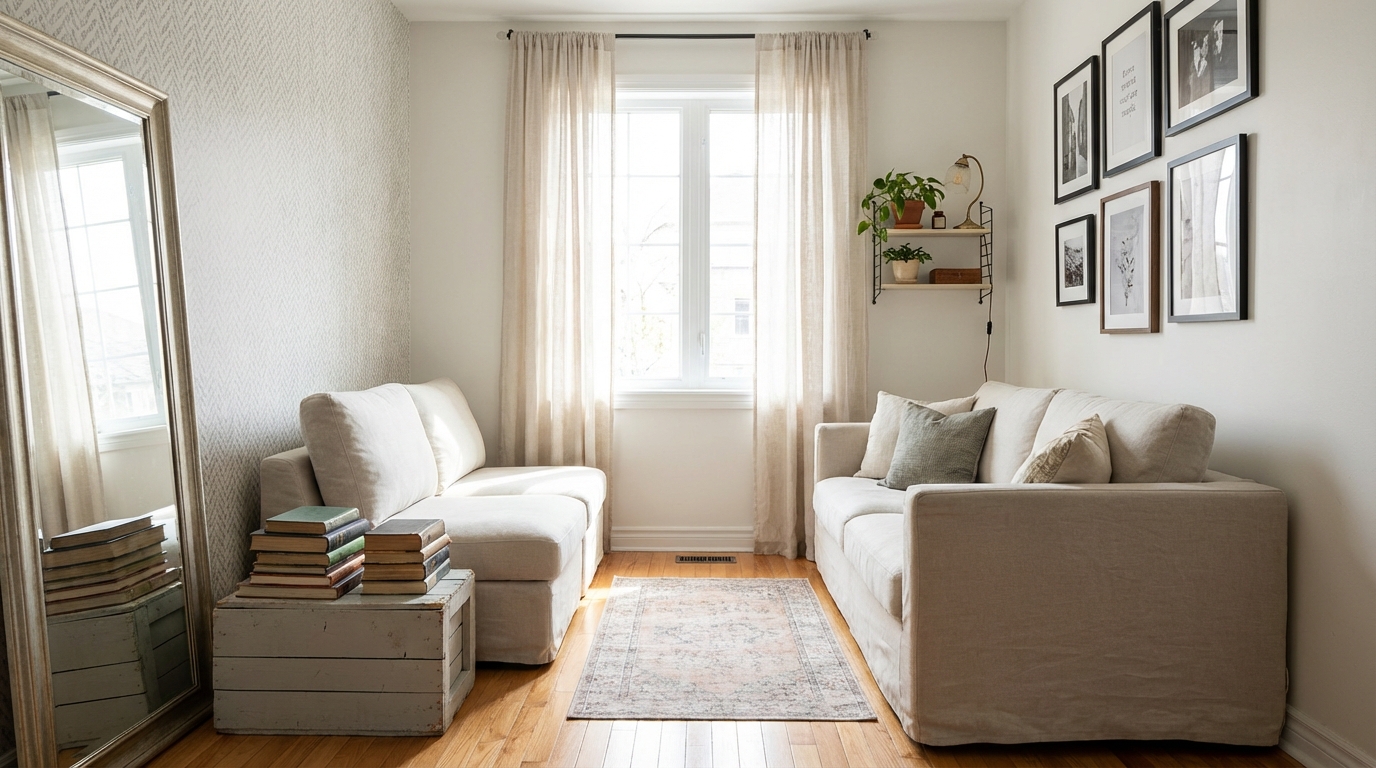
In compact living rooms, transitional style's clean lines and neutral palette actually work to your advantage, making spaces feel larger and more open. Key strategies include:
- Choose a sofa with exposed legs rather than a skirted base—this creates visual space underneath
- Select a glass or acrylic coffee table to maintain sightlines
- Mount your TV rather than using a large media console
- Use mirrors strategically to reflect light and create depth
- Opt for a lighter color palette within the transitional range
- Choose multi-functional furniture like ottomans with storage
- Hang curtains high and wide to draw the eye upward
- Limit accent chairs to one instead of a pair if space is tight
Rental-friendly approaches:
Renters can absolutely achieve transitional style without permanent changes:
- Focus budget on moveable furniture rather than built-ins
- Use removable wallpaper or large-scale artwork instead of paint
- Choose freestanding bookshelves over built-in shelving
- Layer area rugs over less-than-ideal carpet or flooring
- Use floor and table lamps rather than relying on existing fixtures
- Hang curtains with tension rods or Command hooks where allowed
- Style around existing elements you can't change by coordinating your palette
Budget tier transformations:
Under $500: Focus on high-impact, low-cost changes
- Paint walls in a neutral transitional color ($50-100)
- Add new throw pillows in coordinating colors ($80-120)
- Purchase a quality area rug during sales ($150-200)
- Update lighting with new lamp shades or one new table lamp ($50-100)
- Add artwork or mirrors ($50-100)
- Declutter and rearrange existing furniture (free)
$500-$2,000: Make significant furniture updates
- Invest in a new sofa or have existing one reupholstered ($800-1,200)
- Add one quality accent chair ($400-600)
- Purchase a new coffee table ($200-400)
- Update window treatments ($150-300)
- Add a statement light fixture ($200-400)
- Layer in accessories and textiles ($150-300)
$2,000+: Complete room transformation
- Quality sofa ($1,500-3,000)
- Pair of accent chairs ($800-1,600)
- Coffee table and side tables ($500-800)
- Area rug ($600-1,200)
- Lighting package: chandelier and lamps ($500-1,000)
- Window treatments ($300-600)
- Artwork and accessories ($300-500)
- Professional paint job if desired ($400-800)
Phasing your transformation over time:
You don't need to complete your transitional living room overnight. A strategic phasing approach allows you to spread costs while maintaining design cohesion:
Phase 1 (Months 1-2): Establish your foundation
- Paint walls in your chosen neutral
- Declutter and remove items that don't fit the vision
- Rearrange existing furniture for better flow
- Create a mood board and shopping list
Phase 2 (Months 3-4): Invest in your anchor piece
- Purchase your sofa or have existing furniture reupholstered
- Add a quality area rug
- Update window treatments
Phase 3 (Months 5-6): Layer in supporting furniture
- Add accent chairs or a new coffee table
- Invest in better lighting
- Begin adding artwork
Phase 4 (Months 7-12): Refine and accessorize
- Add remaining furniture pieces
- Layer in textiles: pillows, throws, additional rugs
- Complete your accessory collection
- Fine-tune and edit
This approach allows you to live with each addition, ensuring it works before committing to the next purchase. You'll also spread the financial investment over time, making a high-quality transitional living room achievable on almost any budget.
Styling for Different Budgets & Spaces
Bringing Your Vision to Life
The most challenging aspect of designing a transitional living room is visualizing how all these elements come together in your specific space. You might love a sofa in the showroom but wonder if it works with your wall color. That rug looks perfect online, but will it coordinate with your existing furniture? Traditional interior design required expensive consultations or risky purchases based on imagination alone.
This is where technology transforms the design process. Before investing in furniture, paint, or accessories, start with visualization. Being able to see your living room transformed into your ideal transitional style eliminates guesswork and costly mistakes. You can experiment with different furniture arrangements, color palettes, and design directions without spending a dime or moving a single piece of furniture.
RoomStudioAI revolutionizes this visualization process, making professional-level design exploration accessible to everyone. Here's how it works: simply upload a photo of your current living room—no special photography skills required, just a clear shot from your smartphone. Within seconds, RoomStudioAI's advanced artificial intelligence transforms your space into a stunning transitional living room design, showing you exactly how this style works in your specific room with your specific layout, lighting, and architectural features.
The beauty of this approach is the ability to experiment risk-free. Not sure if you prefer a more traditional-leaning or modern-leaning transitional style? Generate both versions and compare them side-by-side. Wondering how different color palettes look in your particular lighting? Upload the same photo multiple times and explore various options. Curious whether your space can accommodate that sectional you've been eyeing? See it visualized before making the purchase.
This technology also helps you communicate your vision to family members, roommates, or partners. Rather than describing what you imagine, you can show them concrete visualizations. It's much easier to get everyone on board when they can actually see the end result.
The best part? RoomStudioAI offers free visualization to get you started. You can upload your living room photo and see it transformed into a transitional design without any commitment. This allows you to explore whether this style truly resonates with you before investing time and money into the transformation.
Ready to see your living room's transitional potential? Take a quick photo of your space, head to RoomStudioAI, and upload it to the platform. Within moments, you'll see your room transformed with transitional furniture, a perfectly balanced color palette, appropriate lighting, and all the elements we've discussed in this guide. You might discover layout possibilities you hadn't considered or color combinations that work beautifully in your specific space.
Designing your dream transitional living room should be exciting, not stressful. With the right knowledge, strategic planning, and modern visualization tools, you can create a space that perfectly balances traditional warmth with contemporary sophistication—a living room that feels collected rather than decorated, timeless rather than trendy, and authentically yours. Your transitional living room journey starts with a single photo. Why not take it today?