What Defines Retro 70s Style
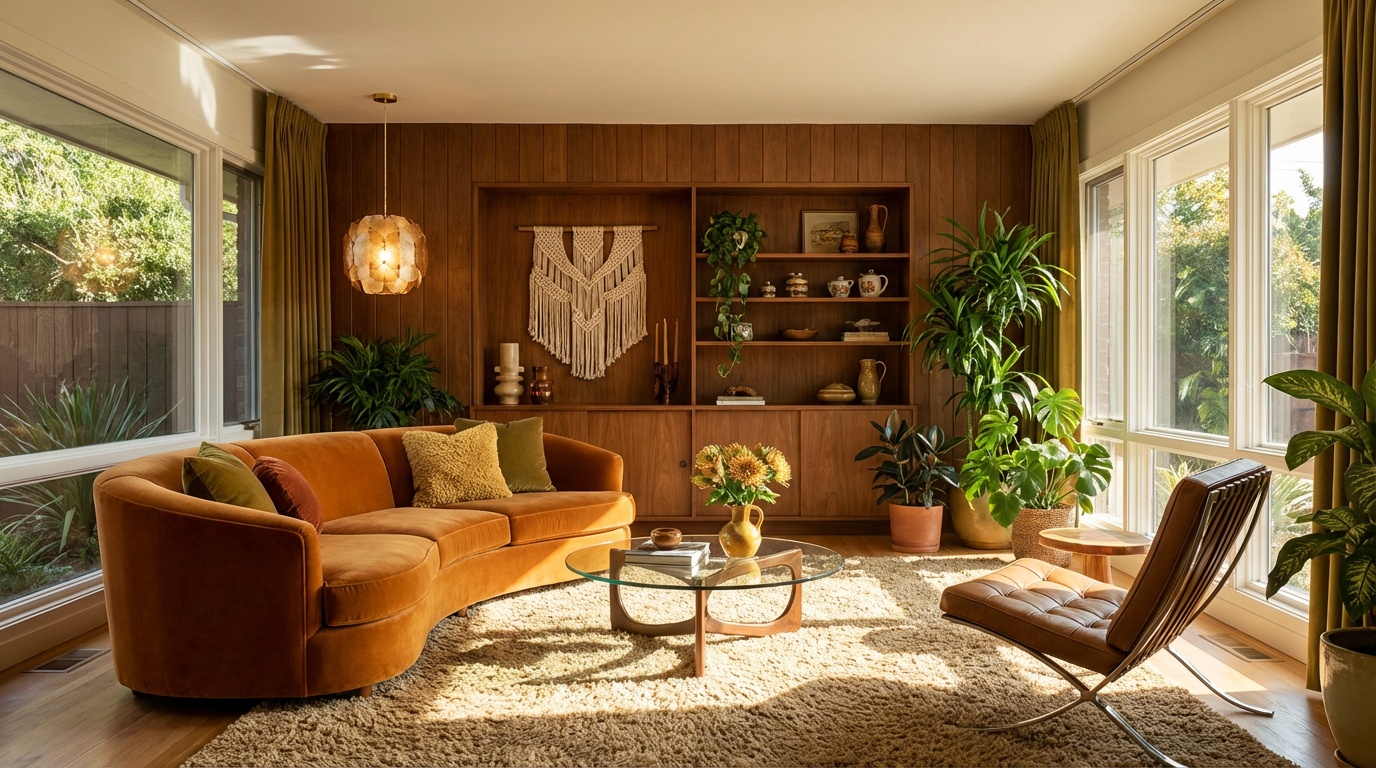
The 1970s marked a pivotal shift in interior design philosophy, moving away from the sleek minimalism of the mid-century modern era toward something warmer, more organic, and decidedly more expressive. This decade embraced natural materials, earthy tones, and a relaxed approach to living that reflected the broader cultural movements of the time—from environmentalism to self-expression and the rejection of rigid formality.
At its core, retro 70s design philosophy centered on creating comfortable, inviting spaces that encouraged gathering and conversation. Unlike the buttoned-up formality of previous decades, 70s interiors prioritized coziness and personality over perfection. This was the era when living rooms became true living spaces—places to sprawl out on low-slung sofas, gather around conversation pits, and surround yourself with textures and colors that felt good rather than just looked good.
Historically, 70s design emerged from several converging influences: the tail end of the hippie movement brought natural fibers and handcrafted elements, the space age contributed futuristic shapes and metallic accents, and global travel inspired exotic patterns from Morocco, India, and beyond. The result was an eclectic mix that somehow cohered into a distinct aesthetic we instantly recognize today.
Why does this style resonate so strongly with modern homeowners? In our current era of sleek minimalism and all-white everything, 70s maximalism offers a refreshing antidote. It gives us permission to embrace color, pattern, and personality. The emphasis on natural materials aligns perfectly with contemporary sustainability values, while the cozy, lived-in vibe counters our increasingly digital lives. There's something deeply appealing about a design era that prioritized comfort and self-expression over Instagram-perfect staging.
What distinguishes 70s style from its mid-century modern predecessor? While both embrace organic shapes and natural materials, 70s design goes bolder with color, heavier with texture, and lower to the ground with furniture profiles. Where mid-century modern feels crisp and optimistic, 70s style feels warm and grounded. The palette shifts from primary brights to earthy ochres, the woods darken from blonde teak to rich walnut, and the overall mood becomes more intimate and enveloping.
What Defines Retro 70s Style
Essential Elements for Your Retro 70s Living Room
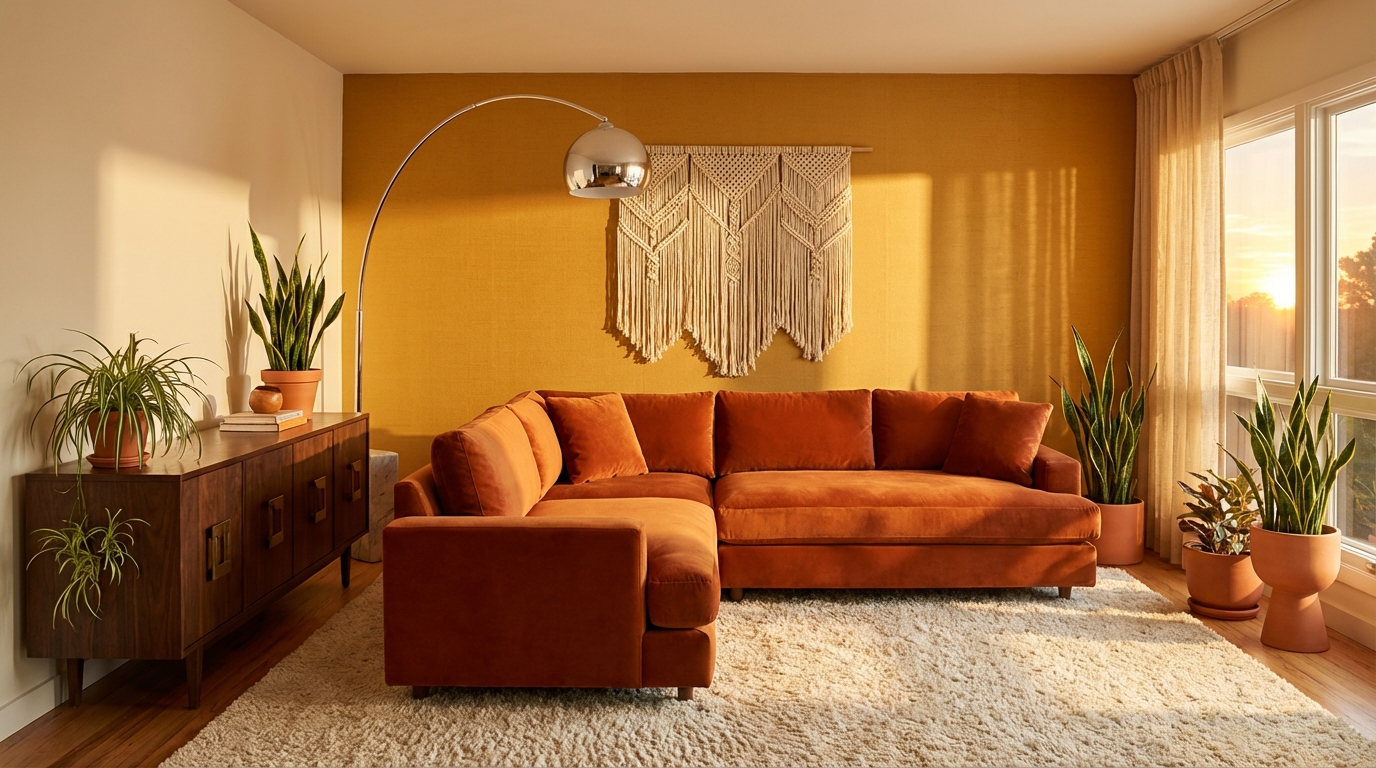
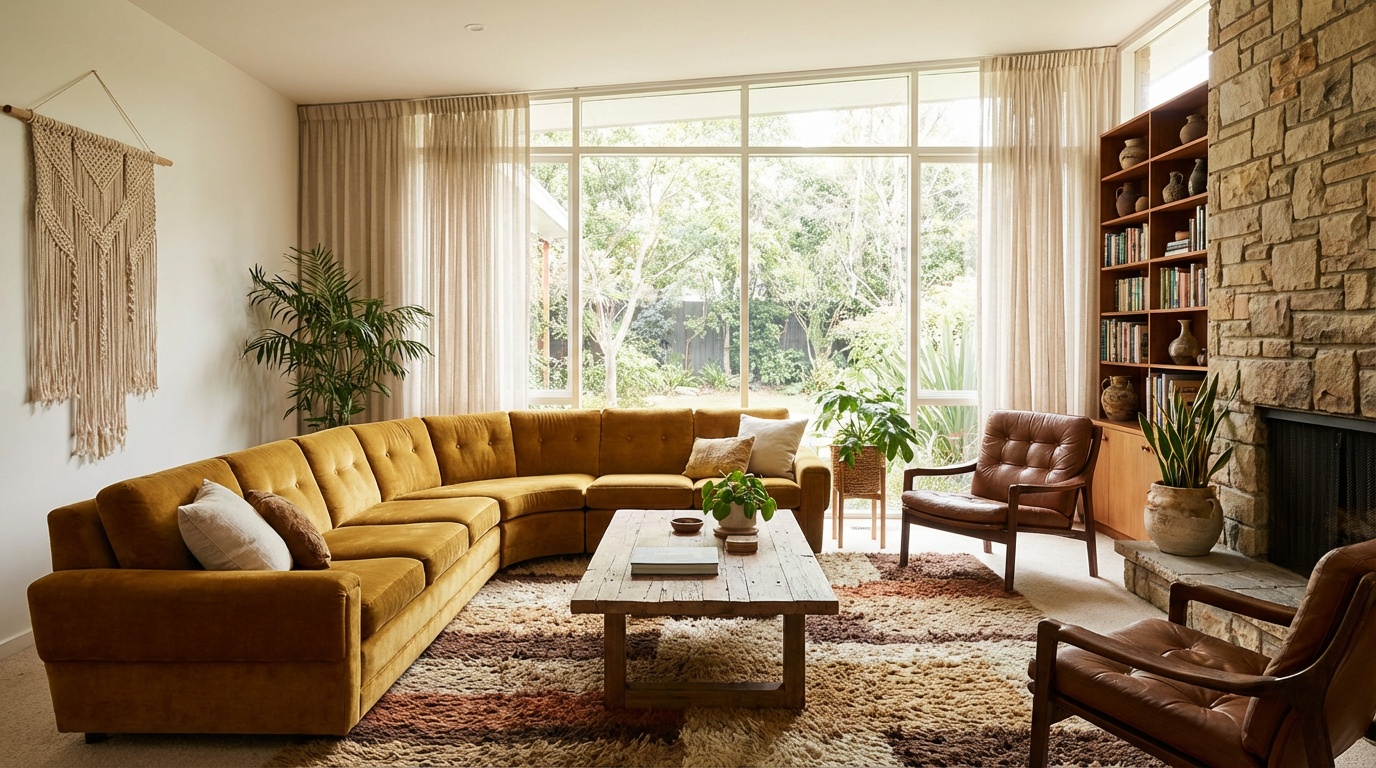
Creating an authentic retro 70s living room starts with selecting the right furniture pieces that capture the era's distinctive aesthetic. The low-profile sofa reigns supreme—look for pieces with deep seats, low backs, and substantial cushions upholstered in velvet, corduroy, or nubby textured fabrics. Ideally, your sofa should sit close to the ground and stretch wide, inviting people to sink in and stay awhile. Materials like cognac leather, burnt orange velvet, or chocolate brown corduroy instantly evoke the period.
A modular sectional represents the ultimate 70s seating solution, offering flexibility and that coveted sunken-in-for-the-evening vibe. These pieces often featured curved or serpentine shapes rather than rigid right angles, creating flowing conversation areas. If you can find or create a genuine conversation pit (a recessed seating area), you've hit the 70s jackpot, though this works better for homeowners than renters.
For additional seating, consider barrel chairs or egg chairs upholstered in rich fabrics or leather. The iconic papasan chair with its large circular cushion also belongs to this era, offering both comfort and visual interest. A low-slung coffee table in dark wood, smoked glass, or chrome becomes the room's anchor—look for organic shapes like ovals, kidneys, or free-form designs rather than simple rectangles.
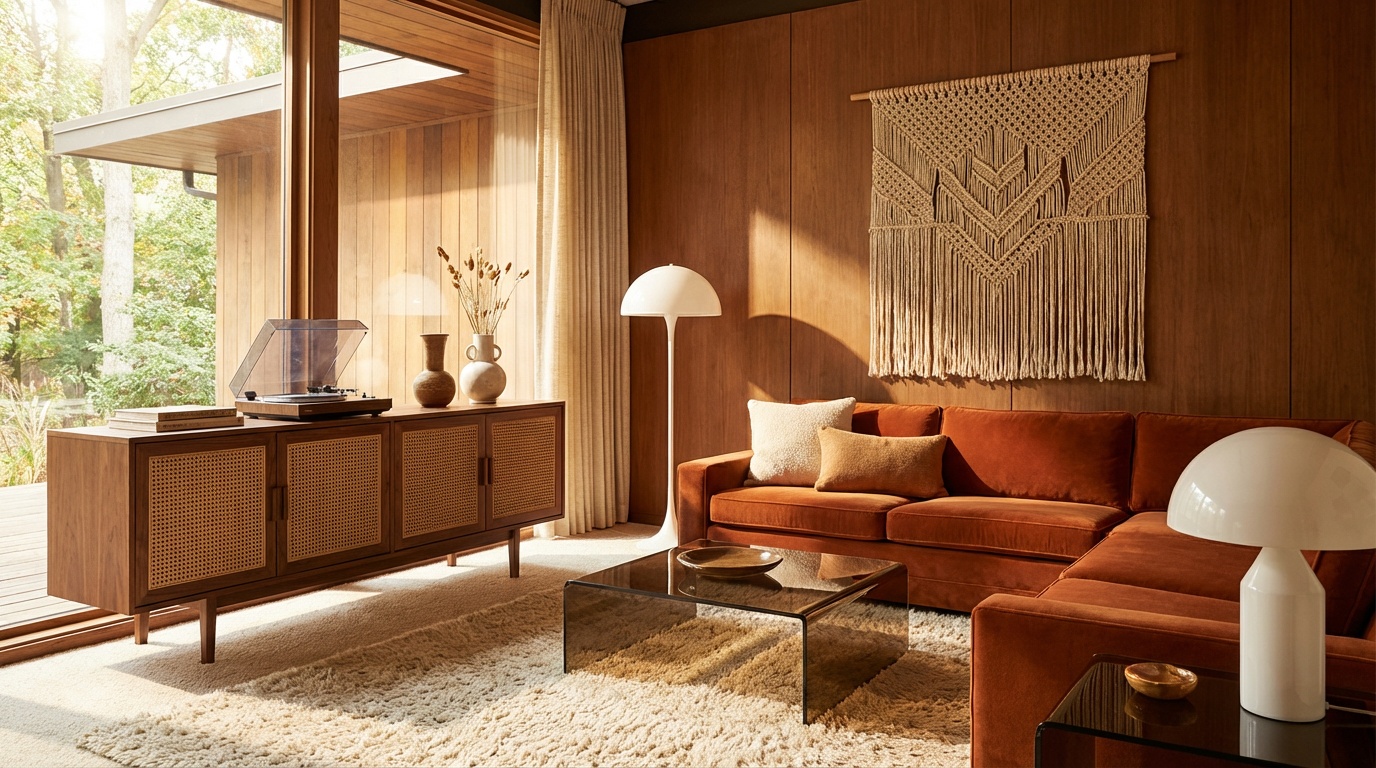
Storage and display pieces should include a credenza or sideboard in dark walnut or teak, preferably with sliding doors and geometric hardware. These versatile pieces provide storage while offering surface space for your record player (an essential 70s element), plants, and decorative objects. Open shelving units in chrome and glass or wood with geometric patterns also work beautifully for displaying books, ceramics, and treasures.
The signature shapes of 70s furniture embrace curves, arcs, and organic forms. Think rounded edges, swooping arms, and flowing lines rather than sharp angles. Furniture legs tend to be chunky and substantial or completely absent, with many pieces sitting directly on the floor. Geometric patterns—circles, hexagons, and abstract shapes—appear in everything from coffee table bases to wall units.
Key materials include dark woods (walnut, rosewood, teak in darker finishes), metals (brushed chrome, brass, smoked steel), and fabrics (velvet, corduroy, suede, leather, macramé, and shag). Natural fibers like rattan, wicker, and bamboo add texture and organic appeal. For upholstery, you want substantial, tactile fabrics that invite touch—nothing sleek or slippery.
Essential Elements for Your Retro 70s Living Room
Color Palettes & Combinations
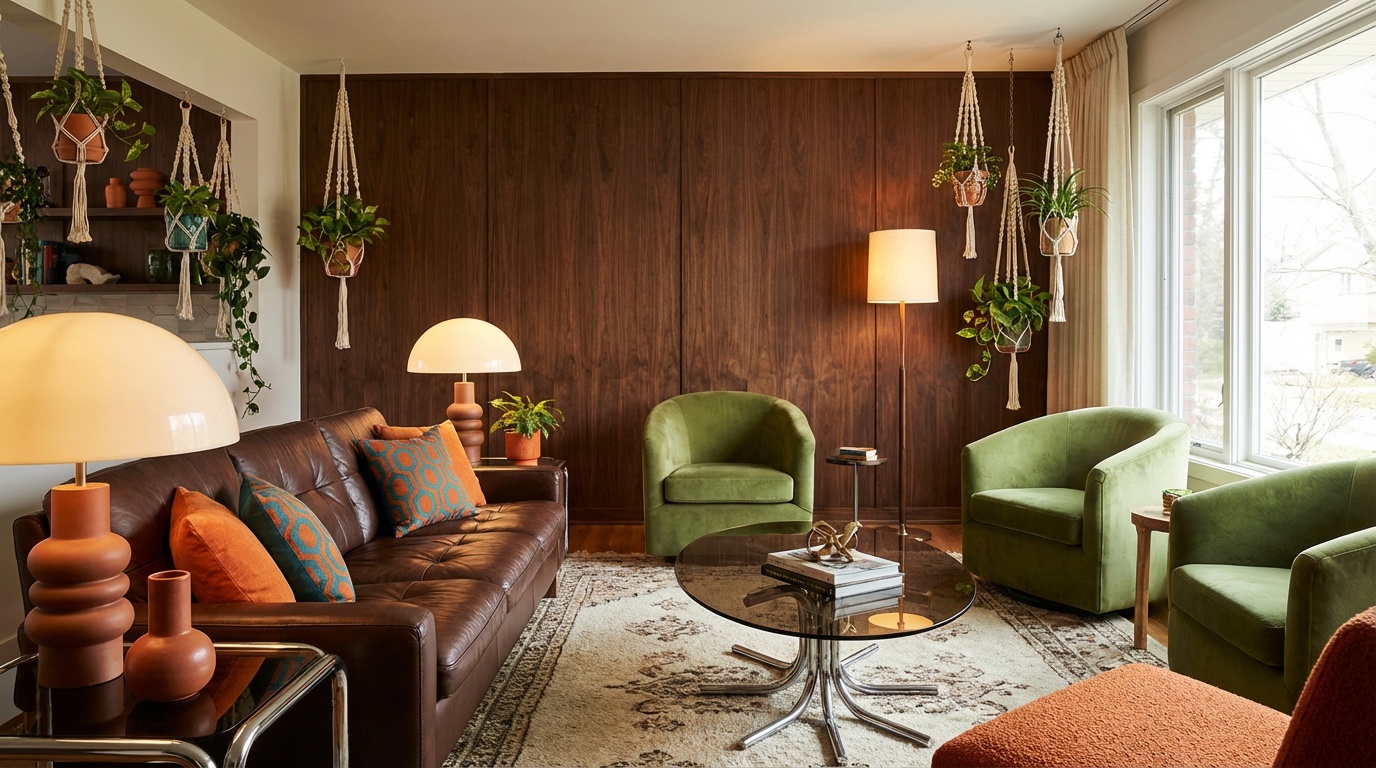
The retro 70s color palette draws directly from nature, embracing the earthy, warm, and organic tones that defined the decade's aesthetic. Your primary palette should center on harvest gold (a rich, mustardy yellow-orange), burnt orange (think terracotta and rust), avocado green (a muted, slightly grayed olive), and chocolate brown (deep, warm, and enveloping). These aren't timid pastels—70s colors have depth, saturation, and presence.
Within this earthy foundation, you'll find variations: ochre and amber for golden tones, sienna and paprika for oranges, sage and olive for greens, and cognac and espresso for browns. The key is choosing colors that feel like they came from the earth—clay, rust, moss, wood bark, autumn leaves.
Accent colors that complement this palette include teal and peacock blue (adding a jewel-tone punch), plum and eggplant (rich purples that pair beautifully with oranges), brick red (deeper than orange but equally warm), and cream and ivory (essential neutrals that prevent the space from feeling too dark). Metallic accents in brass, bronze, and copper add warmth, while chrome provides cool contrast.
Balancing these bold colors requires strategy. Use your darkest browns on larger furniture pieces—the sofa, credenza, or built-in shelving. Apply your mid-tones (oranges, greens, golds) to accent furniture, large textiles, and one accent wall. Reserve your brightest or most saturated colors for smaller doses—throw pillows, artwork, ceramics, and decorative objects. The cream and ivory neutrals should appear in area rugs, lampshades, and some textiles to give the eye places to rest.
For wall colors, you have several approaches. The safest route uses warm cream, ivory, or light tan on walls, allowing furniture and decor to provide color. More adventurous designers might paint walls in harvest gold, burnt orange, or avocado green, creating an immersive color experience. A popular 70s technique involved painting one accent wall in a bold color while keeping others neutral. Wood paneling—either real or wallpaper that mimics it—adds authentic 70s character, especially in darker walnut tones.
Furniture colors tend toward the browns, oranges, and greens, with upholstery in rich, saturated tones. Decor and accessories bring in the teals, purples, and metallic accents. This distribution creates layers of color that feel cohesive rather than chaotic.
While 70s style doesn't dramatically shift with seasons, you can make subtle adjustments. In cooler months, emphasize the deeper browns, brick reds, and plums, adding extra textiles like shag throws and velvet pillows. In warmer months, lighten up with more creams, lighter golds, and sage greens, removing some layers while maintaining the core palette. The beauty of 70s style is its inherent warmth works year-round.
Color Palettes & Combinations
Lighting & Ambiance
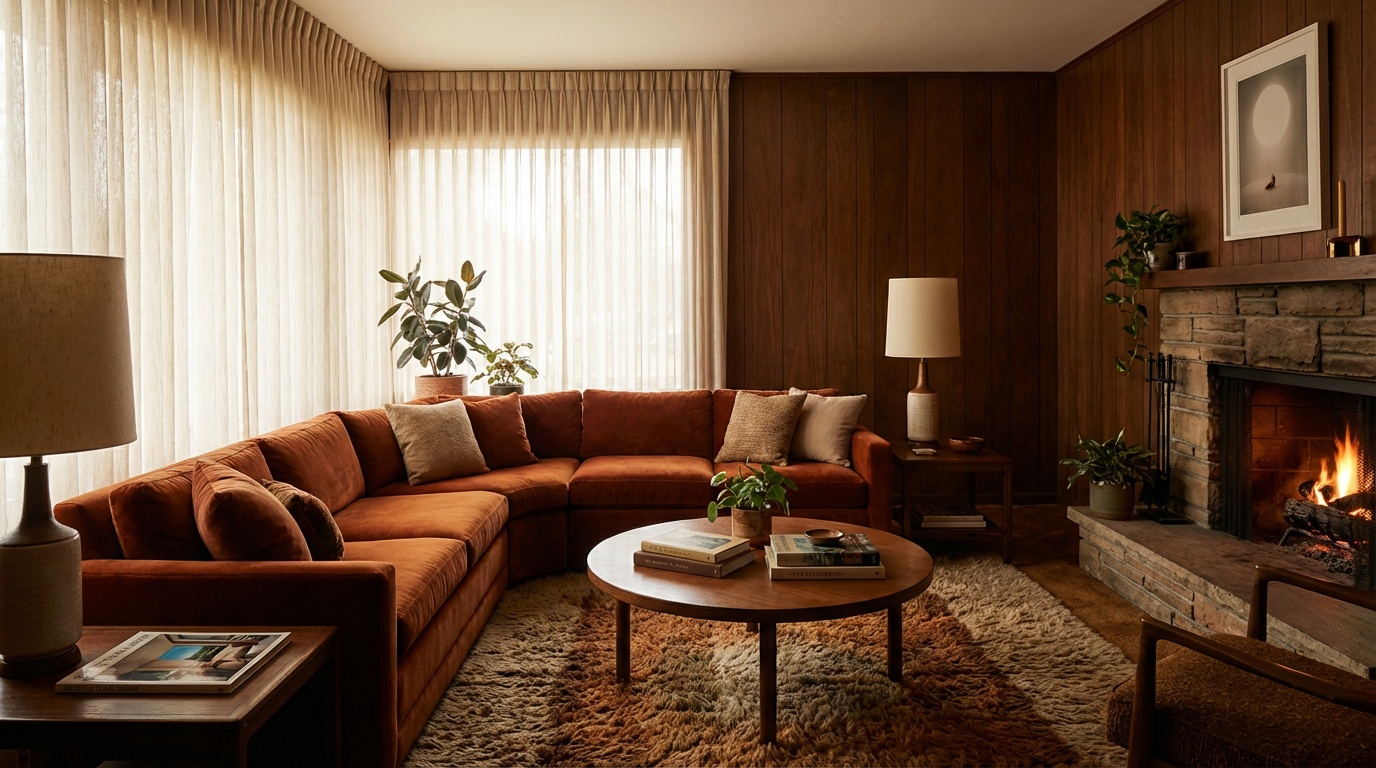
Lighting in a retro 70s living room aims to create warm, ambient, and slightly moody illumination—nothing harsh, bright, or clinical. The goal is an inviting glow that makes everyone look good and encourages relaxation. This stands in stark contrast to contemporary trends favoring bright, white LED lighting.
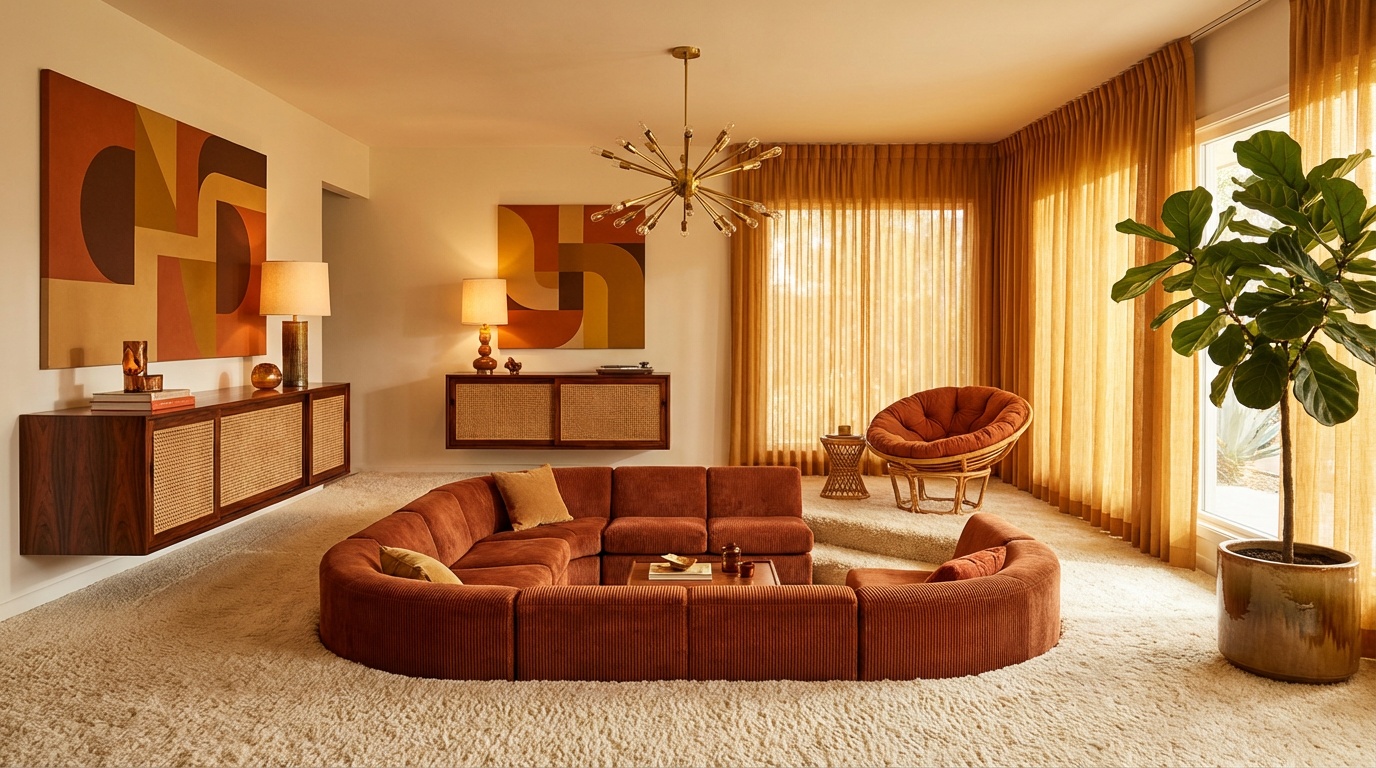
For natural lighting, embrace it but soften it. Large windows are wonderful, but the 70s approach involved filtering sunlight through sheer curtains in cream or amber tones, or heavier drapes in velvet or corduroy that could be drawn for privacy and atmosphere. If you have the option, warm-toned window films or amber-tinted glass (in sunrooms or enclosed porches) add an authentic golden-hour glow throughout the day. Position furniture to take advantage of natural light for reading and plant displays, but don't feel obligated to maximize brightness—70s style embraces coziness over clinical brightness.
Your artificial lighting should work in multiple layers to create depth and interest. Ambient lighting comes from ceiling fixtures, but forget modern recessed lights—think drum pendants, globe fixtures (especially in smoked glass or amber), geometric chandeliers in brass or chrome, or the iconic sputnik chandelier with its radiating arms. These fixtures should cast a warm, diffused glow rather than direct beams.
Task lighting for reading and activities comes from floor lamps and table lamps with distinctive 70s character. The arc floor lamp is quintessentially 70s—a tall, curved stem (usually in chrome or brass) that arcs over seating areas, suspending a dome-shaped shade that directs light downward. Tripod floor lamps with fabric shades, mushroom table lamps with dome tops, and lava lamps (for pure nostalgia) all work beautifully. Look for lamps with sculptural bases in ceramic, wood, or metal, and fabric shades in cream, orange, or brown.
Accent lighting adds drama and atmosphere. Track lighting (yes, it's very 70s) can highlight artwork or architectural features. Uplighting behind plants or furniture creates interesting shadows and depth. String lights weren't as common in the 70s, but rope lights hidden behind furniture or along shelving add a subtle glow. Colored bulbs in amber or even red can create a specific mood, though use these sparingly.
The key to authentic 70s lighting is choosing warm-toned bulbs (2700K or lower), using dimmers extensively to control mood, and ensuring you can create pools of light rather than even, overall illumination. The room should have brighter areas for activities and dimmer corners that add mystery and coziness. Multiple light sources at different heights create the layered, intimate atmosphere that defines 70s ambiance.
Lighting & Ambiance
Furniture & Decor Shopping Guide
When building your retro 70s living room, strategic spending ensures you get the most impact for your budget. Key investment pieces worth splurging on include your sofa or sectional (the room's foundation and largest visual element), a quality credenza or sideboard (these vintage pieces have appreciated significantly and good ones last forever), and lighting fixtures (authentic vintage fixtures or high-quality reproductions make a huge impact).
For budget-friendly alternatives, consider these strategies: Instead of expensive vintage velvet sofas, look for modern sofas in 70s-appropriate colors and shapes, then add vintage-style throw pillows. IKEA's Stockholm sofa in velvet or leather captures 70s proportions at a fraction of vintage prices. For credenzas, West Elm and Article offer mid-century and 70s-inspired pieces that deliver the look without the vintage price tag or condition issues.
Where to shop depends on your budget and patience:
- Vintage and antique stores: Best for authentic pieces, especially credenzas, lamps, and decorative objects
- Estate sales and auctions: Treasure troves for real 70s furniture, often at reasonable prices
- Facebook Marketplace, Craigslist, and OfferUp: Excellent for local vintage finds; search terms like "vintage 70s," "retro," "harvest gold," and "mid-century"
- Etsy: Great for smaller vintage items, lamps, ceramics, and wall art
- Article, West Elm, CB2: Modern retailers offering 70s-inspired furniture
- Target and Urban Outfitters: Budget-friendly accessories, textiles, and smaller furniture pieces
- Wayfair and Overstock: Wide selection of affordable furniture in various styles, including 70s-inspired pieces
Vintage and secondhand finds that work particularly well include ceramic lamps (abundant and affordable), brass and chrome accessories, macramé wall hangings (having a major resurgence), rattan and wicker furniture, vintage bar carts, geometric mirrors, shag rugs (if in good condition), and record players with speakers. These items are often cheaper vintage than new because they're abundant from the era.
DIY projects can achieve the look affordably:
- Macramé wall hangings: Tutorials abound online; materials cost $20-50
- Painting existing furniture: Transform a basic dresser into a 70s credenza with walnut stain and new hardware
- Reupholstering: Give a dated sofa new life with burnt orange velvet (or hire an upholsterer for larger pieces)
- Creating artwork: Abstract geometric art in 70s colors using canvas and acrylic paint
- Making shag pillows: Easier than shag rugs and just as impactful
- Refinishing thrifted furniture: Strip and restain pieces in darker walnut tones
- Dyeing curtains: Transform white curtains into harvest gold or amber using fabric dye
The smartest approach combines one or two investment vintage pieces (maybe a credenza and arc lamp) with affordable modern alternatives (sofa, coffee table) and DIY projects (artwork, textiles, small accessories). This creates an authentic look without breaking the bank or requiring endless vintage hunting.
Furniture & Decor Shopping Guide
Common Mistakes to Avoid
Even with the best intentions, several common pitfalls can derail your retro 70s living room. Here are the top mistakes and how to avoid them:
Mistake #1: Going too literal with the theme
The biggest error is creating a museum exhibit or costume party rather than a livable space. When every single element screams "1970s!"—lava lamps, shag everything, orange and brown in equal measure—the room feels like a caricature.
The fix: Apply the 80/20 rule. Let 80% of your room embrace 70s principles (color palette, furniture shapes, materials), while 20% incorporates modern conveniences and personal touches. Include contemporary elements like a modern TV (don't try to hide it in a cabinet), current books and magazines, and perhaps one piece of furniture in a more modern style. This creates a room that evokes the 70s rather than replicates it.
Mistake #2: Neglecting lighting quality
Many people nail the furniture and colors but install harsh, cool-toned LED bulbs that completely destroy the warm, cozy ambiance essential to 70s style. The wrong lighting makes even perfect furniture look wrong.
The fix: Invest in warm-toned bulbs (2700K maximum, 2200K even better), install dimmer switches on every light, and use multiple light sources instead of relying on overhead lighting alone. The right lighting transforms the entire space and is relatively inexpensive to get right.
Mistake #3: Choosing too-small furniture
Modern furniture trends favor smaller-scale pieces, but 70s style needs substantial, low-slung furniture to feel authentic. A dainty modern sofa in orange velvet won't capture the vibe—you need something with presence and heft.
The fix: Choose furniture with low profiles but generous proportions. Your sofa should be deep (36"+ seat depth if possible), wide, and close to the ground. Coffee tables should be substantial. Chairs should feel enveloping. If your space truly can't accommodate larger pieces, focus on getting the proportions right (low and wide rather than tall and narrow) even in smaller sizes.
Mistake #4: Ignoring texture
A 70s-colored room with smooth, uniform surfaces misses the mark entirely. The decade was all about tactile variety—shag, velvet, macramé, rattan, wood grain, chrome, and more, all in one space.
The fix: Consciously layer textures throughout the room. Combine smooth velvet with nubby bouclé, sleek chrome with rough macramé, glossy wood with matte ceramics. Every surface should have visual and tactile interest. Add a shag rug, textured throw pillows, woven wall hangings, and plants to create the sensory richness that defines the era.
Mistake #5: Forgetting the plants
The 70s embraced houseplants with unprecedented enthusiasm, and a 70s living room without substantial greenery feels incomplete and sterile.
The fix: Add multiple plants in various sizes, focusing on varieties popular in the era: spider plants, pothos, snake plants, fiddle leaf figs, and ferns. Display them in macramé plant hangers, on plant stands, and clustered on surfaces. The more plants, the better—this era loved bringing the outdoors in. For more plant-forward design inspiration, explore these tropical living room ideas.
Signs your space is missing the mark: If your room feels cold rather than cozy, bright rather than warm, minimal rather than layered, or dated rather than vintage-cool, reassess your choices. A successful 70s living room should feel inviting, warm, slightly moody, and personality-filled.
The balance between over-styling and under-styling requires attention. Over-styled spaces feel like stage sets—too perfect, too themed, too much. Under-styled spaces look like you just happened to buy some orange furniture without a cohesive vision. Aim for curated but lived-in, with enough 70s elements to establish the style clearly while leaving room for personal items, books, and the comfortable imperfection of real life.
Common Mistakes to Avoid
Styling for Different Budgets & Spaces
Retro 70s style adapts beautifully to various spatial and financial constraints with smart planning.
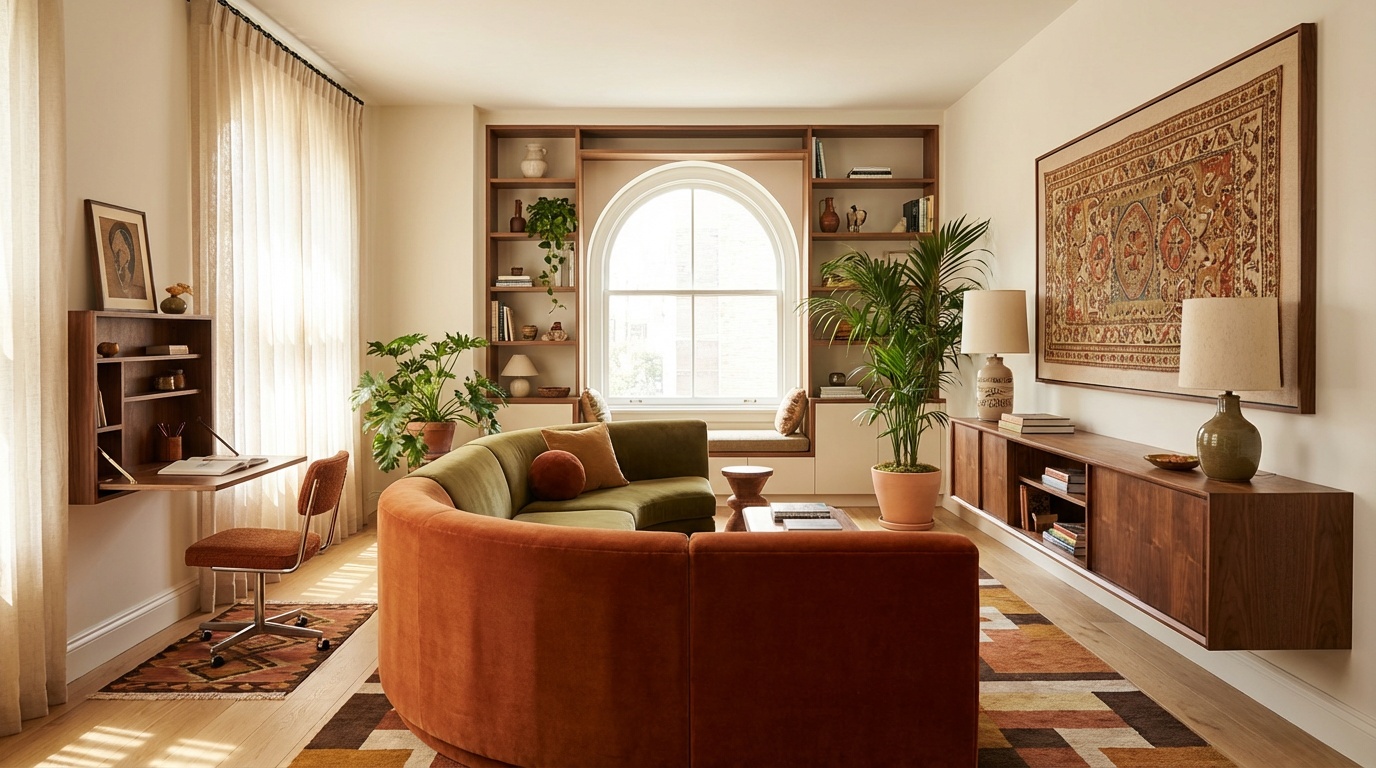
Small space adaptations require focusing on key elements rather than trying to include everything. In a compact living room:
- Choose one substantial seating piece (a velvet loveseat or small sectional) in a signature 70s color rather than multiple chairs
- Use wall-mounted or floating credenzas to save floor space while providing storage and style
- Embrace vertical elements like tall plants in macramé hangers and vertical artwork
- Select a round or oval coffee table instead of rectangular—the curved shape takes up less visual space
- Use mirrors with geometric frames to expand the sense of space while adding 70s flair
- Focus color on accents (pillows, artwork, one accent wall) rather than large furniture pieces in small spaces
- Choose multi-functional furniture like a credenza that serves as media console, storage, and bar
Rental-friendly approaches let you embrace the style without permanent changes:
- Use peel-and-stick wallpaper in 70s patterns or wood-grain finishes instead of paint
- Choose freestanding furniture over built-ins
- Add removable brass or chrome hardware to existing cabinets
- Use area rugs to define spaces and add color without changing floors
- Install removable curtain rods for vintage-style drapes
- Focus on furniture, lighting, and accessories that move with you
- Create gallery walls with command strips instead of permanent installations
Budget tiers for transformation:
Under $500: Focus on accessories and color
- Paint one accent wall ($50)
- Vintage lamp from thrift store ($30-75)
- Throw pillows in 70s colors ($80-120)
- Macramé wall hanging ($40-80)
- Vintage ceramic pieces and brass accessories ($50-100)
- Area rug in appropriate colors ($100-150)
- Plants and planters ($50-80)
$500-$2000: Add key furniture pieces
- Everything from the under-$500 list
- Modern sofa in 70s-appropriate color/style ($600-1200)
- Vintage or reproduction credenza ($300-800)
- Arc floor lamp ($150-400)
- Better quality area rug ($200-400)
- Additional seating (barrel chair or papasan) ($200-500)
$2000+: Create a complete transformation
- High-quality vintage or custom sofa ($1500-3000)
- Authentic vintage credenza ($800-2000)
- Multiple quality lighting fixtures ($500-1000)
- Custom or designer area rug ($600-1500)
- Collection of vintage accessories and art ($300-800)
- Professional paint or wallpaper installation ($500-1500)
- Multiple furniture pieces for complete room ($1000-3000)
Phasing the transformation over time makes the project manageable:
Phase 1 (Months 1-2): Establish the foundation
- Paint or wallpaper
- Acquire your main seating piece
- Add basic lighting
Phase 2 (Months 3-4): Layer in character
- Find your credenza or storage piece
- Add textiles (curtains, pillows, throws)
- Incorporate plants
Phase 3 (Months 5-6): Refine and accessorize
- Add accent seating
- Collect vintage accessories
- Upgrade lighting fixtures
- Add artwork and final decorative touches
This gradual approach lets you hunt for vintage pieces, save for quality items, and live with your choices before committing further. It also prevents the overwhelm of trying to do everything at once.
Styling for Different Budgets & Spaces
Bringing Your Vision to Life
The most challenging aspect of any design project is visualizing the final result before you commit. You might love the idea of a burnt orange velvet sofa in theory, but will it actually work in your specific living room with your existing architecture and lighting? This is where starting with visualization becomes invaluable.
Before purchasing a single piece of furniture or painting any walls, create a clear vision of your desired outcome. Collect inspiration images, create mood boards, and most importantly, see how these elements would actually look in your space rather than someone else's perfectly styled room.
This is exactly where RoomStudioAI becomes your secret weapon for design success. Instead of relying on imagination alone or making expensive mistakes, you can upload a photo of your current living room and instantly see it transformed into a retro 70s paradise. Want to compare how harvest gold walls look versus keeping them neutral? Curious whether that low-slung sectional will overwhelm your space or look perfect? RoomStudioAI lets you experiment with different approaches risk-free.
The AI-powered tool understands retro 70s design principles—the color palettes, furniture styles, textures, and proportions that make the look work. You can try multiple variations in minutes: a version with more orange, one with more brown, a maximalist approach versus a more restrained interpretation. This experimentation phase, which would traditionally require expensive consultations or costly trial-and-error purchases, becomes quick, easy, and free.
For renters wondering if 70s style can work in their space without major renovations, seeing the visualization first provides confidence. For homeowners debating between multiple design directions, comparing AI-generated options side-by-side clarifies which resonates most. For anyone worried about going too far or not far enough with the theme, visual feedback helps calibrate the right balance.
The process is simple: upload a photo of your living room, select the retro 70s style (or describe your specific vision), and within moments, you'll see professional-quality renderings of your transformed space. You can then use these visualizations as shopping guides, showing contractors exactly what you want, or simply as inspiration to guide your own DIY efforts.
Ready to see your living room's groovy potential? Try RoomStudioAI and discover how retro 70s style can transform your space. There's no commitment, no credit card required—just instant visualization that turns your design dreams into something tangible you can actually see.
The 1970s gave us a design aesthetic that prioritized comfort, personality, and warmth—values that feel more relevant than ever in our modern world. Whether you're going full-on groovy with harvest gold walls and shag carpeting or incorporating subtle 70s touches into a more eclectic space, this style offers endless opportunities for creativity and self-expression. Your living room should reflect who you are and how you want to live, and retro 70s design provides the perfect framework for creating a space that's both stylish and genuinely livable.
Start with visualization, plan strategically, shop smart, and most importantly, have fun with the process. Your dream retro 70s living room is closer than you think—and with tools like RoomStudioAI, you can see it before you create it. Now that's something even the grooviest 70s designer couldn't have imagined.