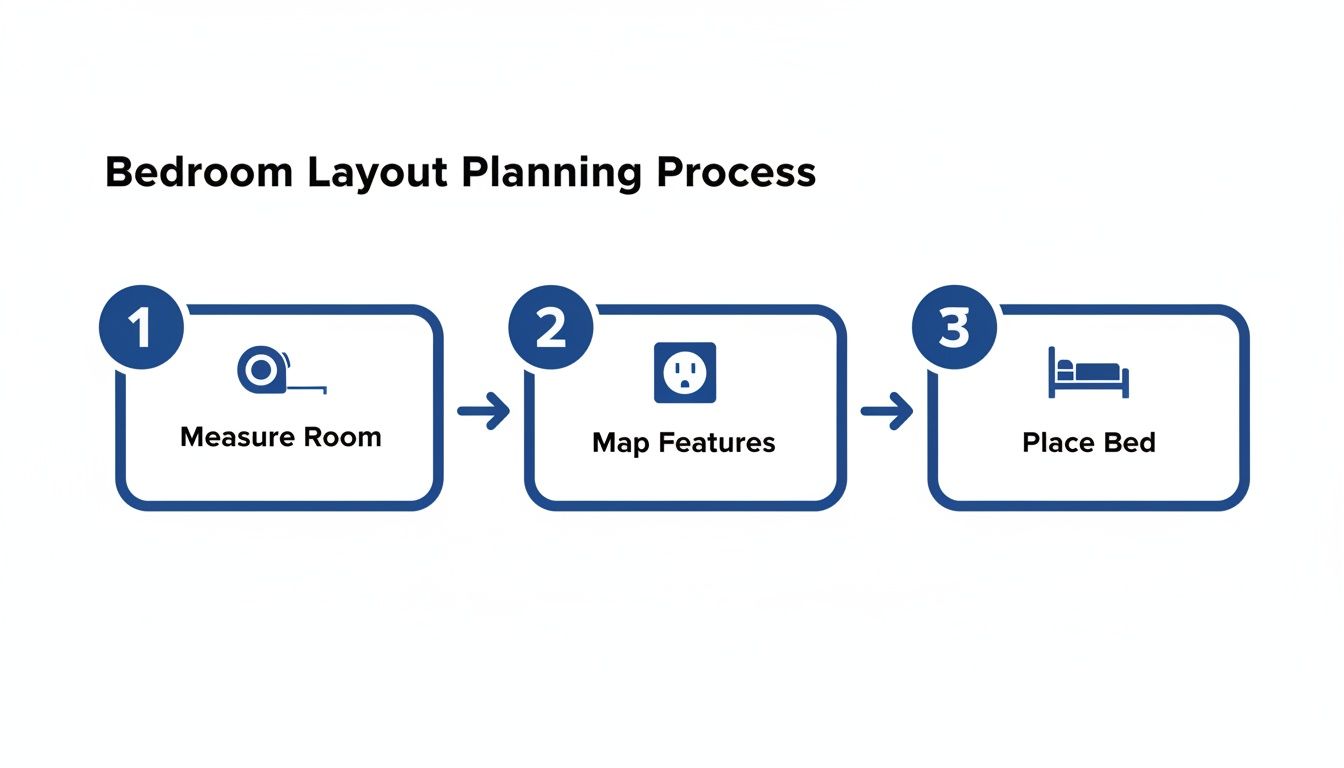
A truly great bedroom layout isn't about guesswork or pushing heavy furniture around until something "feels right." It’s about a little bit of strategy upfront that saves you a ton of frustration later. The goal is to create a rock-solid floor plan that considers every door, window, and outlet before you even start dreaming about furniture.
This foundational step is what separates a beautifully functional room from one that just doesn’t work.
Before You Move Anything, Nail Down The Basics
We’ve all been there. You get a sudden burst of inspiration, start shoving the bed against a new wall, and then realize the closet door won’t open all the way. Or the only convenient outlet is now hidden behind your headboard. A few minutes of prep work is the secret to avoiding those classic layout mistakes.
Think of this initial phase as creating a blueprint for your room. You're gathering the essential data that will guide every single decision from here on out.
Measure and Map Your Space
Grab a tape measure and start with the big picture: the room's total length and width. But that's just the beginning. The real magic happens when you document all the fixed architectural features.
- Doors and Windows: Measure their width and height, of course, but also note the swing direction and clearance needed for them to open fully. It’s a classic rookie error to place a nightstand just a few inches too close, blocking a door from opening completely.
- Electrical Outlets and Switches: Pinpoint the exact location of every outlet, light switch, and cable hookup. This simple step prevents the all-too-common headache of realizing your bed now covers the perfect spot to plug in your lamp and phone.
- Permanent Fixtures: Don't forget to map out anything that can't be moved, like radiators, air vents, or built-in shelving. These are your non-negotiables, and your layout has to work with them, not against them.
The best layouts aren't just creative; they're built on accurate data. When you map out every fixed element—from that awkwardly placed radiator to the crucial power outlet—you're essentially creating a personalized set of design rules that makes every other decision a whole lot easier.
To keep everything organized, I always recommend using a simple checklist. It ensures you don't miss a single detail.
Your Pre-Planning Measurement Checklist
Use this table to document the essential measurements and features of your room before you begin planning the layout.
| Item To Measure | Why It Matters | Insider Tip |
|---|---|---|
| Room Length & Width | Establishes the total square footage and sets the scale for your furniture. | Measure wall-to-wall in at least two different spots to check if the walls are perfectly parallel. They rarely are! |
| Ceiling Height | Crucial for determining the scale of tall furniture like wardrobes or canopy beds. | Note if you have sloped ceilings, as this will impact placement options for tall items. |
| Doors (including swing clearance) | Ensures you leave enough space for entry, exit, and access to closets or bathrooms. | Physically swing the door open and mark the floor with painter's tape to visualize the clearance you need. |
| Windows (width, height, distance from floor) | Affects natural light, furniture placement (like a desk or reading chair), and window treatments. | Don’t forget to measure the wall space above and below the window—it's prime real estate for art or shelving. |
| Outlets, Switches, & Vents | Dictates where you can place lamps, electronics, and furniture that needs airflow (like a bed). | Take a quick photo of each wall with your phone so you have a visual reference of where everything is. |
Having these numbers written down turns a vague idea into a concrete plan.
Prioritize The Bed’s Position
With your map complete, the first and most important decision is where to place the bed. It's the anchor of the room—the largest piece of furniture that dictates the flow and feel of the entire space.
In fact, according to National Association of Home Builders data, the bed often takes up 60-70% of the usable floor space in an average master bedroom. Getting its placement right is everything.
Once you’ve locked in the bed’s location, arranging the rest of the furniture—dressers, nightstands, a reading chair—becomes a much more intuitive process. For inspiration on how a well-placed bed can anchor a design, check out some of our favorite bedroom ideas. This logical, step-by-step approach ensures every piece has its place and the room truly works for you.
Mastering The Art Of Bed Placement
Let's be honest: where you put your bed is the single most important decision you'll make in your bedroom. It's the anchor of the entire space. Everything else—from where the dresser goes to the flow of traffic—hinges on this one choice. Get it right, and the rest of the room practically designs itself.
The classic, designer-approved strategy is to put the bed in what's known as the commanding position. This just means you can see the door from your bed, but you're not directly in its path. Usually, this sweet spot is on the wall opposite the entrance.
Why does this work so well? It taps into a primal sense of security. Being able to see who's coming in gives you a feeling of control, which is exactly what you want for a restful night's sleep. As a bonus, it creates a beautiful, welcoming focal point the moment you walk into the room.
Finding The Right Wall
Of course, not every bedroom has a perfect "commanding position" wall. If that's the case for you, the next best thing is to place the bed against the longest, solid wall. This simple move can make the room feel much larger and more open because it frees up the most floor space. It also gives you a great, uninterrupted canvas for a statement headboard.
What about windows, though? I generally advise against placing a bed directly under a window if you can help it. Drafts can be an issue, and you don't want to block all that gorgeous natural light. If it's your only real option, look for a headboard with a low profile or an open, airy frame that won't create a massive visual block.
Your bed sets the entire mood. The goal is to create a layout that feels balanced and intuitive. A well-placed bed doesn’t just fit the space; it makes the space feel right, establishing a clear focal point and promoting a sense of calm.
Give Yourself Some Breathing Room
Once you've picked your spot, it's time to think about clearance—the empty space that lets you move around freely. So many people make the mistake of cramming in furniture, only to find they've created an obstacle course.
Here are the numbers I always stick to for good flow:
- On the Sides: You need at least 24 to 36 inches of clear space on both sides of the bed. This is non-negotiable for making the bed without a struggle and easily reaching your nightstand.
- At the Foot: If you have a wall or a piece of furniture (like a bench or dresser) at the foot of your bed, leave a minimum of 30 to 36 inches for a comfortable walkway. Anything less and the room will feel instantly cramped.
This layout below is a great example of getting the spacing right.
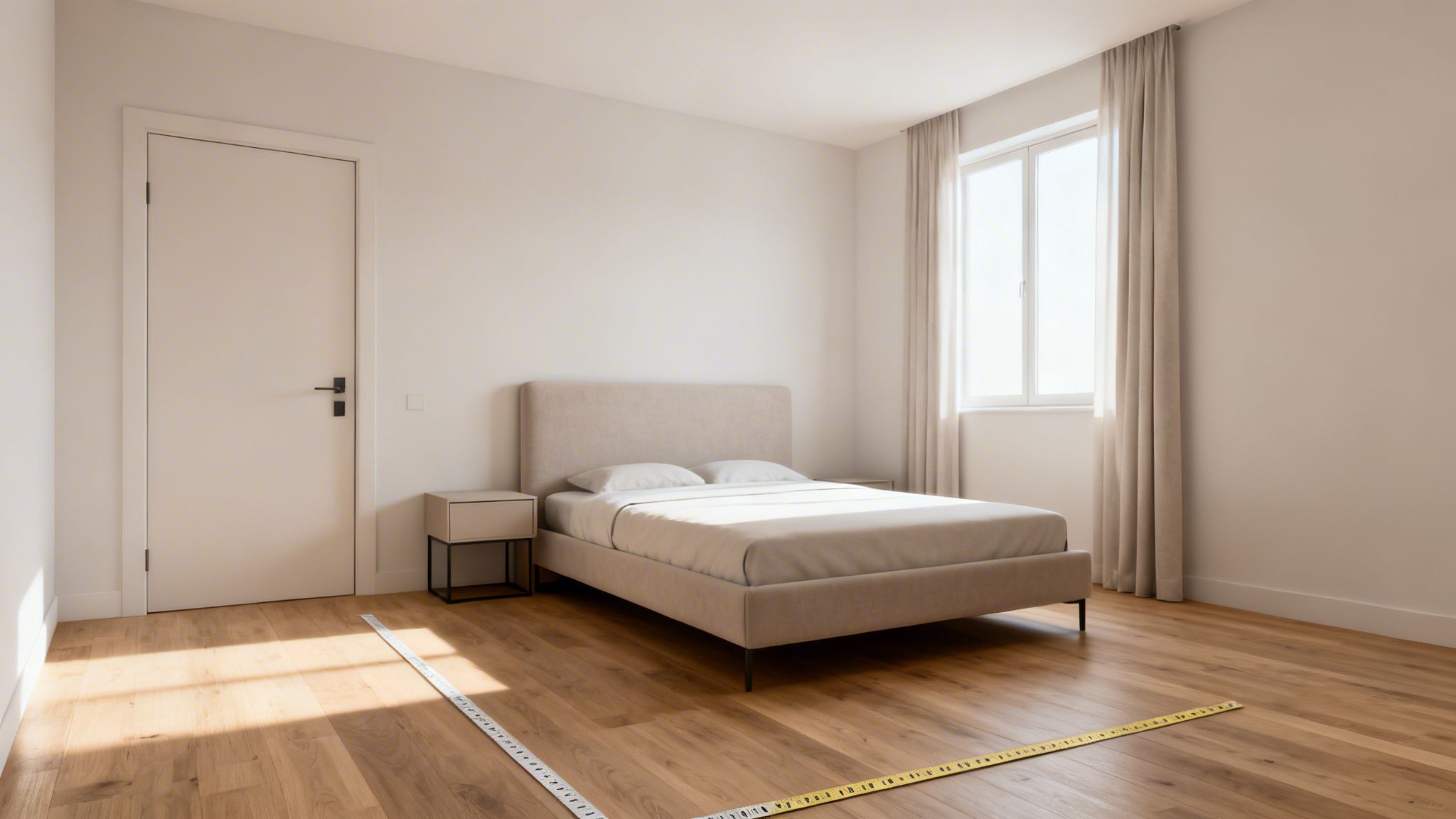
See how open and easy to navigate the room feels? That’s the power of proper clearance. It can be hard to picture this in your head, which is where a little tech can make a huge difference. To see how these rules play out in your own room, you can explore our AI-powered bedroom design tool. It lets you test out different placements and see exactly how much space you’ll have before you lift a single piece of furniture.
Designing Functional Zones And Clear Pathways
Once your bed is in its ideal spot, the next challenge is arranging everything else to create a room that genuinely supports your life. A well-designed bedroom is more than just a place to sleep; it’s a sanctuary with distinct areas for different activities. This part of the process is all about creating effortless flow and purpose.
The aim here is to move past a random collection of furniture and create a space that feels intentional. That means carving out clear circulation paths to avoid that cluttered, frustrating feeling. Nothing kills a serene bedroom vibe faster than stubbing your toe on a dresser corner in the middle of the night.
Establish Clear Circulation Paths
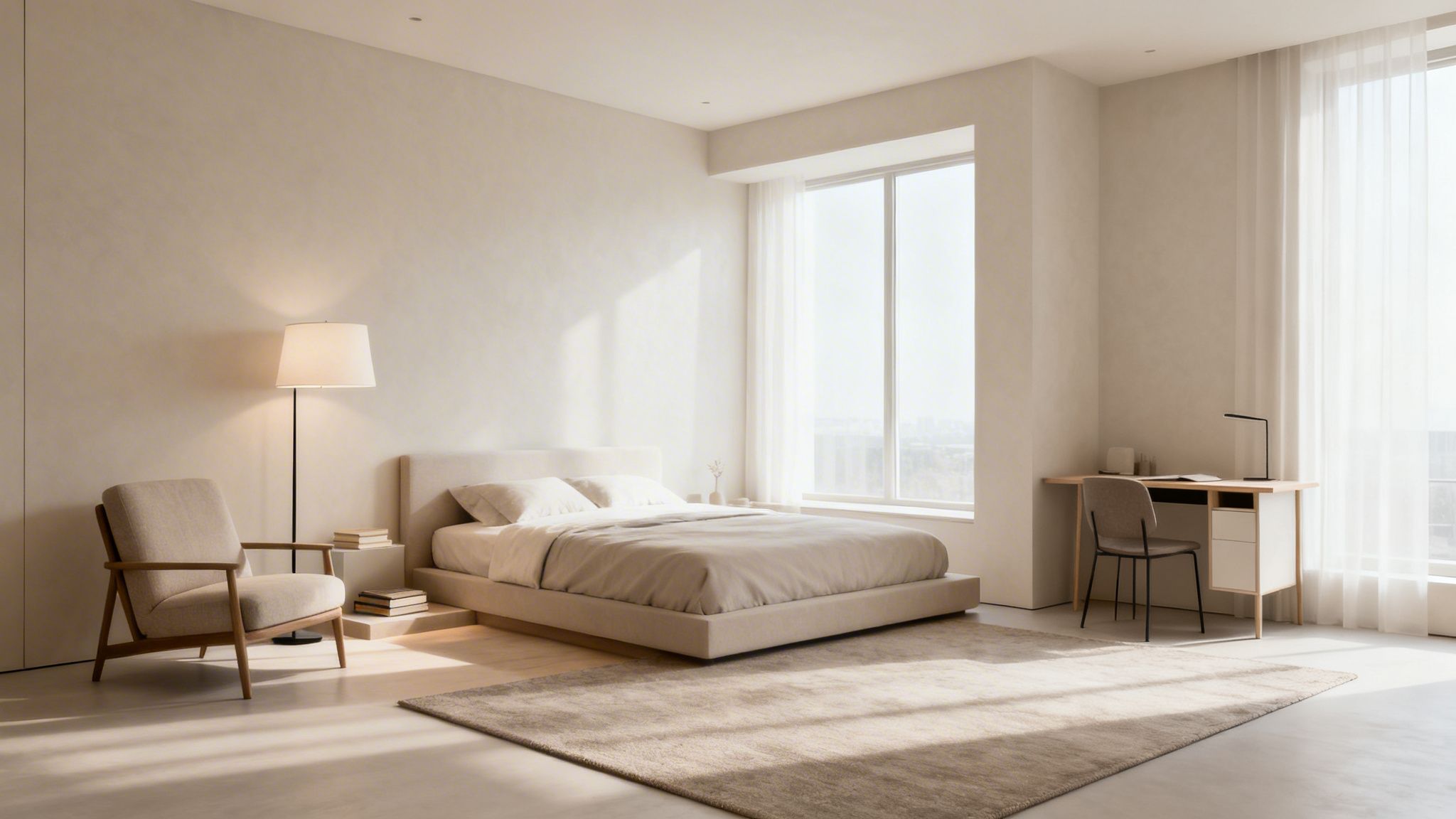
Before you start adding more pieces, trace your primary walkways with your mind’s eye. Think about the path from the door to the bed, from the bed to the closet, and to the bathroom. These routes need to be wide open to make the room easy and comfortable to navigate, especially when you're half-asleep.
As a rule of thumb, stick to these clearance guidelines for a truly functional layout:
- Major Walkways: Aim for at least 30 to 36 inches of clear floor space for main traffic routes. This is the sweet spot for comfortable movement.
- Dresser and Closet Access: You’ll want a minimum of 36 inches of space in front of dressers, wardrobes, or closets. This gives you enough room to open drawers and doors all the way without having to squeeze by.
- Beside the Bed: As we touched on earlier, leaving at least 24 inches on each side of the bed is non-negotiable for making the bed and easily reaching your nightstands.
Create Dedicated Functional Zones
Today's bedrooms have to wear many hats. The concept of "zoning" has become a huge deal, with 52% of designs now featuring distinct areas for sleeping, working, and reading. This really reflects our modern, multifunctional lives—especially since nearly 40% of homeowners globally now work from home. If you're curious, Decorilla has some great insights into 2026 bedroom trends.
Even in a smaller room, you can create the illusion of separate spaces. For instance, a comfy armchair and a floor lamp tucked into a corner instantly becomes a cozy reading nook. A slim console table against a wall can double as a vanity or a compact workspace. For more ideas on carving out a productive corner, check out our guide to home office ideas.
A well-zoned bedroom doesn’t just look better; it works better. By assigning a purpose to each area, you reduce clutter and create a more organized, peaceful environment that adapts to all your needs, from rest to productivity.
You don't need walls to define these zones. An area rug can anchor a small seating area, while a tall plant or a decorative screen can create a subtle visual break. Lighting is also your best friend here. A focused task light over a desk clearly signals a work zone, whereas a soft, warm lamp quietly says, "time to relax." This thoughtful approach is what transforms a simple room into a highly functional and personalized retreat.
Visualize Your Layout Without The Heavy Lifting
Once you have your zones and pathways sketched out on paper, the real work usually begins—shoving furniture around, hoping it fits. But why risk scratching your floors or pulling a muscle when you can nail down the entire plan digitally first? This is where a bit of modern tech gives you a much smarter way forward, letting you see exactly how your ideas will look before you move a single thing.
Instead of just trying to imagine how your bed might look on the opposite wall, you can see it in a few seconds. AI visualization tools have been a game-changer for me and my clients, completely removing the frustrating trial-and-error that used to be part of the process.
Bypass The Guesswork With AI
The whole process is surprisingly simple. With a tool like RoomStudioAI, you just upload a photo of your bedroom as it is now. The platform is smart enough to read the room’s dimensions, note where your windows are, and pick up on any quirky architectural details. It essentially creates a digital copy of your space that becomes your personal design sandbox.
From that point on, you can experiment with all sorts of possibilities without any of the heavy lifting.
- Test different bed positions to find out if it really does look better under the window or against the main wall.
- Virtually place new furniture to confirm whether that bigger dresser you’ve been eyeing will actually fit and still leave you enough room to walk by.
- Rearrange what you already own to discover a more functional and visually pleasing setup for how you actually live.
This method keeps everything true to scale, generating photorealistic images that are not only inspiring but also incredibly accurate.
The real power here is in making confident decisions. Digital visualization turns an abstract floor plan into something you can see and feel, saving you time, effort, and the buyer's remorse that comes from a layout mistake.
Make Confident Decisions Before You Commit
Let's say you're torn between two totally different layouts. One creates a wide-open, minimalist feel, while the other carves out a cozy little reading nook. Instead of just debating the pros and cons in your head, you can generate realistic images of both. This kind of visual confirmation is what planning a bedroom layout is all about—creating a space you’ll be happy with for years.
It’s also a fantastic way to spot problems early. You might realize a nightstand would block an important outlet, or that a new wardrobe would make the room feel cramped. By catching these issues on-screen, you ensure the final arrangement is as practical as it is beautiful.
To see how fast your ideas can come to life, try a free AI interior design tool and start playing around. This digital-first approach means that when you finally get around to moving the furniture, you’re doing it with total confidence because you already know the layout is perfect.
Weaving In Smart Storage And Layered Lighting
A brilliant layout can completely fall apart if you're tripping over clutter and squinting under a single harsh bulb. When you're planning a bedroom, storage and lighting aren't just finishing touches—they're fundamental parts of the design that make the space work for you.
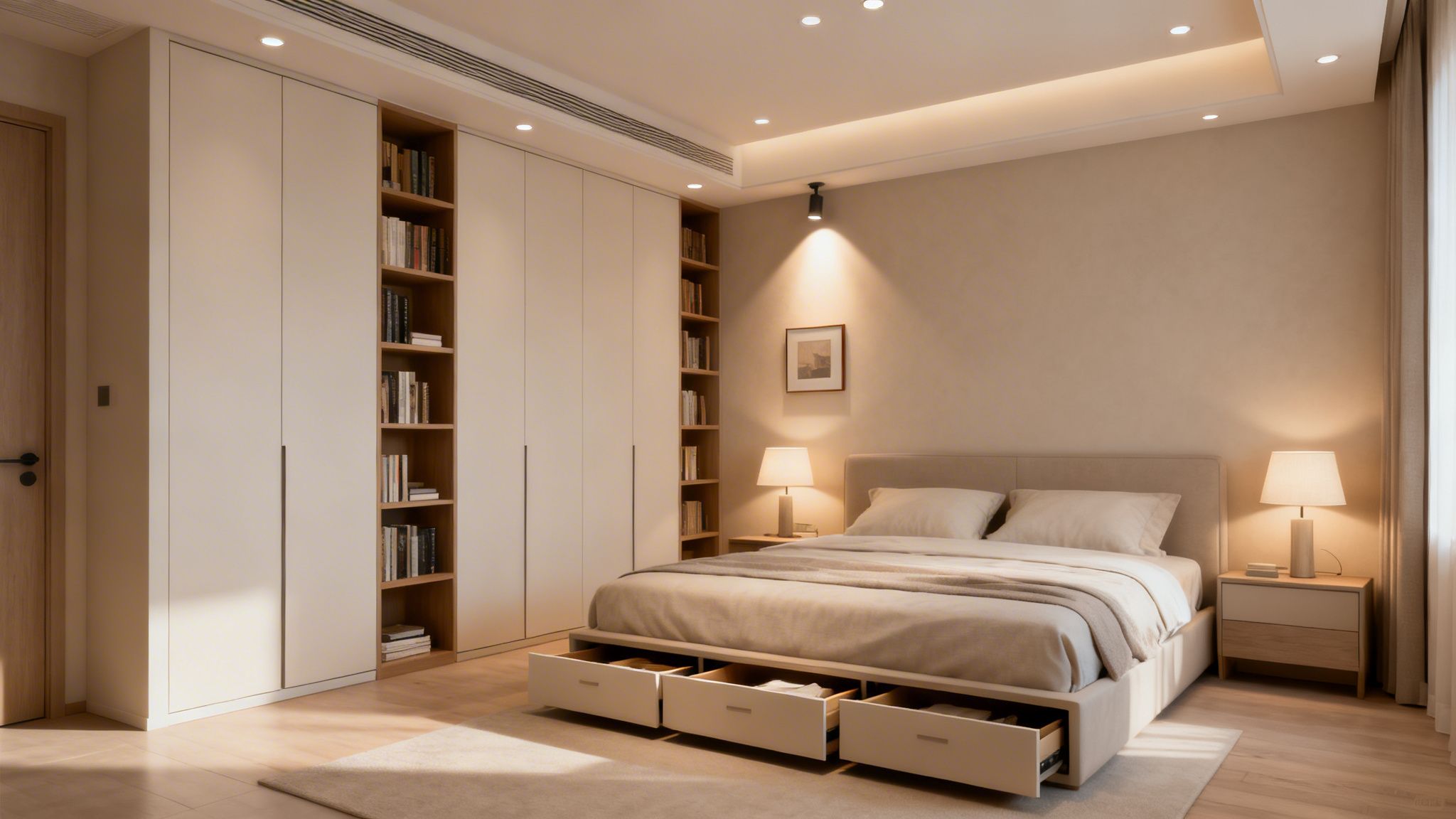
The trick is to think about these elements from the very beginning. By weaving them into your floor plan, you create a room that feels cohesive, supports your daily routine, and keeps visual chaos at bay.
Think Beyond a Single Ceiling Light
Let’s be honest: a single, lonely overhead light fixture just doesn't cut it. It tends to cast unflattering shadows and create a sterile vibe. To get that warm, inviting atmosphere you see in magazines, you need layered lighting. This is a classic design strategy that combines three types of light to build mood and function.
- Ambient Lighting: This is the base layer, your room's main source of general light. Think recessed lights on a dimmer or a beautiful flush-mount fixture that casts a soft, even glow.
- Task Lighting: This is all about focused light for specific activities. A pair of bedside lamps for reading is a classic example. You might also have a floor lamp by a reading chair or a small lamp on a vanity.
- Accent Lighting: This is the fun part! Accent lighting adds a touch of drama and draws attention to the things you love, like a picture light over a favorite piece of art or a small uplight behind a plant.
When you combine these three layers, you get total control over the room’s feel. You can have it bright and energetic when you're getting ready in the morning, then dim everything down for a calm, relaxing evening.
Your lighting plan should be as carefully considered as your furniture layout. Good lighting doesn't just help you see; it shapes how you feel in the space, making a room feel larger, cozier, and more welcoming.
Making Every Inch Count With Smart Storage
Nothing kills a serene bedroom faster than clutter. The best layouts integrate storage solutions so seamlessly they feel like part of the architecture, not just bulky furniture you added later. It’s time to get creative and move beyond the standard closet.
Look for opportunities to go vertical. A tall, narrow bookcase or floor-to-ceiling built-in wardrobes can draw the eye upward, making the whole room feel taller while packing in a ton of storage. In smaller rooms, under-bed storage is an absolute lifesaver. It’s the perfect hidden spot for out-of-season clothes or extra bedding, and it doesn't take up an inch of precious floor space.
If you’re aiming for that polished, high-end look, custom built-ins are a fantastic investment. They can be designed to fit your room's exact dimensions and style, so there’s no wasted space. For more ideas on how to merge beauty with practicality, you can explore different approaches to interior design. Remember, the right storage doesn't just hide your stuff—it actively supports your layout and elevates the entire design.
Common Questions About Bedroom Layouts
Even the best-laid plans can hit a snag. When you start moving from paper to reality, certain layout challenges inevitably crop up. Let's walk through some of the most common questions I hear and offer some practical, real-world solutions.
These little hurdles can feel like major roadblocks, but more often than not, a simple strategic shift is all it takes to get back on track.
How Can I Plan a Layout for a Very Small Bedroom?
In a tight space, your entire mindset has to shift. You need to think vertically and demand that your furniture works harder. The first move is almost always placing the bed against the longest, solid wall. This one action typically frees up the maximum amount of floor space right away.
From there, it’s all about multi-functionality. A bed with built-in storage drawers can completely eliminate the need for a separate, bulky dresser. Ditch the traditional nightstands that hog floor space and opt for sleek wall-mounted shelves or hardwired sconces instead. They give you light and a spot for your book without the clutter.
In a small bedroom, every piece of furniture must earn its keep. You're aiming for maximum function without the visual weight, creating a room that feels clever and organized, not just cramped.
Don't forget to draw the eye up. A tall, narrow dresser uses less floor space than a wide one and gives the illusion of a higher ceiling. A classic designer move is to hang a large mirror opposite a window—it’s a game-changer for bouncing light around the room and creating a feeling of depth, making the whole space feel bigger and brighter.
What if the Bed Cannot Be the Focal Point?
While the bed is the natural star of the show in most bedrooms, sometimes the architecture just won't cooperate. If your layout relegates the bed to an awkward spot, don't worry. You can simply create a different focal point to anchor the room and draw attention.
A large, stunning piece of art on the wall you see when you first walk in makes an immediate statement. A feature wall is another fantastic option—think bold wallpaper or a deep, moody paint color that adds instant personality and serves the same purpose.
Another approach I love is to style a beautiful dresser with an ornate mirror hanging above it, creating a sophisticated and intentional vignette. In a larger room, a cozy seating area with a stylish armchair, a small side table, and a floor lamp can become a compelling secondary anchor. The trick is to choose one dominant feature to avoid a visually chaotic or confusing result.
Is It Okay to Place a Bed in Front of a Window?
Yes, absolutely. Sometimes, putting the bed in front of a window is the only layout that truly works, especially in rooms with multiple doors or awkward corners. When done right, it can look incredibly chic.
The key is choosing the right headboard. Go for something low-profile that sits below the windowsill or one with an open, airy design, like wrought iron or rattan. This ensures you aren't blocking that valuable natural light.
Window treatments also become critical. You'll want high-quality blackout curtains or layered shades for privacy and to keep the early morning sun from waking you. One final tip: make sure to leave a gap of a few inches between your headboard and the wall. This gives your curtains room to hang and operate smoothly behind the bed.
Ready to stop guessing and start visualizing? RoomStudioAI lets you upload a photo of your room and experiment with countless layouts in seconds. You can see exactly how your furniture will fit and nail down your perfect bedroom plan before you move a single thing. Try RoomStudioAI for free and see your ideas come to life.
Ready to redesign your space?
Try our AI interior design tool and see your room transformed in seconds.
Try Free Design

