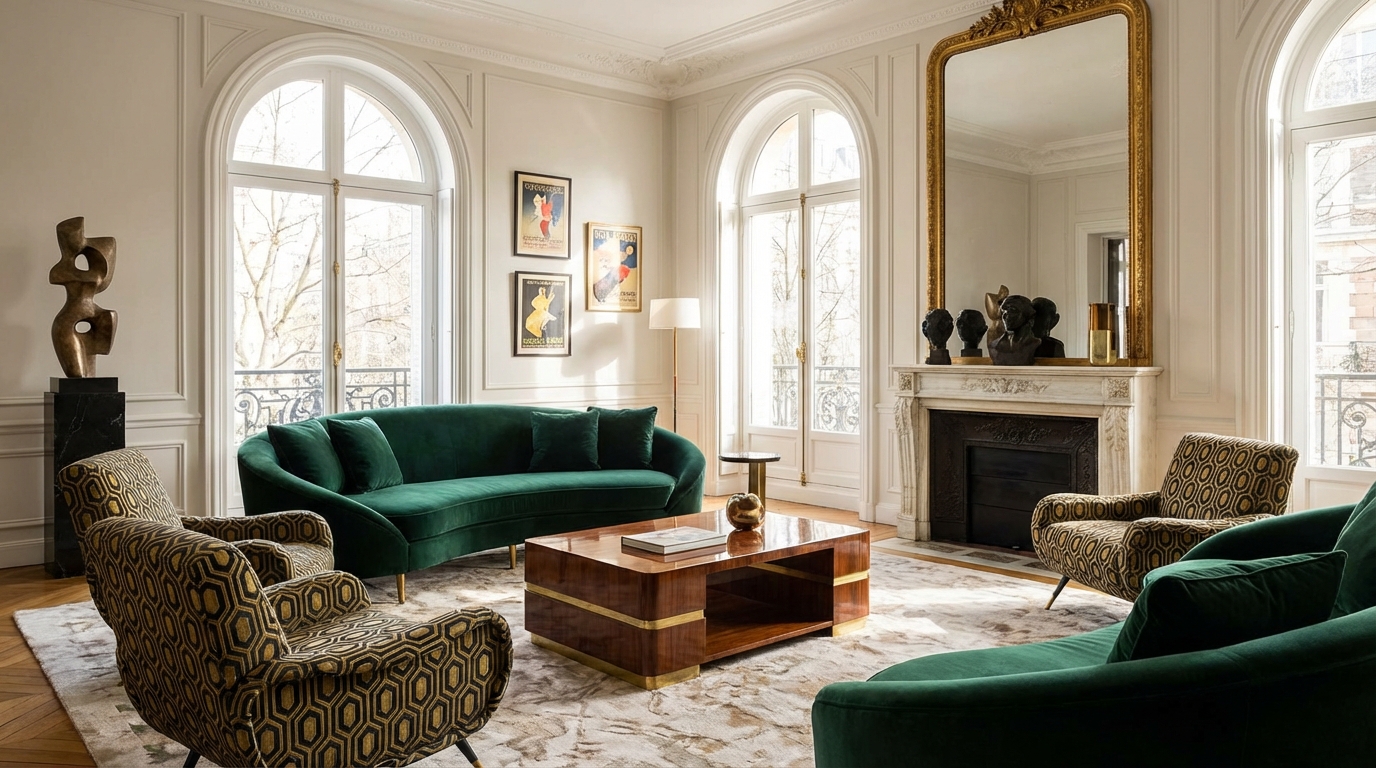
What Defines Art Deco Style
Art Deco emerged in Paris in the 1920s, reaching its zenith during the interwar period before spreading across Europe and America. The style takes its name from the 1925 Exposition Internationale des Arts Décoratifs et Industriels Modernes, though its influence had been building for years before this landmark event. Born from a desire to celebrate modernity, luxury, and technological progress, Art Deco represented a decisive break from the organic, flowing lines of Art Nouveau that preceded it.
The core philosophy of Art Deco centers on geometric precision, streamlined forms, and the celebration of both machine-age innovation and exotic luxury. This style embraced contradictions beautifully—it was simultaneously futuristic and historically referential, drawing inspiration from ancient Egyptian, Aztec, and Asian design while celebrating chrome, glass, and other modern materials. The result was a aesthetic that felt both timeless and daringly contemporary.
What distinguishes Art Deco from similar styles is its bold geometry and symmetry. While mid-century modern shares some streamlined qualities, Art Deco is far more ornamental and luxurious. Unlike the minimalism of Bauhaus design, Art Deco revels in decorative elements—but always with mathematical precision rather than organic whimsy. The style features stepped forms, chevron patterns, sunburst motifs, and zigzag designs that create visual drama through repetition and symmetry.
Today's homeowners are rediscovering Art Deco for several compelling reasons. In an era of mass-produced minimalism, Art Deco offers personality and glamour without sacrificing clean lines and functionality. The style translates beautifully to modern living because it was always forward-thinking—those 1920s designers were imagining the future, and their vision still feels fresh a century later. Art Deco also offers incredible versatility; you can embrace full Gatsby-era opulence or incorporate subtle Art Deco elements into a more contemporary space. The style's emphasis on quality materials and craftsmanship resonates with today's values around investing in timeless pieces rather than disposable furniture.
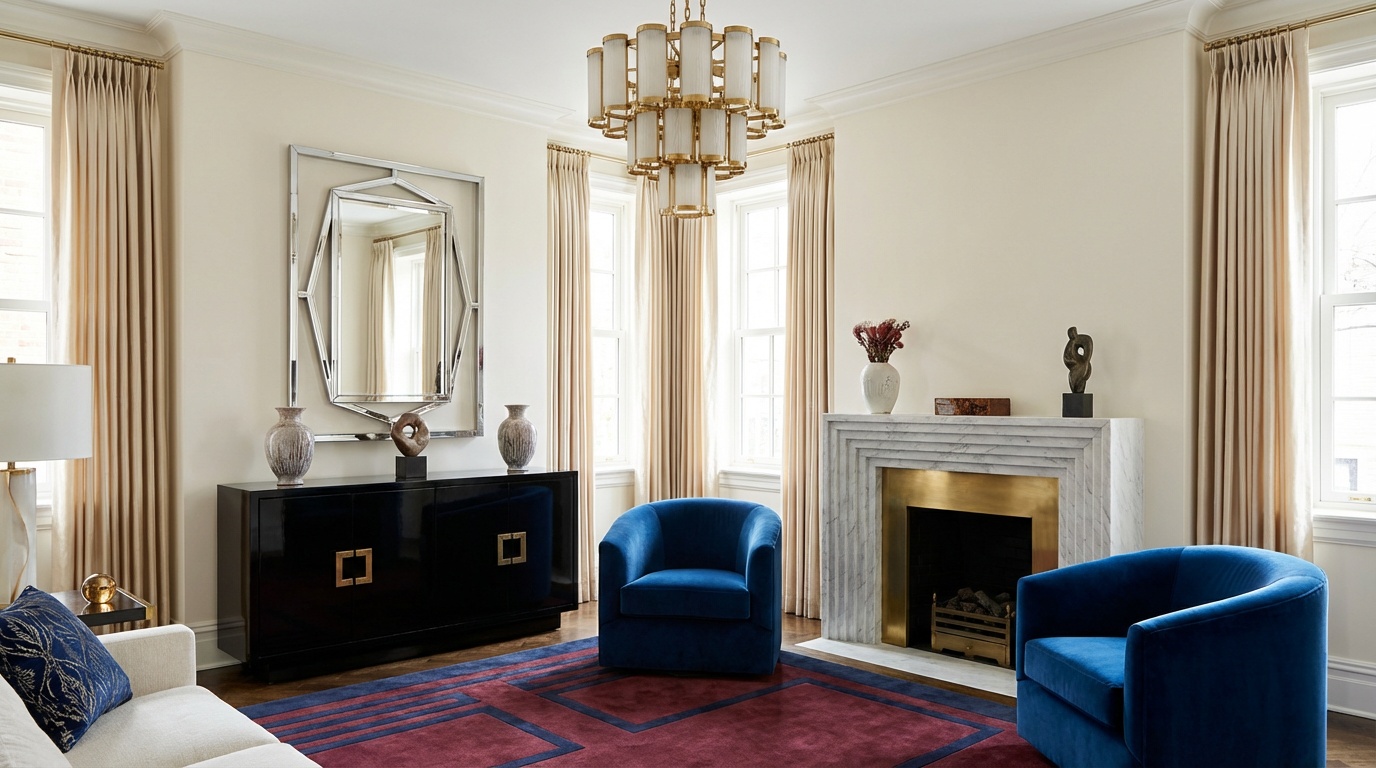
What Defines Art Deco Style
Essential Elements for Your Art Deco Living Room
Creating an authentic Art Deco living room starts with selecting the right foundational pieces. The sofa is your anchor—look for low-profile designs with clean, geometric lines. Velvet upholstery in jewel tones like emerald, sapphire, or ruby captures the era's love of luxury, though you can also opt for leather in rich cognac or black for a more masculine interpretation. The silhouette should be structured rather than slouchy, with track arms or gently curved arms that maintain symmetry.
Accent chairs in Art Deco living rooms often feature dramatic curved backs, fan shapes, or channel tufting. Club chairs with rounded backs and low seats work beautifully, especially in materials like mohair velvet or leather. Look for pieces with geometric wooden frames in walnut or mahogany, or chairs with chrome or brass legs that showcase the era's love of metallic accents.
The coffee table should make a statement—this is where you can really showcase Art Deco's material palette. Consider pieces with mirrored surfaces, glass tops with geometric metal bases, or lacquered wood in high-gloss black or cream. Stepped designs that echo the era's skyscraper aesthetic work particularly well. The shape might be circular, octagonal, or rectangular, but it should feel substantial and precisely crafted.
Key materials define the Art Deco aesthetic more than almost any other style. For woods, think exotic and richly grained: macassar ebony, zebrawood, burled walnut, and mahogany were favorites of the era. These woods were often used in book-matched veneers that created stunning symmetrical patterns. For metals, chrome, brass, bronze, and nickel appear in furniture legs, light fixtures, and decorative accents. Polished to a high shine, these metals catch and reflect light, adding to the room's sense of glamour.
Fabrics should feel luxurious to the touch. Velvet is quintessentially Art Deco, whether in solid jewel tones or geometric patterns. Silk, satin, and mohair also capture the right feeling. For patterns, look for geometric designs: chevrons, Greek keys, stylized florals reduced to their geometric essence, and the iconic sunburst motif. Animal prints—particularly leopard and zebra—were popular in the era and can add exotic flair when used judiciously.
The living room benefits from Art Deco style because it's inherently a social, performative space. Art Deco was designed for entertaining, for cocktail parties and sophisticated gatherings. The style's emphasis on symmetry and focal points helps organize conversation areas naturally, while its glamorous materials create an atmosphere that makes everyday living feel special. The geometric clarity of Art Deco also helps define zones within open-plan living spaces, using rugs, lighting, and furniture arrangement to create structure.
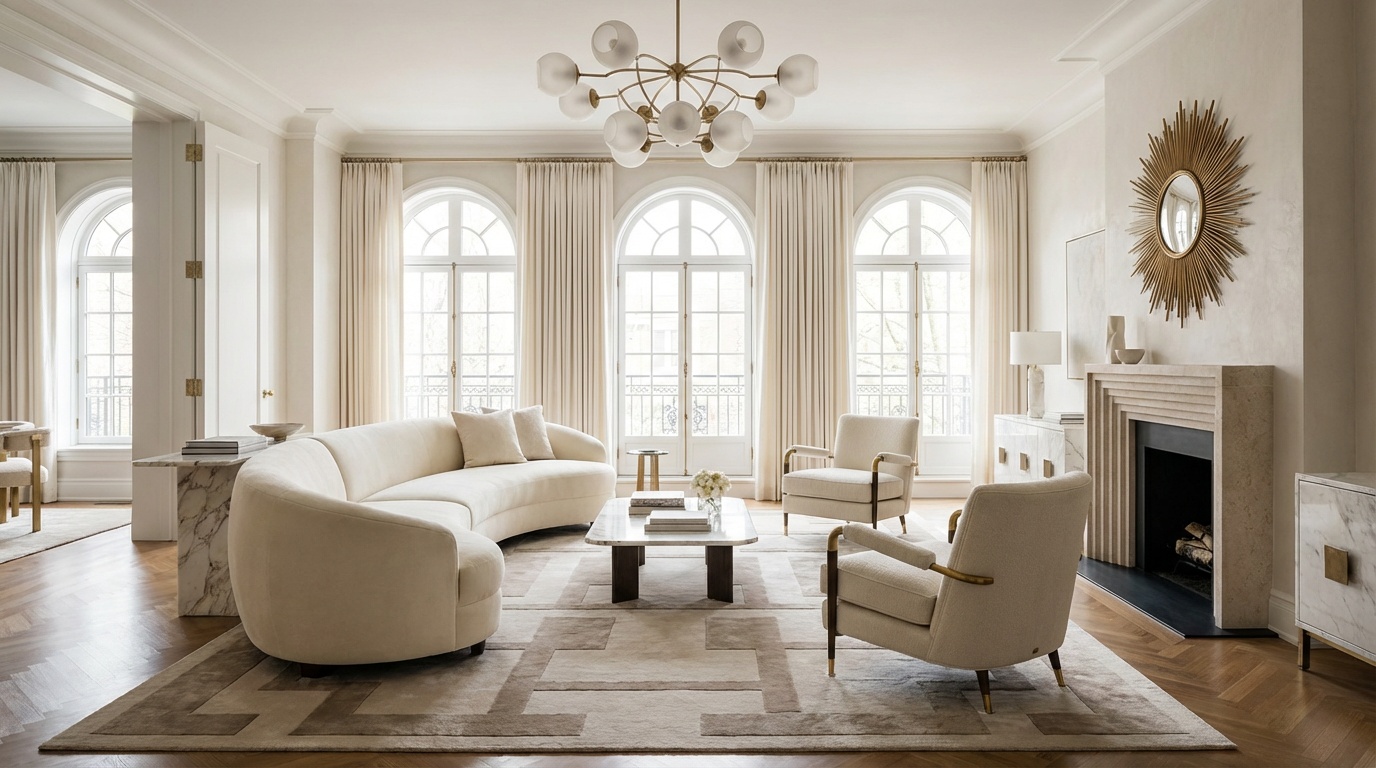
Essential Elements for Your Art Deco Living Room
Color Palettes & Combinations
The Art Deco color palette walks a sophisticated line between restraint and drama. The foundation typically consists of neutral anchors: ivory cream, warm taupe, charcoal gray, and jet black. These provide the canvas against which bolder colors can shine. Black and cream together create the classic Art Deco contrast—think of a black lacquered cabinet against cream walls, or a geometric black-and-white rug grounding the space.
For primary accent colors, embrace jewel tones that evoke luxury and depth. Emerald green brings richness without overwhelming a space—use it in velvet upholstery or as an accent wall color. Sapphire blue and royal blue add regal sophistication, working beautifully in curtains, pillows, or artwork. Ruby red or burgundy provides warmth and drama, though use these more sparingly as they're quite intense.
Metallic accents are essential to the Art Deco palette—they're not just finishes but actual color elements. Polished brass and gold bring warmth and opulence, while chrome and silver offer cooler, more streamlined sophistication. Copper and bronze fall somewhere in between, adding depth and vintage appeal. Don't be afraid to mix metals in an Art Deco space; the era celebrated material variety.
Balancing neutrals with color requires thoughtful distribution. A successful approach uses the 60-30-10 rule: 60% neutral foundation (walls, large furniture pieces), 30% primary accent color (sofa, curtains, large rug), and 10% bold accents (pillows, artwork, decorative objects). This prevents the space from feeling overwhelming while still delivering Art Deco's signature drama.
Wall colors in Art Deco living rooms often lean toward sophisticated neutrals—warm grays, soft creams, or even dramatic charcoal for accent walls. However, don't rule out color; a deep teal or rich burgundy can create an enveloping, luxurious atmosphere. Consider using high-gloss paint or even metallic wallpaper to enhance the play of light. Geometric wallpaper in stylized patterns was popular in the era and works beautifully as an accent wall behind a sofa or entertainment center.
For furniture, you might choose a neutral sofa in cream or gray, allowing accent chairs in jewel tones to provide color interest. Alternatively, a bold emerald velvet sofa becomes the room's statement piece against neutral walls and rug. Decor and accessories bring in your accent metals, additional jewel tones, and pattern through pillows, throws, artwork, and decorative objects.
While Art Deco doesn't traditionally shift with seasons, you can introduce subtle variations. In warmer months, emphasize cooler metallics like chrome and silver, lighter creams, and icy blues. For cooler months, bring in warmer brass tones, deeper burgundies and emeralds, and richer chocolate browns. This keeps the space feeling fresh while maintaining its essential character.
Color Palettes & Combinations
Lighting & Ambiance
Lighting in an Art Deco living room isn't just functional—it's theatrical. The era celebrated light as a design element, using it to highlight materials, create drama, and enhance the sense of luxury. Start by maximizing natural light, which shows off the room's metallic finishes and rich materials at their best. Keep window treatments elegant but not overly heavy; consider floor-length curtains in silk or velvet with geometric tiebacks, or streamlined Roman shades that don't compete with the room's architecture.
For artificial lighting, think in layers—Art Deco rooms typically combine ambient, task, and accent lighting to create depth and flexibility. The chandelier or central ceiling fixture should make a statement. Look for geometric designs with chrome or brass finishes, frosted glass shades, or crystal elements arranged in stepped or sunburst patterns. Sputnik-style fixtures (though technically mid-century) can work if they have the right geometric quality. Tiered chandeliers with geometric glass shades capture the era's love of stepped forms.
Table lamps provide task lighting while serving as sculptural objects. Seek out lamps with geometric bases—perhaps a stepped design in chrome and black lacquer, or a sculptural form in polished brass. Shades might be drum-shaped in silk or parchment, or geometric in frosted glass. Pairs of matching lamps on side tables or console tables reinforce Art Deco's love of symmetry.
Floor lamps add height and drama, particularly torchiere styles that direct light upward, washing walls and ceilings with ambient glow. Look for designs with geometric metal bases and frosted glass shades. Arc floor lamps with chrome or brass finishes can provide reading light while their sculptural forms contribute to the room's aesthetic.
Accent lighting highlights specific features and adds atmosphere. Use picture lights to illuminate artwork, creating focal points and adding warmth. LED strip lighting behind floating shelves or within display cabinets can showcase decorative objects while adding a modern touch that still feels appropriate to Art Deco's forward-thinking spirit. Wall sconces flanking a fireplace or artwork reinforce symmetry while providing ambient light; choose geometric designs in brass or chrome with frosted glass elements.
Consider dimmers on all lighting circuits—they're essential for creating the right mood. Art Deco spaces should feel glamorous but not harsh; dimmed lighting in the evening creates an intimate, sophisticated atmosphere perfect for entertaining. The interplay of light on metallic surfaces, glass, and mirrors becomes even more magical as light levels drop and shadows deepen.
The goal is layered ambiance that can shift from bright and energizing during the day to warm and intimate in the evening. Multiple light sources at different heights create visual interest and prevent the flat, one-dimensional feeling that comes from relying solely on overhead lighting.
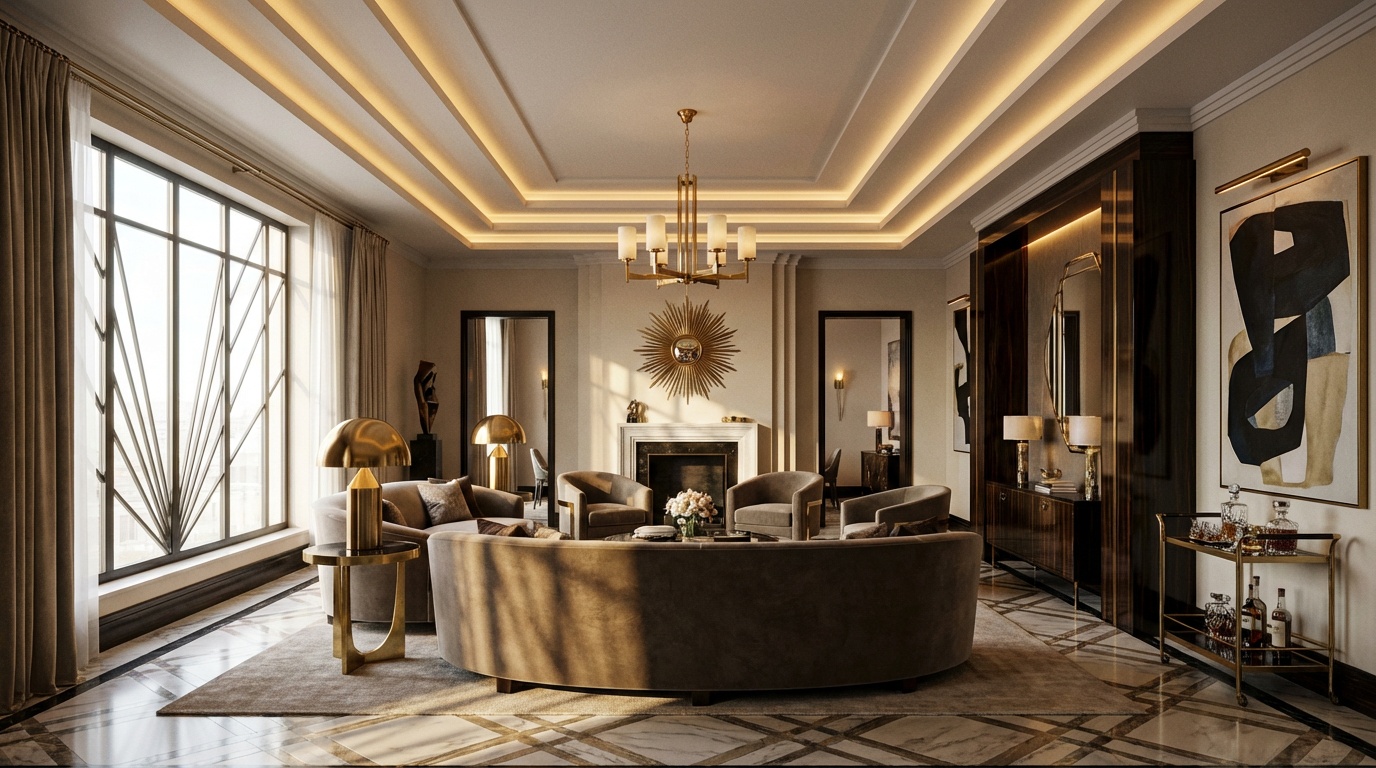
Lighting & Ambiance
Furniture & Decor Shopping Guide
Building an Art Deco living room requires strategic shopping across different price points and sources. Let's start with investment pieces worth splurging on—these are items that will define your space and last for decades.
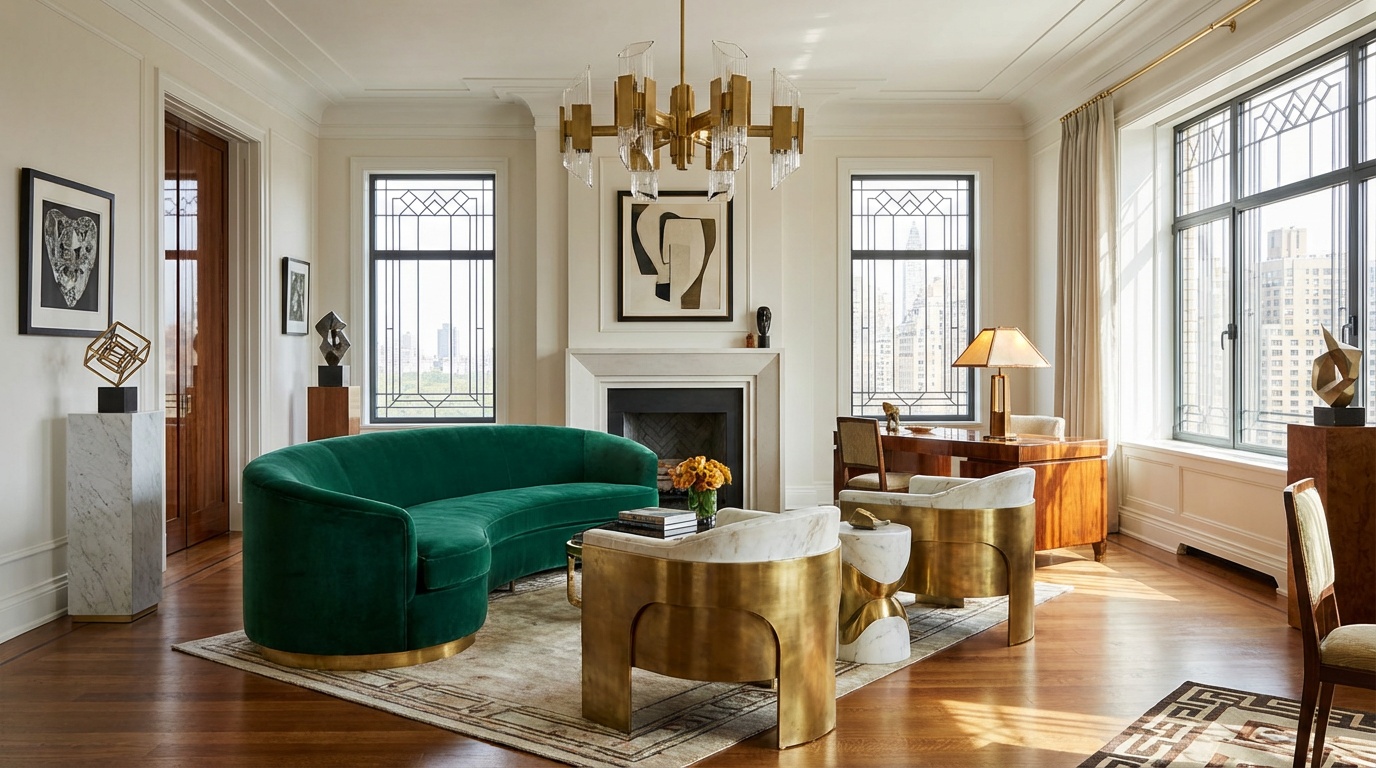
The upholstered sofa deserves your budget priority. A quality piece in genuine velvet or leather, with proper frame construction and eight-way hand-tied springs, will serve you for twenty years or more. Expect to invest $2,000-$5,000 for a well-made sofa from brands like Jonathan Adler, Article, or vintage pieces from the 1930s-1940s. A genuine Art Deco or Art Deco-revival coffee table in quality materials—whether mirrored, lacquered, or exotic wood—is another worthy investment at $800-$2,500.
Lighting fixtures are also worth the splurge, particularly your central chandelier. A stunning geometric chandelier becomes a focal point and conversation piece; budget $600-$2,000 for quality. These pieces often appreciate in value, especially authentic vintage fixtures.
For budget-friendly alternatives, focus on achieving the look through carefully chosen accessories and smart shopping. Retailers like West Elm, CB2, and AllModern offer Art Deco-inspired pieces at accessible price points. Their geometric side tables, velvet accent chairs, and metallic accessories capture the aesthetic without the vintage price tag. Target's Project 62 line and HomeGoods often carry geometric mirrors, metallic planters, and decorative objects that work beautifully in Art Deco spaces.
IKEA offers surprising options for the Art Deco aesthetic—their STOCKHOLM series includes pieces with the right clean lines and quality materials. Their velvet DJUPARP sofa in dark green captures Art Deco glamour at a fraction of designer prices. Pair IKEA basics with higher-end accessories to elevate the overall look.
For online shopping, explore Wayfair and Overstock for geometric rugs, velvet furniture, and lighting fixtures. 1stDibs and Chairish offer authentic vintage Art Deco pieces, though at premium prices. Etsy is excellent for Art Deco-inspired artwork, vintage barware, and decorative accessories. Article and Joybird offer mid-range furniture with the clean lines and quality materials that suit Art Deco interiors.
Vintage and secondhand finds can be the heart of an Art Deco room. Estate sales, antique stores, and auctions often yield authentic pieces from the 1920s-1940s at reasonable prices. Look for mirrored vanity trays, geometric bookends, chrome cocktail shakers, and barware—these small items are affordable but impactful. Vintage mirrors with geometric or sunburst frames make dramatic wall art. Check Facebook Marketplace and Craigslist for larger furniture pieces; many people don't recognize Art Deco furniture and price it affordably.
For DIY projects, consider these approaches: Paint existing furniture in high-gloss black or metallic gold to give it Art Deco glamour. Add geometric drawer pulls in brass or chrome to plain dressers or cabinets. Create your own geometric artwork using metallic paint pens on black canvas—Art Deco's mathematical patterns are surprisingly DIY-friendly. Reupholster a vintage chair in velvet or geometric fabric. Frame vintage Art Deco posters or fashion illustrations from the era (prints are affordable online). Create a gallery wall with geometric mirrors in different sizes and finishes.
When shopping, always prioritize quality over quantity. One authentic vintage piece or one really well-made contemporary item will do more for your space than multiple cheap alternatives. Art Deco is about luxury and craftsmanship—it's better to build your room slowly with quality pieces than to fill it quickly with items that don't capture the right feeling.
Furniture & Decor Shopping Guide
Common Mistakes to Avoid
Even with the best intentions, it's easy to miss the mark when creating an Art Deco living room. Here are the five most common mistakes and how to correct them.
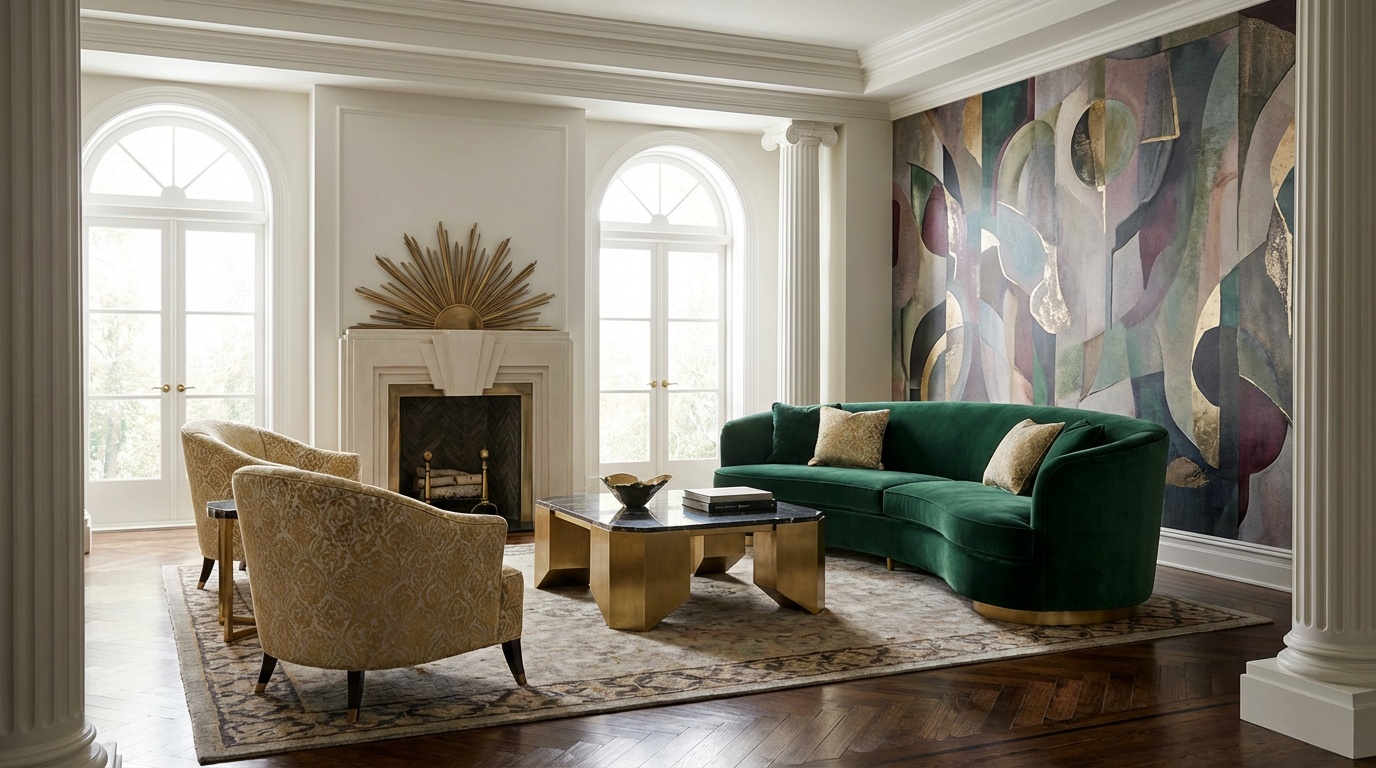
Mistake #1: Choosing overly ornate or curvy furniture. Many people confuse Art Deco with Art Nouveau or Victorian styles, selecting pieces with organic curves and floral motifs. Art Deco is about geometric precision, not flowing lines. If your furniture looks like it belongs in a Victorian parlor or has lots of carved flowers and vines, it's wrong for this style.
The fix: Focus on symmetry, straight lines, and geometric curves. Curves in Art Deco are mathematical—arcs, circles, and fan shapes—not organic. Replace overly ornate pieces with streamlined alternatives that emphasize form over decoration.
Mistake #2: Using too many competing patterns. Art Deco does embrace pattern, but there's a fine line between dynamic and chaotic. Using multiple geometric patterns in different scales and styles can create visual confusion rather than the sophisticated harmony you're after.
The fix: Choose one primary pattern (perhaps a geometric rug) and keep other patterns subtle or in the same family. If your rug features bold chevrons, keep pillows in solid jewel tones or subtle geometric textures. Patterns should complement each other through shared colors and scale, not compete for attention.
Mistake #3: Neglecting symmetry and balance. Art Deco rooms feel organized and intentional, with carefully balanced arrangements. A common error is placing furniture haphazardly or creating asymmetrical vignettes that undermine the style's essential character.
The fix: Embrace pairs and symmetry. Flank your sofa with matching side tables and lamps. Center your coffee table precisely. If you have a fireplace or architectural focal point, arrange furniture symmetrically around it. This doesn't mean the room should feel rigid—you can break symmetry intentionally for interest—but the underlying structure should be balanced.
Mistake #4: Using the wrong metals or mixing them carelessly. While you can combine metals in Art Deco spaces, there's an art to it. Mixing cheap, mismatched metal finishes looks unintentional rather than curated. Similarly, using brushed or antiqued metals instead of polished finishes misses the mark.
The fix: Choose two complementary metal finishes and use them consistently throughout the space. Brass and chrome work beautifully together, as do gold and black nickel. Keep finishes highly polished rather than distressed or matte. Ensure your metal finishes appear in multiple places—if you have brass lamp bases, echo that brass in picture frames, hardware, or decorative objects.
Mistake #5: Creating a museum rather than a living space. In their enthusiasm, some people create rooms that look like period film sets—impressive but not comfortable or livable. Art Deco should feel glamorous but also functional for modern life.
The fix: Balance authenticity with comfort. Your sofa should be beautiful but also comfortable enough for movie nights. Incorporate modern conveniences (a sleek TV, concealed charging stations) in ways that don't compromise the aesthetic. Mix vintage pieces with contemporary comfort items. Remember that the original Art Deco era was about embracing modernity—your room should feel current, not like a time capsule. If you're interested in blending styles, you might also explore modern living room ideas that can complement Art Deco elements.
Signs your space is missing the mark: If the room feels cluttered rather than curated, you've gone too far with accessories. If it feels cold and uninviting, you may need to add warmer metals, richer colors, or softer textures. If it doesn't photograph well (Art Deco is highly photogenic), something is off with your symmetry, lighting, or material choices.
Common Mistakes to Avoid
Styling for Different Budgets & Spaces
Art Deco's reputation for luxury might seem intimidating on a budget or in a small space, but this style is remarkably adaptable. Let's explore how to achieve the look across different constraints.
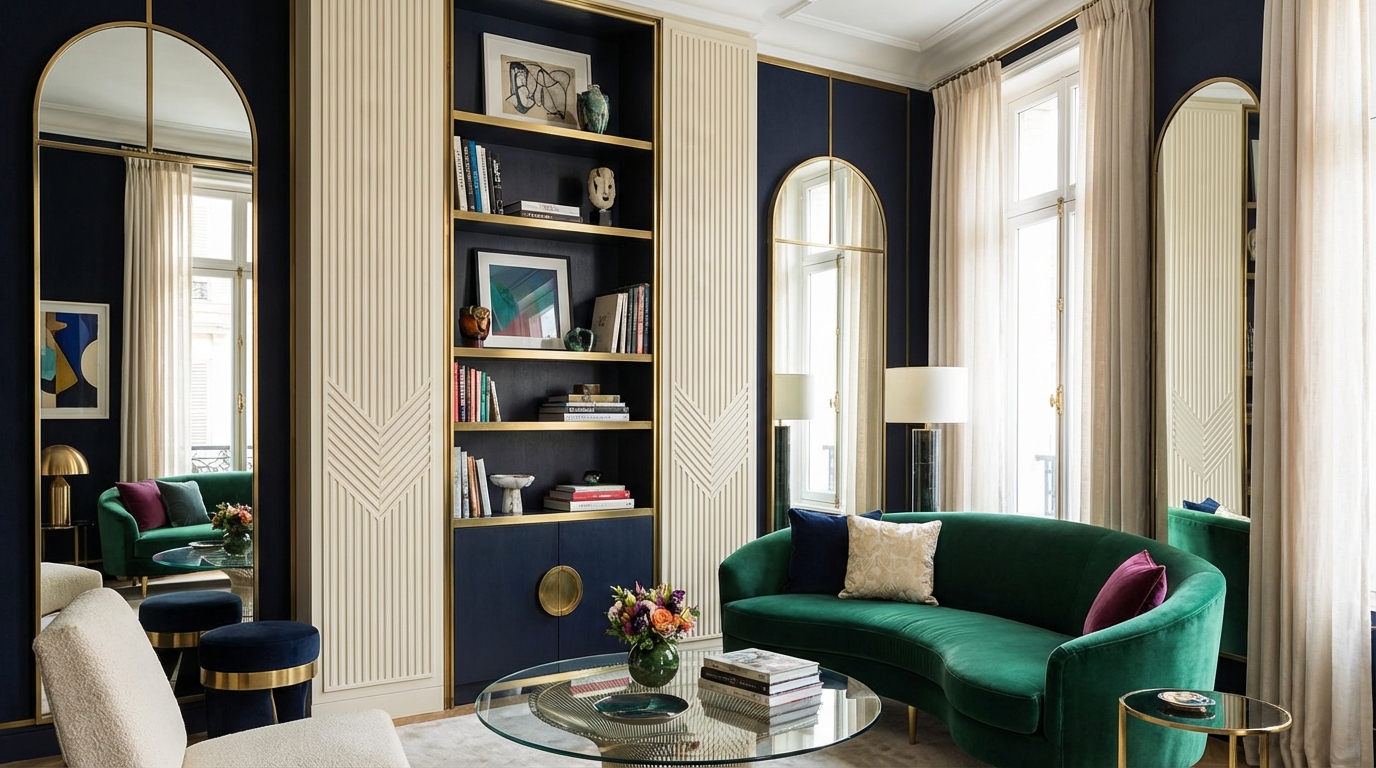
Small space adaptations actually play to Art Deco's strengths. The style's emphasis on streamlined furniture and vertical elements helps small rooms feel larger. Use mirrors strategically—a large geometric mirror or a gallery wall of smaller mirrors reflects light and expands visual space. Choose furniture with exposed legs rather than skirted pieces; seeing floor beneath furniture makes rooms feel more spacious. A small velvet loveseat works better than a bulky sofa. Opt for nesting tables or a sleek console behind the sofa instead of large coffee tables.
Vertical emphasis helps in small spaces—use tall, narrow bookcases or étagères in chrome and glass. Draw the eye upward with vertical stripes in wallpaper or a tall, narrow mirror. Keep the color palette more restrained in small rooms; choose one jewel tone as an accent rather than multiple competing colors. A small living room might feature cream walls, a charcoal gray loveseat, emerald green accent pillows, and brass accessories—simple but impactful.
Rental-friendly approaches focus on non-permanent changes. You can't install wallpaper or paint walls in most rentals, but you can bring Art Deco style through furniture, rugs, lighting, and accessories. A large geometric rug defines the space and brings pattern. Freestanding floor lamps and table lamps provide Art Deco lighting without changing fixtures. Use removable wallpaper on one accent wall if your lease allows. Focus your budget on portable items you'll take to your next home—quality furniture pieces, artwork, mirrors, and decorative objects.
Budget tier: Under $500 - At this level, focus on accessories and small changes that deliver maximum impact. Invest in a geometric area rug ($150-250) to anchor the space. Add two matching table lamps with geometric bases ($80-120 for the pair). Purchase velvet pillow covers in jewel tones ($40-60). Find a large geometric mirror at HomeGoods or Target ($60-100). Add metallic accessories—a brass bar cart, geometric bookends, a mirrored tray ($50-80). Paint existing furniture in high-gloss black if you're able. This budget won't transform your entire room, but it will introduce clear Art Deco elements.
Budget tier: $500-2,000 - Here you can make more substantial changes. Invest in one signature furniture piece—perhaps a velvet accent chair ($400-700) or a geometric coffee table ($300-500). Add quality window treatments in velvet or silk ($200-400). Purchase a statement light fixture ($150-300). Add a geometric area rug if you haven't already ($200-400). Invest in artwork or mirrors ($100-300). Buy decorative accessories in quality materials ($100-200). This budget allows you to create a cohesive look with several key pieces establishing the style.
Budget tier: $2,000+ - At this level, you can fully transform your living room. Invest in a quality velvet sofa ($1,500-3,000), a statement coffee table ($500-1,200), accent chairs ($400-800 each), and a show-stopping chandelier ($600-1,500). Add custom window treatments ($400-800), a luxury area rug ($600-1,500), and quality artwork and mirrors ($300-800). This budget allows for authentic vintage pieces or high-end contemporary furniture that will last decades.
Phasing the transformation makes Art Deco achievable over time. Phase 1 (first 3 months): Start with paint, lighting, and accessories—these give you immediate visual impact. Change your lamps, add mirrors and metallic accessories, paint an accent wall if possible. Phase 2 (months 4-6): Add one major furniture piece, whether a sofa, accent chairs, or coffee table. Phase 3 (months 7-12): Layer in textiles—curtains, area rug, throw pillows, and blankets. Phase 4 (year 2): Refine with artwork, additional furniture pieces, and decorative objects. This approach spreads costs while allowing you to live with each change and make thoughtful decisions about what comes next.
Remember that Art Deco is about quality over quantity. A small room with a few perfect pieces captures the style better than a large room filled with mediocre items. Start with what matters most to you—if you love lounging, invest in seating first; if you entertain, prioritize the coffee table and lighting.
Styling for Different Budgets & Spaces
Bringing Your Vision to Life
The most challenging part of any design project is visualizing how all these elements will work together in your actual space. You might love emerald velvet and brass accents in theory, but will they work with your room's dimensions, natural light, and existing architecture? This is where visualization becomes invaluable before you spend a single dollar.
Traditionally, homeowners faced a frustrating guessing game—buying pieces they thought would work, hoping for the best, and often ending up with expensive mistakes. Professional interior designers use mood boards and renderings, but these services cost hundreds or thousands of dollars and still require imagination to translate to your specific room.
This is exactly why RoomStudioAI is transforming how people approach interior design. Instead of guessing whether Art Deco style will work in your living room, you can see it instantly. Simply upload a photo of your current space, select Art Deco as your preferred style, and within seconds, you'll see a professionally designed visualization of your room transformed with authentic Art Deco elements.
The AI understands the principles we've discussed throughout this guide—the geometric patterns, the jewel tones, the metallic accents, the symmetrical arrangements—and applies them specifically to your room's layout, lighting, and proportions. You'll see how emerald velvet might look against your walls, whether a geometric rug works with your floor space, and how brass lighting fixtures interact with your natural light.
This risk-free experimentation is invaluable. You can try different Art Deco color palettes—maybe one version with sapphire blue accents, another with ruby red—and compare them side by side. You can see whether full Art Deco glamour works for your space or if a more subtle approach feels better. You might discover that Art Deco elements blend beautifully with your existing contemporary interior design, creating a unique hybrid that's perfect for you.
For renters, this is especially powerful. You can visualize what's possible with furniture and accessories alone, without permanent changes. For homeowners planning a complete renovation, you can experiment with different levels of commitment before making expensive decisions. For anyone on a budget, you can see the end goal clearly, making it easier to phase your transformation and prioritize which pieces to buy first.
The free AI design tool at RoomStudioAI takes minutes to use but can save you from costly mistakes and give you the confidence to commit to your vision. You'll have a clear reference image to guide your shopping, help you communicate with partners or roommates about the direction you're heading, and keep you focused on cohesive design choices rather than impulse purchases.
Creating an Art Deco living room is a journey worth taking. This style offers a rare combination of timeless elegance and bold personality, creating spaces that feel both luxurious and livable. Whether you're drawn to full Gatsby-era glamour or prefer subtle geometric accents within a more contemporary framework, the principles in this guide will help you achieve a sophisticated, cohesive result.