What Defines Contemporary Style
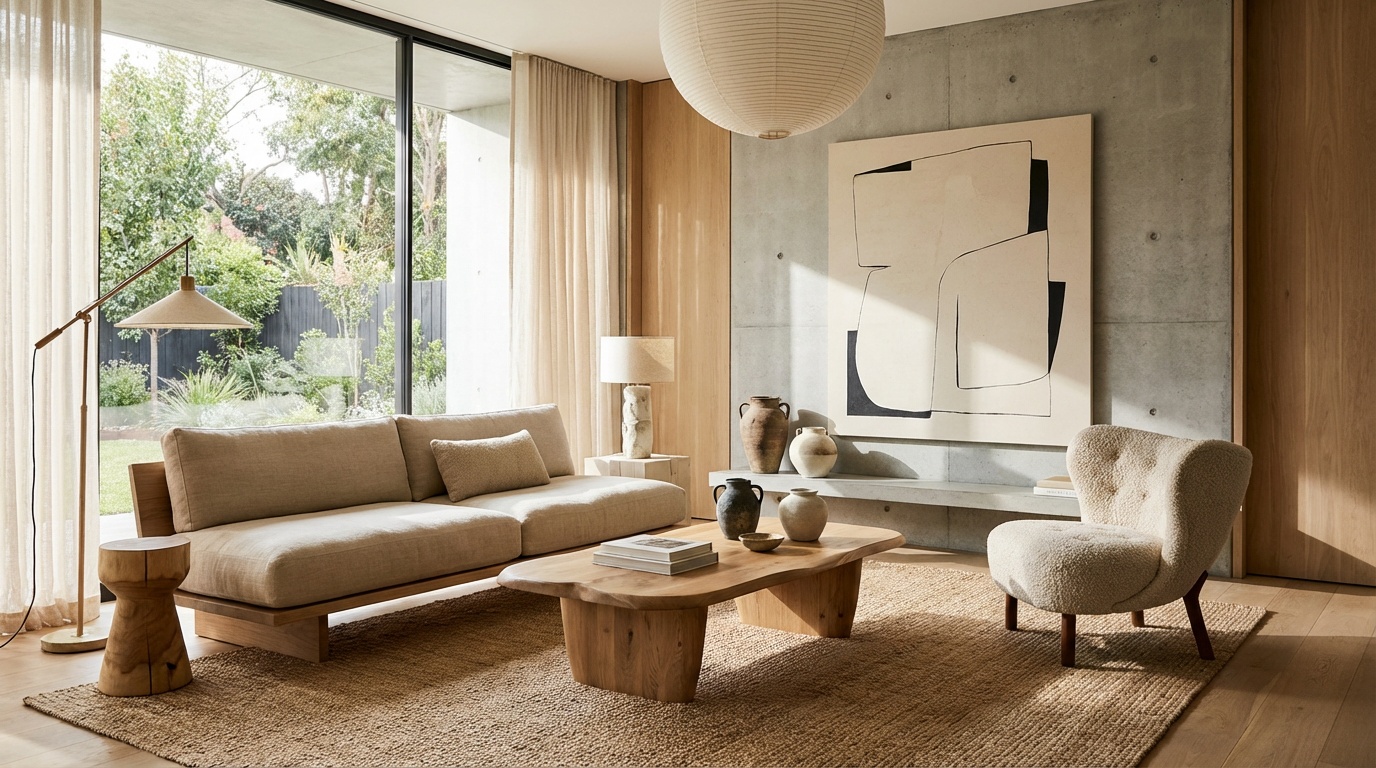
Contemporary design is often misunderstood as simply "modern," but it's actually a distinct and evolving approach to interior design. The term contemporary literally means "of the moment," which means this style is always shifting to reflect current trends, materials, and cultural influences. Unlike modern design, which refers specifically to a historical movement from the early to mid-20th century, contemporary design is fluid and borrows elements from various styles while maintaining its own distinct identity.
The contemporary style emerged in the 1970s as designers began moving away from the strict minimalism of mid-century modern design. They started incorporating softer lines, varied textures, and more comfortable furnishings while retaining the clean, uncluttered aesthetic that defined modern spaces. This evolution created a style that feels less rigid and more welcoming than its modernist predecessor.
Today's homeowners gravitate toward contemporary design because it offers the best of both worlds: the clean lines and simplicity that make spaces feel calm and organized, combined with the warmth and comfort necessary for daily living. Contemporary living rooms don't sacrifice functionality for aesthetics—they embrace both equally. This style resonates particularly well with people who appreciate current design trends but don't want their homes to feel dated in five years.
What distinguishes contemporary from similar styles is its emphasis on neutral color palettes, natural materials, and open, flowing spaces. While minimalist design strips everything down to the absolute essentials, contemporary design allows for more personality and layering. Unlike transitional style, which blends traditional and modern elements, contemporary design looks firmly toward the present and future. The hallmarks include horizontal and vertical lines, lack of ornamentation, and a focus on shape, color, and texture rather than decorative details.
What Defines Contemporary Style
Essential Elements for Your Contemporary Living Room
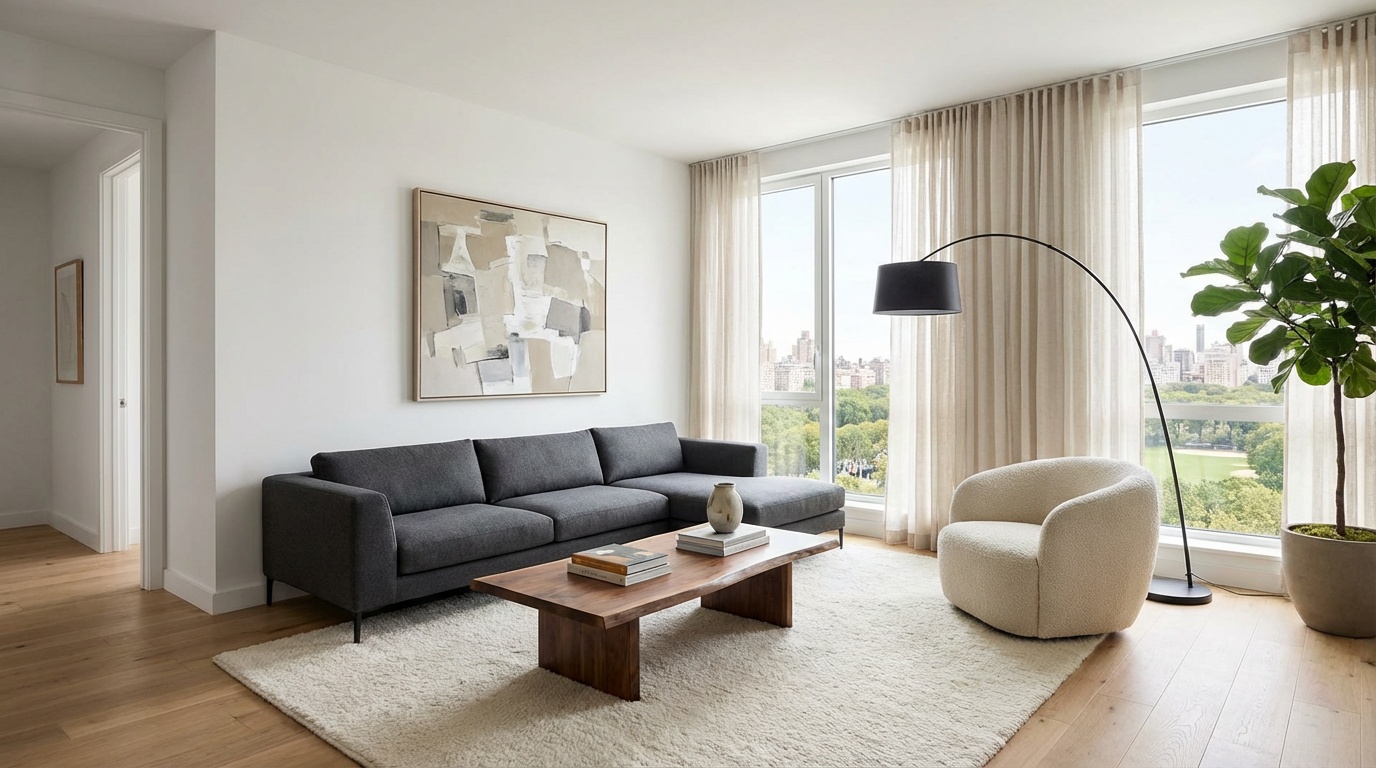
Creating an authentic contemporary living room starts with selecting the right foundational pieces. The sofa is your most important investment—look for low-profile designs with clean lines and minimal detailing. Contemporary sofas typically feature straight or slightly curved arms, exposed legs (often in metal or wood), and tailored upholstery without tufting or decorative elements. Materials like performance linen, bouclé, velvet, or leather work beautifully, offering both visual interest and durability.
Your coffee table should make a statement through shape and material rather than ornate design. Consider pieces in glass and metal combinations, solid wood slabs with live edges, or sculptural concrete. The key is choosing something with interesting proportions or materials that serves as a conversation piece without overwhelming the space. Rectangular, oval, round, and organic shapes all work—just ensure the scale is appropriate for your seating arrangement.
Accent chairs in contemporary living rooms often provide opportunities to introduce sculptural elements or bold colors. Look for designs with interesting silhouettes—perhaps a curved barrel chair, a geometric armchair, or a sleek recliner that doesn't look like traditional recliners. These pieces should complement your sofa without matching it exactly, creating visual interest through variation.
Storage solutions in contemporary spaces are streamlined and often hidden. Floating shelves, low media consoles with clean fronts, and built-in cabinetry keep clutter at bay while maintaining the uncluttered aesthetic. Choose pieces in natural wood finishes, matte lacquered surfaces, or combinations of wood and metal. Hardware should be minimal—think integrated pulls or push-to-open mechanisms rather than decorative knobs.
Materials are crucial to achieving the contemporary look. Wood should appear natural with visible grain—think white oak, walnut, or teak in their natural or lightly stained finishes. Metals like brushed brass, matte black steel, chrome, and brushed nickel add sophistication without feeling cold. For textiles, layer different textures: a smooth leather sofa with nubby linen pillows, a plush wool rug, and lightweight cotton or linen curtains.
The contemporary living room benefits from this style's emphasis on functionality and flow. Unlike more formal design approaches, contemporary spaces are designed for actual living—conversation, relaxation, entertainment, and family time. The open layout and minimal clutter create a sense of calm and spaciousness, even in smaller rooms, while the focus on quality materials and craftsmanship ensures the space ages beautifully.
Essential Elements for Your Contemporary Living Room
Color Palettes & Combinations
Contemporary color palettes begin with a neutral foundation that creates a sophisticated, timeless backdrop. The primary palette typically includes crisp white, warm gray (think greige tones like "Agreeable Gray" or "Repose Gray"), soft taupe, and charcoal. These aren't boring builder-grade neutrals—contemporary design embraces complex, layered neutrals with subtle undertones that shift throughout the day as lighting changes.
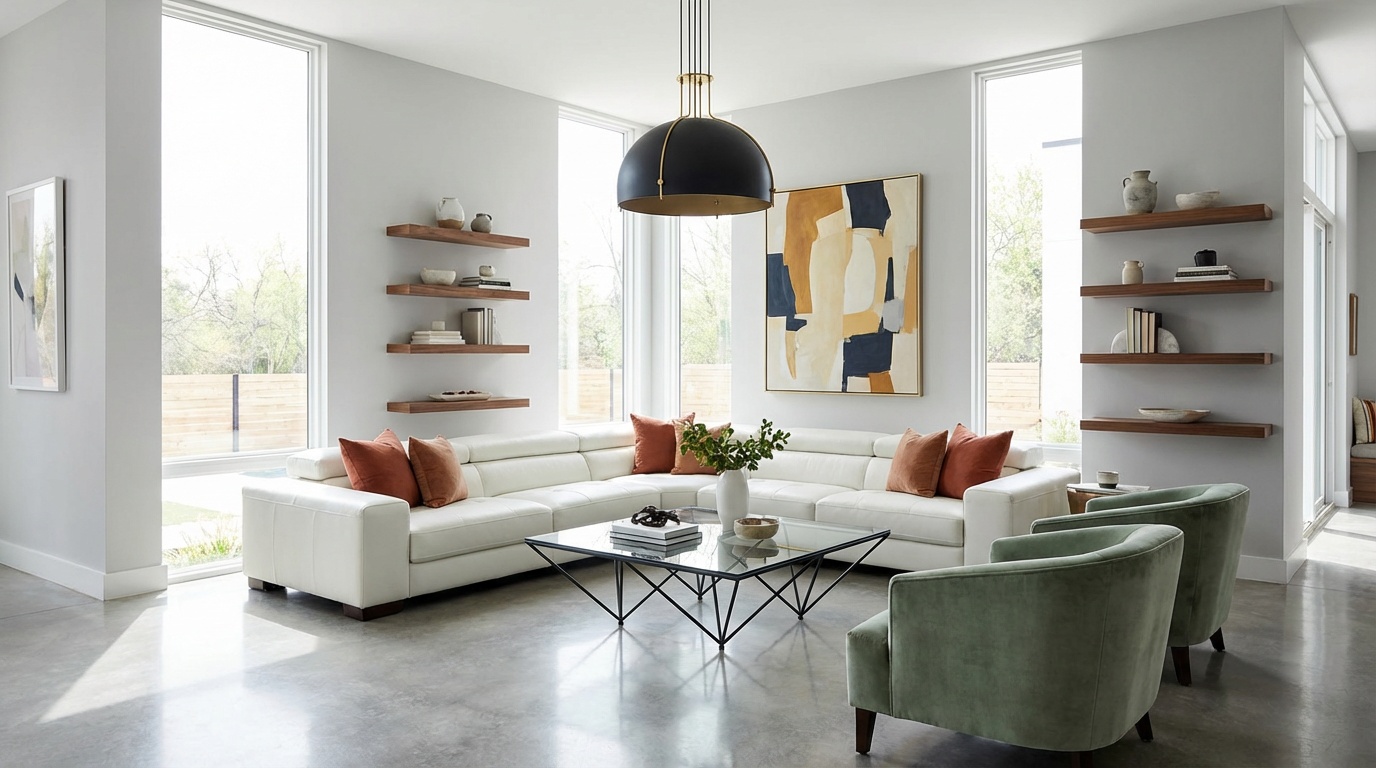
Within this neutral framework, contemporary spaces introduce nature-inspired accent colors. Sage green, dusty blue, terracotta, warm ochre, and deep forest green bring life without overwhelming the serene foundation. The key is using these colors thoughtfully—perhaps a sage green accent chair, terracotta throw pillows, or ochre artwork rather than painting entire walls in bold hues.
Balancing neutrals with color follows the 60-30-10 rule: 60% of the room in your dominant neutral (usually walls, large furniture pieces), 30% in a secondary color (perhaps a rug, curtains, or secondary seating), and 10% in accent colors (pillows, artwork, decorative objects). This creates visual interest without chaos.
For wall colors, contemporary living rooms often feature warm whites, light grays, or greige tones that provide a clean backdrop. Some homeowners create an accent wall in a deeper tone—perhaps charcoal gray, navy blue, or deep green—but this should be done sparingly and with intention. The goal is to highlight architectural features or create depth, not to chop up the space visually.
Furniture colors in contemporary spaces tend toward neutrals—gray, cream, tan, black, or natural wood tones. This doesn't mean everything matches; rather, pieces should coordinate within a cohesive color story. A charcoal sofa might pair with a cream accent chair, natural oak coffee table, and black metal shelving.
Decor and accessories provide opportunities for those accent colors. This is where you can introduce seasonal variations without major renovations. In fall and winter, layer in deeper jewel tones, rust, burgundy, and forest green through pillows, throws, and decorative objects. For spring and summer, lighten things up with soft blues, sage, blush pink, and natural textures like jute and linen.
Color Palettes & Combinations
Lighting & Ambiance
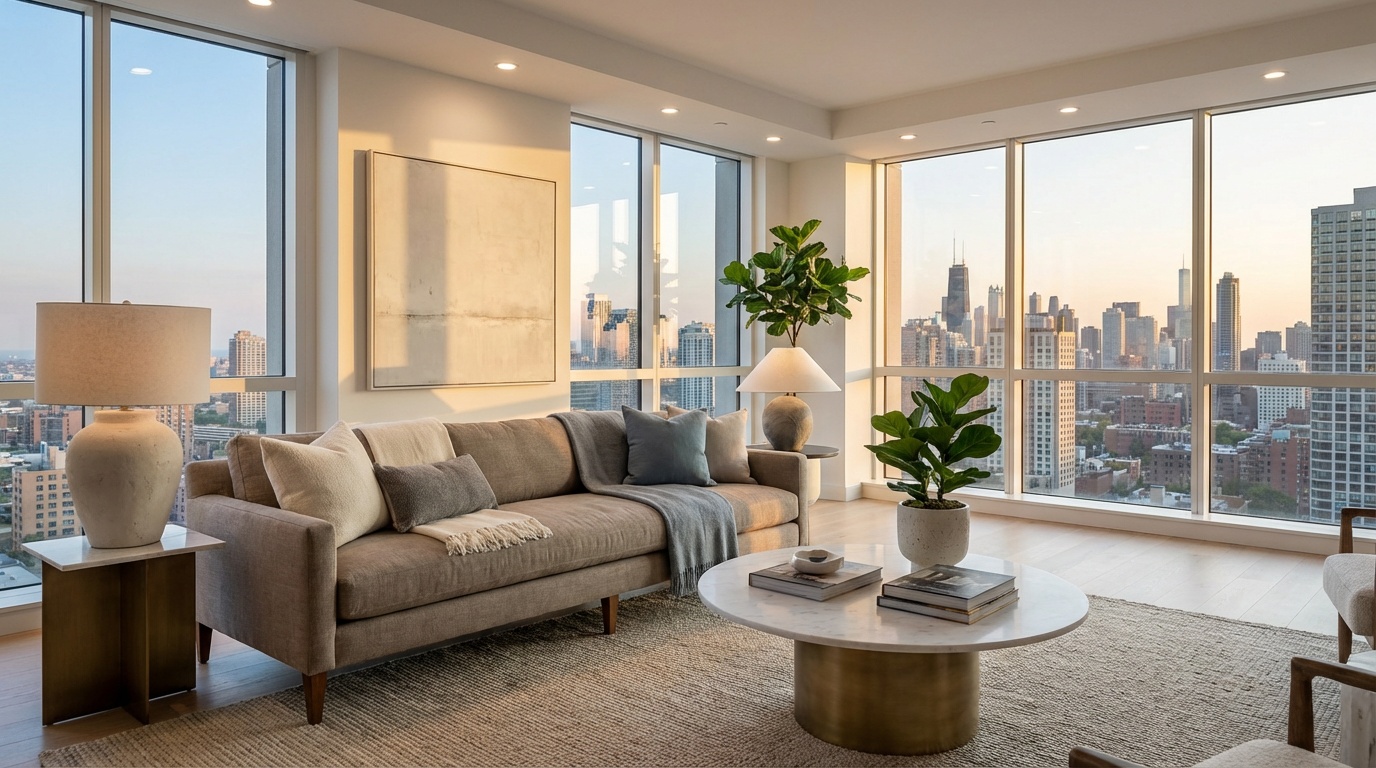
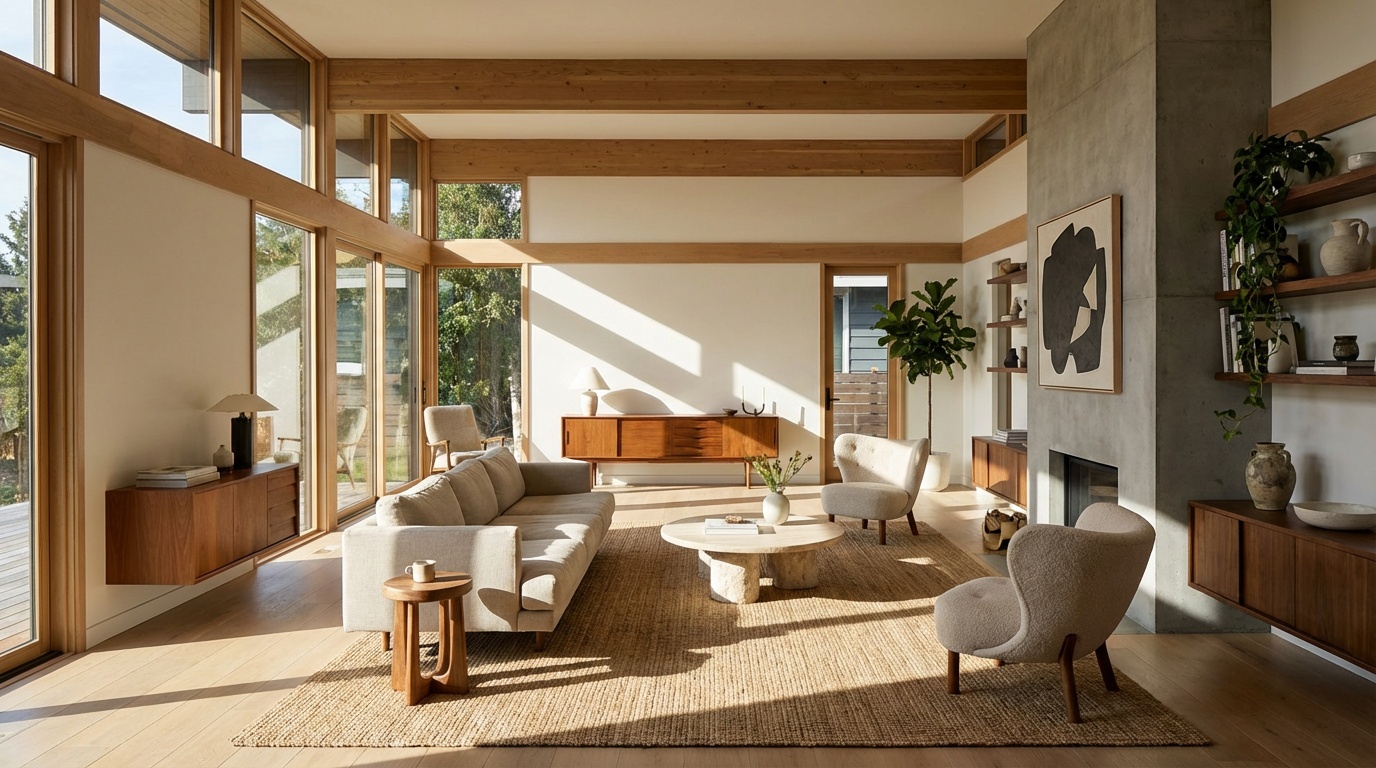
Lighting is absolutely crucial in contemporary living rooms, where the interplay of light and shadow enhances the clean lines and architectural elements. Natural light should be maximized and celebrated. Keep window treatments minimal—sheer linen curtains, roller shades, or even no treatments if privacy allows. The goal is to let daylight flood the space, highlighting textures and creating an airy, open feeling.
Contemporary lighting design follows the principle of layering: combining ambient, task, and accent lighting to create a flexible, functional space. Ambient lighting provides overall illumination—think recessed ceiling lights, track lighting, or a statement chandelier or pendant. Contemporary fixtures in this category feature geometric shapes, clean lines, and interesting materials like glass globes, metal cages, or sculptural forms.
Task lighting serves specific functions: reading, working, or highlighting particular areas. Floor lamps with arcing arms can illuminate seating areas without requiring side tables. Table lamps on consoles or side tables should have simple, sculptural bases—perhaps ceramic, metal, or wood—with drum or cylinder shades in white or neutral tones. Avoid fussy, traditional lamp styles with pleated shades or ornate bases.
Accent lighting adds drama and highlights architectural features or artwork. Picture lights, wall sconces, LED strip lighting behind floating shelves, or uplighting in corners create depth and visual interest. Contemporary sconces often feature minimal designs—think simple wall-mounted cylinders, swing-arm reading lights, or geometric metal frames.
Fixture finishes should coordinate with other metals in the room. Matte black creates striking contrast and works particularly well in spaces with white or light walls. Brushed brass or aged brass adds warmth without feeling too yellow or traditional. Brushed nickel and chrome offer cooler tones that pair well with gray-based color schemes.
Creating mood and atmosphere requires dimmer switches on all lighting circuits. This allows you to adjust lighting levels throughout the day—bright and energizing for daytime activities, softer and more intimate for evening relaxation. Consider smart bulbs that allow you to adjust both brightness and color temperature, shifting from cool daylight (5000K) during the day to warm white (2700K) in the evening.
Lighting & Ambiance
Furniture & Decor Shopping Guide
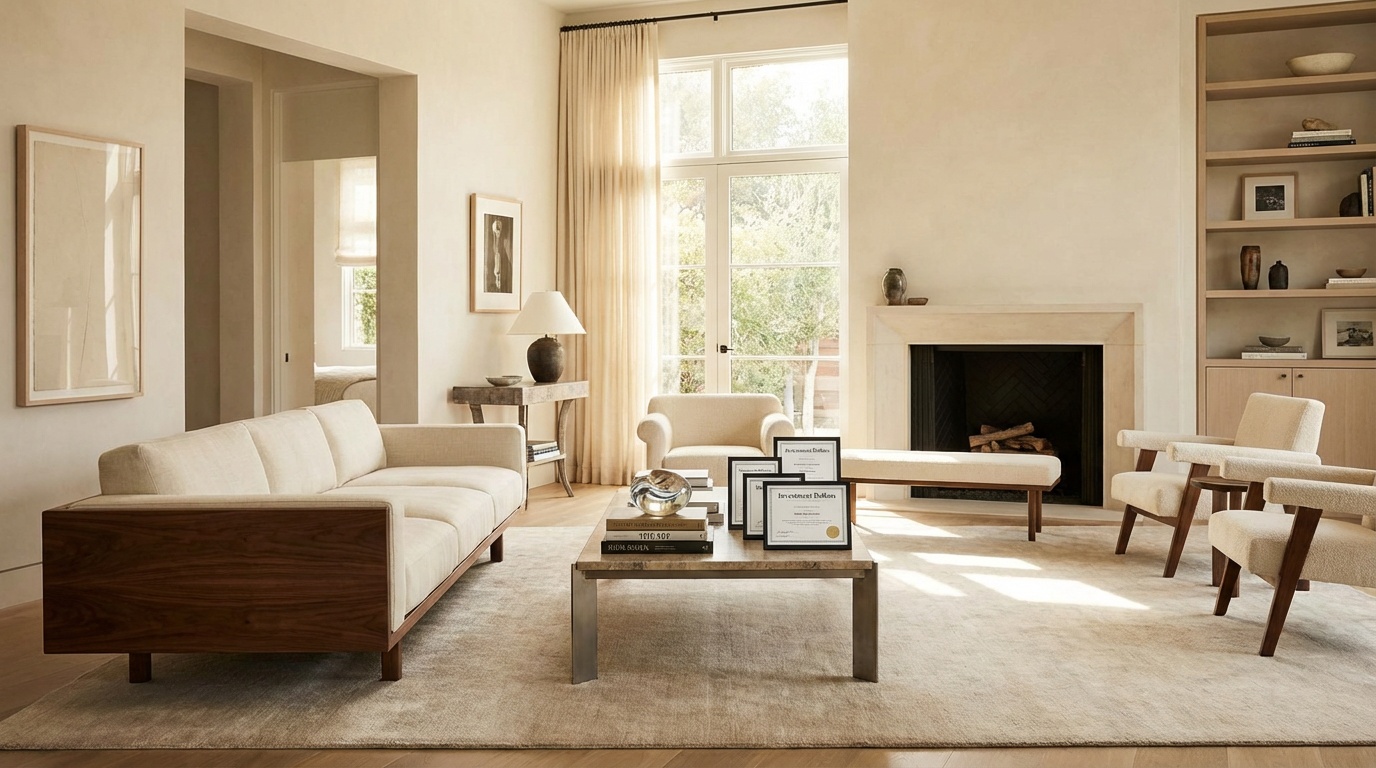
When budgeting for a contemporary living room, certain pieces deserve your investment dollars because they'll serve you for years. The sofa tops this list—plan to spend $1,500-$4,000 on a quality piece with solid hardwood frame, eight-way hand-tied springs, and durable upholstery. Brands like Article, Interior Define, West Elm, and Room & Board offer contemporary designs at various price points. For higher budgets, consider Design Within Reach or Herman Miller.
Your coffee table is another worthwhile investment. A well-made piece in solid wood, quality metal, or stone will last decades. Look at CB2, Crate & Barrel, AllModern, and Wayfair for mid-range options ($400-$1,200). For budget-friendly alternatives, IKEA's Scandinavian-influenced designs work surprisingly well in contemporary spaces—the STOCKHOLM and LISABO collections offer solid wood options under $300.
Lighting fixtures dramatically impact your space without requiring huge investments. Target's Project 62 line, West Elm, CB2, and Schoolhouse Electric offer contemporary fixtures at accessible prices. For statement pieces, browse Rejuvenation, YLighting, or Lumens. Don't overlook vintage and secondhand finds—mid-century modern lighting from the 1960s-1980s fits beautifully in contemporary spaces and can be found at estate sales, thrift stores, and online marketplaces.
For budget-friendly alternatives, focus on getting the big pieces right (even if that means starting with fewer items) rather than filling the space with cheap furniture. A quality neutral sofa from a reputable brand will serve you better than a full room of particle board furniture. HomeGoods, TJ Maxx, and Marshalls often carry contemporary-style accessories, pillows, and decor at fraction of retail prices.
Online retailers have revolutionized contemporary furniture shopping. Article offers mid-century and contemporary pieces with transparent pricing and good quality. AllModern (Wayfair's contemporary division) provides huge selection across all price points. Burrow and Inside Weather offer modular, customizable seating that ships easily and works well in contemporary spaces. Floyd creates minimalist furniture designed for easy moving and assembly.
Vintage and secondhand shopping can yield amazing contemporary and mid-century pieces that fit the aesthetic perfectly. Scour Facebook Marketplace, Craigslist, Chairish, and 1stDibs for original mid-century furniture, vintage lighting, and unique accent pieces. A 1970s chrome and glass coffee table or 1960s teak credenza can become the foundation of your contemporary living room at a fraction of new prices.
DIY projects can achieve the contemporary look affordably. Create floating shelves from solid wood boards and hidden brackets. Paint existing furniture in matte black or white for a contemporary refresh. Make abstract art with canvas, paint, and geometric tape. Build a simple platform bench for additional seating. The key is keeping designs clean and minimal—contemporary style doesn't lend itself to heavily crafted or ornate DIY projects.
Furniture & Decor Shopping Guide
Common Mistakes to Avoid
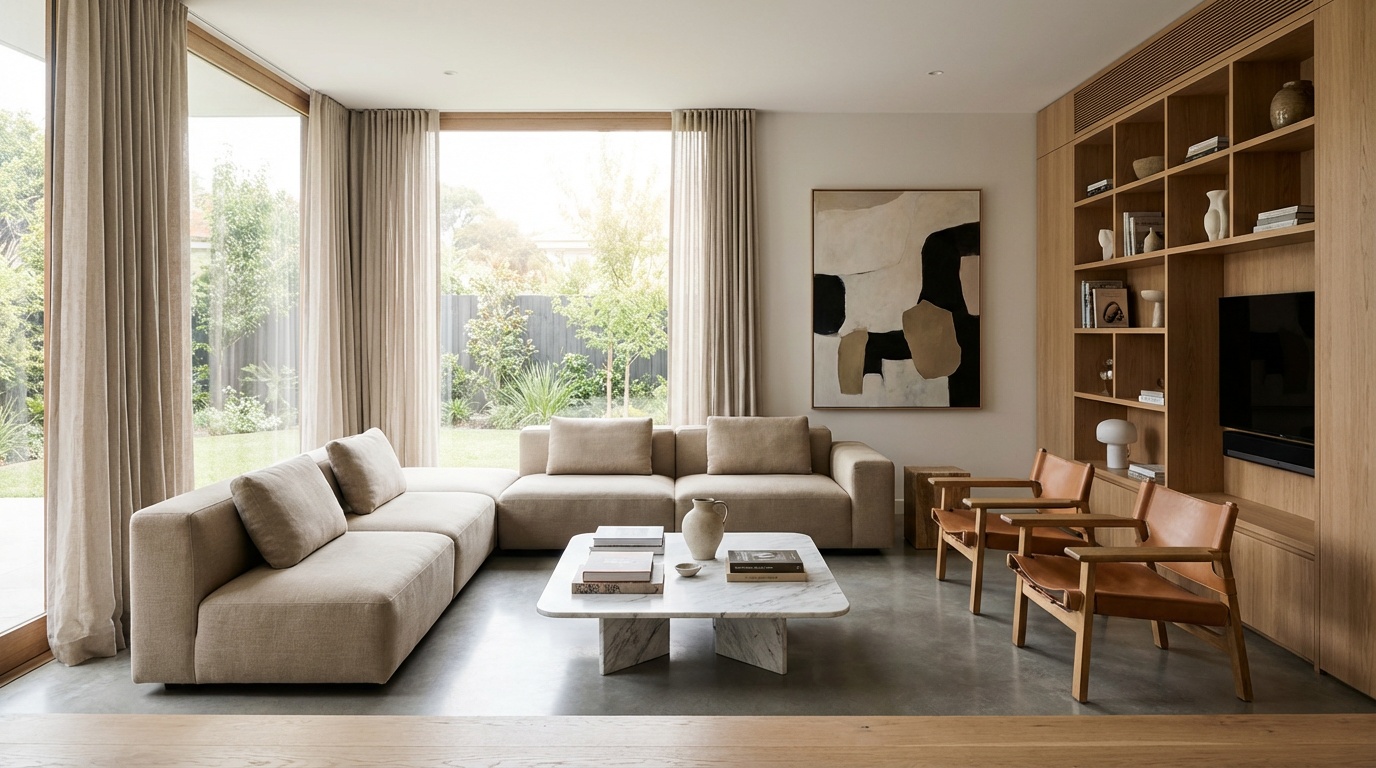
The first major mistake is confusing contemporary with cold or sterile. Many people interpret "clean lines" and "minimal" as removing all warmth and personality, resulting in spaces that feel more like showrooms than homes. The fix: layer textures abundantly. Combine a smooth leather sofa with chunky knit throws, nubby linen pillows, a plush wool rug, and natural wood elements. Add living plants for organic warmth. Contemporary should feel serene and uncluttered, not empty and unwelcoming.
The second mistake is over-matching everything. Buying a complete furniture set or matching every wood tone creates a flat, one-dimensional space. Contemporary design thrives on subtle variation and contrast. Pair different wood tones—perhaps walnut and white oak. Mix metals—brass table lamps with black metal shelving. Vary your neutral tones rather than making everything the same shade of gray. Signs you're over-matching: everything looks like it came from the same catalog photo, or you can't tell where one piece ends and another begins.
The third mistake is ignoring scale and proportion. Contemporary design emphasizes clean lines and shapes, which means poorly proportioned furniture stands out even more. A too-small coffee table floating in front of a large sectional, or oversized furniture crowding a small room, disrupts the balanced feeling contemporary spaces require. The fix: measure carefully before purchasing. Your coffee table should be about two-thirds the length of your sofa. Leave 30-36 inches of walking space around furniture. Use painter's tape on the floor to map out furniture footprints before buying.
The fourth mistake is neglecting lighting layers. Relying solely on overhead lighting or having only one light source creates harsh, unflattering illumination that emphasizes the starkness of contemporary design rather than its sophistication. You need at least three light sources in a living room: overhead ambient lighting, task lighting (floor or table lamps), and accent lighting (sconces or picture lights). Each should be on a separate dimmer switch for maximum flexibility.
The fifth mistake is under-styling or over-styling. Under-styling leaves contemporary spaces feeling unfinished and cold—just furniture with bare walls and no personality. Over-styling clutters surfaces and walls, defeating the uncluttered aesthetic that defines contemporary design. The balance: follow the rule of three for styling surfaces (group items in odd numbers), leave negative space on shelves and walls, and edit ruthlessly. Every item should either serve a function or bring you genuine joy. If you're questioning whether something belongs, it probably doesn't.
Signs your space is missing the mark: it feels uncomfortable or uninviting, dated rather than current, cluttered despite your best efforts, or lacks personality and could be anyone's living room. The solution often involves adding texture, editing accessories, improving lighting, or introducing one or two personal elements that make the space uniquely yours.
Common Mistakes to Avoid
Styling for Different Budgets & Spaces
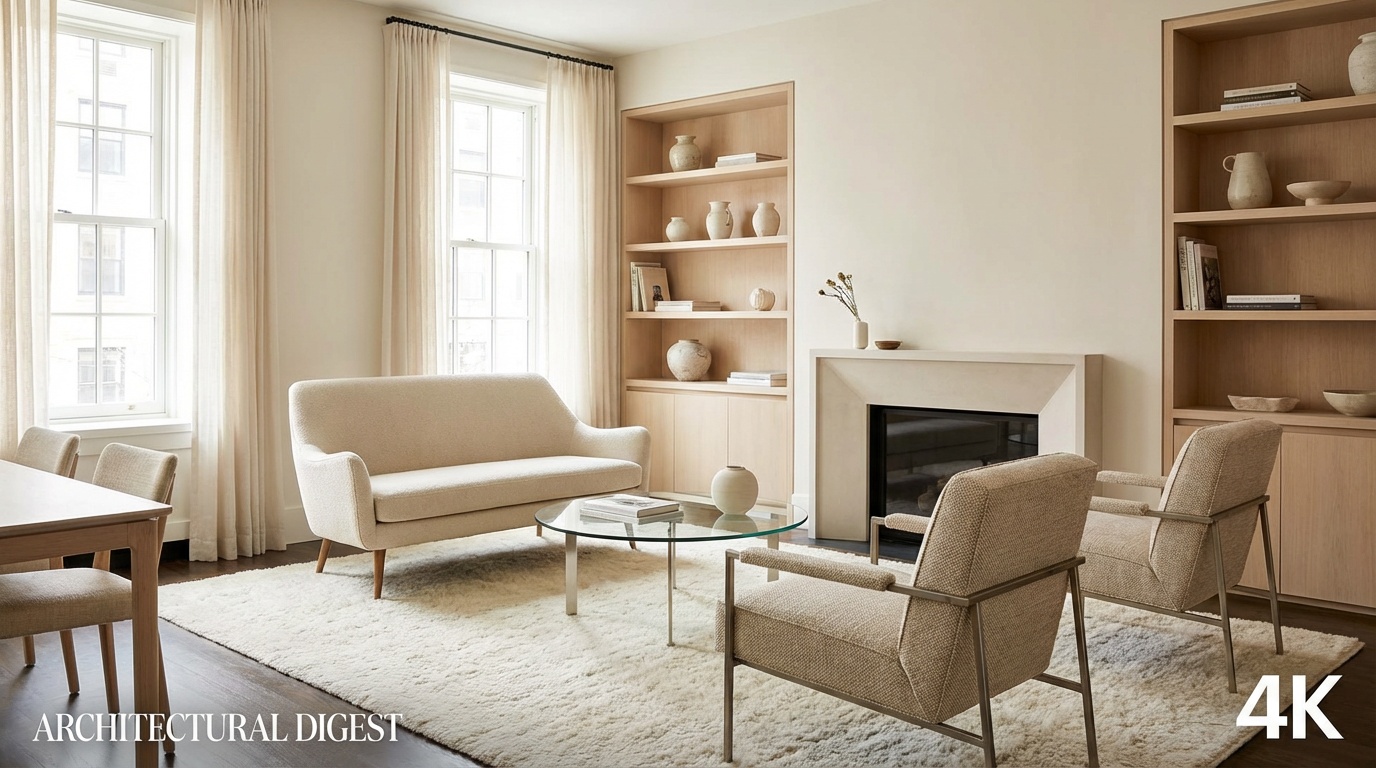
Small space adaptations require strategic choices that maximize the contemporary style's inherent spaciousness. Start with a neutral, light color palette to make the room feel larger. Choose furniture with exposed legs rather than skirted pieces—seeing the floor underneath creates visual space. Opt for a loveseat or apartment-sized sofa (72-78 inches) instead of a full-sized sectional. Use glass or acrylic coffee tables that don't visually block space. Mount your TV on the wall instead of using a bulky media console, or choose a minimal, low-profile console. Incorporate vertical storage with floating shelves or tall, narrow bookcases that draw the eye upward.
Rental-friendly approaches focus on changes that don't require permanent modifications. Invest in quality furniture you'll take with you rather than built-ins. Use removable wallpaper or large-scale art to create accent walls without paint. Add floor lamps and table lamps instead of installing new fixtures. Layer large area rugs to define spaces and cover less-than-ideal flooring. Use tension rods for curtains that don't require drilling into walls. The beauty of contemporary style is that it's largely about furniture, lighting, and accessories rather than architectural changes, making it perfect for renters.
Budget tier: Under $500 - Focus on strategic updates rather than complete replacement. Paint walls in a warm white or light gray ($50-100). Add contemporary throw pillows in solid colors or simple patterns ($80-120 for 4-6 pillows). Replace old curtains with simple linen or cotton panels ($60-100). Add a contemporary floor lamp ($80-150). Incorporate plants in simple planters ($40-80). Create DIY abstract art ($30-50 for supplies). Shop secondhand for one statement piece like a vintage coffee table or mid-century chair ($100-200). This budget prioritizes cosmetic updates that refresh the space.
Budget tier: $500-$2,000 - Make more substantial furniture investments. Purchase a quality contemporary coffee table ($400-700). Add a statement floor lamp and table lamp ($200-350 total). Invest in a large area rug in neutral tones ($300-600). Buy accent chairs or a bench ($300-600). Update window treatments with custom or semi-custom curtains ($150-300). Add floating shelves and contemporary accessories ($150-250). This budget allows for several key pieces that transform the space.
Budget tier: $2,000+ - Invest in a new contemporary sofa ($1,500-3,000). Add quality accent seating ($600-1,200). Purchase a designer coffee table ($600-1,500). Install new lighting fixtures including a statement pendant or chandelier ($400-800). Buy a high-quality area rug ($800-2,000). Commission custom window treatments ($400-800). Add artwork from local artists or galleries ($300-1,000). This budget enables a complete transformation with investment pieces.
Phasing over time is often the smartest approach. Phase 1 (Months 1-3): Paint, lighting updates, and accessories. Phase 2 (Months 4-6): Invest in your sofa or primary seating. Phase 3 (Months 7-9): Add accent furniture and window treatments. Phase 4 (Months 10-12): Final touches like artwork, plants, and decorative objects. This approach allows you to live in the space, save for quality pieces, and make thoughtful decisions rather than rushing to fill the room.
If you're working with a small space, you might also find inspiration in minimalist living room ideas, which share contemporary design's emphasis on clean lines and uncluttered spaces.
Styling for Different Budgets & Spaces
Bringing Your Vision to Life
The most challenging part of any design project is visualizing the end result before you've spent a single dollar. You might love that charcoal gray sofa in the showroom, but will it work with your light oak floors and white walls? Will that geometric rug complement or clash with your existing furniture? These questions often lead to decision paralysis or expensive mistakes.
This is where visualization tools become invaluable. Before committing to paint colors, furniture purchases, or layout changes, you need to see your actual space transformed. Traditional methods like mood boards and paint swatches only go so far—they can't show you how everything works together in your specific room with your specific lighting and architectural features.
RoomStudioAI solves this challenge by allowing you to upload a photo of your current living room and instantly see it redesigned in contemporary style. Instead of imagining how contemporary design principles might translate to your space, you'll see realistic visualizations that show exactly how different furniture arrangements, color palettes, and decor choices will look. You can experiment with various interpretations of contemporary style—from minimalist contemporary to warmer, more textured versions—without any risk or commitment.
The ability to try before you buy is transformative. See whether that all-white color scheme you're considering might feel too stark in your north-facing room. Test whether a large sectional or sofa-and-chairs arrangement works better with your space's proportions. Experiment with different accent colors to find what resonates with you. Each visualization helps you make more confident, informed decisions that align with both your vision and your budget.
Start by taking photos of your living room from multiple angles in natural daylight. Upload them to RoomStudioAI and select "contemporary" as your preferred style. Within seconds, you'll see professional-quality visualizations showing your space transformed. Use these images to guide your shopping, communicate with family members about design decisions, and plan your budget by identifying which changes will have the biggest impact.
The beauty of using AI visualization is that it's completely free to try with no obligation. You're not committing to expensive designer consultations or purchasing furniture based on guesswork. You're simply exploring possibilities and gaining clarity about what will work in your unique space. Many users find that visualization helps them avoid costly mistakes and identify creative solutions they wouldn't have considered otherwise.
Once you've visualized your contemporary living room and identified the changes you want to make, you can move forward with confidence and excitement. You'll know exactly what you're working toward, which makes the process of shopping, budgeting, and implementing so much more enjoyable. Your contemporary living room isn't just a design concept—it's a tangible vision you can bring to life step by step.
Remember, creating a contemporary living room isn't about following rigid rules or achieving some perfect magazine-worthy ideal. It's about understanding the principles that make contemporary design work—clean lines, neutral palettes, quality materials, thoughtful lighting—and applying them in ways that suit your lifestyle. Whether you're working with a small apartment or a spacious house, a tight budget or room for investment pieces, contemporary style offers a flexible framework for creating spaces that feel current, calm, and completely you.
Take that first step today by visualizing your space with RoomStudioAI. See your contemporary living room come to life, get inspired by the possibilities, and start your transformation with clarity and confidence. Your dream living room is closer than you think—sometimes you just need to see it to believe it.