What Defines Wabi-Sabi Style
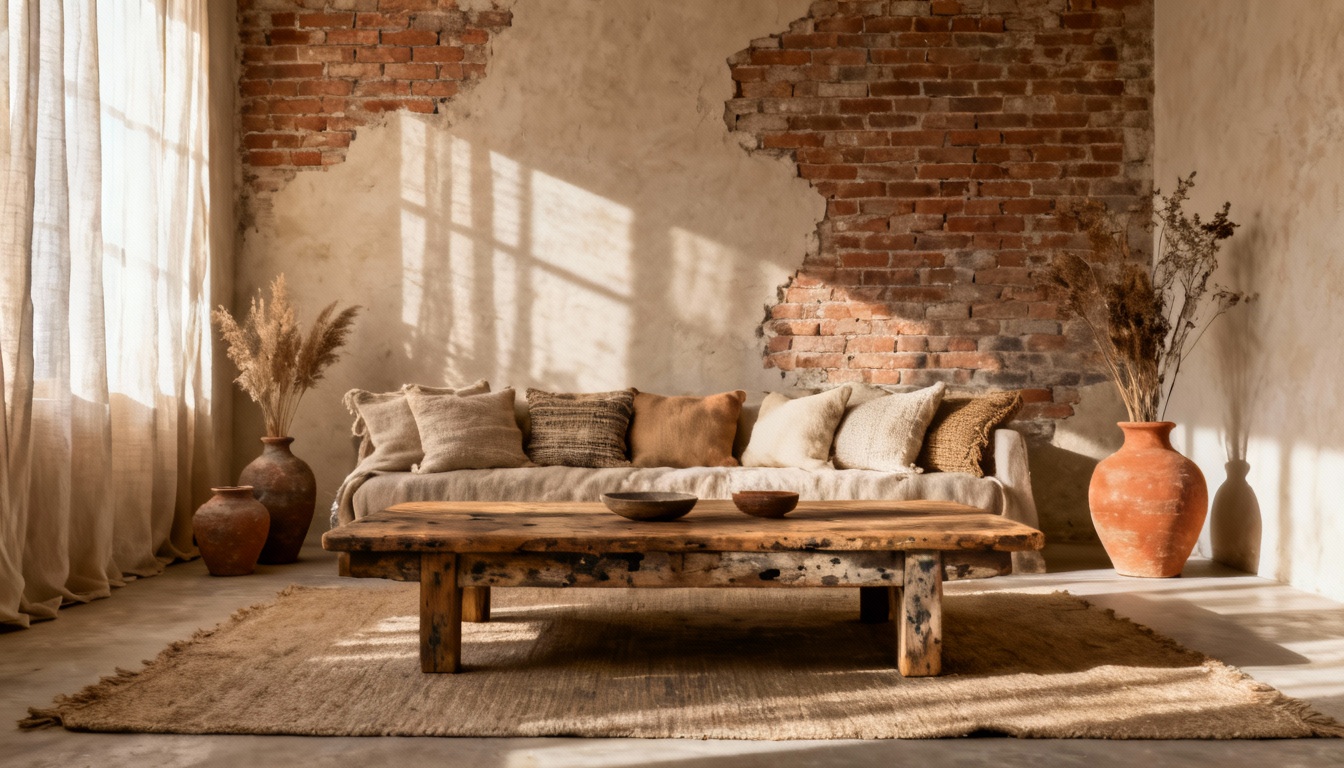
Wabi-sabi is far more than an aesthetic trend—it's a profound Japanese philosophy that has shaped art, architecture, and daily life for centuries. The term itself combines two concepts: "wabi," which refers to the beauty of humble simplicity and harmony with nature, and "sabi," which celebrates the passage of time and the elegance found in aging and wear.
Originating from 16th-century Japanese tea ceremonies, wabi-sabi emerged as a counterpoint to the ornate and ostentatious design favored by the wealthy elite. Tea master Sen no Rikyū championed the use of rough, handmade pottery and simple, rustic tea rooms that honored natural materials and celebrated imperfection. This philosophy was deeply influenced by Zen Buddhism's emphasis on mindfulness, acceptance, and finding beauty in the present moment.
In contemporary interior design, wabi-sabi has evolved into a deeply relevant approach for modern homeowners seeking refuge from the relentless pace and visual noise of contemporary life. Unlike the stark minimalism of Scandinavian design or the curated perfection of modern farmhouse style, wabi-sabi embraces authenticity over perfection. A crack in a ceramic vase isn't a flaw to be hidden—it's a story to be celebrated. Wood that shows its grain, knots, and natural irregularities is treasured rather than sanded into uniformity.
What distinguishes wabi-sabi from similar styles is its philosophical foundation. While minimalism focuses on "less is more" and rustic design celebrates country living, wabi-sabi is about acceptance and finding beauty in the transient nature of all things. It's not about creating an Instagram-perfect space, but rather cultivating a living room that feels like a gentle exhale—calm, grounded, and deeply personal.
The key characteristics that define wabi-sabi interiors include:
- Organic imperfection: Asymmetry, irregularity, and natural flaws are embraced
- Natural materials: Raw wood, stone, clay, linen, and other unprocessed materials take center stage
- Muted color palettes: Earth tones and soft neutrals dominate
- Minimal ornamentation: Decoration is sparse and intentional
- Textural richness: Tactile surfaces create visual interest without clutter
- Evidence of time: Patina, weathering, and signs of age are valued
- Connection to nature: Natural light, plants, and organic forms bring the outside in
What Defines Wabi-Sabi Style
Essential Elements for Your Wabi-Sabi Living Room
Creating an authentic wabi-sabi living room begins with selecting furniture pieces that embody the philosophy's core values. Unlike styles that demand matching sets, wabi-sabi encourages a more intuitive, collected-over-time approach.
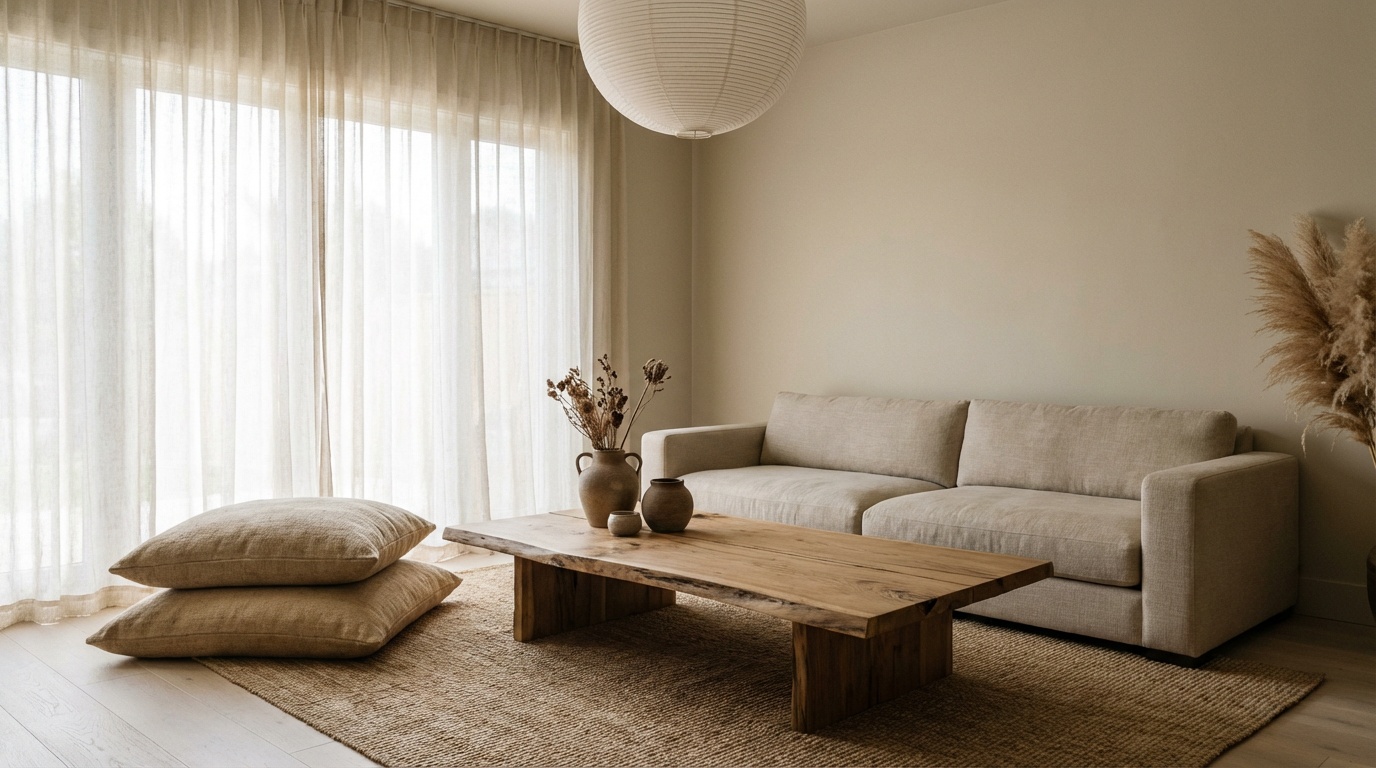
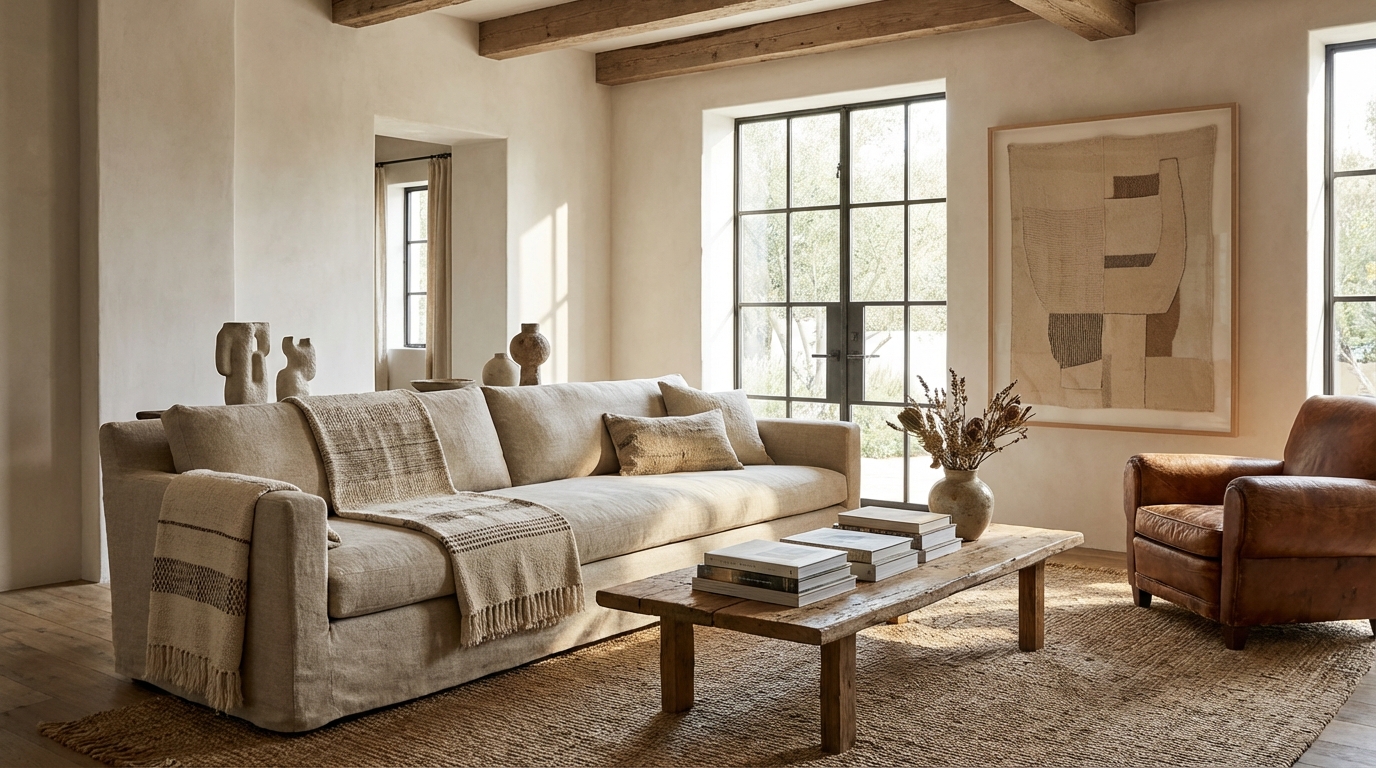
The low-profile sofa is perhaps the most important piece in a wabi-sabi living room. Look for designs with clean lines and natural fabric upholstery—think undyed linen in oatmeal, flax, or soft gray tones. Japanese-inspired platform sofas work beautifully, as do vintage mid-century pieces reupholstered in natural textiles. The sofa should feel inviting and lived-in rather than pristine and untouchable. Slight fading or gentle wear in the fabric isn't a problem—it's part of the story.
A handcrafted coffee table serves as the room's grounding element. Seek out pieces made from reclaimed wood, preferably with visible grain patterns, natural edges, or even small imperfections like knots or minor cracks. A thick slab of oak, walnut, or elm resting on simple legs embodies wabi-sabi perfectly. Alternatively, a low Japanese chabudai table or a vintage wooden trunk can serve this purpose beautifully.
Floor seating elements enhance the wabi-sabi aesthetic while encouraging a more relaxed, grounded way of living. Large floor cushions covered in natural linen or cotton, a low meditation bench, or a tatami mat create varied seating options that feel casual yet intentional.
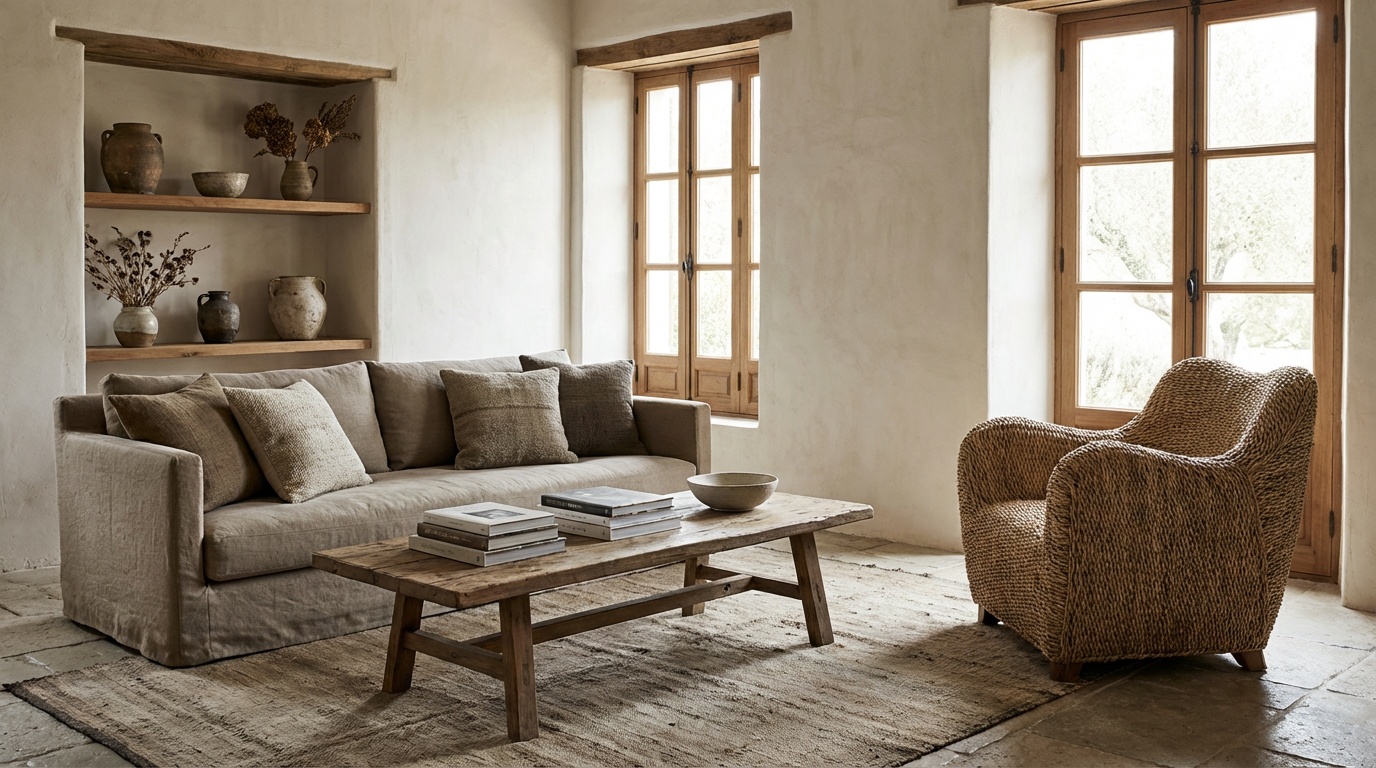
For additional seating, consider handwoven chairs or stools made from natural materials like rattan, rush, or wood. A single statement piece—perhaps a vintage Windsor chair or a handmade ceramic stool—adds character without overwhelming the space. The key is choosing pieces that show the maker's hand rather than factory uniformity.
Open shelving made from raw or lightly finished wood provides display space for carefully curated objects. Unlike closed storage, open shelves allow you to showcase handmade ceramics, weathered books, and natural objects that reinforce the wabi-sabi aesthetic.
Material recommendations for wabi-sabi living rooms:
- Woods: Unfinished or oil-finished oak, walnut, elm, pine, or reclaimed timber
- Metals: Aged brass, oxidized copper, raw iron, or blackened steel in small doses
- Fabrics: Linen, raw silk, cotton canvas, wool, hemp, and other natural fibers in their undyed or naturally dyed states
- Stone: Rough-hewn slate, river rocks, unpolished marble, or concrete
- Ceramics: Handmade pottery with visible throwing marks, irregular glazes, or earthy terracotta
Essential Elements for Your Wabi-Sabi Living Room
Color Palettes & Combinations
The wabi-sabi color palette draws directly from nature's most subdued and grounding tones. Think of the colors you'd encounter on a misty morning walk through a forest or along a quiet beach—soft, muted, and inherently calming.
The primary palette revolves around four foundational color families:
Warm neutrals: Oatmeal linen, weathered driftwood gray, warm putty, aged parchment, and soft mushroom beige form the backbone of wabi-sabi interiors. These aren't the stark whites or cool grays of modern minimalism, but rather colors with subtle warmth and depth.
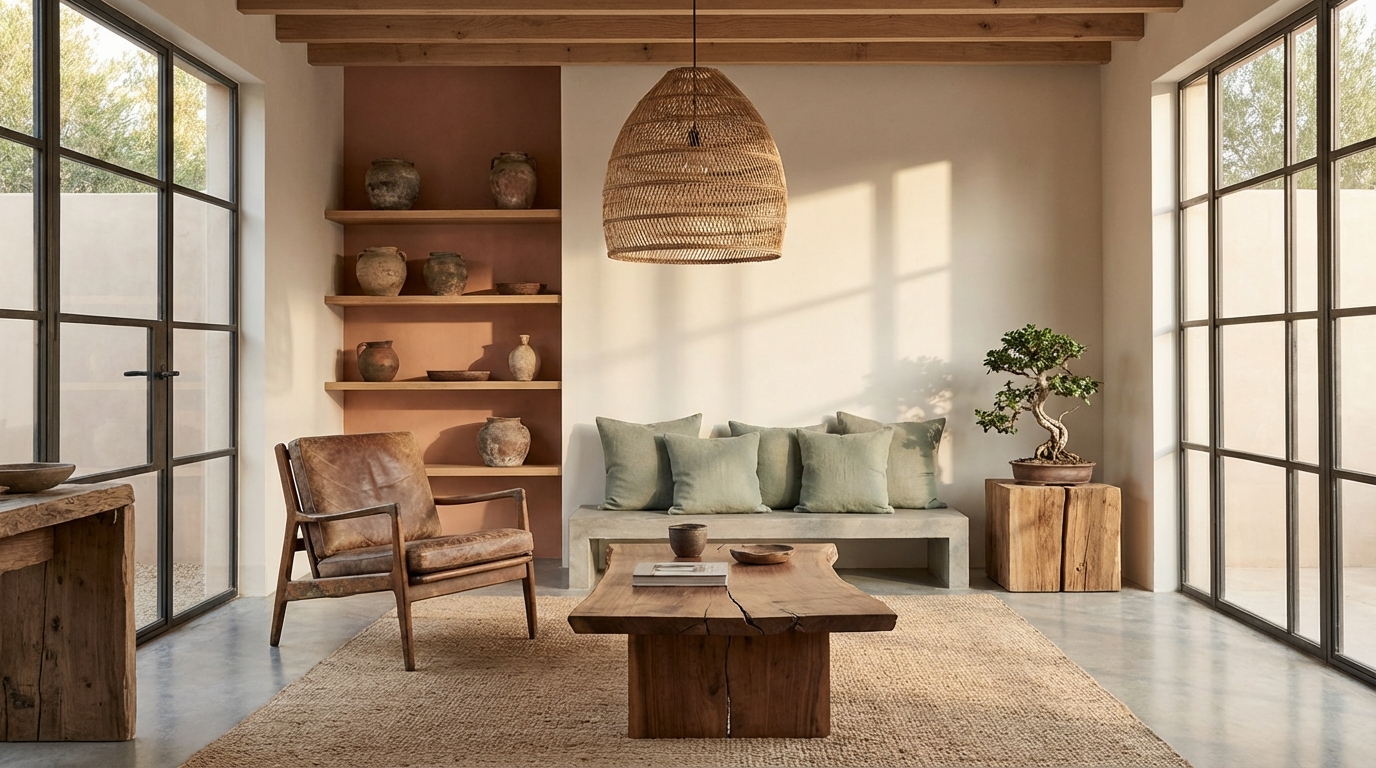
Earth browns: Think sun-baked terracotta, rich walnut, dried clay, and warm chestnut. These grounding tones typically appear in furniture, wooden elements, and ceramic pieces.
Muted greens: Dusty sage, faded moss, soft olive, and weathered verdigris bring gentle color while maintaining the natural, organic feel. These work beautifully in textiles, plants, and occasional accent pieces.
Soft grays: Charcoal-washed linen, dove gray, warm slate, and stone gray provide depth and contrast without harshness.
Accent colors in wabi-sabi spaces are used sparingly and always drawn from nature. Consider:
- Rust orange: The color of oxidized metal or autumn leaves
- Deep indigo: Reminiscent of traditional Japanese textiles
- Warm ochre: Like sun-dried earth or natural clay
- Faded black: Not harsh black, but the soft charcoal of aged wood or stone
Balancing neutrals with these subtle pops of color requires restraint. In a wabi-sabi living room, 70-80% of the palette should be neutral, with earth tones making up 15-20%, and accent colors appearing in just 5-10% of the space. This might mean neutral walls and large furniture pieces, medium-toned wood elements, and a single rust-colored ceramic vase or faded indigo throw pillow.
For wall colors, consider warm whites like "Swiss Coffee" or "Alabaster," soft greiges like "Accessible Beige" or "Revere Pewter," or gentle earth tones like "Balanced Beige" or "Edgecomb Gray." The goal is a backdrop that feels warm and enveloping rather than stark or clinical.
Furniture colors typically come from the natural materials themselves—the honey tones of oak, the rich browns of walnut, the soft grays of linen upholstery. Avoid anything too matchy-matchy; the slight variations in wood tones and fabric colors add to the organic, collected feel.
Decor color distribution should feel intuitive rather than calculated. A handmade ceramic bowl in warm terracotta, a vintage textile in faded indigo, a bundle of dried grasses in muted ochre—these elements introduce color naturally without overwhelming the serene base palette.
Unlike some design styles, wabi-sabi doesn't typically embrace seasonal color variations. The palette remains consistent year-round, though you might introduce slightly warmer textures (chunky wool throws) in winter and lighter ones (gauzy linen) in summer, all within the same color family.
Color Palettes & Combinations
Lighting & Ambiance
Lighting in a wabi-sabi living room serves a dual purpose: illuminating the space while enhancing its contemplative, peaceful atmosphere. The approach differs significantly from the bright, even lighting of modern interiors or the dramatic contrasts of industrial design.
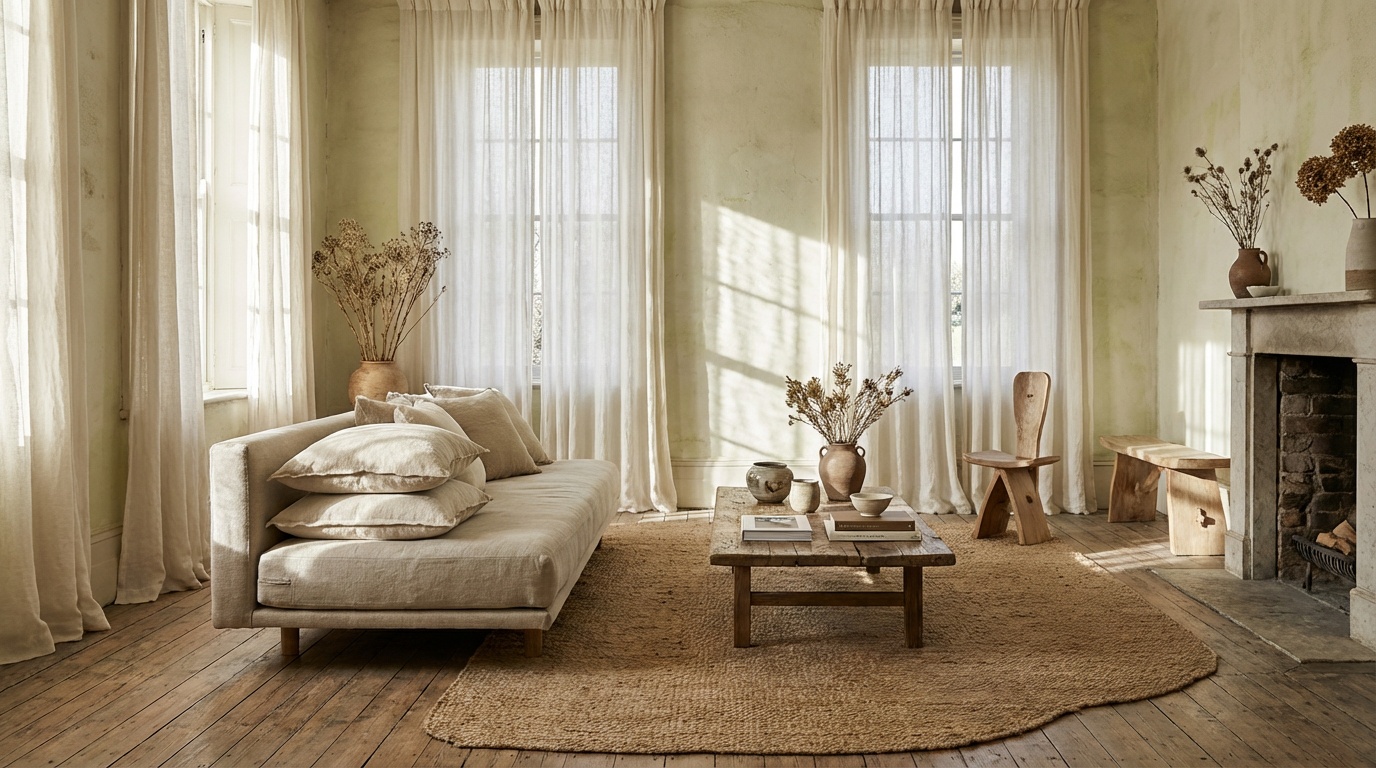
Natural lighting is paramount in wabi-sabi philosophy. The changing quality of daylight throughout the day—from soft morning glow to warm afternoon light to dusky evening shadows—connects us to natural rhythms and the passage of time. To optimize natural light:
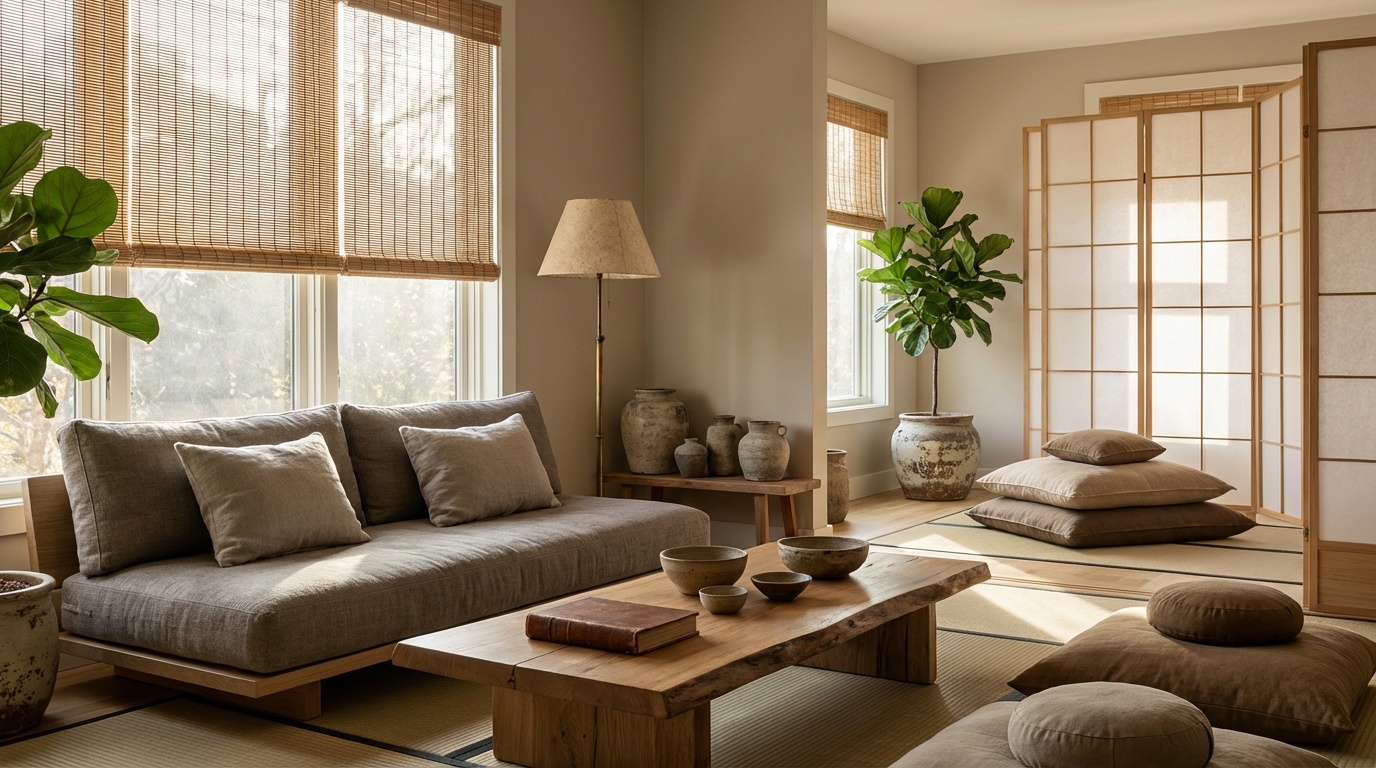
- Use sheer linen curtains or light-filtering shades rather than heavy drapes or blackout treatments
- Keep windows unobstructed by furniture when possible
- Consider removing or simplifying window treatments entirely if privacy allows
- Position seating to take advantage of natural light for reading or contemplation
- Use reflective surfaces sparingly—a small antique mirror might bounce light gently, but avoid large, modern mirrors that create harsh reflections
For artificial lighting, think in layers that can be adjusted for different moods and times of day:
Ambient lighting provides overall illumination without harshness. Recessed lighting with warm-toned bulbs (2700K-3000K) can work if dimmed appropriately, but wabi-sabi spaces often benefit more from indirect lighting. Consider:
- Rice paper pendant lights or lanterns that diffuse light softly
- Ceiling-mounted fixtures with natural fiber shades (bamboo, rattan, or linen)
- Wall sconces with simple ceramic or metal shades
- Floor lamps with paper or fabric shades positioned to wash light upward or against walls
Task lighting should be functional but unobtrusive. A simple ceramic table lamp beside a reading chair, a slender floor lamp arching over the sofa, or a small desk lamp on a side table provides focused light for specific activities without dominating the space visually.
Accent lighting is used minimally in wabi-sabi interiors. Rather than spotlighting artwork or architectural features, consider:
- Candlelight in simple ceramic holders or glass votives
- A small table lamp highlighting a treasured object or plant
- Soft LED strips hidden behind floating shelves to create gentle background glow
Specific fixture styles that complement wabi-sabi design include:
- Akari-style paper lanterns: Isamu Noguchi's iconic sculptural light designs embody wabi-sabi perfectly
- Handmade ceramic pendant lights: Irregular, organic shapes with natural glazes
- Woven fiber fixtures: Rattan, bamboo, or rush pendants and shades
- Simple wood and metal combinations: Fixtures with clean lines and natural materials
- Vintage brass or copper lamps: Pieces that show natural patina and aging
Creating the right mood and atmosphere through lighting placement involves thinking about how you actually use your living room. Position a reading lamp where you naturally sit with a book. Place candlelight on the coffee table for evening gatherings. Install dimmers on all overhead fixtures so you can adjust brightness throughout the day. The goal is lighting that feels intuitive and supports the room's function while maintaining a sense of calm and warmth.
Lighting & Ambiance
Furniture & Decor Shopping Guide
Building a wabi-sabi living room doesn't require a massive budget, but it does require patience and intentionality. Unlike trend-driven styles where you might overhaul everything at once, wabi-sabi encourages slowly collecting pieces that genuinely resonate with you.
Key investment pieces worth splurging on:
A quality sofa with natural upholstery: This is your primary seating and the room's largest visual element. Invest in solid construction and genuine linen or cotton upholstery. Brands like Article, Maiden Home, or even vintage pieces from Design Within Reach hold up beautifully. Budget: $1,500-$4,000.
A handcrafted wood coffee table: Whether custom-made, vintage, or from a skilled artisan, a solid wood table with character will last decades. Look for pieces from local woodworkers, vintage shops, or retailers like Etsy's artisan furniture makers. Budget: $500-$2,000.
Artisan lighting: A beautiful handmade pendant light or quality floor lamp becomes a focal point. Consider investing in an authentic Noguchi Akari lamp or a handmade ceramic fixture. Budget: $300-$800.
Budget-friendly alternatives:
- IKEA hacks: The LISABO coffee table in ash veneer ($149) can be sanded and oiled for a more natural finish
- Unfinished furniture stores: Purchase raw wood pieces and finish them yourself with natural oils
- Linen-look fabrics: While genuine linen is ideal, cotton-linen blends offer a similar aesthetic at lower cost
- DIY floor cushions: Make your own using natural fabric remnants and buckwheat hull or kapok filling
Where to shop:
Online retailers:
- Etsy: Incredible source for handmade ceramics, vintage textiles, and artisan furniture
- 1stDibs: High-end vintage and antique pieces (filter for Japanese, mid-century, or rustic items)
- Chairish: Curated vintage furniture and decor
- Article: Affordable modern furniture with natural materials
- Rejuvenation: Lighting and hardware with timeless appeal
Physical stores:
- Local antique shops and flea markets: Best source for authentic vintage pieces with patina
- Japanese specialty stores: If you're near a major city, stores specializing in Japanese goods often carry authentic ceramics and textiles
- Pottery studios and craft fairs: Direct from makers, ensuring handcrafted authenticity
- Architectural salvage yards: Reclaimed wood, vintage fixtures, and unique finds
Vintage and secondhand finds that work beautifully:
- Mid-century modern furniture in teak or walnut
- Vintage Japanese tansu chests or low cabinets
- Antique wooden bowls, cutting boards, or farm tools as decorative objects
- Weathered wooden stools or benches
- Vintage linen or hemp textiles
- Old ceramic crocks, stoneware, or earthenware
DIY projects to achieve the look affordably:
- Shibori-dyed pillow covers: Use natural indigo dye on cotton or linen fabric
- Concrete planters: Mix and pour your own for a raw, organic look
- Driftwood or branch display: Collect and arrange natural wood pieces
- Homemade beeswax candles: In simple ceramic holders
- Macramé wall hanging: Using natural jute or cotton rope
- Refinished vintage furniture: Sand and oil-finish secondhand wood pieces
Furniture & Decor Shopping Guide
Common Mistakes to Avoid
Even with the best intentions, it's easy to misinterpret wabi-sabi principles. Here are the top five mistakes people make when creating a wabi-sabi living room, along with solutions:
Mistake #1: Confusing wabi-sabi with neglect or messiness
Wabi-sabi celebrates natural imperfection and aging, but this doesn't mean your living room should look unkempt or dirty. There's a crucial difference between a beautiful crack in a ceramic vase (wabi-sabi) and dust bunnies under the sofa (just messy).
How to fix it: Maintain cleanliness and order while embracing objects that show natural wear. A well-swept floor with a vintage rug showing gentle fading is wabi-sabi; a floor covered in clutter is not. Think "thoughtfully curated" rather than "carelessly neglected."
Mistake #2: Over-styling with too many decorative objects
The impulse to fill every surface with handmade pottery, dried flowers, and natural objects can quickly overwhelm the serene simplicity that defines wabi-sabi.
How to fix it: Edit ruthlessly. Display only objects that truly speak to you and give each piece breathing room. A single beautiful ceramic bowl on the coffee table makes more impact than five scattered items. Follow the principle of "less, but better." Remove half of your decorative objects and see if the space feels calmer—it probably will.
Mistake #3: Using artificial or synthetic materials
Polyester "linen-look" curtains, plastic "wood-grain" furniture, or synthetic rugs fundamentally contradict wabi-sabi's emphasis on authentic natural materials.
How to fix it: Start small if budget is a concern, but always choose genuine materials. Better to have one real linen pillow than five polyester ones. The tactile and visual quality of authentic materials is essential to the wabi-sabi experience. If you can't afford natural materials yet, leave that element minimal until you can invest properly.
Mistake #4: Making everything too perfect or matchy-matchy
Ironically, trying too hard to achieve the wabi-sabi "look" can result in a space that feels contrived. Purchasing everything new from one retailer's "wabi-sabi collection" misses the point entirely.
How to fix it: Mix sources, ages, and origins. Pair a new linen sofa with a vintage coffee table and a handmade ceramic lamp. Let wood tones vary slightly. Embrace asymmetry in arrangements. The goal is a space that feels collected over time rather than designed in a day.
Mistake #5: Ignoring comfort in pursuit of aesthetics
A living room that looks serene but feels uncomfortable to actually live in has failed its primary purpose.
How to fix it: Test furniture for comfort before purchasing. Add soft throws and cushions even if they're not in your initial vision. Wabi-sabi should enhance your daily life, not make it more austere. A well-worn, comfortable chair is more wabi-sabi than an uncomfortable but "authentic-looking" bench you never sit on.
Signs your space is missing the mark:
- The room feels cold or unwelcoming
- Everything looks brand new and unused
- You're afraid to actually use or touch anything
- The space feels cluttered despite minimal furniture
- There's no sense of personal history or connection to the objects
Common Mistakes to Avoid
Styling for Different Budgets & Spaces
Wabi-sabi's emphasis on simplicity and natural materials makes it surprisingly adaptable to various spatial and financial constraints.
Small space adaptations:
Wabi-sabi actually thrives in smaller living rooms because the philosophy naturally discourages excess. In a compact space:
- Choose low-profile furniture to maintain visual openness and make ceilings feel higher
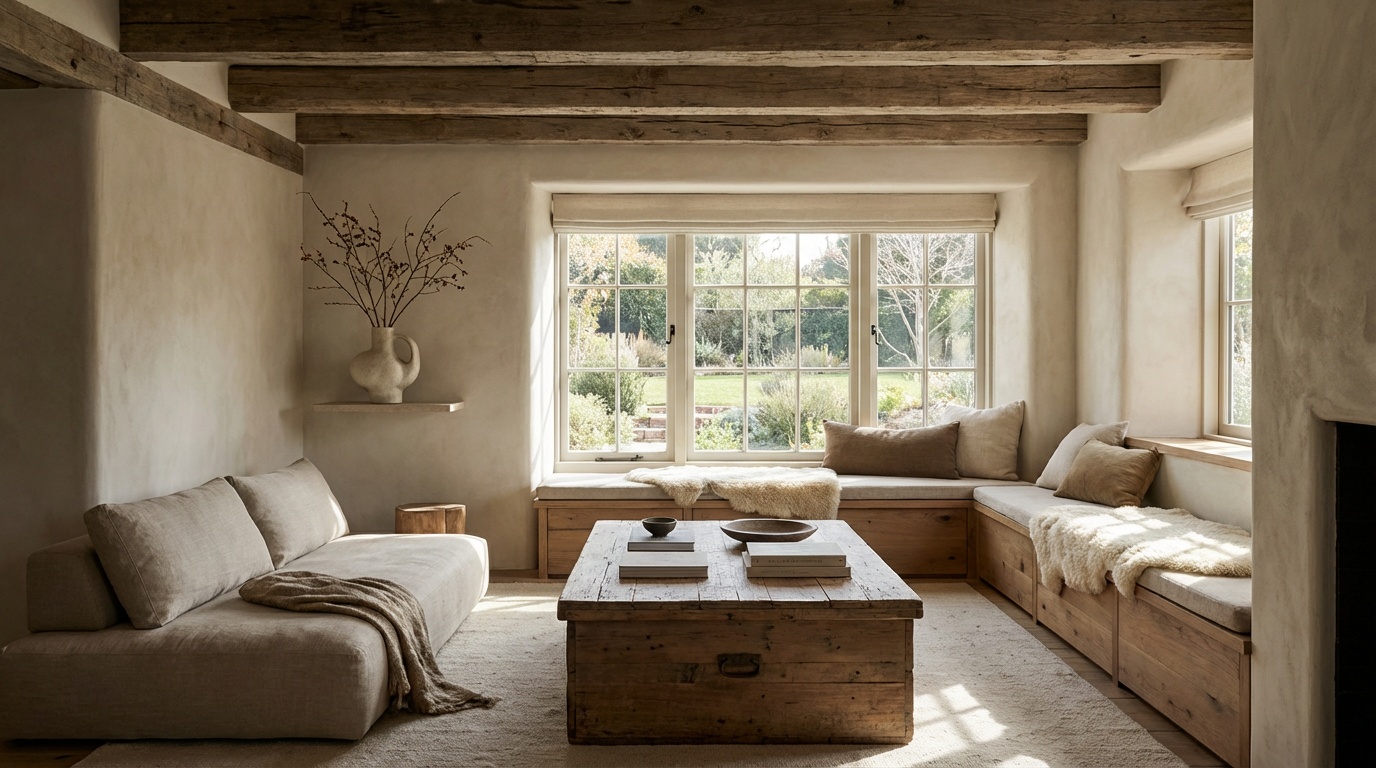
- Use multipurpose pieces: A wooden trunk serves as both coffee table and storage
- Embrace floor seating: Large cushions take up less visual space than bulky chairs and can be stacked when not in use
- Limit the color palette to create cohesion in a small footprint
- Use vertical space wisely: A single tall shelf for curated objects rather than multiple low surfaces
- Keep window treatments minimal to maximize natural light
Rental-friendly approaches:
You can achieve wabi-sabi aesthetics without permanent changes:
- Focus on furniture and textiles rather than architectural modifications
- Use removable wallpaper in natural textures if you want to change wall color
- Add freestanding lighting rather than installing new fixtures
- Layer natural fiber rugs to cover problematic flooring
- Bring in plants and natural objects that move with you
- Choose freestanding shelving rather than built-ins
Budget tier transformations:
Under $500:
- Start with paint if you own: warm neutral walls ($100)
- Linen curtains from IKEA or Amazon ($80-150)
- Floor cushions (DIY or budget-bought, $50-100)
- Secondhand coffee table refinished with oil ($50-100)
- Plants and simple ceramic pots ($50-100)
- Natural fiber rug (jute or sisal, budget option, $100)
This budget focuses on creating the foundation—neutral backdrop, natural light, and a few key natural elements.
$500-2,000:
- Everything from the under-$500 tier
- Quality linen sofa slipcover or new cushions for existing sofa ($300-500)
- Handmade pendant light or quality floor lamp ($200-400)
- Better quality rug in natural fiber ($300-600)
- Handcrafted ceramics and decorative objects ($200-300)
- Vintage wood furniture piece (side table or shelf, $200-400)
At this level, you're investing in better quality materials and adding authentic handmade elements.
$2,000+:
- New natural-fiber upholstered sofa ($1,500-3,000)
- Custom or artisan coffee table ($500-2,000)
- Multiple quality light fixtures ($500-1,000)
- High-end natural rug ($600-1,500)
- Curated collection of artisan ceramics and objects ($300-600)
- Additional seating (handwoven chairs, vintage pieces, $400-800)
This budget allows for investment pieces that will last decades.
Phasing the transformation over time:
Wabi-sabi's philosophy actually encourages a gradual approach:
Phase 1 (Months 1-2): Declutter and simplify. Remove excess decoration, synthetic materials, and anything that doesn't align with wabi-sabi principles. Paint walls if possible. This costs little but makes the biggest impact.
Phase 2 (Months 3-4): Address window treatments and lighting. These changes affect the entire room's ambiance and are relatively affordable.
Phase 3 (Months 5-6): Add or upgrade the coffee table and one seating element. Start collecting handmade objects slowly.
Phase 4 (Months 7-12): Invest in the sofa or reupholster existing furniture. Add final textile layers and refinements.
This approach mirrors how traditional Japanese homes evolved—slowly, thoughtfully, and in response to actual needs rather than design trends.
Styling for Different Budgets & Spaces
Bringing Your Vision to Life
Transforming your living room into a wabi-sabi sanctuary is an exciting journey, but it can also feel overwhelming. How do you know if that vintage table will work with your existing sofa? Will that warm gray paint feel too dark? Does your room have enough natural light to pull off minimal window treatments?
This is where visualization becomes invaluable. Before investing in new furniture, paint, or decor, seeing how these elements actually look in your specific space can save you from costly mistakes and buyer's remorse.
RoomStudioAI offers a powerful solution for this exact challenge. Rather than relying on imagination or generic inspiration photos, you can upload a photo of your actual living room and instantly see it transformed with wabi-sabi design elements. The AI understands the principles of different design styles—including the subtle nuances of wabi-sabi—and applies them to your unique space.
Here's how to use this approach effectively:
- Take clear photos of your current living room from multiple angles in natural daylight
- Upload to RoomStudioAI and select the wabi-sabi or Japanese-inspired style options
- Experiment with variations: Try different furniture arrangements, color palettes, and design intensities
- Compare options side-by-side to see which resonates most with your vision
- Use the visualizations as a shopping guide: Take note of specific furniture styles, color tones, and arrangements that work in your space
- Share with family or roommates to get everyone aligned on the vision before purchasing
The beauty of using AI visualization is that you can experiment risk-free. Wondering if your living room can handle darker walls? Try it virtually first. Not sure if that low coffee table will work with your existing sofa? See it before buying. This approach aligns perfectly with wabi-sabi's mindful, intentional philosophy—making thoughtful decisions rather than impulsive purchases.
Many design transformations fail not because of bad taste, but because of the disconnect between inspiration photos and your actual space. A wabi-sabi living room that looks stunning in a magazine might not translate to your specific room dimensions, lighting conditions, or existing architecture. RoomStudioAI bridges this gap, showing you what's actually possible in your unique environment.
The tool is particularly helpful for understanding scale and proportion—critical elements in wabi-sabi design where simplicity means every piece must be just right. You'll see immediately if furniture is too large, too small, or perfectly balanced for your space.
Best of all, you can try RoomStudioAI's visualization tools for free, making it accessible whether you're planning a complete renovation or a modest refresh. The insights you gain from seeing your space transformed can inform everything from paint choices to furniture purchases, potentially saving you thousands of dollars in returns and mistakes.
As you embark on creating your wabi-sabi living room, remember that this journey is as much about cultivating a mindset as it is about buying furniture. Wabi-sabi teaches us to find beauty in simplicity, to honor the passage of time, and to create spaces that support contemplation and genuine connection. Your living room doesn't need to be perfect—it needs to be authentically yours, a reflection of your life and values.
Start with visualization, move forward with intention, and trust that the right pieces will find their way to you over time. The imperfect, evolving nature of the process is, after all, very wabi-sabi indeed.
Ready to see your living room transformed? Try RoomStudioAI's free visualization tool today and discover the wabi-sabi potential hiding in your current space. Upload a photo, explore different approaches, and start your journey toward a more mindful, beautiful home.