What Defines Mediterranean Style
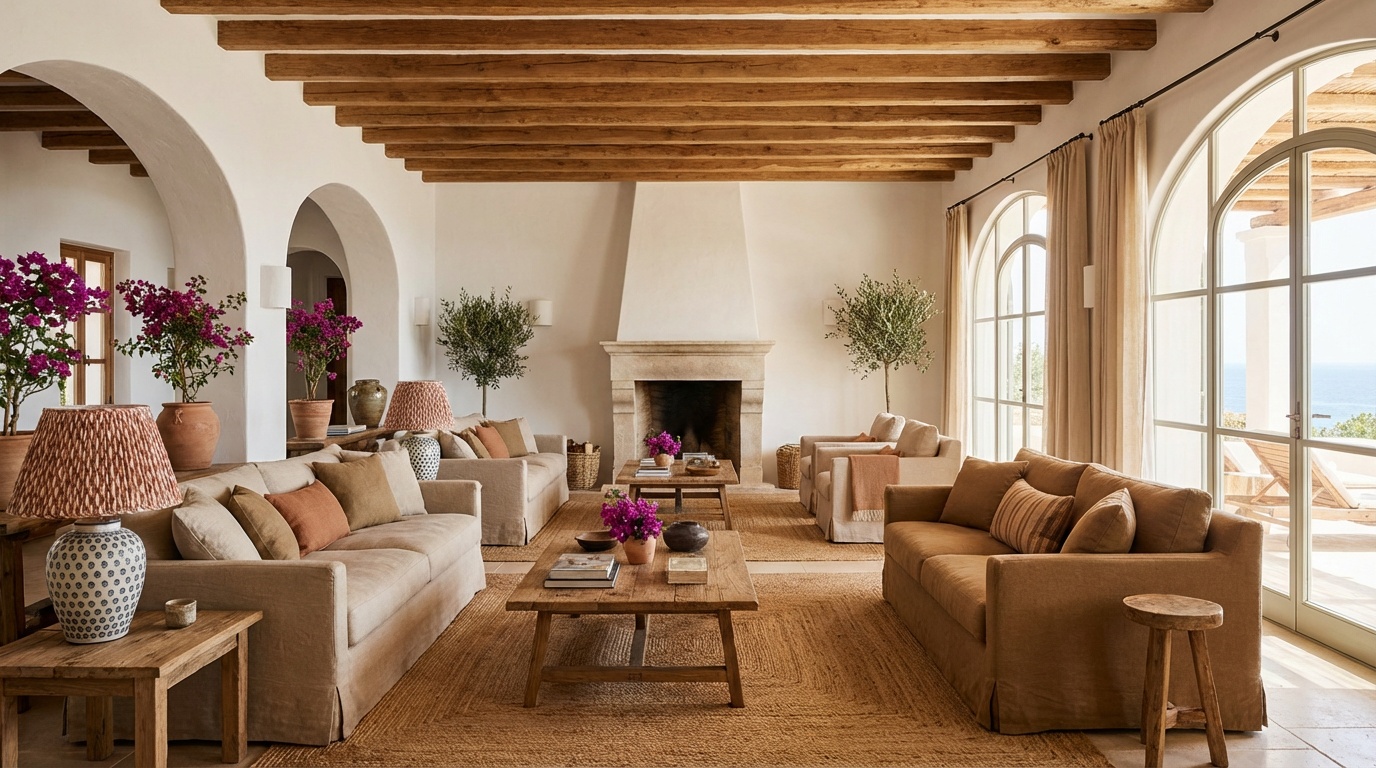
Mediterranean design is more than just an aesthetic—it's a lifestyle philosophy rooted in centuries of coastal living across Southern Europe and North Africa. This timeless style emerged from the convergence of cultures surrounding the Mediterranean Sea, blending influences from Greece, Italy, Spain, Morocco, and Turkey into a cohesive design language that celebrates natural materials, indoor-outdoor living, and effortless elegance.
At its core, Mediterranean design philosophy embraces simplicity, functionality, and a deep connection to nature. The style evolved organically from the practical needs of coastal communities: thick walls to keep interiors cool, terracotta tiles that withstand heat, and open floor plans that invite sea breezes. These functional elements became defining aesthetic features that continue to resonate today.
Modern homeowners are drawn to Mediterranean style because it offers a refreshing antidote to the sleek minimalism that has dominated recent decades. In our increasingly digital world, the tactile warmth of hand-plastered walls, the organic irregularity of wrought iron fixtures, and the sun-bleached patina of aged wood provide a grounding sense of authenticity. Mediterranean living rooms create spaces that feel collected over time rather than purchased all at once—a quality that appeals to those seeking homes with soul and character.
What distinguishes Mediterranean style from similar aesthetics like coastal or rustic design is its Old World sophistication. While coastal design often leans beachy and casual, Mediterranean interiors incorporate architectural gravitas through arched doorways, exposed wooden beams, and ornate tilework. Unlike rustic farmhouse style, which can feel heavy and landlocked, Mediterranean design maintains an airy, sun-soaked quality that references the sea without relying on literal nautical motifs. The style balances earthy warmth with cooling elements, creating living spaces that feel both grounded and refreshing.
The enduring appeal of Mediterranean living rooms lies in their ability to be simultaneously elegant and comfortable, sophisticated and approachable. These are spaces designed for living—for gathering with family, enjoying long conversations over wine, and creating memories that span generations.
What Defines Mediterranean Style
Essential Elements for Your Mediterranean Living Room
Creating an authentic Mediterranean living room begins with selecting the right foundational pieces that establish the style's characteristic warmth and timeless appeal. The furniture in a Mediterranean space should feel substantial and enduring, with an emphasis on natural materials and craftsmanship.
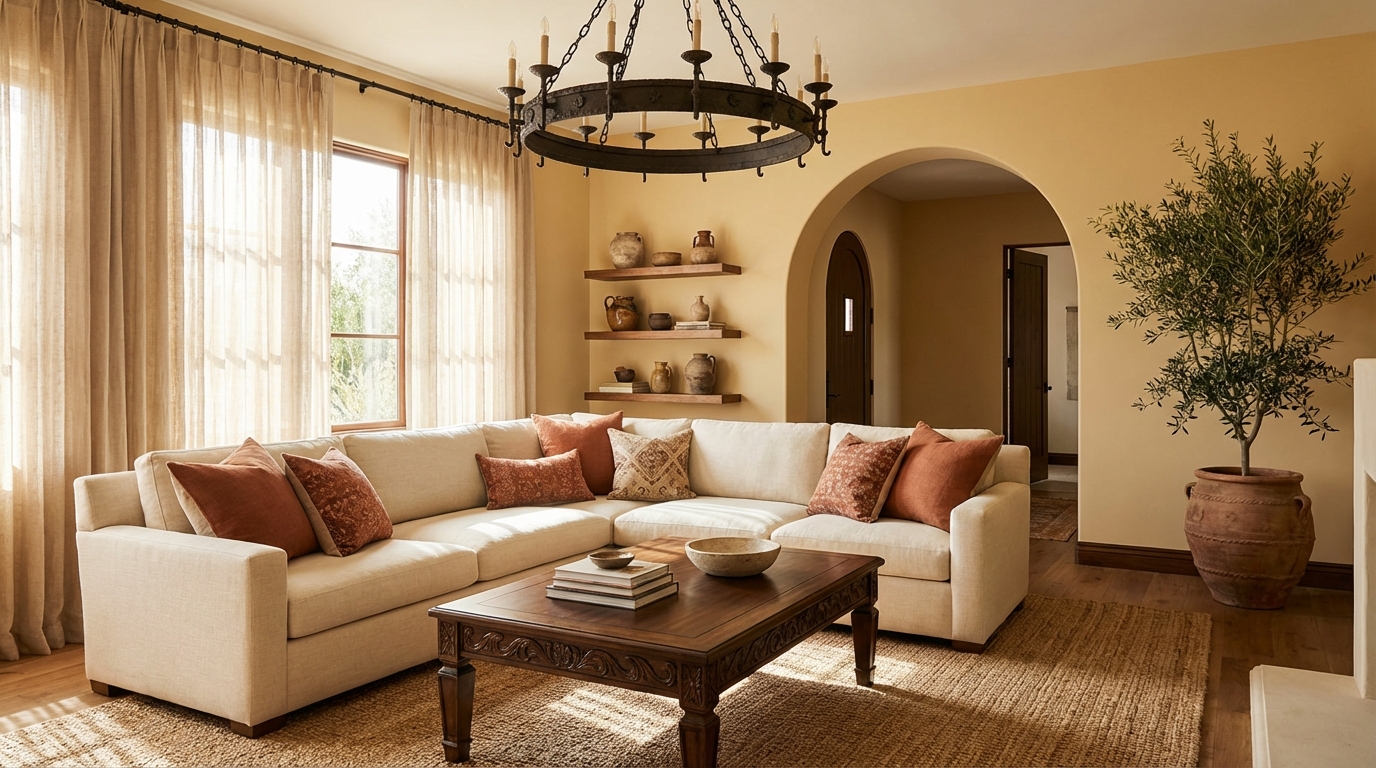
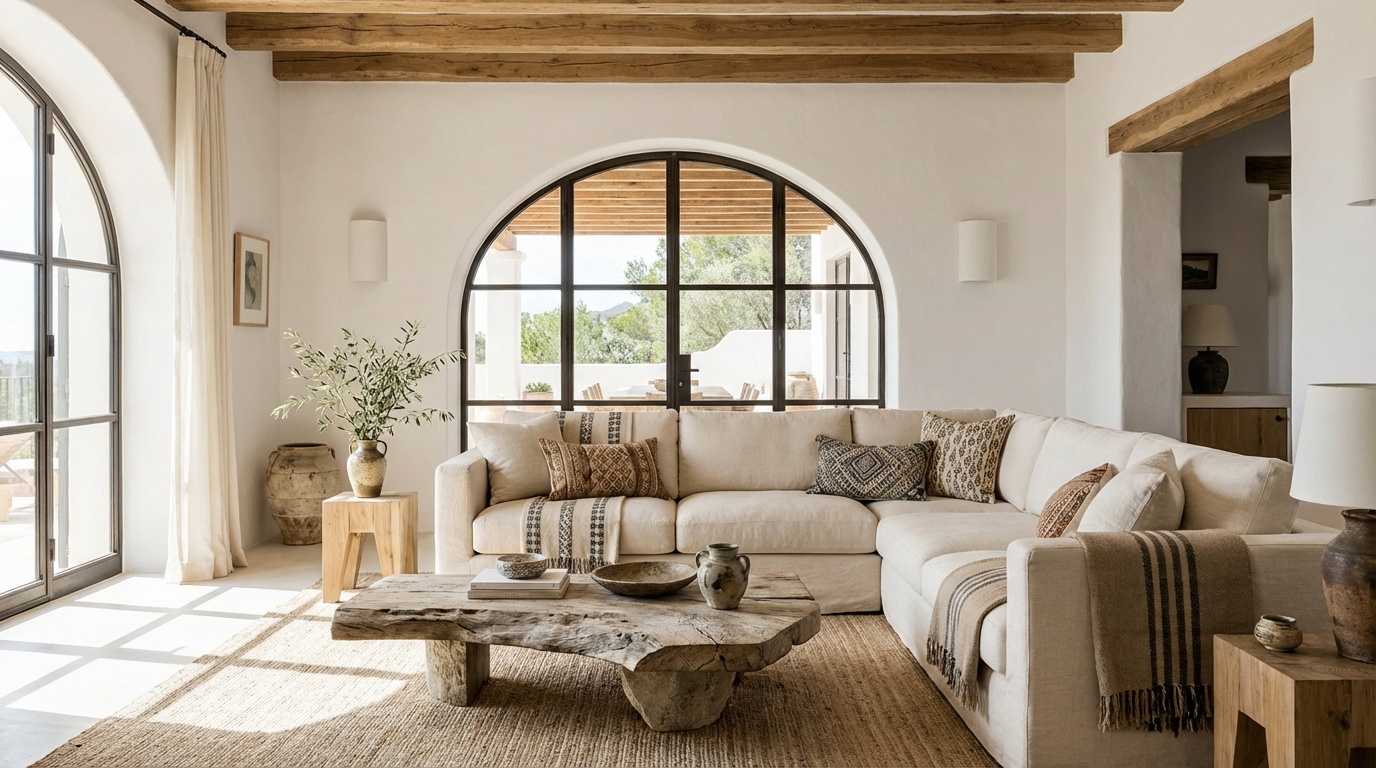
Key furniture pieces include a generously proportioned sofa upholstered in natural linen or cotton in warm neutrals like cream, oatmeal, or soft terracotta. Look for designs with exposed wooden frames, rolled arms, or simple, clean lines rather than overly contemporary silhouettes. Pair your sofa with substantial wooden coffee tables—ideally in dark walnut, weathered oak, or reclaimed wood with visible grain and character. A carved wooden console table against one wall adds vertical interest and provides display space for pottery and plants.
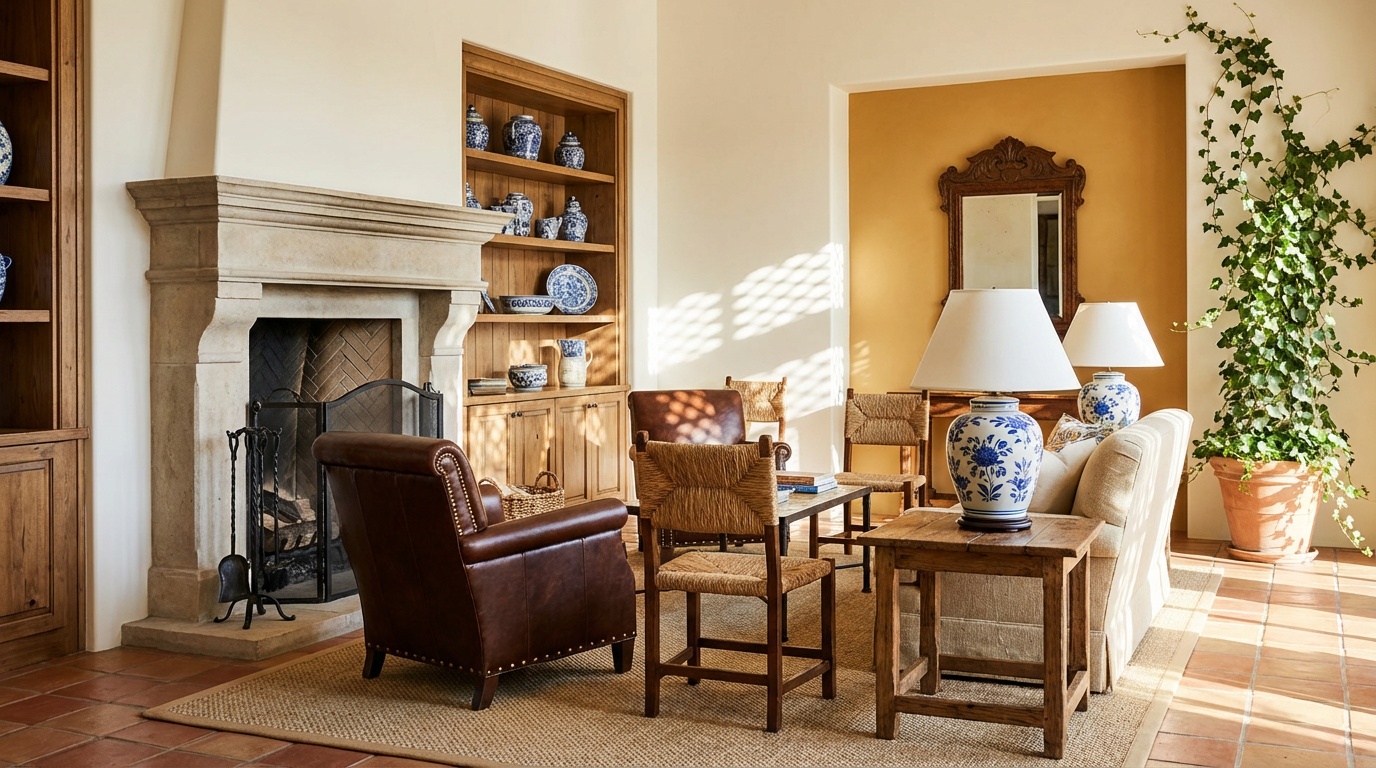
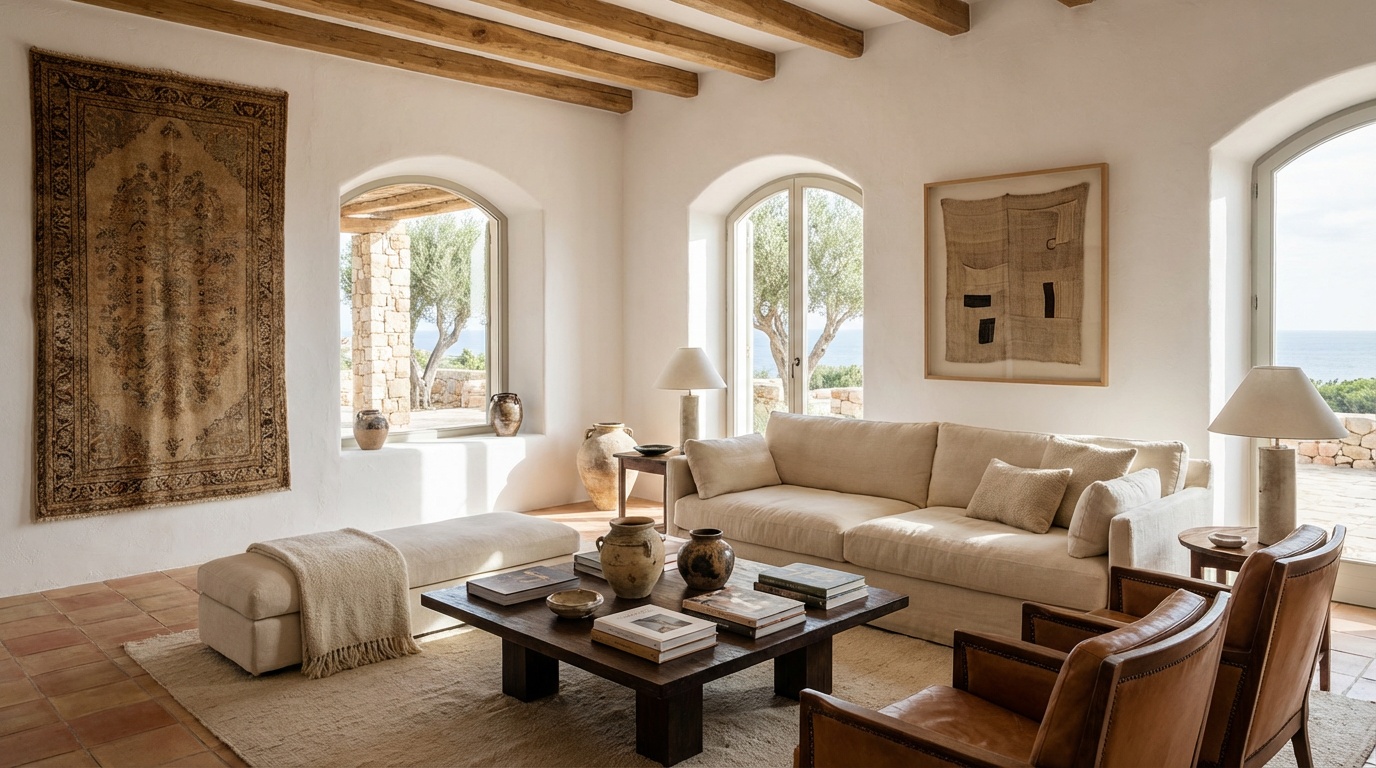
Seating should include a mix of upholstered pieces and wood or wrought iron accent chairs. Consider ladder-back chairs with woven rush seats, leather armchairs with nailhead trim, or painted wooden chairs that reference Spanish colonial influences. The variety in seating creates visual interest while maintaining cohesion through material consistency.
Signature shapes and silhouettes in Mediterranean design favor curves and organic forms. Arched doorways and windows are architectural hallmarks, but you can echo these shapes through rounded mirrors, curved-back chairs, and decorative arches in shelving or built-ins. Avoid sharp angles and ultra-modern geometric forms in favor of softer, more traditional profiles.
Material selection is crucial for authenticity. Woods should be substantial and richly grained—think walnut, oak, pine, and chestnut in medium to dark finishes or distressed painted finishes. Metals include wrought iron (for lighting fixtures, curtain rods, and decorative accessories), aged brass, and oil-rubbed bronze rather than shiny chrome or stainless steel. Fabrics should be natural and textural: linen, cotton, wool, jute, and sisal. Incorporate leather for upholstery accents and richly patterned textiles like Turkish kilims or Moroccan-inspired prints for throw pillows.
The living room particularly benefits from Mediterranean style because it's designed for gathering and hospitality—core values in Mediterranean culture. The emphasis on comfortable, durable furnishings creates a space that invites lingering conversations. The warm color palette and natural materials create an inherently welcoming atmosphere, while the balance of rustic and refined elements ensures the room feels special enough for entertaining yet relaxed enough for daily family life.
Layering is essential in Mediterranean living rooms. Add depth through textural elements like woven baskets, ceramic pottery in varying sizes, wrought iron candle holders, and abundant greenery. Display collections of pottery on open shelving, hang decorative plates on walls, and incorporate architectural salvage pieces like corbels or carved wooden panels as art.
Essential Elements for Your Mediterranean Living Room
Color Palettes & Combinations
The Mediterranean color palette draws directly from the coastal landscapes that inspired the style: sun-baked earth, whitewashed villages, azure seas, and olive groves. Creating an authentic palette means balancing these warm and cool tones to evoke the region's distinctive light and natural beauty.
Primary colors for your Mediterranean living room should include:
- Warm terracotta and clay tones: Think sun-baked brick, rusty orange, and peachy coral—the colors of ceramic roof tiles and earthenware pottery
- Creamy whites and ivories: Not stark white, but warmer tones like vanilla cream, aged plaster, and bone white that reference lime-washed walls
- Warm honey oak and golden wheat: Sandy beiges and warm tans that echo sun-bleached stone and natural wood
- Dusty sage and olive green: Muted, earthy greens inspired by olive trees and Mediterranean herbs
These four color families form the foundation of your palette, with warm neutrals typically dominating walls and larger furniture pieces.
Accent colors that complement Mediterranean style include:
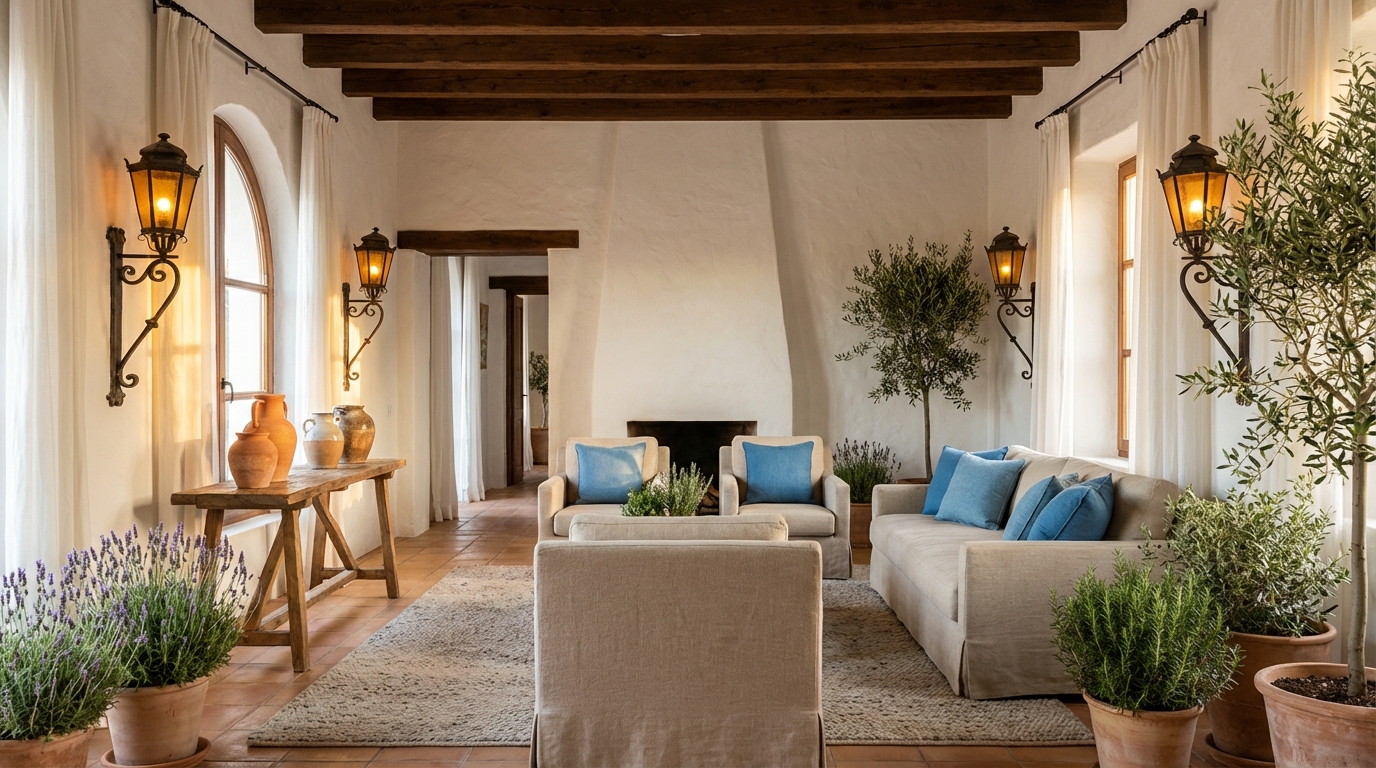
- Azure and cobalt blue: The iconic blues of Greek shutters and Moroccan tiles, used sparingly for maximum impact
- Deep burgundy and wine red: Rich, earthy reds found in textiles and ceramics
- Sunny golden yellow: Warm ochre and saffron tones that add brightness without feeling tropical
- Burnt sienna and copper: Deeper terracotta shades for visual weight and warmth
Balancing neutrals with color is key to avoiding a space that feels either washed out or overwhelming. A successful approach is the 70-20-10 rule: 70% warm neutrals (cream walls, beige sofa, natural wood floors), 20% earthy mid-tones (terracotta accents, olive green pillows, natural fiber rugs), and 10% saturated accent colors (cobalt blue pottery, deep red throw blanket).
Wall colors should lean toward warm whites, soft beiges, or very pale terracotta—think "sun-bleached plaster" rather than bright white or cool gray. If you want more color on walls, consider a feature wall in dusty sage or warm ochre. Furniture typically stays in the neutral range with natural wood tones and cream or beige upholstery, allowing you to change accent colors seasonally through pillows and accessories. Decor is where you introduce saturated colors through pottery, textiles, artwork, and plants.
For seasonal variations, Mediterranean style naturally adapts to warmer and cooler months. In summer, emphasize the cooler elements—bring in more blue and white textiles, display collections of blue pottery, and use lighter-weight linens. In winter, warm the space with deeper terracottas, burgundy accents, heavier wool throws, and more golden tones in candlelight and lamp glow.
The key to an authentic Mediterranean color palette is avoiding anything too bright, saturated, or artificial-looking. Colors should appear sun-faded and naturally weathered, as if they've been part of a coastal villa for decades. Think patina, not paint-box perfection.
Color Palettes & Combinations
Lighting & Ambiance
Lighting is fundamental to achieving authentic Mediterranean ambiance—the style is defined by its relationship to natural light and the warm, golden glow that characterizes Mediterranean evenings. Your lighting strategy should maximize daylight while creating layered artificial lighting that maintains warmth after sunset.
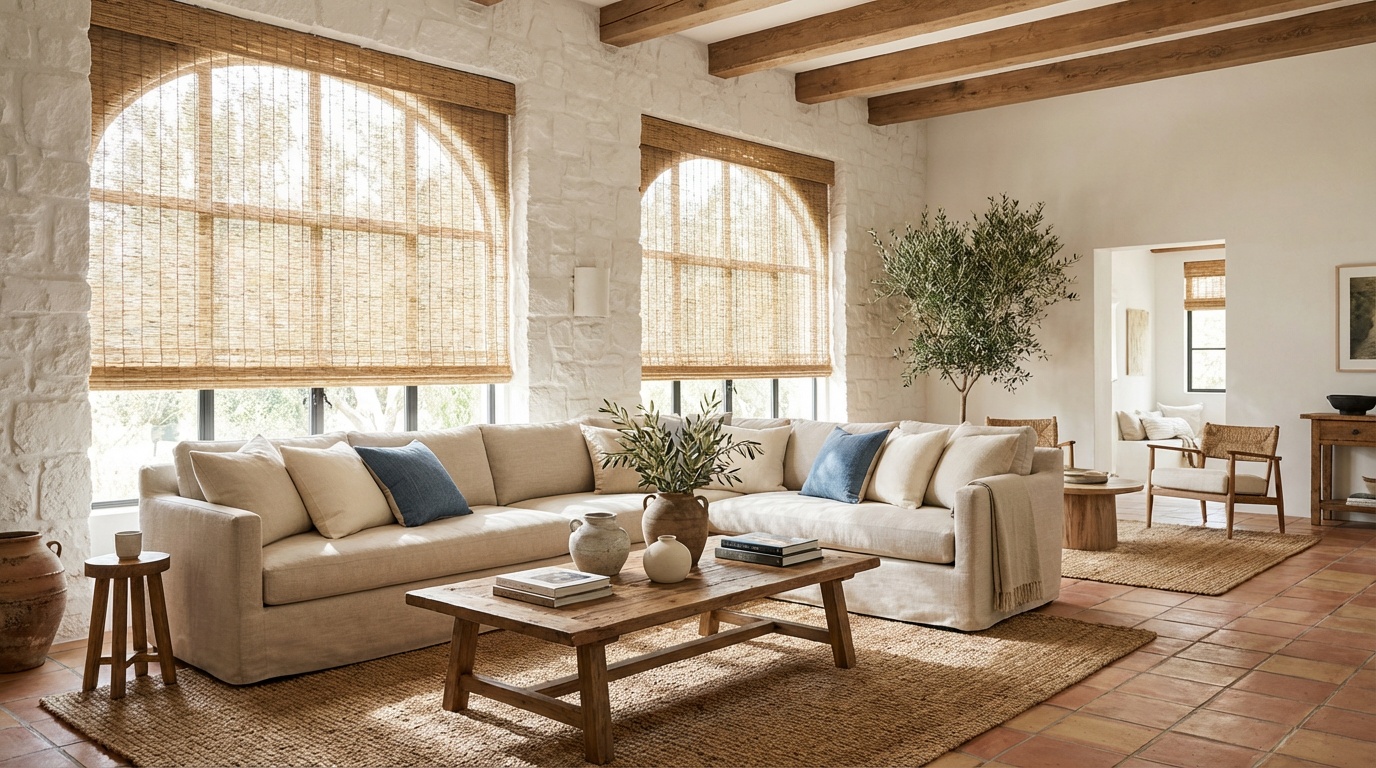
Natural lighting optimization begins with window treatments. Mediterranean style favors unobstructed windows that flood interiors with sunlight. If privacy isn't a concern, consider leaving windows bare or using simple linen curtains that can be tied back during the day. For privacy, choose natural woven shades in bamboo or jute, or flowing linen panels in cream or white that filter light softly. Avoid heavy drapes or anything overly formal—the goal is to invite light in, not block it out.
Position furniture to take advantage of natural light. Place seating areas near windows where occupants can enjoy both the view and the warmth of sunlight. Use mirrors strategically to bounce light deeper into the room—a large mirror with a wrought iron or distressed wood frame opposite a window effectively doubles your natural light.
Artificial lighting layers are essential for creating the warm, inviting atmosphere Mediterranean living rooms are known for. You'll need three types:
Ambient lighting provides overall illumination. The signature Mediterranean ambient fixture is a wrought iron chandelier with candelabra-style bulbs—look for designs with scrollwork, aged finishes, and substantial presence. Hang it at the room's focal point, typically centered over the seating area. For lower ceilings, consider wrought iron or aged brass flush-mount fixtures with amber or seeded glass shades. Avoid recessed lighting as your primary source; it feels too modern and creates harsh shadows.
Task lighting includes reading lamps and focused light for specific activities. Choose table lamps with ceramic bases in terracotta, cream, or hand-painted designs, paired with natural linen or parchment shades that cast warm light. Wrought iron floor lamps with adjustable arms work well beside reading chairs. The bases should feel substantial and handcrafted rather than sleek and industrial.
Accent lighting creates drama and highlights architectural features or collections. Use wrought iron wall sconces with candle-style bulbs flanking a fireplace or artwork. Display lighting within built-in shelving showcases pottery collections. Consider rope lighting behind architectural elements like exposed beams to create subtle uplighting that emphasizes texture.
Creating the right mood requires attention to bulb selection. Choose warm white bulbs (2700K-3000K) exclusively—cool white or daylight bulbs destroy Mediterranean ambiance. Consider dimmable fixtures throughout to adjust lighting levels for different occasions. The goal is a warm, golden glow reminiscent of candlelight and sunset.
Incorporate actual candles generously—they're essential to Mediterranean ambiance. Display pillar candles in wrought iron holders, use candelabras as centerpieces, and group votives in terracotta holders on coffee tables. The flickering light and subtle scent of beeswax candles add an authentic sensory layer that artificial lighting alone cannot achieve.
Lighting placement should avoid uniformity. Rather than evenly spaced fixtures creating flat illumination, create pools of light at varying heights and intensities. This layered approach mimics natural lighting patterns and creates the intimate, gathered feeling central to Mediterranean living spaces.
Lighting & Ambiance
Furniture & Decor Shopping Guide
Creating an authentic Mediterranean living room doesn't require unlimited funds, but knowing where to invest and where to save makes all the difference in achieving a high-end look on any budget.
Key investment pieces worth splurging on include:
Your sofa: This is your largest visual element and gets the most use. Invest in quality construction with a solid wood frame and natural fiber upholstery that will age beautifully. Budget $1,500-$3,500 for a piece that will last decades.
A statement coffee table: A substantial wooden coffee table with character—whether antique, reclaimed, or high-quality reproduction—anchors your entire seating area. Expect to spend $600-$1,500 for something with real presence and craftsmanship.
Lighting fixtures: A beautiful wrought iron chandelier or substantial ceramic table lamps become focal points that define your style. Quality metalwork and hand-finished details justify spending $400-$1,200 on a signature piece.
One authentic vintage or antique piece: Whether it's a carved wooden console, an antique mirror, or a collection of vintage pottery, one genuinely old piece adds instant credibility and soul to your space.
Budget-friendly alternatives that deliver style without the splurge:
- Textiles: High-quality throw pillows in Mediterranean colors and patterns cost $20-$40 each but dramatically impact your overall look
- Pottery and ceramics: New handmade pottery from local artisans or imported pieces from Mediterranean countries run $30-$100 per piece
- Natural fiber rugs: Jute, sisal, and seagrass rugs in large sizes cost $200-$500—significantly less than wool but perfect for layering
- Painted furniture: Buy solid wood pieces secondhand and paint them in Mediterranean colors for a fraction of new furniture costs
Where to shop for Mediterranean style:
- For investment pieces: Pottery Barn, Arhaus, and Ballard Designs offer Mediterranean-inspired furniture with quality construction
- For budget-friendly finds: World Market, HomeGoods, and Target's Threshold line frequently carry Mediterranean-style accessories and smaller furniture pieces
- For authentic imports: Sites like Chairish, 1stDibs, and Etsy connect you with vintage European furniture and authentic imported ceramics and textiles
- For lighting: Wayfair and Overstock offer extensive wrought iron lighting selections at various price points
Vintage and secondhand finds that work beautifully:
- Carved wooden furniture from Spain, Italy, or Mexico
- Wrought iron pieces including gates, window grilles, and architectural elements that can be repurposed as wall art
- Antique mirrors with ornate frames
- Collections of vintage pottery, especially earthenware and terracotta
- Old wooden doors or shutters that can become coffee tables or wall features
- Vintage textiles including kilims, suzanis, and embroidered linens
Scour estate sales, architectural salvage stores, and online marketplaces for these treasures. The imperfections and patina of genuinely old pieces are impossible to replicate and add instant authenticity.
DIY projects to achieve the look affordably:
- Faux plastered walls: Use joint compound and warm paint glazes to create textured, old-world walls for under $100
- Painted terracotta pots: Buy inexpensive terracotta planters and paint them in Mediterranean blues and whites
- Rope-wrapped accessories: Wrap thick natural rope around lamp bases, mirrors, or storage boxes for textural interest
- Stenciled tile patterns: Use stencils and paint to create faux tile patterns on floors or as a backsplash accent
- Distressed furniture finishes: Transform modern furniture with chalk paint and distressing techniques to create an aged appearance
Furniture & Decor Shopping Guide
Common Mistakes to Avoid
Even with the best intentions, certain missteps can prevent your Mediterranean living room from achieving its full potential. Here are the top five mistakes and how to correct them:
Mistake #1: Going too matchy-matchy
Many people think Mediterranean style means buying a coordinated furniture set in the same finish and fabric. This creates a showroom look that lacks the collected, lived-in quality essential to the style.
How to fix it: Mix wood tones (pair dark walnut with lighter oak), vary your seating (upholstered sofa plus wooden accent chairs), and combine different metals (wrought iron chandelier with brass candlesticks). Aim for cohesion through color palette and style rather than identical finishes.
Mistake #2: Using cool, modern colors
Gray walls, cool whites, and contemporary color schemes completely undermine Mediterranean warmth. A living room with perfect Mediterranean furniture but painted in cool gray reads as confused and lacks the sun-soaked quality that defines the style.
How to fix it: Commit to warm tones. If you've already painted in cool colors, add warmth through lighting (warm bulbs, amber lamp shades), textiles in terracotta and ochre, and abundant natural wood. Better yet, repaint in warm white or soft beige—it's the fastest transformation you can make.
Mistake #3: Over-accessorizing with literal Mediterranean symbols
Filling your space with obvious Mediterranean clichés—ceramic roosters, olive oil bottles as decor, grape clusters, literal anchors and ships—makes your living room feel like a theme restaurant rather than an authentic home.
How to fix it: Choose subtle references over literal symbols. Instead of decorative olive oil bottles, display a beautiful wooden dough bowl. Rather than ceramic roosters, use simple earthenware pottery. Let the overall aesthetic speak for itself through materials, colors, and textures rather than obvious motifs.
Mistake #4: Insufficient texture and layering
A common mistake is creating a Mediterranean color palette but keeping surfaces too smooth and modern. Without textural variety, the space feels flat and one-dimensional, missing the tactile richness that makes Mediterranean interiors so inviting.
How to fix it: Add texture at every opportunity—nubby linen pillows, rough-hewn wood, hand-plastered walls, natural fiber rugs, wrought iron with visible hammer marks, and hand-thrown pottery with irregular surfaces. Layer rugs, stack books and pottery on coffee tables, and display collections rather than single items.
Mistake #5: Ignoring architectural context
Trying to impose full Mediterranean style on a home with strongly contrasting architecture (ultra-modern, traditional American colonial, or industrial loft) can create discord rather than harmony.
How to fix it: Adapt Mediterranean elements to your existing architecture. In a modern space, keep the warm color palette and natural materials but choose cleaner-lined furniture. In a traditional home, emphasize the Old World sophistication of Mediterranean style with more formal furniture arrangements. Find the overlap between your home's existing character and Mediterranean aesthetics rather than fighting against your architecture.
Signs your space is missing the mark:
- The room feels cold or uninviting despite Mediterranean furnishings (likely a lighting or color temperature issue)
- Everything looks brand new and lacks character (needs vintage pieces, patina, or distressing)
- The space feels cluttered and busy (too many competing patterns or overcrowded surfaces)
- It reads as "beachy" rather than Mediterranean (too much blue and white, too literal with coastal symbols)
Balancing over-styling versus under-styling: Mediterranean living rooms should feel abundantly layered but not cluttered. Aim for "curated abundance"—generous amounts of texture, pottery, plants, and textiles, but with breathing room between elements. Every surface shouldn't be covered, but empty spaces should feel intentional rather than sparse. When in doubt, add one more layer of texture but remove one decorative object.
Common Mistakes to Avoid
Styling for Different Budgets & Spaces
Mediterranean style adapts beautifully to various spatial and financial constraints. Here's how to achieve the look regardless of your starting point.
Small space adaptations
Mediterranean style can feel overwhelming in compact living rooms if you're not strategic. The key is capturing the essence without the full architectural grandeur:
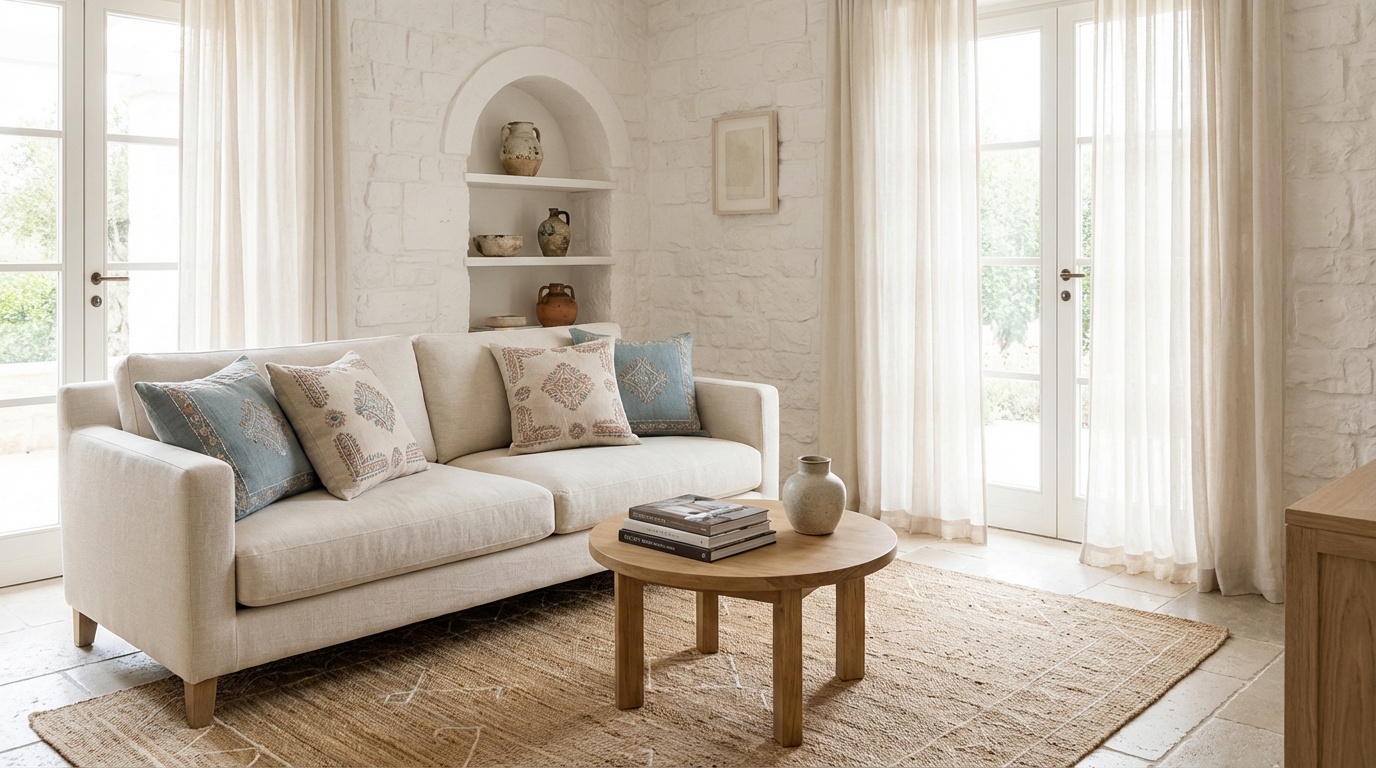
- Choose a lighter color palette: Emphasize creamy whites and soft beiges with terracotta and blue as small accents rather than dominant colors
- Scale down patterns: Use smaller-scale tilework patterns and avoid large, bold designs that overwhelm compact spaces
- Maximize vertical space: Install floating shelves to display pottery collections, drawing the eye upward
- Choose furniture wisely: Select a loveseat instead of a full sofa, opt for armless chairs that take less visual space, and choose a round coffee table that improves traffic flow
- Limit wood tones: Too much dark wood makes small spaces feel cave-like; balance dark wood accents with lighter painted pieces
- Use mirrors strategically: A large mirror with a Mediterranean-style frame expands the space while reinforcing your aesthetic
Rental-friendly approaches
You can achieve Mediterranean style without permanent changes:
- Focus on furniture and textiles: Since you can take these with you, invest here rather than in architectural modifications
- Use removable wallpaper: Textured or patterned removable wallpaper can create an accent wall with Mediterranean character
- Add temporary texture: Tapestries, large-scale artwork, and hanging textiles add visual warmth without altering walls
- Bring in plants abundantly: Potted olive trees, citrus plants, lavender, and rosemary in terracotta pots create instant Mediterranean atmosphere
- Layer rugs: Place Mediterranean-style area rugs over existing carpet to introduce color and pattern
- Use freestanding furniture: A beautiful wooden bookshelf or console table makes an impact without requiring installation
Much like bohemian living room ideas, Mediterranean style in rentals succeeds through layering portable elements that create atmosphere without permanent alterations.
Budget tiers for transformation
Under $500:
- Paint (if allowed) or add warm-toned textiles throughout ($100-150)
- Natural fiber area rug in jute or seagrass ($150-200)
- Collection of terracotta pots with plants ($50-75)
- Throw pillows in Mediterranean colors and patterns ($80-100)
- Secondhand wooden coffee table refinished or painted ($100-150)
- Thrifted pottery and decorative items ($50-75)
$500-$2,000: All of the above, plus:
- Quality linen curtains or window treatments ($200-300)
- Wrought iron chandelier or statement light fixture ($300-500)
- Upholstered accent chairs or ottoman ($400-600)
- Large mirror with ornate frame ($150-250)
- Collection of quality ceramic table lamps ($200-300)
- Vintage or antique wooden piece ($300-500)
$2,000+: All of the above, plus:
- New or high-quality vintage sofa in linen or leather ($1,500-3,000)
- Substantial wooden coffee table with character ($600-1,200)
- Custom window treatments in natural fabrics ($500-1,000)
- Multiple quality light fixtures throughout ($600-1,500)
- Architectural elements like corbels, salvaged doors, or built-in shelving ($500-2,000)
- Professional faux finishing on walls ($500-1,500)
Phasing your transformation over time
A strategic approach allows you to build your Mediterranean living room gradually:
Phase 1 (Months 1-2): Establish your color palette through paint, textiles, and accessories. This creates immediate impact at minimal cost and helps you visualize the final result.
Phase 2 (Months 3-4): Invest in one major furniture piece—either your sofa or a statement coffee table. This anchors your design and gives you a quality foundation to build around.
Phase 3 (Months 5-6): Add lighting fixtures. Quality lighting transforms ambiance and is worth saving for.
Phase 4 (Months 7-9): Acquire accent furniture and vintage pieces. Take your time finding the right pieces at estate sales and antique markets.
Phase 5 (Months 10-12): Final layering with art, collections, plants, and finishing touches that personalize your space.
This gradual approach allows you to make thoughtful decisions, wait for the right pieces, and spread costs over time while still enjoying your evolving space.
Styling for Different Budgets & Spaces
Bringing Your Vision to Life
Creating your dream Mediterranean living room begins with visualization. Before investing in furniture, paint, or decor, it's crucial to see how different elements work together in your actual space. This is where modern technology meets timeless design.
Starting with visualization prevents costly mistakes and helps you make confident decisions. Rather than guessing whether that terracotta accent wall will work with your existing furniture or wondering if wrought iron fixtures will feel too heavy in your space, you can see the results before committing.
Traditional methods like mood boards and paint samples offer limited insight—they show you colors and textures in isolation but don't reveal how everything works together in your specific room with your lighting conditions and architectural features.
RoomStudioAI transforms this process by allowing you to see your living room completely redesigned in Mediterranean style instantly. Simply upload a photo of your current space, select Mediterranean as your preferred style, and within seconds, you'll see a photorealistic rendering of your room transformed with authentic Mediterranean elements—warm terracotta tones, natural textures, wrought iron fixtures, and all the characteristic details that define the style.
This AI-powered visualization lets you experiment risk-free. Try different color palettes—see your room with creamy white walls versus soft terracotta. Visualize various furniture arrangements. Compare how different levels of color saturation affect the overall feel. You can explore multiple Mediterranean interpretations—from Greek island minimalism to Tuscan rustic warmth to Spanish colonial richness—all in your actual space.
The ability to upload your photo and experiment means you're not working from generic inspiration images that may not translate to your room's proportions, lighting, or existing features. You're seeing your specific living room with your windows, your ceiling height, your architectural details, transformed with Mediterranean design principles.
This technology is particularly valuable when you're trying to convince family members or roommates about a design direction. Rather than asking them to imagine the transformation, you can show them exactly what you're proposing. It's also invaluable for identifying which elements of Mediterranean style work best in your particular space—you might discover that your room looks stunning with warm neutrals and blue accents but overwhelming with too much terracotta.
Try the free AI design tool at RoomStudioAI before making any purchases. Spend time exploring different variations. Save your favorite renderings and use them as shopping guides—you'll know exactly what colors to look for, what furniture styles will work, and how to layer elements effectively. Many users find that visualization helps them prioritize spending, identifying which elements make the biggest impact in their specific space.
The transformation from your current living room to a Mediterranean sanctuary is absolutely achievable, regardless of your starting point or budget. With the right approach—warm colors, natural materials, layered textures, and quality lighting—you can create a space that captures the timeless elegance and welcoming warmth of Mediterranean design.
Start your Mediterranean living room journey today by visualizing your space with RoomStudioAI. See your vision come to life, refine your design direction, and step confidently into creating a living room that transports you to sun-drenched coastal villas every time you walk through the door. Your Mediterranean retreat is just a photo upload away.