What Defines Asian Zen Style
Asian Zen style is far more than an aesthetic choice—it's a design philosophy rooted in Buddhist and Taoist principles that have shaped Eastern interiors for over a thousand years. The term "Zen" itself comes from the Japanese pronunciation of the Chinese word "Chan," which derives from the Sanskrit "dhyana," meaning meditation. This deep spiritual foundation informs every aspect of Zen design, from spatial arrangement to material selection.
The core principles of Asian Zen design revolve around simplicity, naturalness, and tranquility. Unlike maximalist Western traditions that often celebrate abundance and ornamentation, Zen aesthetics embrace the concept of "ma"—the Japanese term for negative space or emptiness. This doesn't mean bare or sterile; rather, it's about creating breathing room that allows the mind to rest and the spirit to expand. Each element in a Zen space is carefully considered and purposefully placed, following the principle that less is indeed more.
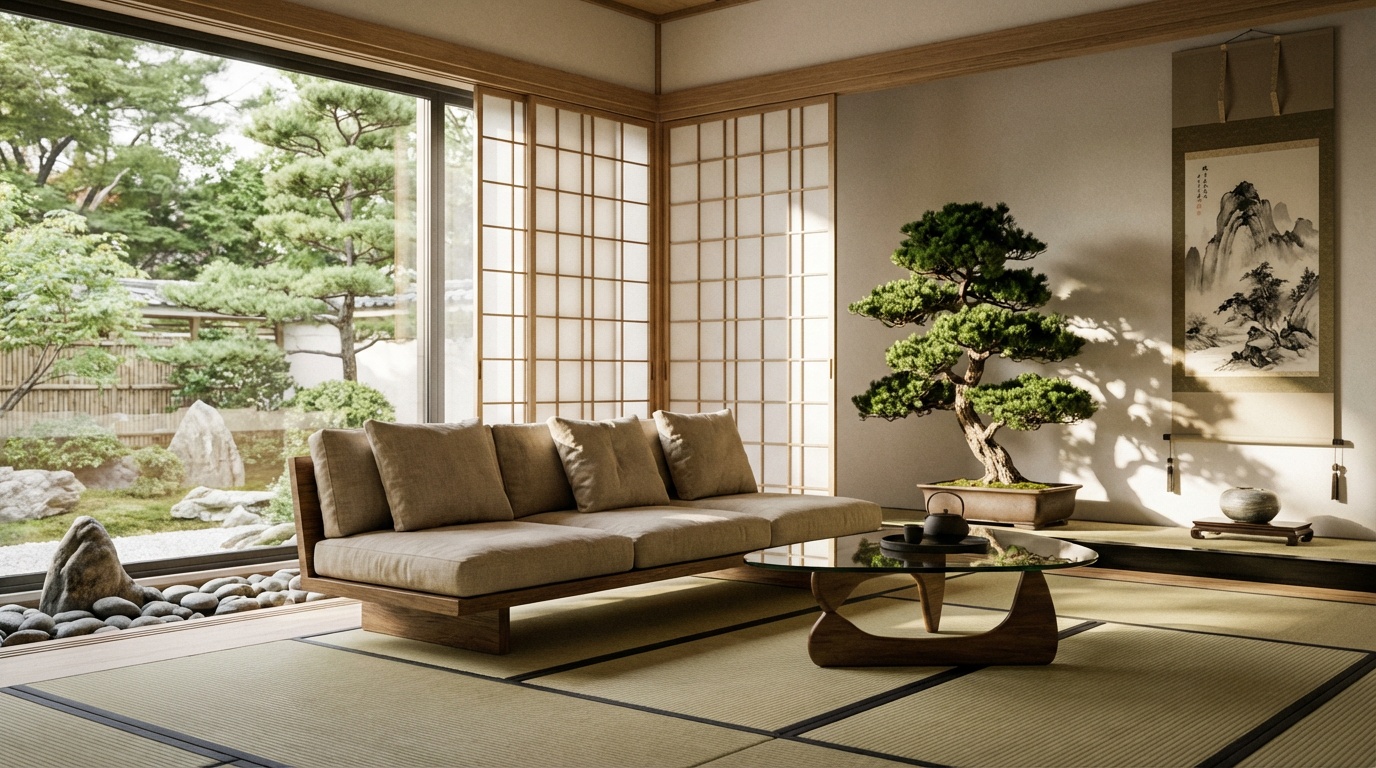
Historically, Zen design emerged from the tea ceremony culture of 15th and 16th century Japan, where masters like Sen no Rikyū codified principles of wabi-sabi—finding beauty in imperfection and impermanence. These tea rooms, with their tatami mats, shoji screens, and minimal ornamentation, became the template for what we now recognize as Zen interiors. Over centuries, these principles spread throughout Asia and eventually captivated Western designers in the mid-20th century, when figures like George Nakashima brought Japanese aesthetics to American audiences.
Today, Asian Zen style resonates powerfully with modern homeowners for several compelling reasons. In an era of information overload and constant digital stimulation, people crave spaces that offer mental clarity and sensory calm. The Zen living room provides exactly this—a carefully curated environment that reduces visual noise and promotes mindfulness. Additionally, Zen design aligns perfectly with contemporary values of sustainability and intentional living, as it emphasizes quality over quantity and natural materials over synthetic alternatives.
What distinguishes Asian Zen from similar minimalist styles is its spiritual foundation and connection to nature. While Scandinavian minimalism focuses on functionality and hygge coziness, and modern minimalism prioritizes sleek lines and industrial materials, Zen design maintains a deeper philosophical purpose. Every design choice serves to facilitate meditation, contemplation, and harmony with the natural world. The style also incorporates specific cultural elements like low-profile furniture, natural fiber textiles, and symbolic decorative objects that carry meaning beyond their aesthetic appeal.
What Defines Asian Zen Style
Essential Elements for Your Asian Zen Living Room
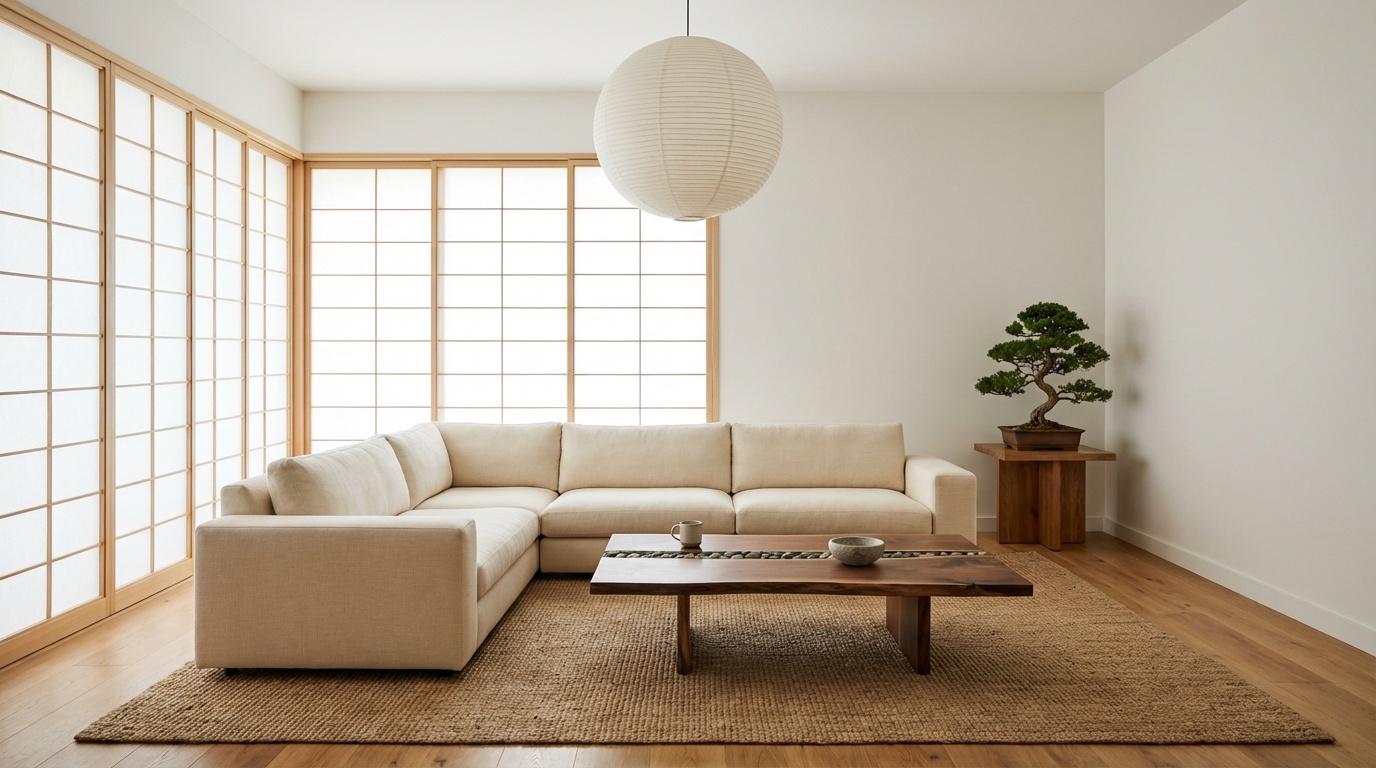
Creating an authentic Asian Zen living room begins with selecting the right foundational furniture pieces. The most iconic element is the low-profile seating arrangement—think floor cushions (zabuton), low platform sofas, or streamlined couches with clean horizontal lines that sit close to the ground. This lower sight line creates a sense of spaciousness and connects occupants more intimately with the earth element. Look for sofas in natural linen, organic cotton, or even leather in neutral tones, with simple wooden legs in walnut, teak, or bamboo.
A low coffee table is absolutely essential, preferably in solid wood with minimal ornamentation. Traditional Japanese chabudai tables or modern interpretations in reclaimed teak or elm work beautifully. The table should feature natural wood grain and perhaps live edges that celebrate the material's organic origins. Pair this with a meditation corner or reading nook featuring a simple floor cushion or low-slung chair, creating a dedicated space for contemplative activities.
Storage in a Zen living room must be concealed and streamlined. Built-in cabinetry with smooth, handle-free doors maintains clean lines, or consider a tansu chest—traditional Japanese step-chest—in dark wood with subtle metal hardware. Open shelving should be used sparingly and styled minimally, displaying only a few carefully chosen objects rather than collections of items.
The signature silhouettes of Zen furniture emphasize horizontal lines, low profiles, and geometric simplicity. Avoid ornate carvings, excessive curves, or busy patterns. Instead, seek pieces with straight lines, gentle curves, and visible joinery that honors traditional craftsmanship. Platform-style furniture that appears to float slightly above the floor creates visual lightness while maintaining grounding energy.
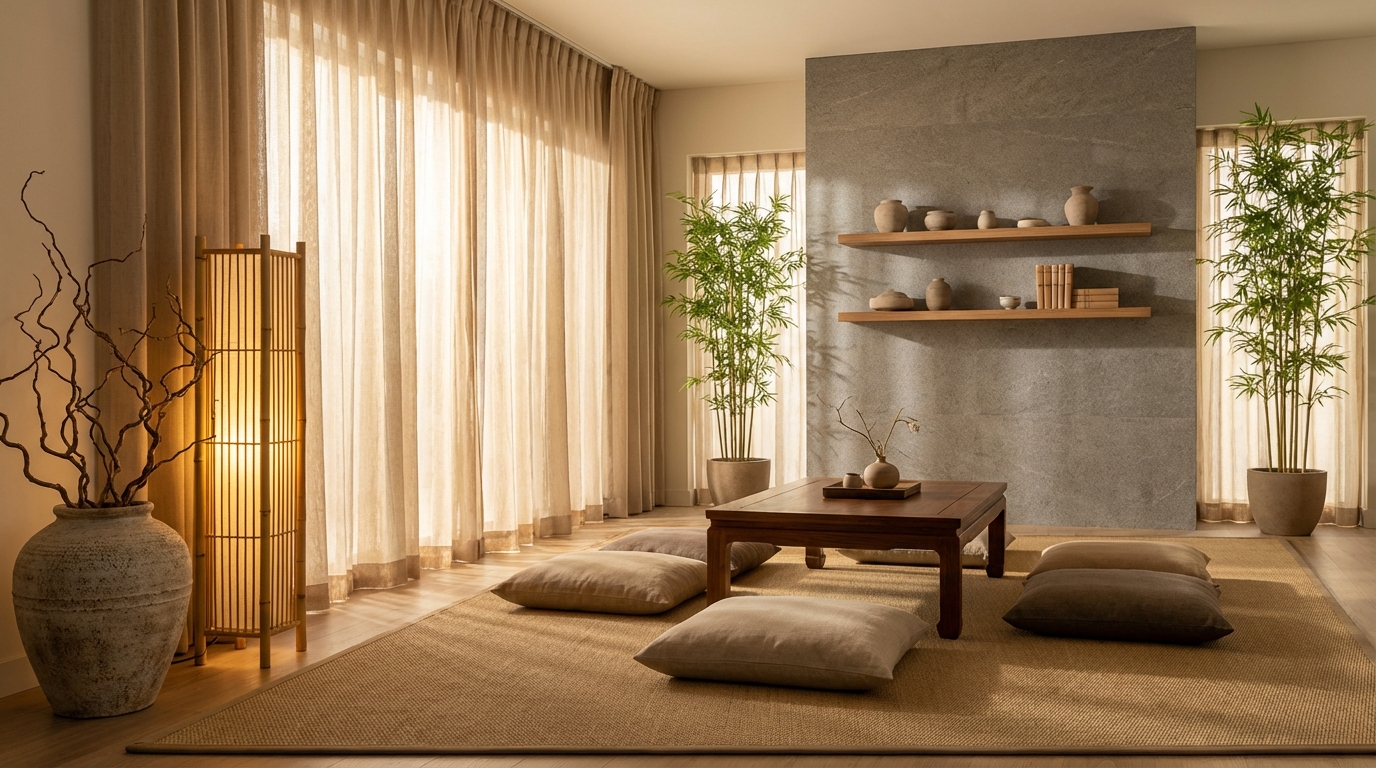
Material selection is crucial for authenticity. Wood is the primary material—bamboo for its sustainability and symbolism, teak for its warmth and durability, walnut for its rich grain, and Japanese cedar (sugi) for its aromatic qualities. Natural fibers like jute, sisal, hemp, and cotton should dominate textiles, while stone elements—river rocks, slate, or granite—can appear in decorative accents or side tables. Metals should be minimal, favoring brushed bronze, blackened steel, or aged copper in small doses for hardware or light fixtures.
The living room particularly benefits from Zen principles because it's typically the home's most active social space. By applying Zen design here, you create a buffer zone between the outside world's chaos and your home's inner sanctum. The style's emphasis on comfortable floor seating and low furniture encourages more intimate, grounded conversations. Natural materials and neutral palettes reduce sensory overwhelm after long days, while the uncluttered aesthetic makes the space easier to maintain—supporting rather than complicating daily life.
Essential Elements for Your Asian Zen Living Room
Color Palettes & Combinations
The Asian Zen color palette draws directly from nature, creating a foundation of earthy neutrals that ground the space and promote tranquility. Your primary colors should include warm ivory or soft white for walls—think the color of natural rice paper or limestone rather than stark white. Warm honey oak or weathered driftwood gray should dominate wood tones, bringing organic warmth without overwhelming the senses. Stone gray in its various iterations—from light dove to deeper charcoal—provides depth and sophistication, mimicking river rocks and mountain mist.
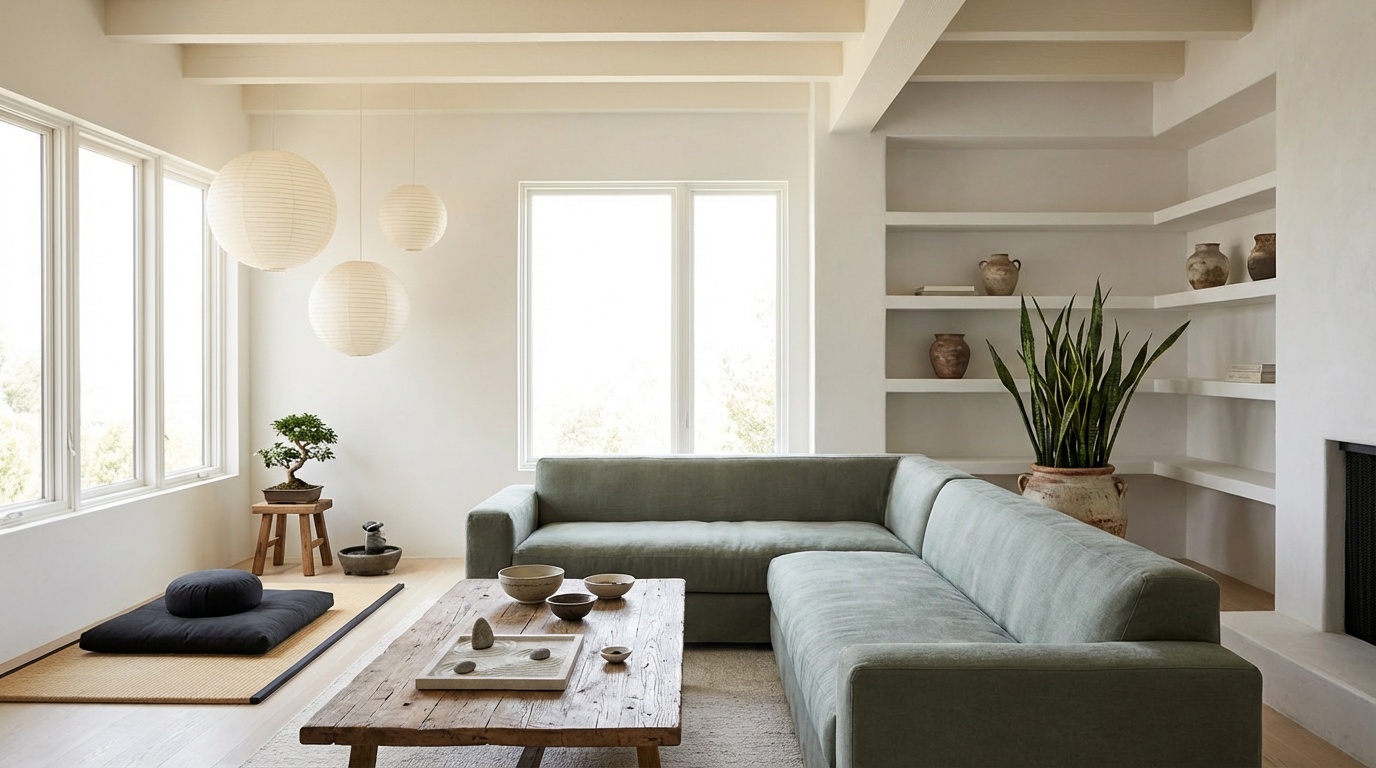
For slightly more color while maintaining serenity, incorporate dusty sage green or soft bamboo green, which references the natural landscape while remaining subtle and calming. These greens work beautifully as accent wall colors or in larger textile pieces like area rugs or curtains.
Accent colors in Zen design should be used with extreme restraint and intention. Deep charcoal or black can ground the space through furniture legs, picture frames, or pottery, creating visual anchors without heaviness. Warm terracotta or burnt sienna might appear in a single ceramic vase or cushion, referencing traditional Japanese pottery. Indigo blue, especially in its faded, wabi-sabi iterations, can add depth through a single textile piece—perhaps a vintage boro fabric or an indigo-dyed cushion.
Balancing neutrals with color in Zen design follows the 80-20 rule: approximately 80% of your palette should consist of neutrals (whites, grays, natural wood tones), while only 20% introduces subtle color. Even within that 20%, the colors should be muted, dusty, or grayed versions rather than saturated hues. The goal is monochromatic harmony with gentle variation rather than contrast.
For color distribution, walls should remain in the lightest neutrals—warm whites, pale grays, or very soft greens—to maximize light reflection and create an expansive feel. Larger furniture pieces typically occupy the mid-tone range—natural wood tones, medium grays, or soft taupes. Smaller decor items and textiles can introduce the deepest tones and subtle accent colors, but even these should feel organic rather than jarring.
Unlike some design styles, Asian Zen doesn't typically embrace seasonal color variations. The philosophy emphasizes timelessness and constancy, providing a stable, unchanging sanctuary. However, you might subtly acknowledge seasons through natural elements—cherry blossom branches in spring, deeper greens in summer, dried grasses in autumn, and bare branches in winter—rather than through color scheme changes.
Color Palettes & Combinations
Lighting & Ambiance
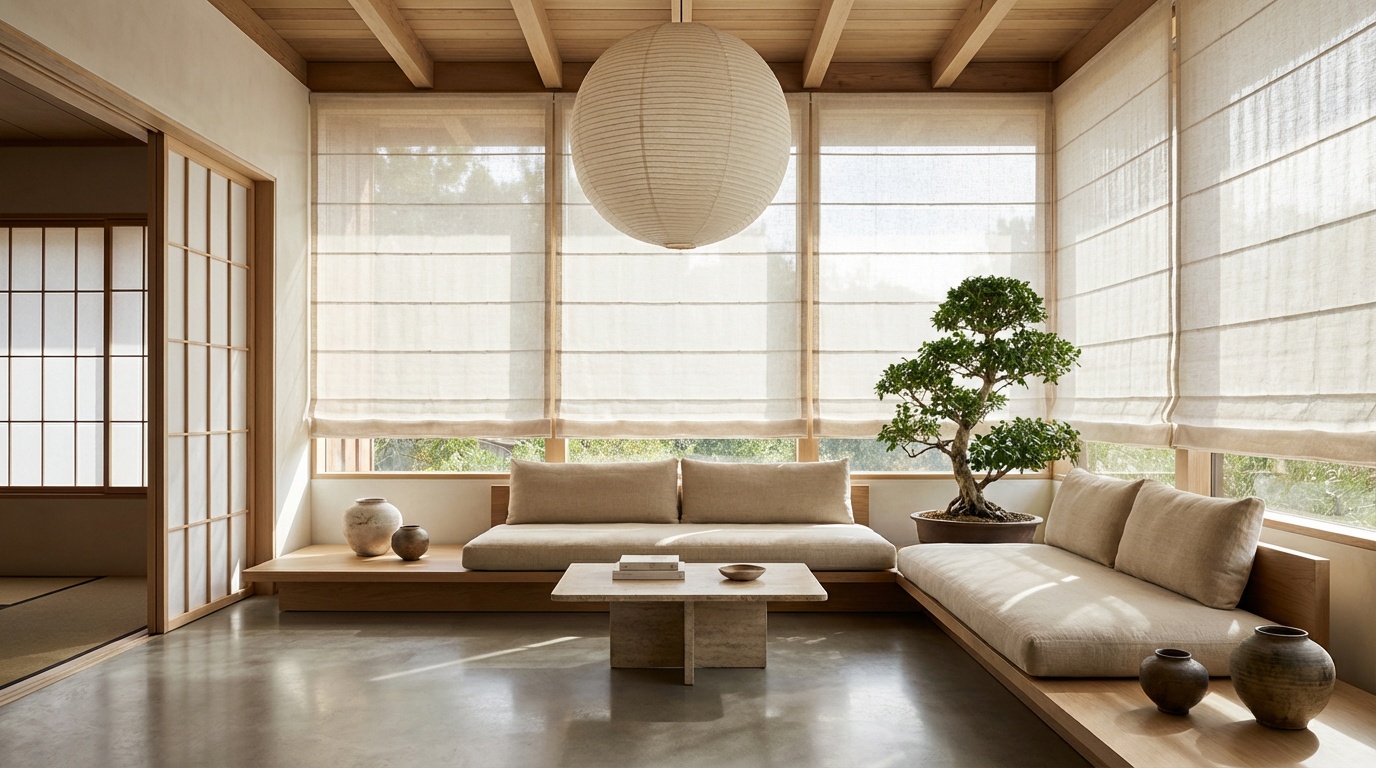
Natural light is the cornerstone of any successful Zen living room, as it connects the interior space with the natural world's rhythms. Maximize natural light by keeping window treatments minimal and translucent. Traditional shoji screens—wooden frames with translucent rice paper—are ideal, diffusing harsh sunlight into a soft, even glow that changes throughout the day. For a more contemporary approach, consider linen Roman shades in natural tones or simple roller shades in light-filtering fabrics that can be fully raised during daylight hours.
Position your primary seating to take advantage of natural light without creating glare. A sofa perpendicular to windows allows occupants to enjoy daylight without direct sun in their eyes. If your living room has limited natural light, consider the strategic placement of mirrors—though used sparingly in Zen design—to reflect and amplify available daylight. A large mirror with a simple wooden frame positioned opposite a window can effectively double your natural light.
For artificial lighting, Zen design embraces a layered approach that allows for flexibility and mood creation. Ambient lighting should be soft, diffused, and never harsh. Recessed ceiling lights with dimmer switches provide general illumination without visual clutter, or consider a single statement pendant light in washi paper (Japanese paper), bamboo, or natural linen. The iconic Noguchi Akari light sculptures exemplify perfect Zen lighting—sculptural yet simple, providing warm, diffused light that creates atmosphere without dominating the space.
Task lighting in a Zen living room should be functional yet beautiful. A simple floor lamp with a linen shade beside a reading chair, or a slender table lamp with a ceramic base in natural tones, provides focused light for specific activities. Look for fixtures with clean lines and natural materials—wood bases, paper or fabric shades, and minimal metal hardware in bronze or blackened finishes.
Accent lighting creates depth and highlights specific elements. Small LED uplights can wash a feature wall or illuminate a carefully placed indoor plant, while picture lights might highlight a piece of calligraphy or minimalist artwork. However, use accent lighting sparingly—the goal is subtle enhancement, not dramatic spotlighting.
Specific fixture styles that complement Zen design include paper lanterns (both hanging and table versions), bamboo pendant lights, ceramic table lamps with simple forms, and wooden floor lamps with adjustable arms in the style of traditional Japanese andon lamps. Avoid crystal chandeliers, ornate sconces, or anything with excessive decoration.
Creating the right ambiance through lighting placement involves understanding the quality of light you're introducing. Warm white bulbs (2700-3000K) create the cozy, calming atmosphere essential to Zen spaces—avoid cool white or daylight bulbs that feel clinical. Place lighting at various heights to create depth: low table lamps, mid-height floor lamps, and overhead ambient lighting. Use dimmers throughout to adjust lighting levels for different times of day and activities, transitioning from bright and energizing during active hours to soft and meditative in the evening.
Lighting & Ambiance
Furniture & Decor Shopping Guide
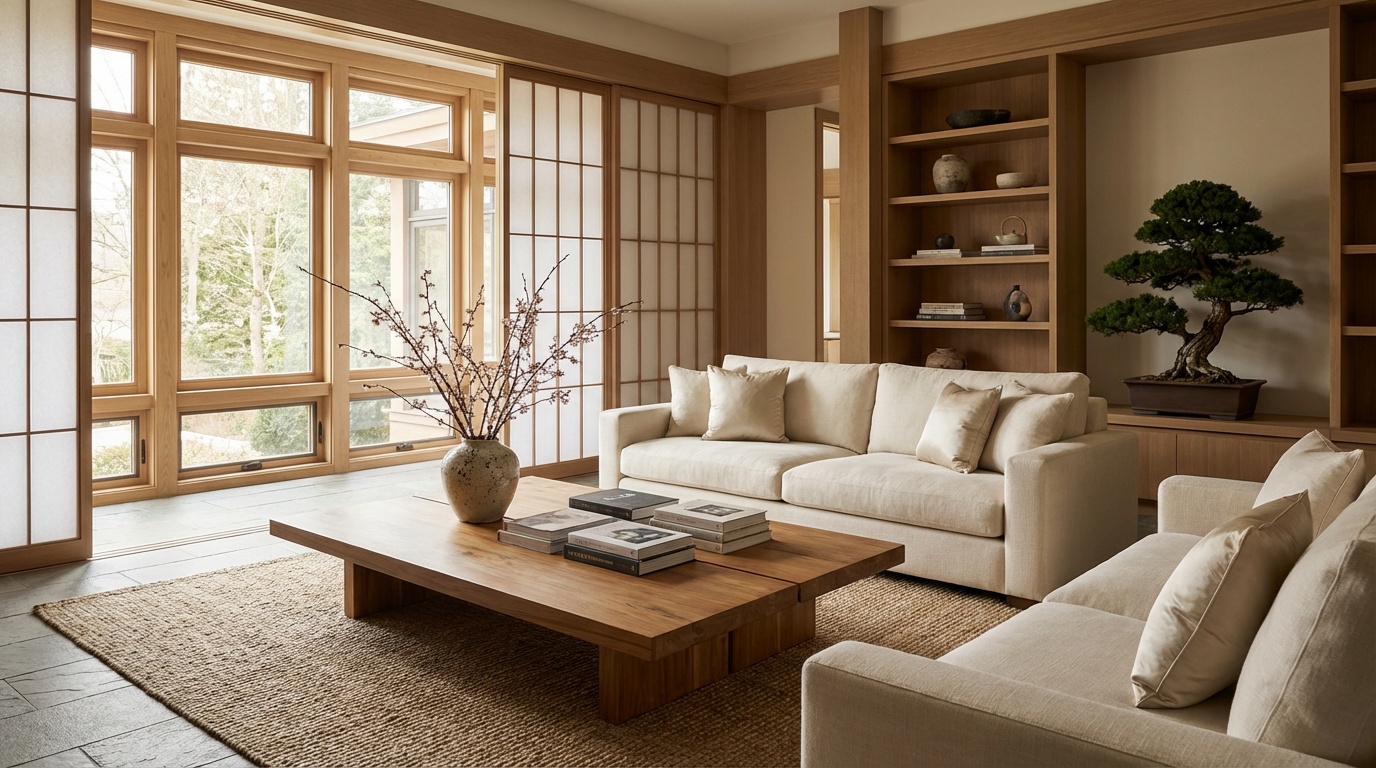
When investing in Asian Zen style, certain pieces deserve your highest budget allocation because they define the space and will serve you for decades. First, invest in a high-quality solid wood coffee table—this central piece anchors your living room and should be substantial, beautifully grained, and expertly crafted. Expect to spend $800-2,500 for an authentic piece in teak, walnut, or reclaimed wood. Second, prioritize your primary seating—a well-made sofa with a simple silhouette in quality natural fabric will cost $2,000-5,000 but will last 15-20 years and form the foundation of your design.
A third investment-worthy piece is quality window treatments—authentic shoji screens or custom linen Roman shades in natural fibers. These control light beautifully and are visible focal points, justifying the $500-1,500 investment. Finally, consider one statement lighting fixture—an authentic Noguchi lamp, handcrafted ceramic pendant, or artisan-made paper lantern—as both functional necessity and sculptural art piece ($300-1,200).
For budget-friendly alternatives, IKEA offers surprisingly good options that can be styled for Zen aesthetics. Their Stockholm series features clean-lined furniture in walnut veneer, and their Lisabo line offers solid wood pieces at accessible prices. Target's Project 62 collection includes minimalist furniture with Asian-inspired silhouettes. For textiles, H&M Home and Zara Home offer linen cushions, cotton throws, and natural fiber rugs at fraction-of-designer prices.
Specific shopping destinations for authentic pieces include Muji for minimalist Japanese furniture and home goods, West Elm for contemporary interpretations with clean lines and natural materials, and CB2 for modern pieces that adapt well to Zen styling. Online, Etsy offers handcrafted items from artisans specializing in Japanese-inspired design—search for "wabi sabi furniture" or "Japanese minimalist decor." Wayfair and Overstock carry affordable Asian-inspired furniture, though quality varies significantly, so read reviews carefully.
For authentic vintage and antique pieces, seek out estate sales in areas with significant Japanese-American populations, where you might find genuine tansu chests, low tables, or ceramic pieces. 1stDibs and Chairish offer curated vintage selections online, including mid-century pieces influenced by Japanese design. Local antique malls often have overlooked Asian-inspired pieces from the 1960s-70s when Japanese aesthetics heavily influenced Western design—these can be excellent values.
Vintage finds that work particularly well include mid-century low-profile sofas (easily reupholstered in natural linen), wooden room dividers (can substitute for shoji screens), ceramic pottery from the mingei folk craft movement, and simple wooden benches that can serve multiple purposes. Don't overlook natural fiber baskets from any culture—Moroccan, Native American, or African woven baskets work beautifully in Zen spaces for concealed storage.
DIY projects can achieve authentic Zen aesthetics affordably. Create DIY shoji-inspired screens using simple wooden frames from a hardware store and translucent white fabric or rice paper. Build floating shelves from reclaimed wood—the simpler the installation, the better. Make your own zabuton floor cushions by sewing simple square covers in natural linen and filling them with buckwheat hulls or cotton batting. Create a meditation corner using just a purchased cushion and a DIY bamboo screen backdrop. Even concrete planters can be DIY-ed using molds and quick-set concrete for that wabi-sabi aesthetic at minimal cost.
Furniture & Decor Shopping Guide
Common Mistakes to Avoid
The first major mistake people make when creating an Asian Zen living room is confusing minimalism with emptiness. A truly Zen space isn't bare or cold—it's carefully curated with purposeful pieces that each serve a function or bring joy. The fix: ensure every item in your space has a reason for being there, whether functional or deeply meaningful. Include comfortable seating, adequate lighting, and enough warmth through textiles to make the space inviting. If your room feels stark rather than serene, you've gone too minimal. Add a soft throw, a living plant, or a beautiful ceramic piece to restore warmth.
The second common error is mixing too many Asian influences without cohesion. Combining Chinese lacquered furniture, Thai Buddha statues, Japanese shoji screens, and Indian textiles creates visual confusion rather than harmony. The fix: choose one primary cultural influence (typically Japanese for Zen style) and stick with it for 80-90% of your pieces. If you love elements from other Asian cultures, incorporate them very selectively and ensure they share similar color palettes and aesthetic principles.
Mistake number three is neglecting the principle of wabi-sabi by keeping everything too perfect and new. Zen aesthetics celebrate natural aging, patina, and imperfection. A living room filled only with brand-new, pristine items misses the philosophical depth of the style. The fix: intentionally include pieces with history and character—a vintage wooden bowl with natural cracks, a stone with weathered edges, furniture that shows honest wear. Don't be afraid of slight imperfections; they add authenticity and soul.
The fourth mistake is improper lighting, particularly relying on a single overhead fixture. This creates harsh shadows and fails to provide the layered, adjustable ambiance essential to Zen spaces. The fix: remove or supplement central ceiling fixtures with multiple light sources at different heights. Add table lamps, floor lamps, and dimmers to create flexibility. Ensure you can adjust lighting for different activities and times of day, from bright and energizing to soft and meditative.
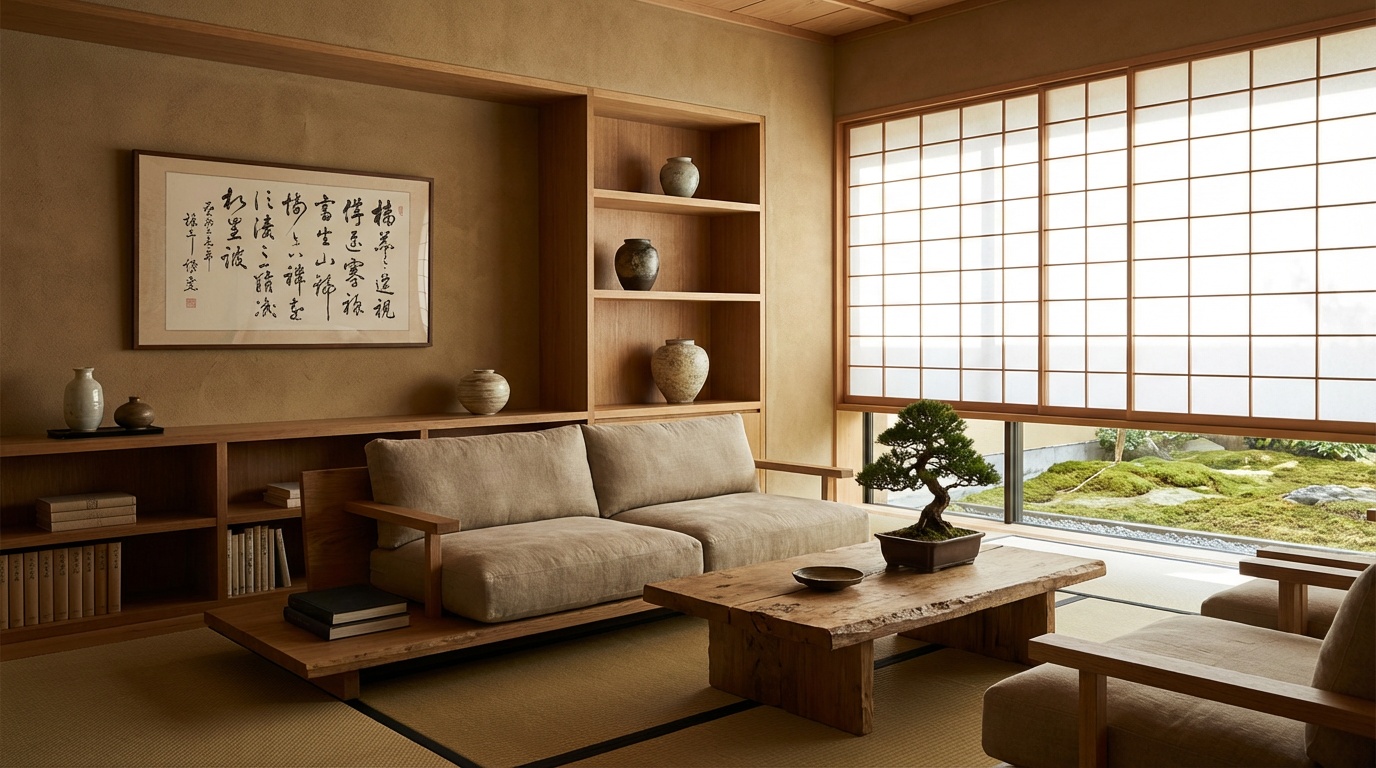
The fifth critical error is ignoring natural elements. A Zen living room without connection to nature—no plants, natural light, organic materials, or nature-inspired elements—feels disconnected from the style's philosophical roots. The fix: incorporate living plants (even one substantial plant makes a difference), maximize natural light, choose natural materials over synthetics, and bring in elements like river rocks, driftwood, or bamboo. Consider a Japanese-inspired garden view if you have access to outdoor space visible from your living room.
Signs your space is missing the mark include feeling anxious rather than calm when you enter, visual chaos despite minimal furniture, coldness rather than serenity, or a space that feels like a museum rather than a home. The balance between over-styling and under-styling is delicate: over-styling shows in too many decorative objects, multiple patterns competing for attention, or excessive symmetry that feels forced. Under-styling appears as emptiness, lack of comfort, insufficient lighting, or a space that doesn't invite you to sit and stay.
Common Mistakes to Avoid
Styling for Different Budgets & Spaces
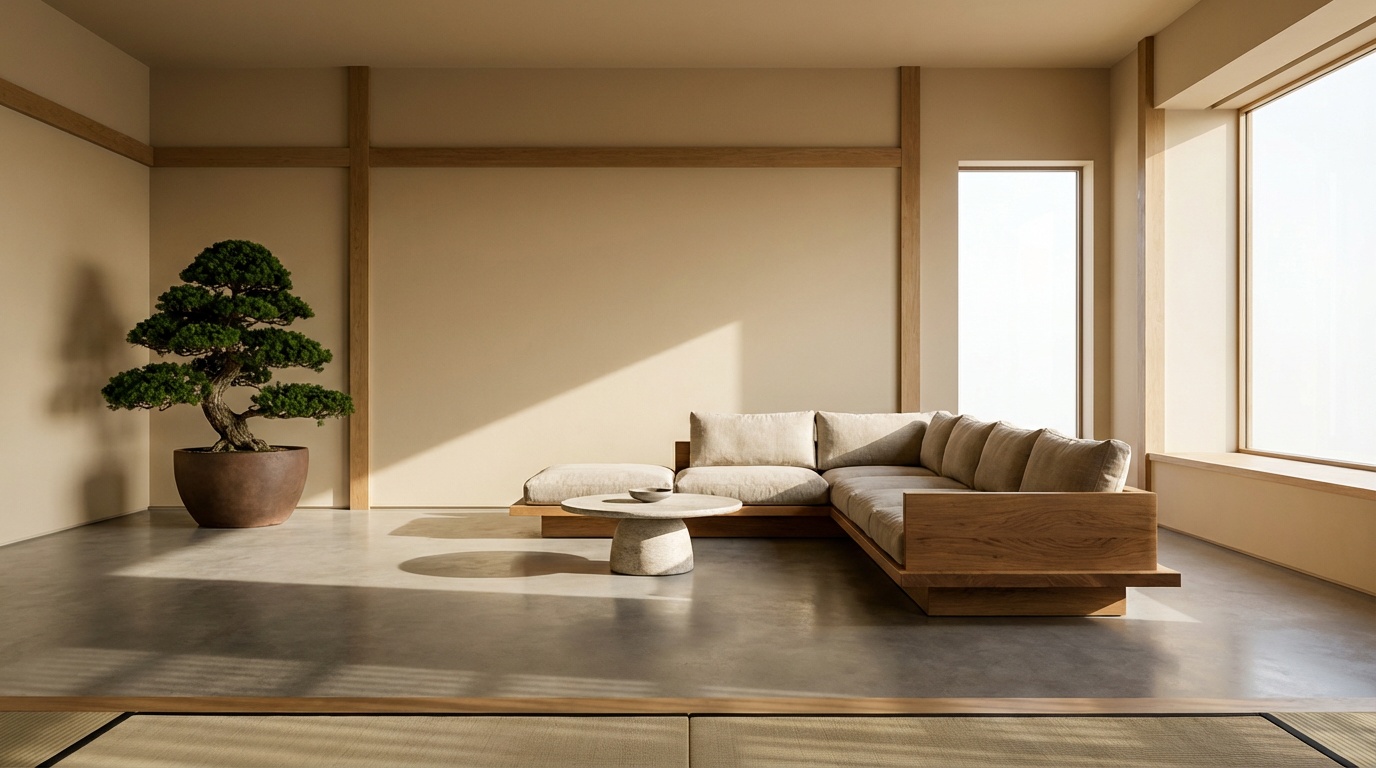
Small living rooms actually adapt beautifully to Zen principles, as the style's emphasis on negative space and minimalism makes compact areas feel larger. In a small space, prioritize low-profile furniture even more strictly—a low sofa and coffee table dramatically increase perceived ceiling height. Use a single, slightly larger piece rather than multiple small items; one substantial sofa beats a sofa plus two chairs in a tiny room. Maximize vertical space with floor-to-ceiling sheer curtains that draw the eye upward, and keep the floor as clear as possible—avoid scatter rugs in favor of one larger rug that extends under furniture, creating visual continuity.
For small spaces, multifunctional furniture is essential while maintaining Zen aesthetics. Look for coffee tables with hidden storage, ottomans that open for blanket storage, or low platform sofas with built-in drawers. Wall-mounted floating shelves provide storage without floor space consumption. A room divider or shoji screen can create separation in a studio apartment while maintaining light flow—far better than solid walls or heavy curtains.
Rental-friendly approaches allow you to achieve Zen style without permanent modifications. Focus on furniture and portable elements rather than built-ins or paint. Use removable wallpaper in subtle natural textures (grasscloth look, linen texture) for an accent wall that you can take with you. Freestanding shoji screens create zones without drilling. Large area rugs define your living space and add warmth without altering floors. Invest in quality portable lighting rather than replacing fixed fixtures, and use plants in beautiful pots to add life without landscaping.
For transformations under $500, start with decluttering and rearranging—free but impactful. Invest in paint for walls in warm white or soft gray ($50-100), one or two large floor cushions in natural linen ($80-150), a simple bamboo shade or white curtains ($40-80), several thrift-store finds like wooden bowls or ceramic vases ($30-60), a couple of easy-care plants like snake plants or bamboo ($30-50), and a paper lantern pendant light to replace an existing fixture ($40-80). Allocate remaining budget to natural fiber throw pillows and perhaps one small vintage wooden piece.
The $500-2,000 range allows for more substantial changes. Invest in a quality coffee table in natural wood ($400-800), new window treatments like linen Roman shades or custom shoji screens ($300-600), a good area rug in jute or wool ($200-500), several quality floor and table lamps with natural materials ($200-400), professional-quality paint for all walls ($150-250), multiple living plants including a larger statement plant ($100-200), and new throw pillows and a blanket in natural fabrics ($100-200). This budget allows you to transform the space's entire feel while keeping existing major furniture.
With $2,000+, you can achieve a complete transformation. Invest in a new sofa in natural linen or organic cotton with a low-profile silhouette ($1,500-3,000), a substantial solid wood coffee table ($800-1,500), custom window treatments ($600-1,200), quality lighting throughout including a statement piece ($500-1,000), professional paint or natural plaster walls ($400-800), a large natural fiber area rug ($500-1,200), multiple plants including a significant indoor tree ($200-500), and carefully curated decor including pottery, art, and textiles ($400-800).
Styling for Different Budgets & Spaces
Bringing Your Vision to Life
The most crucial step before purchasing a single item or painting a single wall is visualization. Too many people invest in furniture and decor only to discover the pieces don't work together or the style doesn't suit their space's architecture. Traditional mood boarding helps, but it can't show you how specific pieces will look in your living room with your lighting, dimensions, and existing elements.
This is where RoomStudioAI becomes an invaluable tool in your design process. Rather than guessing how Asian Zen style will translate to your specific living room, you can see it instantly. Simply upload a photo of your current space, select "Asian Zen" from the style options, and within seconds, you'll see your actual room transformed with appropriate furniture, colors, materials, and decor—all maintaining your room's unique architecture and lighting.
The beauty of using AI visualization is the ability to experiment risk-free. Wondering whether to keep your existing sofa and work around it, or whether a complete furniture overhaul is necessary? Upload your photo twice and compare versions. Unsure whether lighter or darker wood tones suit your space better? Generate multiple variations to see which resonates. Concerned about whether Zen style will feel too minimal in your particular room? See it before committing.
RoomStudioAI also helps you communicate your vision to partners, roommates, or family members who'll share the space. Rather than describing abstract concepts like "wabi-sabi aesthetic" or "negative space," you can show them exactly what you're proposing. This visual reference makes collaborative decision-making far easier and ensures everyone's on the same page before investments are made.
The visualization process also helps you identify which elements to prioritize. When you see your room rendered in Asian Zen style, you'll immediately notice which existing elements work with the aesthetic and which clash. This prevents expensive mistakes like replacing furniture that actually complements the style, or keeping pieces that will always feel out of place no matter how much you try to style around them.
Beyond just Asian Zen, you can use RoomStudioAI to compare how different styles suit your space. Perhaps you're also drawn to Scandinavian minimalism or bohemian design—seeing all options visualized in your actual room helps you make confident decisions based on what truly works for your space rather than abstract preference.
Start your Asian Zen living room transformation today by visiting RoomStudioAI and uploading a photo of your current space. The free AI design tool takes seconds to use but could save you thousands in design mistakes and countless hours of uncertainty. See your vision come to life before you move a single piece of furniture, and begin your journey toward a living room that offers true sanctuary—a space where ancient wisdom meets modern living, and where peace isn't just an aspiration but a daily reality.
Your serene, balanced, beautiful Asian Zen living room is closer than you think. Start visualizing it now, and take the first confident step toward transformation.