Figuring out your home design style is really about making your space a true reflection of who you are. It’s about creating a home that doesn’t just look good, but feels right—a place that genuinely supports your lifestyle and makes you feel comfortable.
How to Translate Your Personality Into a Design Style
The question, "What's my home design style?" can feel like a pop quiz with only one right answer. But it’s not about picking a single, rigid label from a long list. Think of it more like telling your own story. Your home is the backdrop, and the design choices you make are what bring that personal story to life.
This is about so much more than just recreating a look you saw on Pinterest. It’s an inside-out job that starts with how you actually live.
- Your Lifestyle: Are you a homebody who craves quiet nights in, or are you the go-to host for every get-together? Your home should work for you, not against you.
- Your Values: Maybe you’re passionate about sustainability, or perhaps you value incredible craftsmanship or the latest smart-home tech. These principles can point you toward the right materials and furniture.
- Your Feelings: How do you want to feel when you walk in the door after a long day? Relaxed? Energized? Inspired? That feeling is your ultimate goal.
Your design style is the bridge between how you live and how you want to feel in your home. It’s the intentional choice of colors, textures, and objects that work together to create a specific atmosphere.
Finding Your Starting Point
To start turning your personality into a real look and feel, it helps to know the basic design languages out there. You don’t need to become an expert overnight, but getting a sense of the core vibe of different styles is the perfect first step. For a deeper look at different aesthetics and how to apply them, exploring the many uses of AI in interior design can show you how these concepts are visualized today.
To get you started, here’s a quick snapshot of some popular styles to see what immediately clicks with you.
Home Design Styles at a Glance
This table breaks down a few common styles, the feeling they aim to create, and the key ingredients that define them. See if any of these resonate with you.
| Design Style | Core Feeling | Key Elements |
|---|---|---|
| Modern | Clean, intentional, uncluttered | Neutral colors, natural materials, clean lines |
| Minimalist | Calm, simple, functional | Monochromatic palette, negative space, no clutter |
| Coastal | Relaxed, airy, natural | Light blues & whites, natural light, woven textures |
| Japandi | Serene, warm, imperfect | Muted tones, raw wood, handcrafted details |
| Rustic | Cozy, rugged, organic | Exposed wood beams, stone, warm textiles |
| Luxury | Elegant, sophisticated, opulent | Rich fabrics, metallic accents, statement pieces |
Think of this as your jumping-off point. It’s not about finding a perfect match right away, but about identifying a direction that feels like you.
A Visual Guide to Popular Home Design Styles
Now that you have a few starting points, let's get into the fun part: exploring the visual language of some of the most popular home design styles. Think of it like learning to cook—once you understand the core ingredients of a few key cuisines, you can start experimenting and creating your own signature dishes. We'll go beyond the simple labels to understand what really makes each of these styles tick.
This visual gives you a great framework for thinking about your own space, focusing not just on objects, but on how your home reflects your personality, supports your lifestyle, and makes you feel.
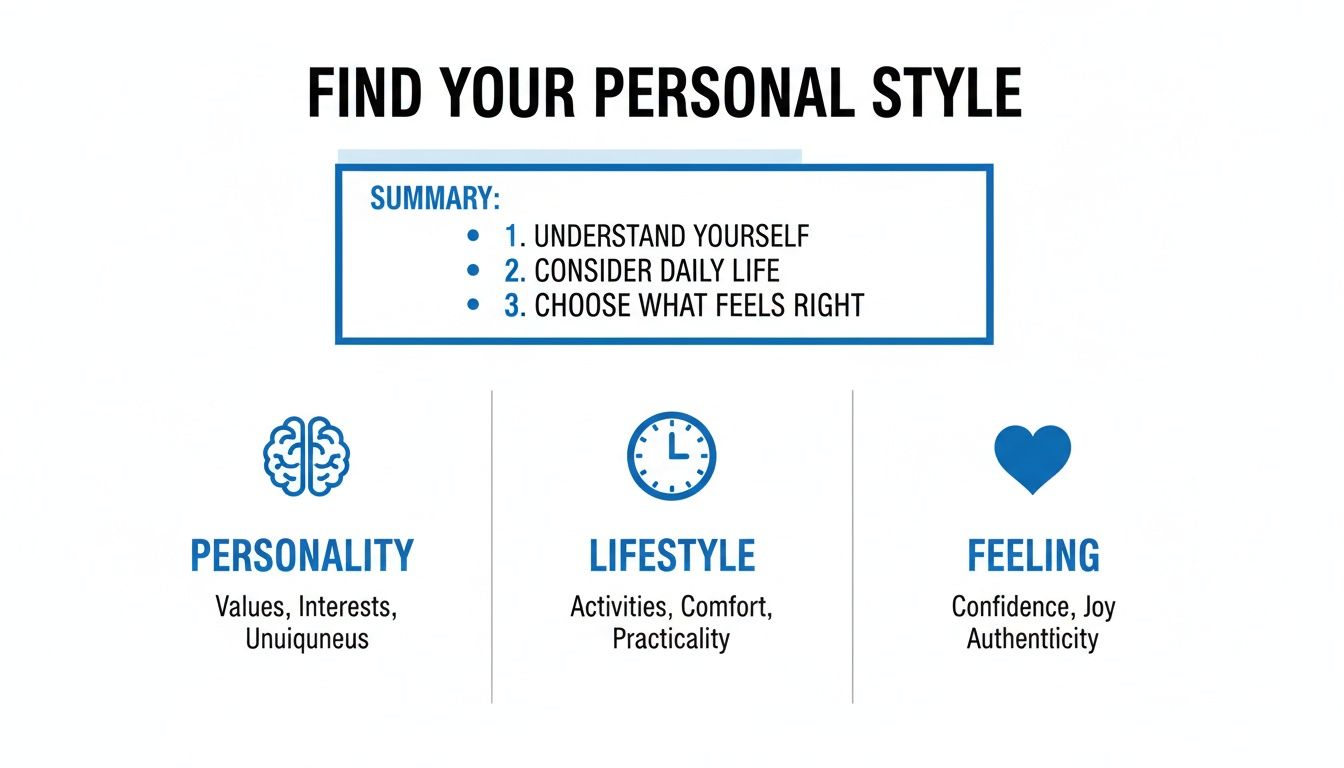
It’s a powerful reminder that the best design isn't just about what looks good on Pinterest; it’s about what genuinely works for you and the way you live.
Modern and Minimalist: The Art of Simplicity
People often use "Modern" and "Minimalist" interchangeably, but they really are two distinct personalities. Modern design, which has its roots in the early to mid-20th century, is all about clean lines, organic forms, and natural materials like wood, metal, and leather. It’s definitely uncluttered, but it's not cold or sterile; it often features a warm, neutral palette with thoughtful pops of color.
Minimalist design is the more extreme cousin. Its mantra is truly "less is more." This style strips everything back to its essential purpose, leaning heavily on monochromatic color schemes (think layered whites, deep blacks, and subtle greys) and a near-total absence of clutter. In a minimalist space, every single object has to earn its keep.
The real difference comes down to intent. Modern design is about simplifying forms and celebrating materials, while Minimalist design is about distilling a room down to its absolute function, creating an incredible sense of calm and open space.
For instance, a Modern living room might feature a sleek walnut media console and a sofa with crisp, clean lines, accented by a single, bold piece of abstract art. A Minimalist version, however, might have only a low-slung sofa, a simple geometric coffee table, and nothing more—letting the empty space itself become a powerful design element.
Coastal and Japandi: Natural Serenity
Both Coastal and Japandi styles pull heavily from the natural world, but they channel very different landscapes. Coastal design is laser-focused on bottling that light, breezy, and relaxed feeling of being by the ocean. It's built on a foundation of:
- Color Palette: Bright whites, soft blues, sandy beiges, and muted greys that mimic a misty morning on the beach.
- Materials: Light-toned woods like oak or ash, mixed with plenty of rattan, jute, linen, and cotton.
- Decor: Think sheer curtains that billow in the breeze, woven baskets, and subtle nods to the sea that don't scream "beach house."
Japandi, on the other hand, is a masterful blend of Japanese minimalism and Scandinavian function. This style is deeply rooted in the concepts of wabi-sabi (finding beauty in imperfection) and hygge (that untranslatable feeling of deep coziness and contentment). The result is an atmosphere that feels serene, warm, and incredibly intentional. To get a better sense of that cozy simplicity, you can see how it comes to life in these Scandinavian living room ideas.
Rustic and Bohemian: Warmth and Individuality
Finally, let’s look at two styles that champion texture, warmth, and a beautifully lived-in feel. Rustic design celebrates rugged, natural beauty. It's all about raw and unfinished elements—think exposed wood beams, rough-hewn stone walls, and furniture made from reclaimed timber. The color palette is earthy and warm, and you'll find plenty of cozy, heavy textiles like wool, flannel, and shearling.
Bohemian (or Boho) is the free-spirited, eclectic member of the family. This is a deeply personal style that’s all about layering patterns, textures, and treasures collected from different cultures and eras. Key ingredients include vibrant colors, macrame wall art, low-level seating like floor cushions and poufs, and an absolute jungle of houseplants. While Rustic captures the raw beauty of the wilderness, Bohemian expresses the vibrant beauty of a life well-traveled and creatively lived.
Interestingly, as you narrow down your personal style, you might find you’re part of a major global trend. A 2023 survey revealed that clean and minimal designs are the top choice for a whopping 59% of people worldwide. It seems simplicity is reigning supreme, leaving cozy fireplace aesthetics (16%) and romantic cottage-core vibes (15.7%) far behind.
Pinpointing Your Aesthetic with a Style Quiz
It’s one thing to admire styles like "Coastal" or "Japandi" online, but how do you actually connect those abstract ideas to your own home? The key to finding your personal design style isn't buried in a furniture catalog—it's hidden in your daily habits and what makes you feel comfortable. A good style quiz is like a translator, turning your personality into a tangible design language.
Forget those quizzes that just ask you to pick between a Chesterfield and a Togo sofa. The best ones dig deeper, connecting your lifestyle choices to specific aesthetics. This makes the whole process feel intuitive and personal, not like you're taking a test.
Think of it this way: a design quiz is like having a conversation with an expert designer. It asks just the right questions to uncover what makes you feel truly at home, revealing the "why" behind your preferences.
This approach cuts through the confusing jargon and gets straight to what matters: creating a space that works for you.
How the Quiz Translates Your Life into a Look
The real magic is in how your answers are mapped to the core principles of different design styles. Each question is carefully designed to uncover a little piece of your aesthetic DNA.
Let's look at how this plays out with a couple of example questions:
Which weekend activity recharges you most?
- Hosting a lively dinner party might point toward a warm, inviting style like Eclectic or Bohemian.
- A quiet day reading by a window suggests a calmer aesthetic like Minimalist or Scandinavian.
- Spending time gardening or hiking connects you to nature-focused styles like Rustic or Modern Farmhouse.
What texture makes you feel most at ease?
- If you love soft, chunky knits and worn leather, you're likely drawn to the cozy, tactile nature of Rustic or Hygge-inspired designs.
- If you prefer smooth, cool surfaces like marble and glass, that’s a clear hallmark of Modern or Luxury aesthetics.
For instance, if you consistently gravitate toward reclaimed wood, earthy colors, and natural textures, you’re probably leaning toward a Rustic aesthetic. You’re not alone—Rustic design currently makes up 8% of global style searches, part of a larger trend where people are craving warmth and authenticity in their homes. It’s a style that really took off as we all started looking for more comforting escapes right where we live.
Making Your Quiz Results Actionable
At the end of the quiz, you don’t just walk away with a label. You get a clear explanation of how your lifestyle choices translate into a cohesive design direction. You'll finally understand why your need for uncluttered surfaces points straight to Minimalism, or why your love for hunting down vintage finds is the soul of a Bohemian space.
This insight is your practical starting point. It gives you the confidence to start gathering inspiration and experimenting with specific elements. Once you’ve identified your style, you can jump right into exploring how it looks in the real world, like browsing through our curated collection of living room ideas to see it all come to life.
Creating Your Personal Design Mood Board
So, you've got a better sense of what you like. Excellent. Now it's time to translate those gut feelings into a visual roadmap for your project. This is where a mood board comes in, and trust me, it’s far more than just a pretty collage. Think of it as the single source of truth for your entire design—a powerful tool that turns abstract ideas into a concrete, actionable plan.
This process is what takes you from a vague style label to defining the specific ingredients that make up your unique style for a particular room. It's the space where you can throw all your inspiration against the wall (figuratively, of course) and see what actually sticks together.
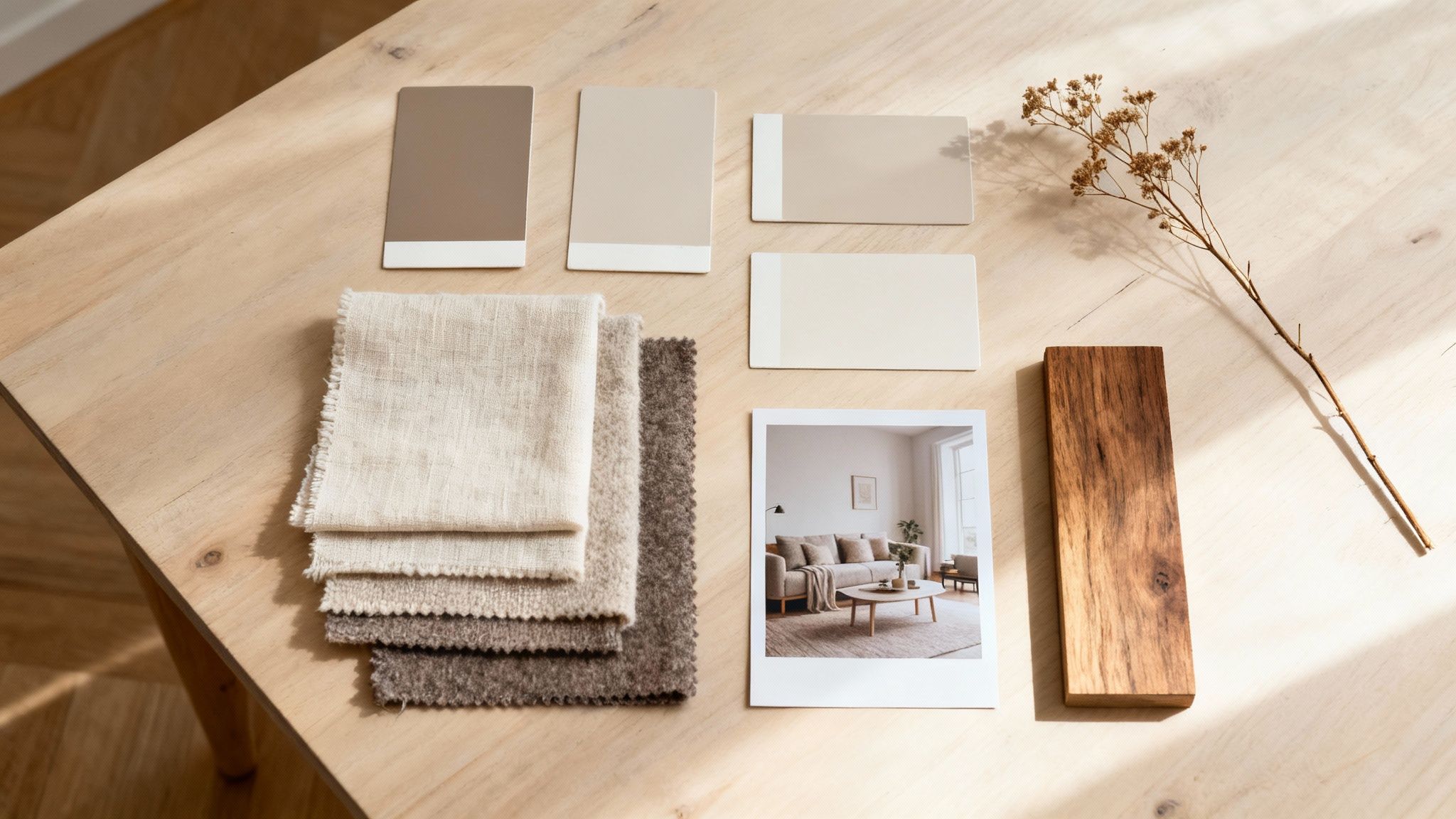
A well-crafted mood board is your best defense against impulse buys that don't quite fit. It becomes your North Star, guiding every decision from the paint on the walls right down to the finish on a single drawer pull, ensuring the final result feels cohesive and intentional.
How to Build Your Mood Board
Building a great mood board is a two-step dance: first, you cast a wide net for inspiration, and second, you edit with surgical precision. It’s in that second step, the refinement, that your true style really comes into focus.
Begin by just collecting images that give you a spark. Don't analyze it too much in the beginning; if a picture catches your eye and makes you feel something, save it. Digital tools like Pinterest are fantastic for this, but even a simple folder on your desktop works just fine.
Make sure you're gathering a good mix of elements:
- Color Palettes: Pin down the 3-5 core colors that will anchor the room.
- Textures and Materials: Go beyond color. Look for images of rich wood grain, chunky woven fabrics, cool marble, or buttery velvet.
- Furniture Silhouettes: What shapes are you drawn to? Save pictures of specific sofa arms, chair legs, or table profiles that you love.
- Lighting: Collect examples of fixtures that create the mood you’re after, whether it's a dramatic chandelier or a set of understated wall sconces.
Once you have a big pile of images, take a step back and play detective. What are the common threads? Are you consistently pinning rooms with clean lines, warm woods, or a particular shade of green? This is you uncovering your aesthetic's DNA.
From Inspiration to Cohesive Plan
The final, crucial step is to edit your collection down into a single, cohesive board. Be ruthless. If something feels like an outlier or clashes with the rest, let it go. Your goal is a visual summary that feels harmonious and clearly communicates the look and feel you want to achieve.
If you need a little help visualizing how different pieces fit together, browsing curated galleries can be a huge help. Looking at a collection of inspiring bedroom ideas, for instance, can show you how a color palette, furniture style, and lighting scheme can unite to create a specific mood.
This final, focused mood board is now your practical guide. It ensures every choice you make supports your vision and brings you one step closer to a space that feels authentically, wonderfully yours.
Bringing Your Vision to Life with AI
So, you’ve taken the quiz and your mood board is bursting with ideas. Fantastic. But now comes the part where most people get stuck: translating that beautiful, curated vision into your actual, physical room.
It’s one thing to love a coastal color palette on Pinterest, but how will it really look with your specific windows? With your unique lighting? This is the moment of uncertainty that can stall a project for months. But it’s also where a bit of modern technology can completely remove the guesswork.
Imagine being able to "test drive" your new home design style before you even think about buying a can of paint. That's exactly what AI-powered tools like RoomStudioAI were built for. Instead of just hoping for the best, you can see a photorealistic preview in seconds, giving you the confidence to finally move forward.
The whole process is surprisingly simple, designed to break down the barrier between your idea and the finished product.
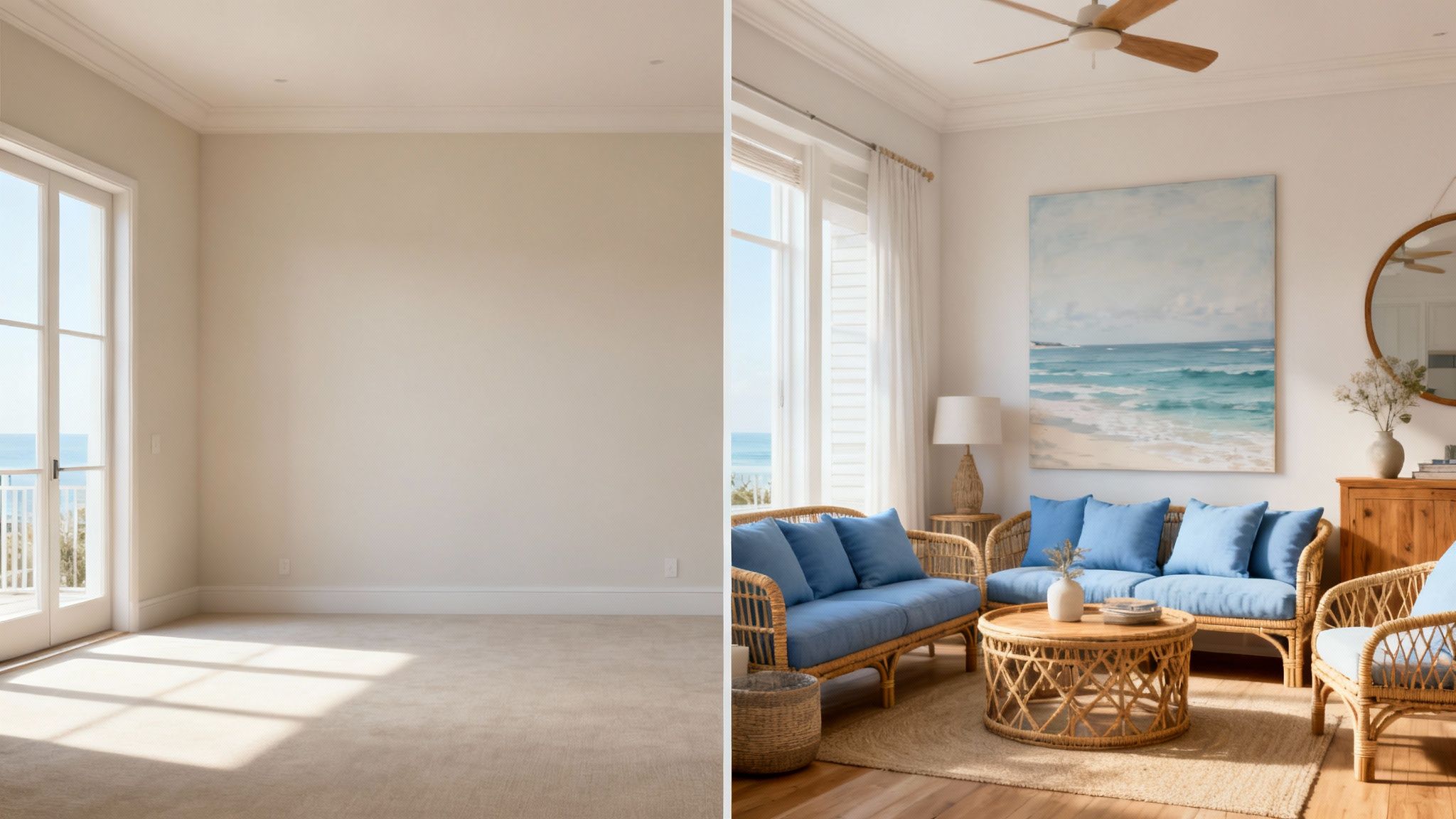
As you can see, the tool takes a photo of your real room and applies a completely new aesthetic, all while keeping the original layout and architecture intact. This makes the visualization feel incredibly accurate and personal to your home.
How AI Makes Design Risk-Free
The real magic of using an AI designer is seeing how a style interacts with your space. This isn't about pasting generic furniture into a picture; the technology intelligently analyzes your room's unique features.
- Architectural Integrity: It respects your existing layout, the placement of your windows, and any structural elements that make your room unique.
- Realistic Lighting: The AI considers your natural and artificial light sources, showing you how colors and materials will genuinely look throughout the day.
- Instant Variations: Feel like comparing styles? You can switch between "Japandi," "Minimalist," or "Luxury" in seconds, putting different aesthetics side-by-side.
This isn’t just a fun visualization tool; it's a powerful decision-making aid. It gives you the visual proof you need to commit to a design, saving you from costly mistakes and ensuring the final result is exactly what you hoped for.
By simply uploading a photo of your room, you can watch your newly defined style come to life. This instant feedback loop is a game-changer for anyone trying to answer the question, "What is my home design style?" because it makes the answer tangible and exciting.
It’s the perfect final step before you start the real work. You can explore dozens of styles and generate your own renders with a free AI interior design tool to see exactly how it works. This hands-on experience turns the abstract ideas from your mood board into a concrete, achievable vision for your home.
Your Top Design Style Questions, Answered
Alright, so you’ve started digging into the big question: "what's my home design style?" But as soon as you start getting answers, a bunch of new, practical questions usually follow. That's totally normal. Let's walk through some of the most common ones I hear so you can move forward with a clear head.
"But I Like More Than One Style! What Do I Do?"
This is probably the number one thing people worry about, and the answer is simple: that’s not a problem, it's a strength! Honestly, the most interesting and personal homes are almost always a mix of two or three styles. Just look at how "Modern Farmhouse" became so popular by blending the cozy, lived-in feel of rustic design with the clean, simple lines of modernism.
The trick is to find what connects the styles you love.
- Drawn to the clean slate of Minimalism but also crave the cozy textures of Rustic decor? You might be building a style we could call "Warm Minimalism."
- Love the over-the-top glamour of Hollywood Regency but also the free-spirited vibe of Bohemian? You can absolutely create a stunning "Boho-Glam" space.
Remember, you're not trying to perfectly recreate a textbook definition. You're curating a collection of things that feel like you. A mood board is your best friend here—it’s the perfect place to see how all those different elements can actually sing together in harmony.
"How Can I Pull This Off on a Budget?"
You don't need to gut your house or win the lottery to bring a new design style home. The secret is to start small and focus on the changes that give you the most bang for your buck.
Your most powerful and affordable tool is paint. It’s amazing how a new color on the walls can completely shift the energy of a room. After that, look to textiles and decor. New throw pillows, a great blanket, different curtains, or a statement rug can all introduce your new style without costing a fortune.
Once you have those basics in place, you can think about adding a single key piece of furniture, like a cool accent chair or a new coffee table. And never underestimate the power of thrift stores and a little DIY—they're fantastic ways to get a high-end look for less.
"How Do I Make Sure a Style Works With My Home's Architecture?"
This is a fantastic question, and a really important one. The most beautiful designs always feel connected to the home's "bones." Trying to force an ultra-modern, minimalist aesthetic into a historic Victorian with ornate crown molding is going to feel… off. It’s better to lean into styles that complement those traditional features, like Transitional or even Grandmillennial.
The best way to sidestep a clash is to see it before you commit. This is where a little bit of tech can be a lifesaver. Using a tool that understands your room's actual layout, lighting, and architectural details lets you see exactly how a style will look in your space. It takes all the guesswork out of the equation and helps you land on a look that feels both beautiful and completely at home.
Ready to stop guessing and start seeing? With RoomStudioAI, you can upload a photo of your own room and instantly see it reimagined in dozens of different styles. You can test-drive a new aesthetic without any risk and find the perfect look for your home in minutes. Try RoomStudioAI for free today and make your vision a reality.
Ready to redesign your space?
Try our AI interior design tool and see your room transformed in seconds.
Try Free Design

