In a world filled with constant noise and visual distraction, the appeal of a minimalist living room is stronger than ever. This design philosophy is more than just a stark aesthetic; it is a commitment to intentional living, where every piece of furniture and decor serves a distinct purpose, contributing to a sense of calm and order. A well-executed minimalist space elevates function, celebrates clean lines, and embraces uncluttered surfaces, creating an environment that is both visually restful and highly practical.
This guide moves beyond generic advice to provide a curated collection of specific, actionable modern minimalist living room ideas. We will deconstruct the core principles of this style, offering tangible strategies that combine timeless beauty with contemporary functionality. You will learn how to master monochromatic color palettes, select multi-functional furniture, and use negative space to make your room feel larger and more serene. We will also explore the impact of natural materials, the elegance of floating storage, and the art of displaying a few curated objects.
Each idea is designed to be a practical step toward creating a space that feels spacious, tranquil, and deeply personal. To help you envision these transformations in your own home, we will demonstrate how a tool like RoomStudioAI can instantly generate photorealistic designs, removing the guesswork from your redesign project. Prepare to transform your primary living area into a sophisticated sanctuary that truly reflects clarity and refined style.
1. Monochromatic Color Palettes
A monochromatic color palette is a foundational principle of modern minimalist design, utilizing a single color family in varying tones, shades, and tints to create a serene and unified space. This approach relies on simplicity to foster a sophisticated atmosphere, making a room feel larger, calmer, and more cohesive. By limiting the color spectrum to whites, grays, beiges, or even a muted single color, you eliminate visual clutter and allow form and texture to become the primary focus.
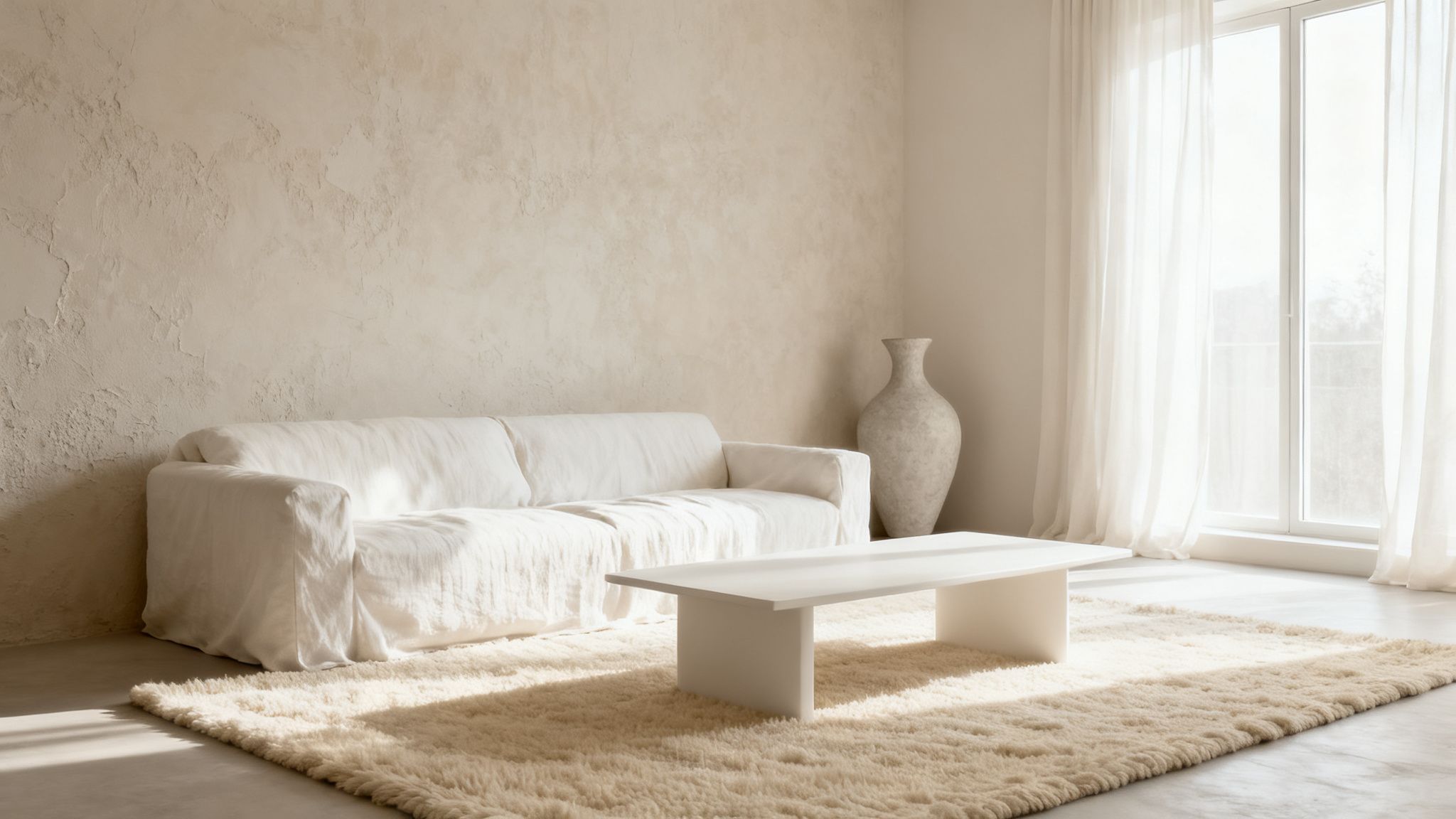
This method is highly effective for creating a tranquil retreat and is one of the most impactful modern minimalist living room ideas for achieving a high-end, gallery-like feel. It’s particularly well-suited for spaces where you want to emphasize architectural details or a few select pieces of furniture.
How to Implement a Monochromatic Palette
To prevent a single-color scheme from feeling flat or sterile, focus on introducing a rich variety of textures.
- Layer Diverse Textures: Combine different materials within your chosen color. For example, in an all-white room, pair a linen sofa with a wool rug, sheer curtains, a smooth ceramic vase, and a roughly plastered feature wall. This creates visual interest and depth without adding new colors.
- Incorporate Natural Warmth: Introduce natural wood elements, such as a light oak coffee table or a walnut side chair, to add warmth and prevent a neutral palette from feeling cold.
- Use Lighting Strategically: Plan your lighting to create dynamic shadows and highlights. An uplight on a textured wall or a sculptural floor lamp can transform the perception of a single color throughout the day.
Pro Tip: Before committing to paint or large furniture, visualize your monochromatic scheme using RoomStudioAI’s style filters. This allows you to test different tones and see how textures interact in your specific space, ensuring a balanced and engaging result.
2. Multi-Functional Furniture Solutions
Multi-functional furniture is a cornerstone of minimalist living, where every piece serves at least one purpose, if not several. This intelligent approach maximizes utility while minimizing the physical and visual footprint of your furnishings. By choosing items like storage ottomans, coffee tables with lift-tops, or modular sofas with hidden compartments, you can maintain clean lines and an open, uncluttered atmosphere essential to the minimalist philosophy.
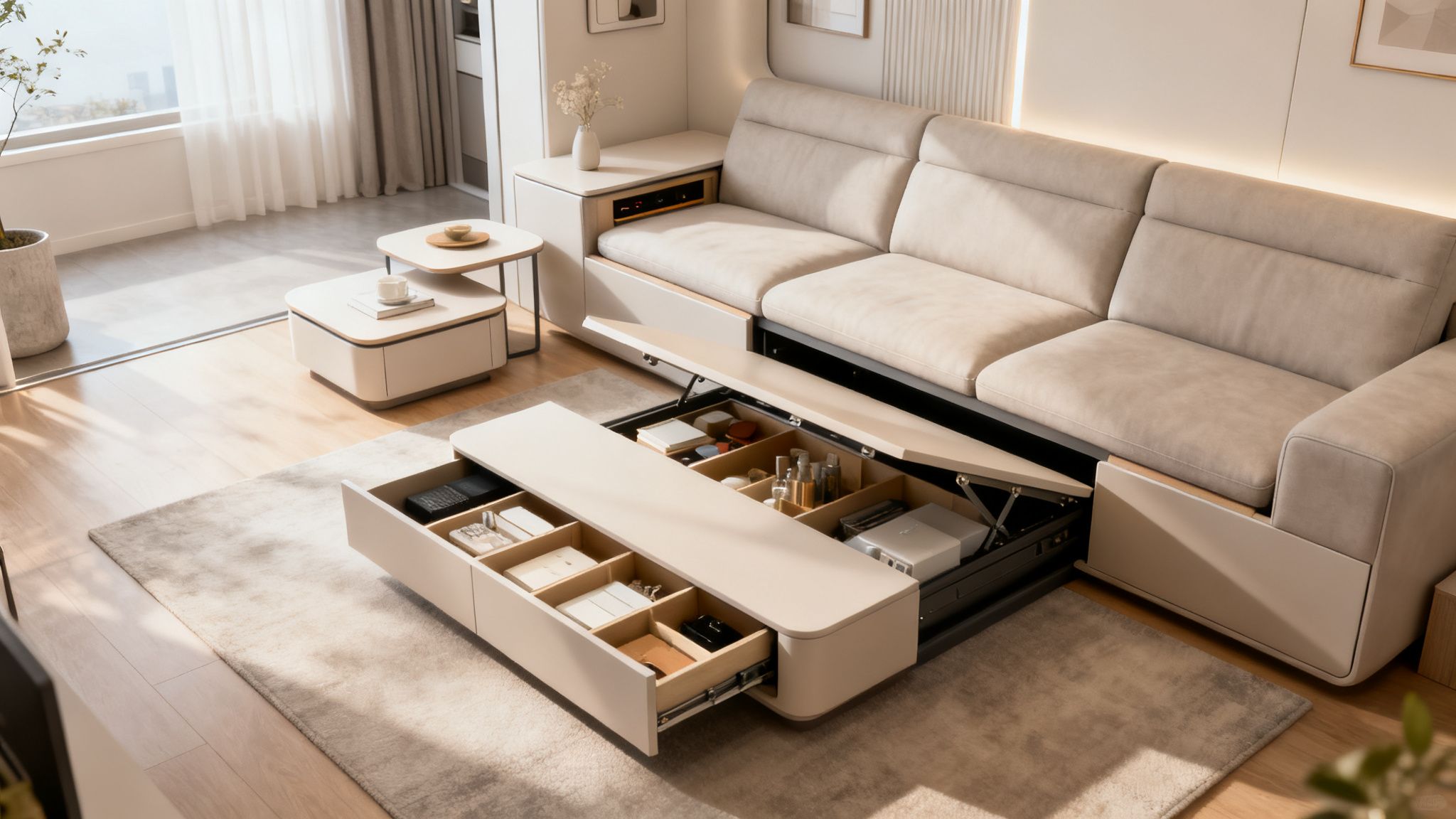
This strategy is one of the most practical modern minimalist living room ideas, particularly for smaller spaces or anyone aiming to live with less. It champions the idea that your home should be both beautiful and highly efficient, ensuring that every object justifies its presence through its usefulness.
How to Implement Multi-Functional Furniture
To integrate these smart solutions seamlessly, focus on quality and purpose, ensuring each piece truly enhances your daily life.
- Analyze Your Activities: Map out your daily routines in the living room. Do you work from the sofa, host overnight guests, or need a place to store blankets? Choose furniture that directly addresses these needs, like a console table that expands for dining or a sofa bed.
- Prioritize Quality and Modularity: Invest in well-made pieces that will withstand daily use in their various functions. Modular systems, like those from USM Haller or String, can adapt and grow with your needs, offering a sustainable long-term solution.
- Keep Storage Accessible: Ensure that any hidden storage is easy to access and stays organized. A beautiful storage bench is less useful if it becomes a disorganized catch-all. Use dividers or bins inside to maintain order.
Pro Tip: Before buying, use RoomStudioAI to place virtual multi-functional furniture in your layout. This helps you check clearances and visualize how a piece will affect the room's flow, ensuring it solves more problems than it creates.
3. Negative Space and Breathing Room
Negative space is a core tenet of minimalist design, referring to the intentional use of empty areas around and between furniture and decor. This principle treats emptiness not as a void to be filled but as an active design element that brings balance, calm, and focus to a room. By strategically leaving floors and walls uncluttered, you allow each carefully selected piece to make a stronger statement and enhance the overall sense of tranquility.
This approach is one of the most effective modern minimalist living room ideas for creating a high-end, gallery-like feel. It is especially powerful in spaces where you want to highlight architectural features or a single piece of statement art, as the surrounding emptiness naturally draws the eye toward it.
How to Implement Negative Space
Embracing negative space is more about thoughtful curation and subtraction than it is about emptiness.
- Follow the 40-60 Rule: Aim to use only about 40% of your visual space for furniture and objects, leaving the remaining 60% open. This includes wall surfaces and floor area.
- Establish Clear Pathways: Arrange furniture to create unobstructed sightlines and clear, generous walkways. This immediately makes a room feel more open and organized.
- Choose One Focal Point: Instead of decorating every wall, select one primary focal point, like a piece of art or a fireplace, and let the surrounding empty space amplify its impact. Avoid placing multiple competing items nearby.
Pro Tip: Use RoomStudioAI’s 'empty room' feature to start with a blank slate. This helps you visualize the powerful impact of adding just a few essential pieces and allows you to appreciate how negative space can completely transform your living room’s atmosphere.
4. Natural Materials and Warm Textures
Incorporating natural materials is a cornerstone of modern minimalist living room ideas, serving to balance the clean lines and open spaces with organic warmth and tactile interest. This approach uses elements like wood, stone, linen, wool, and jute to create a grounded, inviting atmosphere. By focusing on raw and authentic textures, you introduce depth and character without relying on excessive ornamentation or color.
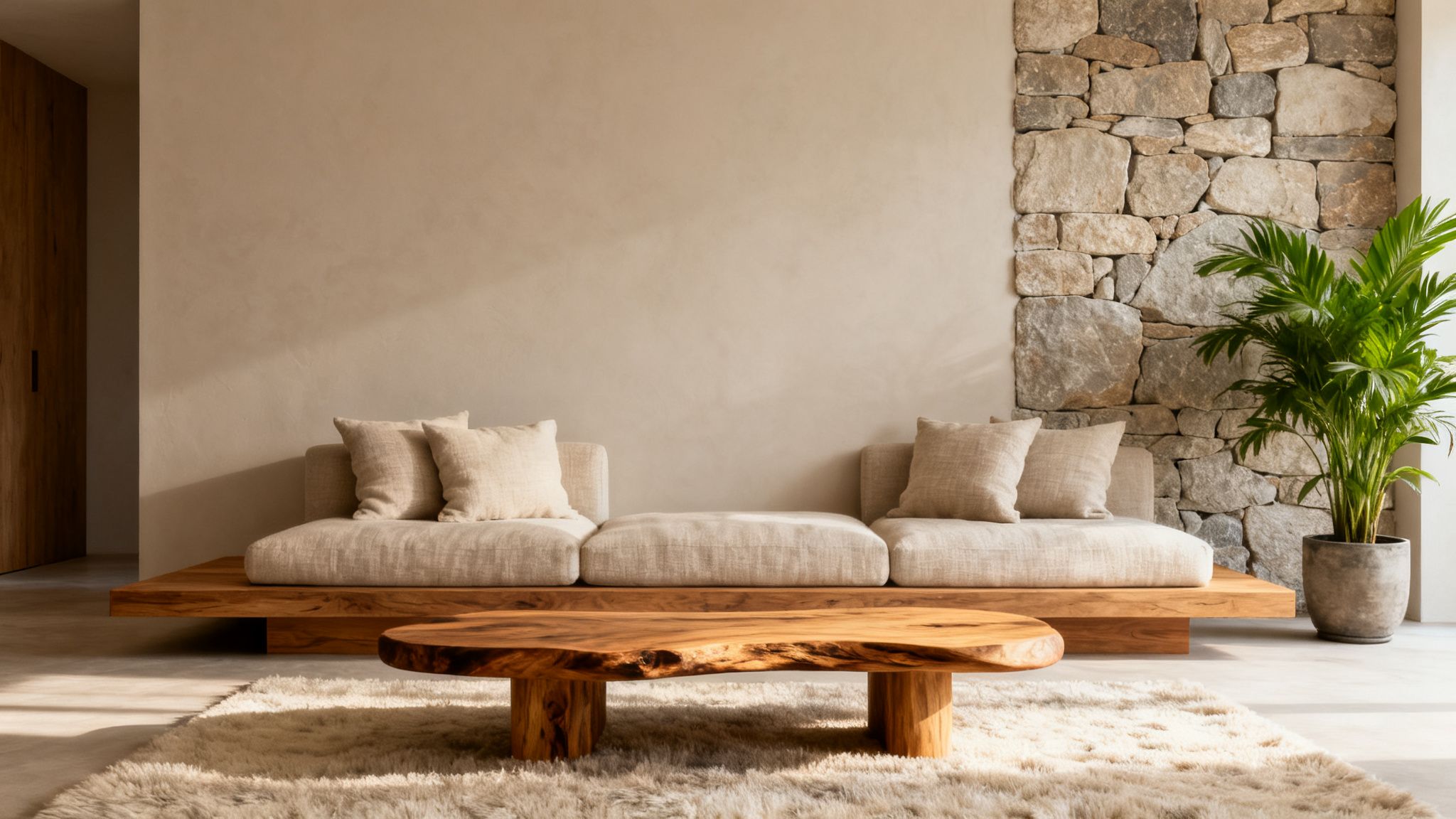
This method, heavily influenced by Scandinavian and Japandi design, prevents minimalism from feeling cold or impersonal. It is ideal for anyone looking to create a serene sanctuary that feels connected to the natural world while maintaining a sophisticated, uncluttered aesthetic.
How to Implement Natural Materials and Textures
The key to success is layering different organic elements thoughtfully to build a cohesive and sensory-rich environment.
- Select a Primary Material: Start with a dominant natural element to anchor the space. This could be light oak hardwood flooring, a rugged stone fireplace surround, or a concrete accent wall.
- Layer Complementary Textures: Introduce two or three other natural materials in smaller doses. Pair a linen-upholstered sofa with a hand-knotted wool rug and woven jute baskets for storage.
- Embrace Imperfection: Allow natural materials to show their true character. Let the unique grain of a live-edge wood table or the subtle variations in a stone wall become focal points. Opt for matte or semi-matte finishes over high-gloss to maintain authenticity.
- Incorporate Greenery: Living plants are the ultimate natural accessory, adding a touch of life, color, and sculptural form that enhances the organic theme.
Pro Tip: Use RoomStudioAI’s material swap feature to test how different woods, stones, and fabrics look together. This helps you find the perfect balance of warmth and texture before making any final purchasing decisions.
5. Floating Furniture and Wall-Mounted Storage
Floating furniture and wall-mounted storage are quintessential modern minimalist living room ideas that create visual lightness and maximize usable floor space. By mounting pieces like media consoles, shelves, and even seating directly to the wall, you create an illusion of weightlessness. This design approach reduces physical and visual bulk, making a room feel more open, airy, and uncluttered, while maintaining clean, uninterrupted sightlines.
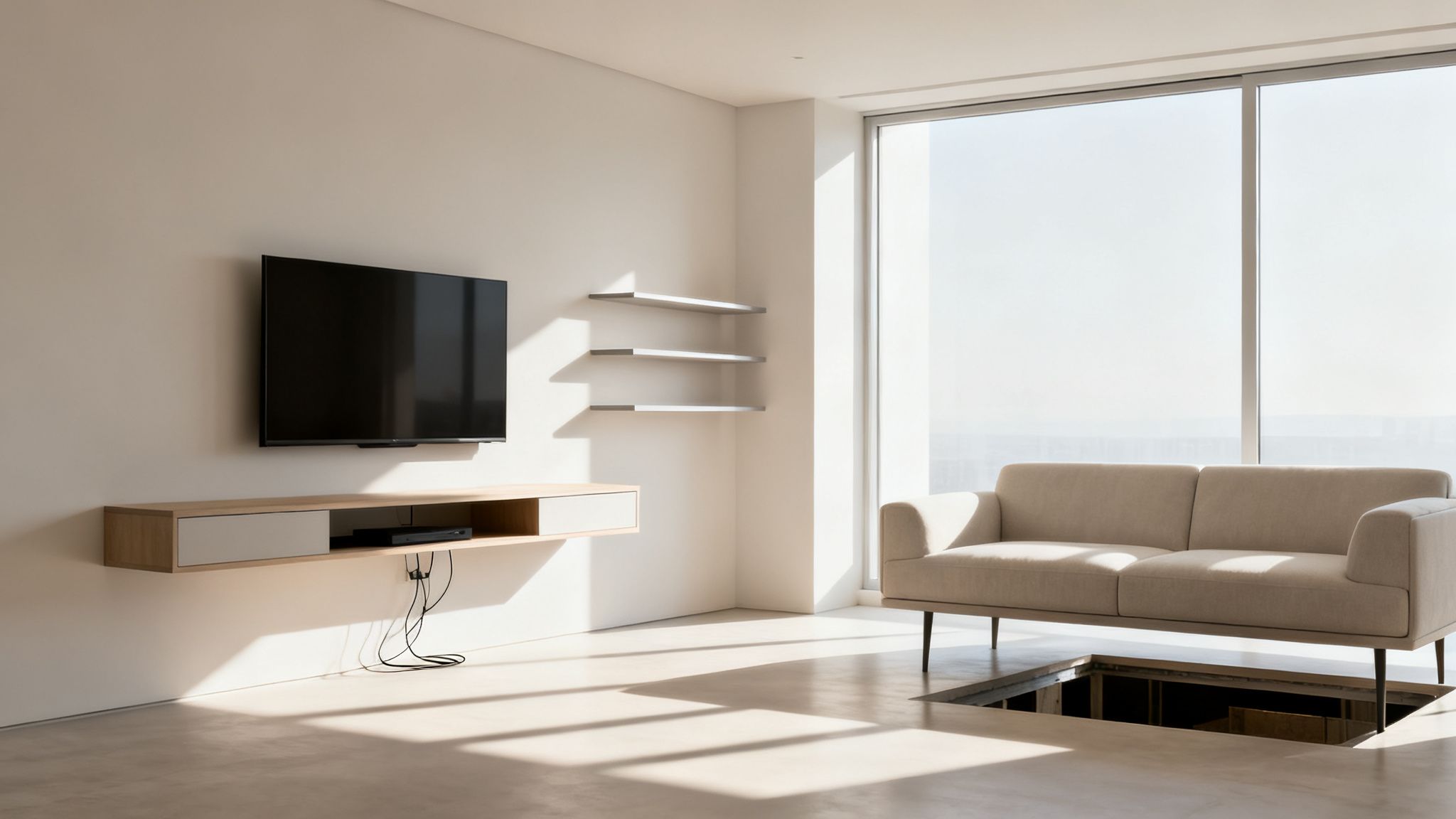
This method is particularly effective in smaller living rooms where every square inch counts, but it also brings a sleek, architectural quality to larger spaces. It elevates storage from a purely functional necessity to a deliberate design element, freeing up the floor for a more spacious and intentional layout.
How to Implement Floating Furniture
Proper installation is key to achieving a secure and seamless look. Focus on both the structural integrity and the aesthetic balance.
- Assess Wall Structure: Before purchasing or installing, ensure your walls can support the intended load. Drywall may require special anchors or reinforcement, while masonry provides a solid base. Consult a professional if you are uncertain.
- Conceal Cables and Wires: Plan for cable management during installation. A floating media unit is most effective when wires for TVs and other electronics are hidden within the wall or a discreet conduit for a truly clean look.
- Balance with Grounded Pieces: For visual harmony, mix floating elements with grounded furniture. Pair a wall-mounted entertainment center with a low-profile sofa that rests firmly on the floor to create a balanced composition.
Pro Tip: Visualize the impact of floating furniture on your room’s perceived size and flow with RoomStudioAI. You can test different heights and configurations for wall-mounted storage to find the perfect placement that enhances spaciousness without sacrificing practicality.
6. Decluttering and Curated Collections
Decluttering is more than just tidying up; it is the deliberate process of removing unnecessary items to allow meaningful, functional, or beautiful objects to take center stage. Rather than advocating for empty spaces, this approach champions intentional ownership. Every item in your living room should serve a clear purpose or bring you joy, creating a curated collection that reflects your personal values and refined taste.
This foundational practice is one of the most transformative modern minimalist living room ideas because it creates mental and physical space. It’s perfect for anyone feeling overwhelmed by their surroundings and looking to cultivate a more serene, purposeful, and personalized home environment.
How to Implement Decluttering and Curation
To successfully declutter, adopt a systematic approach that focuses on intention rather than deprivation. This ensures the process is sustainable and rewarding.
- Start Small: Tackle one category at a time, such as books, DVDs, or decorative objects. This prevents overwhelm and builds momentum for larger tasks.
- Apply a Clear Test: For each item, ask yourself: “Does this serve a functional purpose, or does it genuinely spark joy?” If the answer is no, it’s time to let it go.
- Establish a ‘One-In, One-Out’ Rule: To maintain your newly decluttered space, commit to removing one item for every new one you bring into your home. This prevents clutter from accumulating again.
Pro Tip: Not sure where to begin? Use RoomStudioAI’s “remove clutter” feature on a photo of your living room. This visualization can provide the motivation needed to start by showing you the potential of a clean, curated space.
7. Minimalist Lighting Design
Minimalist lighting design shifts the focus from ornate fixtures to the quality and purpose of light itself. This approach uses strategic, often unobtrusive, systems that provide functionality while maintaining visual simplicity. Modern minimalist lighting emphasizes clean lines, hidden sources, and purposeful illumination that highlights architecture and form rather than adorning the space with decorative hardware. It often features recessed lights, simple pendants, or sculptural pieces that double as art.
This method is crucial for creating ambiance and function without adding clutter, making it one of the most effective modern minimalist living room ideas. It ensures the space feels intentional and serene, with light enhancing the room's best features rather than competing for attention.
How to Implement Minimalist Lighting Design
Proper lighting should be planned early, not added as an afterthought. Layering different sources is key to creating a versatile and inviting atmosphere.
- Layer Multiple Light Sources: Combine ambient, task, and accent lighting. Use recessed ceiling lights for overall illumination, a sleek floor lamp with a thin profile for reading, and integrated LED strips in shelving to highlight objects.
- Choose Fixtures with Clean Lines: Opt for lighting with simple geometric forms. Think of a single pendant with a clean dome shape over a seating area, or track lighting with minimalist, adjustable fixtures. Hide all cords and cables for a seamless look.
- Maximize Natural Light: Design your layout to take full advantage of windows and skylights. Use sheer, unobtrusive window treatments that diffuse light without blocking it, making daylight your primary source during the day.
Pro Tip: Use RoomStudioAI’s lighting features to experiment with different fixture placements and light temperatures. Visualizing how warm (2700K) or cool light affects your minimalist palette can help you perfect the mood before making any installations.
8. Open Floor Plans and Spatial Flow
An open floor plan is a cornerstone of minimalist spatial design, eliminating unnecessary walls to create a single, expansive living area. This architectural approach merges zones like the living room, dining area, and kitchen into one cohesive space, maximizing natural light and enhancing the sense of spaciousness. It fosters a feeling of connection and fluidity, allowing for flexible and intuitive movement throughout the home.
This layout is one of the most effective modern minimalist living room ideas for creating an airy, light-filled environment. It is ideal for those who entertain frequently or prefer a multifunctional living area that adapts to different needs while maintaining a clean, uncluttered aesthetic.
How to Implement an Open Floor Plan
Successfully designing an open-concept space relies on creating distinct functional zones without physical barriers.
- Define Zones with Furnishings: Use large area rugs to anchor seating groups and define the living room perimeter. Arrange sofas and chairs to create conversational hubs that are psychologically separate from the dining or kitchen areas.
- Maintain Visual Cohesion: Ensure a consistent flow by using the same flooring and wall color throughout the entire open space. This creates a unified backdrop that ties all the different zones together.
- Keep Sightlines Clear: Opt for low-profile furniture, such as a sofa with a low back or a minimalist media console, to avoid obstructing views across the room. This preserves the open and airy feel of the layout.
Pro Tip: Before moving furniture, use RoomStudioAI to map out different layouts. You can test various zone arrangements to optimize traffic flow and ensure each area feels both distinct and connected, creating a perfectly balanced open-plan living space.
9. Limited Color Accents and Strategic Contrast
A sophisticated minimalist approach involves maintaining a predominantly neutral palette while introducing one or two carefully selected accent colors in small, strategic doses. This method creates visual interest and injects personality without disrupting the calm, uncluttered aesthetic. The key is using color as a deliberate focal point rather than a widespread theme, allowing accents to appear in artwork, a single piece of furniture, or textiles.
This technique is one of the most effective modern minimalist living room ideas for those who find purely monochromatic schemes too stark. It allows for personal expression while upholding core principles like simplicity and intentionality, preventing the space from feeling impersonal.
How to Implement Limited Color Accents
To successfully integrate accent colors, the "less is more" rule is paramount. The goal is to create punctuation, not noise.
- Follow the 60-30-10 Rule (Modified): Dedicate about 60% of your room to a dominant neutral color (like white or gray), 30% to a secondary neutral (like light wood or beige), and reserve just 5-10% for your chosen accent color. This ensures the accent remains impactful without overwhelming the space.
- Create a Visual Triangle: Distribute your accent color in at least three different locations and at varying heights to guide the eye through the room. For example, a single blue cushion on the sofa, a similarly hued vase on a bookshelf, and a piece of art across the room create a balanced, cohesive look.
- Choose High-Impact Pieces: Let your accent color shine through high-quality, statement pieces. A single cognac leather armchair in an all-gray room or a large, vibrant abstract painting can serve as the sole source of bold color, creating a powerful and refined focal point.
Pro Tip: Not sure which accent color will work best with your neutral base? Use RoomStudioAI’s design variations to instantly test different color pops-from a bold red cushion to a serene green plant-and see the impact before you commit.
10. Technology Integration and Hidden Systems
True minimalism extends beyond visual aesthetics to encompass functionality. Technology integration involves strategically incorporating modern systems like audio, climate control, and smart home features so they remain invisible or seamlessly blend into the environment. This approach preserves clean lines and an uncluttered atmosphere while delivering the convenience of contemporary living, hiding cables, screens, and hardware within furniture or walls.
This method is one of the most sophisticated modern minimalist living room ideas, ideal for those who desire a high-tech home without sacrificing a serene, distraction-free ambiance. It supports a lifestyle where technology serves you quietly in the background rather than dominating the space with visible hardware.
How to Implement Hidden Technology
Successful integration requires careful planning, often during the initial design or renovation phase, to ensure all systems are discreet yet accessible.
- Plan Cable Management Early: Design built-in solutions for wires. Integrate cable conduits within walls or select furniture, like media consoles from Design Within Reach, that has dedicated channels to keep cords completely out of sight.
- Choose Wireless and Multi-Function Devices: Opt for wireless solutions like in-ceiling speakers (e.g., Sonos) and furniture with built-in wireless charging pads to eliminate visible clutter. A single smart home hub can replace multiple remotes and controls.
- Conceal Screens and Hardware: Hide a television behind a retractable panel or custom cabinetry that matches the wall. Store routers, speakers, and other devices inside ventilated cabinets to maintain a clean look.
Pro Tip: Use RoomStudioAI to plan your layout before construction. Visualizing where to place integrated speakers, hidden outlets, and smart controls helps ensure they are perfectly positioned for both function and aesthetics, preventing costly changes later.
Modern Minimalist Living Room — 10-Point Comparison
| Item | Complexity / Process 🔄 | Resource Requirements ⚡ | Expected Outcomes 📊 | Ideal Use Cases 💡 | Key Advantages ⭐ |
|---|---|---|---|---|---|
| Monochromatic Color Palettes | Low — simple selection and coordination of tones | Low–Moderate — paint/finishes, lighting tweaks | Calm, cohesive, visually spacious | Galleries, small rooms, modern minimalist interiors | Timeless cohesion; reduces decision fatigue |
| Multi-Functional Furniture Solutions | Medium — choose and integrate versatile pieces | Moderate–High — investment in quality, possible custom modules | Fewer pieces, higher functionality, better space use | Small apartments, renters, multi-use rooms | Maximizes space and utility; cost-effective long term |
| Negative Space and Breathing Room | Low — discipline and planning to remove clutter | Low — time and editing, minimal purchases | Strong perception of space, visual calm, improved flow | Galleries, luxury living rooms, minimalist retreats | Emphasizes focal pieces; reduces visual stress |
| Natural Materials and Warm Textures | Medium — sourcing and balanced layering required | High — quality materials and maintenance (sealing/oiling) | Warm, tactile, durable interiors with organic character | Family homes, long-term renovations, Japandi/Scandi schemes | Adds warmth, sustainability, ages gracefully |
| Floating Furniture & Wall-Mounted Storage | High — structural assessment and secure installation | High — anchors, custom hardware, professional install | Airier rooms, better floor access, cleaner sightlines | Custom builds, modern apartments, spaces needing floor clearance | Enhances perceived space; modern, uncluttered aesthetic |
| Decluttering and Curated Collections | Medium — emotional effort and ongoing maintenance | Low — time and organization systems | Reduced decision fatigue, clearer personal expression | Any home, staging, lifestyle resets | Promotes intentional living; easier upkeep |
| Minimalist Lighting Design | Medium–High — requires planning and layering | Moderate–High — fixtures, controls, possible rewiring | Flattering ambience, highlighted architecture, energy savings | Renovations, new builds, galleries, hospitality | Clean visual profile; flexible mood control |
| Open Floor Plans & Spatial Flow | High — may need structural changes and planning | High — demolition, finishes, HVAC/lighting adjustments | Seamless zones, improved light distribution, flexible use | Lofts, new builds, homes prioritizing social spaces | Increases perceived volume; adaptable layouts |
| Limited Color Accents & Strategic Contrast | Low — careful color selection and placement | Low — moveable accents, artwork, textiles | Controlled focal points and personality without clutter | Rentals, staged homes, those who want subtle flair | Adds interest while preserving minimalist calm |
| Technology Integration & Hidden Systems | High — integrated planning and specialist installation | High — smart devices, concealed hardware, maintenance | Seamless functionality with minimal visual impact | Tech-forward homes, luxury renovations, media rooms | Maintains clean aesthetics while enhancing convenience |
From Inspiration to Implementation: Design Your Minimalist Space Today
As we’ve explored, crafting a modern minimalist living room is less about adhering to a rigid set of rules and more about embracing a philosophy of intentionality. The journey from a cluttered, overwhelming space to a serene, functional sanctuary is built on a foundation of deliberate choices. By moving beyond mere inspiration and into thoughtful implementation, you can create an environment that not only looks stunning but also profoundly enhances your daily life.
The core principles we've discussed serve as your blueprint. Remember that a successful minimalist design is a harmonious blend of form and function. It's about making every single element count.
Key Takeaways for Your Minimalist Transformation
Let’s distill the most crucial concepts into actionable takeaways:
- Foundation First: Begin with the essentials. A monochromatic color palette creates a cohesive and calming backdrop, while prioritizing negative space allows each piece of furniture and decor to breathe and make an impact. This isn't about emptiness; it's about clarity.
- Functionality is Paramount: Select furniture that works as hard as you do. Multi-functional pieces, like storage ottomans and convertible coffee tables, along with floating furniture, maximize floor space and reduce visual clutter. This approach ensures your room is as practical as it is polished.
- Curate with Intention: Minimalism is not deprivation. It is the art of curation. This applies to your possessions through rigorous decluttering and to your decor by using limited color accents and natural materials to add warmth, personality, and texture without overwhelming the senses.
Moving from Concept to Reality
The true value of mastering these modern minimalist living room ideas lies in their ability to transform your home into a haven of calm and order. A well-designed minimalist space reduces stress, promotes focus, and frees you from the maintenance of unnecessary belongings. It encourages a lifestyle where you are surrounded only by items that are useful, beautiful, or deeply meaningful.
The principles of strategic lighting, seamless technology integration, and creating an open spatial flow are not just design tricks; they are tools for improving your quality of life. By implementing these concepts, you are actively designing a more peaceful and organized existence. Your living room becomes more than just a room; it becomes a deliberate expression of your values and a supportive environment for the life you want to live. Don't be afraid to experiment. The most compelling minimalist interiors are those that reflect the unique personality of their inhabitants. Start small, be patient, and trust your instincts.
Ready to stop guessing and start visualizing? Take the uncertainty out of your design process with RoomStudioAI. Upload a photo of your current living room, select the "Modern Minimalist" style, and let our advanced AI generate stunning, photorealistic redesigns in seconds, tailored specifically to your space. See exactly how these ideas will look in your home before you commit to a single change by visiting RoomStudioAI today.
Ready to redesign your space?
Try our AI interior design tool and see your room transformed in seconds.
Try Free Design

