The world of interior design is vast, but finding a style that resonates with your personal aesthetic and lifestyle is key to creating a home you truly love. Modern design is not a single, monolithic look, but a broad philosophy rooted in clean lines, functional purpose, and a strong connection to architecture. This guide moves beyond generic advice to provide a practical, room-by-room blueprint for today's most impactful modern interior design ideas.
We will explore 12 distinct styles, breaking down the core principles of each. From the serene simplicity of Japandi and Scandinavian design to the bold, curated expression of Maximalism and Art Deco, this comprehensive roundup offers actionable steps for implementation. You will learn the specific materials, color palettes, and lighting techniques that define each aesthetic, empowering you to make confident design choices.
Whether you are planning a complete home renovation, staging a property, or simply refreshing a single room, this listicle will serve as your essential resource. We provide clear, structured insights designed to translate inspiration into reality. To bridge the gap between concept and execution, we will also demonstrate how to quickly visualize these styles in your own space using powerful tools like RoomStudioAI. This ensures that the vision you curate on paper translates perfectly into your physical environment, eliminating guesswork and bringing your ideal home to life with precision and style.
1. Minimalist Design
Minimalist design is more than an aesthetic; it's a philosophy centered on simplicity and intentionality. This approach strips a space down to its essential elements, championing the principle of "less is more." By focusing on clean lines, uncluttered surfaces, and a neutral color palette, minimalism creates a serene and purposeful environment that reduces visual noise and promotes mental clarity.
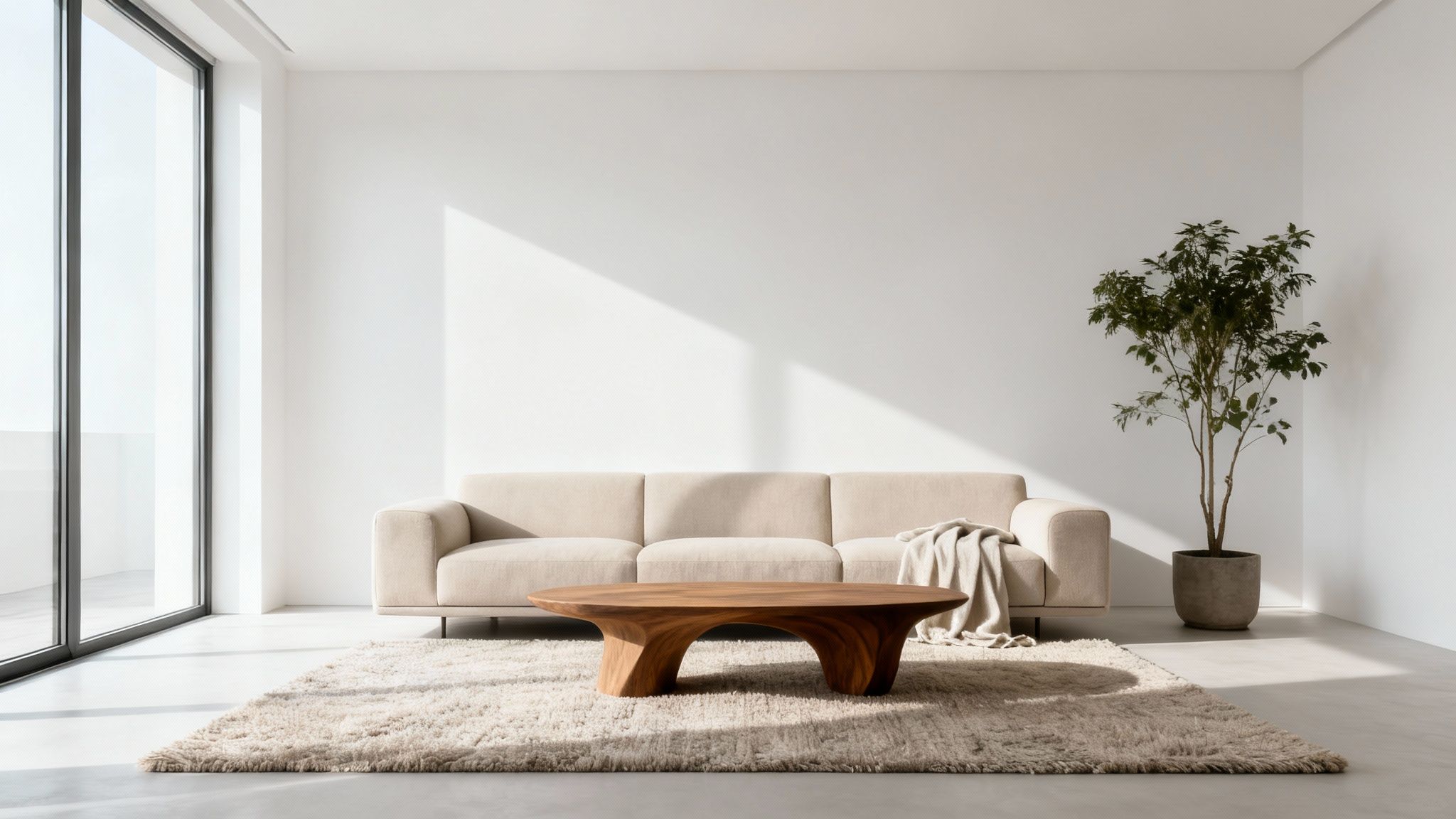
This style, heavily influenced by Japanese Zen philosophy and Scandinavian functionality, proves that a room's impact comes from its architecture and the quality of its contents, not the quantity. It's one of the most enduring modern interior design ideas because it prioritizes function and form equally.
Key Elements & Implementation
To successfully adopt minimalism, concentrate on a few core principles.
- Color Palette: Stick to a base of neutrals like white, beige, gray, and black. You can introduce subtle color through a single piece of art or natural elements.
- Materials: Emphasize natural materials to add warmth and texture. Think light woods, stone, concrete, and metals combined with soft textiles like linen, wool, and cotton.
- Furniture: Each piece must be functional and beautiful. Opt for high-quality, multifunctional furniture with simple silhouettes.
- Storage: The key to a clean aesthetic is clever, hidden storage. Integrated cabinets, handleless drawers, and built-in solutions keep clutter out of sight.
You can explore a wealth of inspiration and practical tips for a tranquil space with these minimalist living room ideas. Before committing, use a tool like RoomStudioAI to virtually empty your space and test the placement of a few key pieces, ensuring the layout feels balanced and breathable.
2. Industrial Design
Industrial design is a raw, utilitarian aesthetic that draws inspiration from old factories, warehouses, and urban lofts. It celebrates the building’s history by exposing structural elements like brick walls, concrete floors, and steel beams. This style is defined by its unpretentious, edgy character, creating a space that feels both spacious and grounded in its architectural bones.
Popularized by the loft living culture in cities like New York and London, this approach proves that beauty can be found in imperfection and utility. It remains one of the most compelling modern interior design ideas for its ability to blend ruggedness with sophisticated comfort, making it ideal for open-concept spaces and historic building conversions.
Key Elements & Implementation
To master the industrial look, focus on celebrating raw materials and functional forms.
- Color Palette: Use a neutral foundation of gray, black, and white, complemented by the warm, earthy tones of exposed brick and wood.
- Materials: Showcase raw and weathered materials. Think exposed brick, polished concrete, distressed wood, stainless steel, and cast iron. Balance these hard surfaces with soft textiles like leather, canvas, and wool.
- Furniture: Select furniture with a clear function and simple, strong lines. A mix of reclaimed wood pieces, metal-framed shelving, and comfortable, large-scale sofas works perfectly.
- Lighting: Lighting is crucial for softening the style’s hard edges. Opt for bare Edison bulbs, metal pendant lights, and track lighting to highlight architectural features.
You can find more inspiration to create an authentic urban retreat with these industrial living room ideas. Before sourcing materials, use a tool like RoomStudioAI to visualize how different textures like brick and concrete will interact in your space, ensuring the final look is balanced and inviting.
3. Japandi Design
Japandi design masterfully blends Japanese minimalism with Scandinavian functionality, creating a serene and purposeful hybrid style. This approach harmonizes the rustic modern warmth of Scandinavian design with the timeless elegance of Japanese aesthetics. The result is a space that feels both sophisticated and cozy, emphasizing clean lines, natural materials, and a deep appreciation for craftsmanship and simplicity.
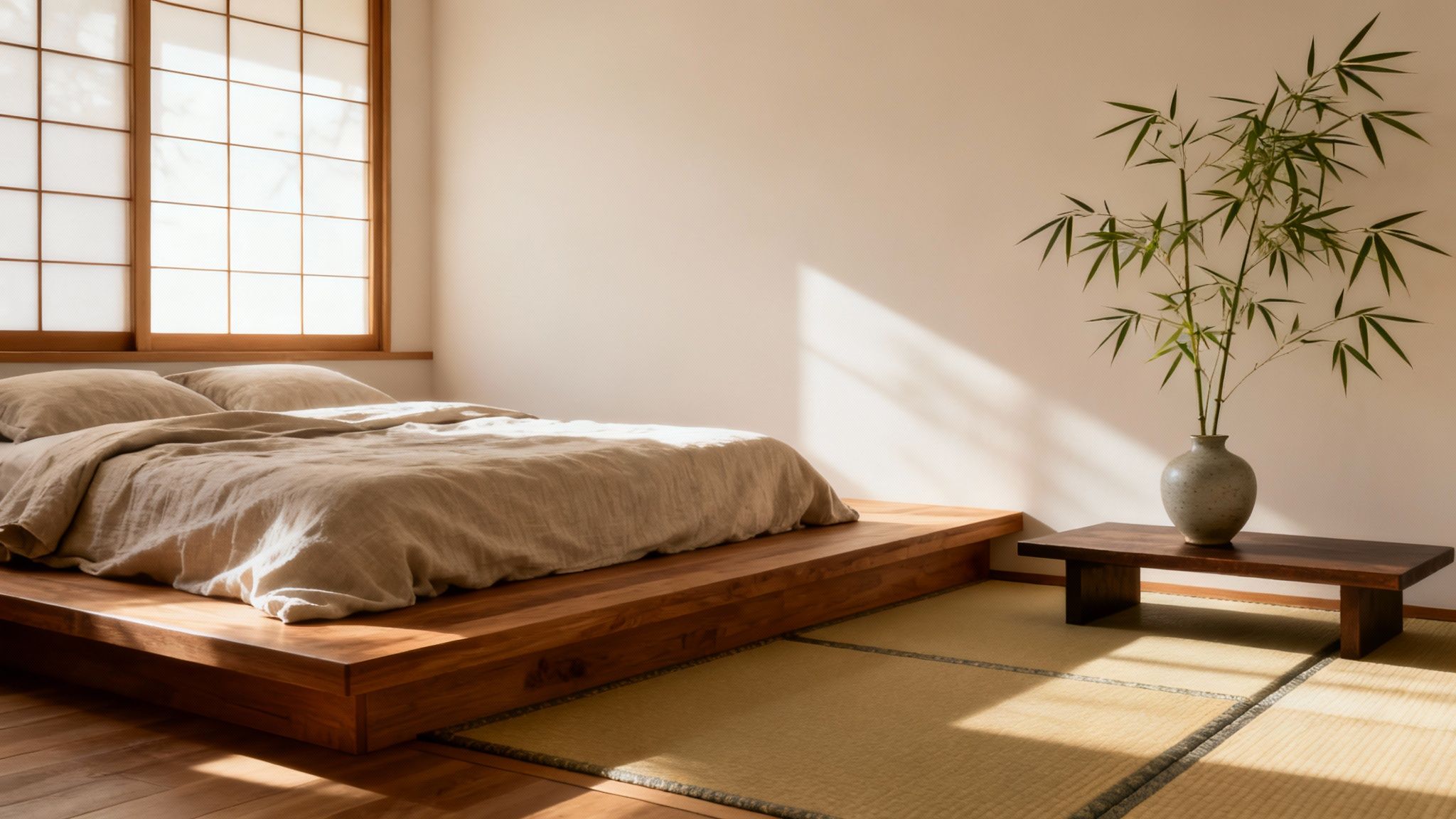
This fusion of two design philosophies has become one of the most sought-after modern interior design ideas for its focus on creating a tranquil, uncluttered, and highly functional living environment. It celebrates the beauty of imperfection, known as wabi-sabi in Japan, and the cozy contentment of hygge from Scandinavia, proving that a home can be both a sanctuary and a practical living space.
Key Elements & Implementation
To bring the balanced essence of Japandi into your home, focus on a few key principles.
- Color Palette: Use a muted and earthy color scheme. Combine the warm, neutral tones of Scandinavian design with the richer, natural hues found in Japanese interiors, such as soft beige, cream, oatmeal, and charcoal, accented with pale greens or blues.
- Materials: Prioritize natural, sustainable materials. Think light-toned woods like oak and maple paired with darker woods like walnut or stained bamboo. Complement these with textured materials like linen, rattan, wool, and handmade ceramics.
- Furniture: Select pieces that are both functional and beautifully crafted. Opt for low-profile furniture with clean lines and organic shapes. Quality is paramount, so choose well-made items that are built to last.
- Nature & Simplicity: Incorporate greenery through simple, elegant plants like bamboo or bonsai. Embrace the concept of negative space by keeping decor minimal, allowing each carefully chosen object to stand out and be appreciated.
For a deeper dive into creating this serene atmosphere, discover these Japandi living room ideas. You can experiment with this style risk-free by using a tool like RoomStudioAI to apply Japandi presets and visualize how the balance of light woods and mindful simplicity will transform your room.
4. Maximalist Design
Maximalist design is a vibrant and expressive philosophy that wholeheartedly embraces the "more is more" mantra. It stands in bold opposition to minimalism, celebrating an abundance of color, pattern, texture, and personal collections. This approach allows for deep personal expression, creating densely layered spaces through an eclectic yet curated combination of furniture, art, textiles, and decorative objects.
Fueled by a desire for personality-driven interiors, maximalism is one of the most dynamic modern interior design ideas gaining momentum. It transforms a room into a rich narrative of its inhabitant's life and passions. The style is often seen in character-filled spaces like Notting Hill townhouses and Brooklyn brownstones, where every object tells a story.
Key Elements & Implementation
To master maximalism without creating chaos, focus on curated layering and intentional combinations.
- Color Palette: Be bold but strategic. Choose three to four primary colors to create a cohesive story that ties disparate elements together. Jewel tones, deep saturates, and vibrant hues work well.
- Materials: Mix and match with abandon. Combine plush velvets with sleek metals, rough-hewn woods with smooth lacquers, and patterned wallpapers with rich, textured rugs. The goal is a tactile and visually stimulating experience.
- Furniture: Embrace variety in style and period. An ornate antique chest can coexist beautifully with a modern, sculptural armchair. Anchor the room with a few larger, perhaps more neutral, pieces to ground the space.
- Collections: Display your passions thoughtfully. Group similar items on shelves or create a gallery wall to make a strong visual statement rather than scattering objects randomly.
You can dive deeper into creating these vibrant spaces with these maximalist living room ideas. Before you start buying, use a tool like RoomStudioAI to experiment with layering different patterns, colors, and objects. This allows you to visualize the complex interplay and ensure your curated collection feels harmonious and intentional.
5. Modern Coastal Design
Modern coastal design reinterprets the classic beach house aesthetic for contemporary living. It merges the relaxed, airy feel of a seaside escape with the clean lines and sophistication of modern style. This approach focuses on creating light-filled, open spaces that feel connected to nature, using a palette inspired by sand, sea, and sky without resorting to overt nautical clichés.
This design style evokes the serene atmosphere of locales like the Hamptons or California coast properties. It achieves a balance between casual comfort and refined elegance, making it one of the most sought-after modern interior design ideas for creating a tranquil, vacation-like retreat at home.
Key Elements & Implementation
To bring the modern coastal look into your home, focus on a light and natural foundation.
- Color Palette: Start with a base of crisp white, off-white, and light neutrals. Introduce soft blues, gentle greens, and sandy beige as accent colors to evoke a waterside environment.
- Materials: Texture is essential. Layer natural materials like light-toned woods, rattan, jute, and linen. Incorporate elements like weathered wood, rope, or seagrass for an authentic, organic feel.
- Furniture: Choose pieces with simple, clean lines and a relaxed profile. Upholstered furniture in durable, light-colored fabrics like cotton or linen is ideal. Avoid heavy, ornate styles.
- Light: Maximize natural light with sheer window treatments. Keep the space open and uncluttered to allow light to flow freely, enhancing the airy and spacious ambiance.
For more inspiration, explore these coastal living room ideas to see how the style comes to life. You can use a tool like RoomStudioAI to experiment with coastal color palettes and furniture arrangements, ensuring the final look feels both refreshing and sophisticated before you commit.
6. Luxury Modern Design
Luxury modern design elevates contemporary aesthetics by blending them with high-end materials, bespoke furnishings, and exquisite craftsmanship. This approach focuses on quality over quantity, creating spaces that feel both opulent and thoughtfully curated. It moves beyond mere function to express refinement and sophistication through every detail, from premium finishes to unique art pieces.
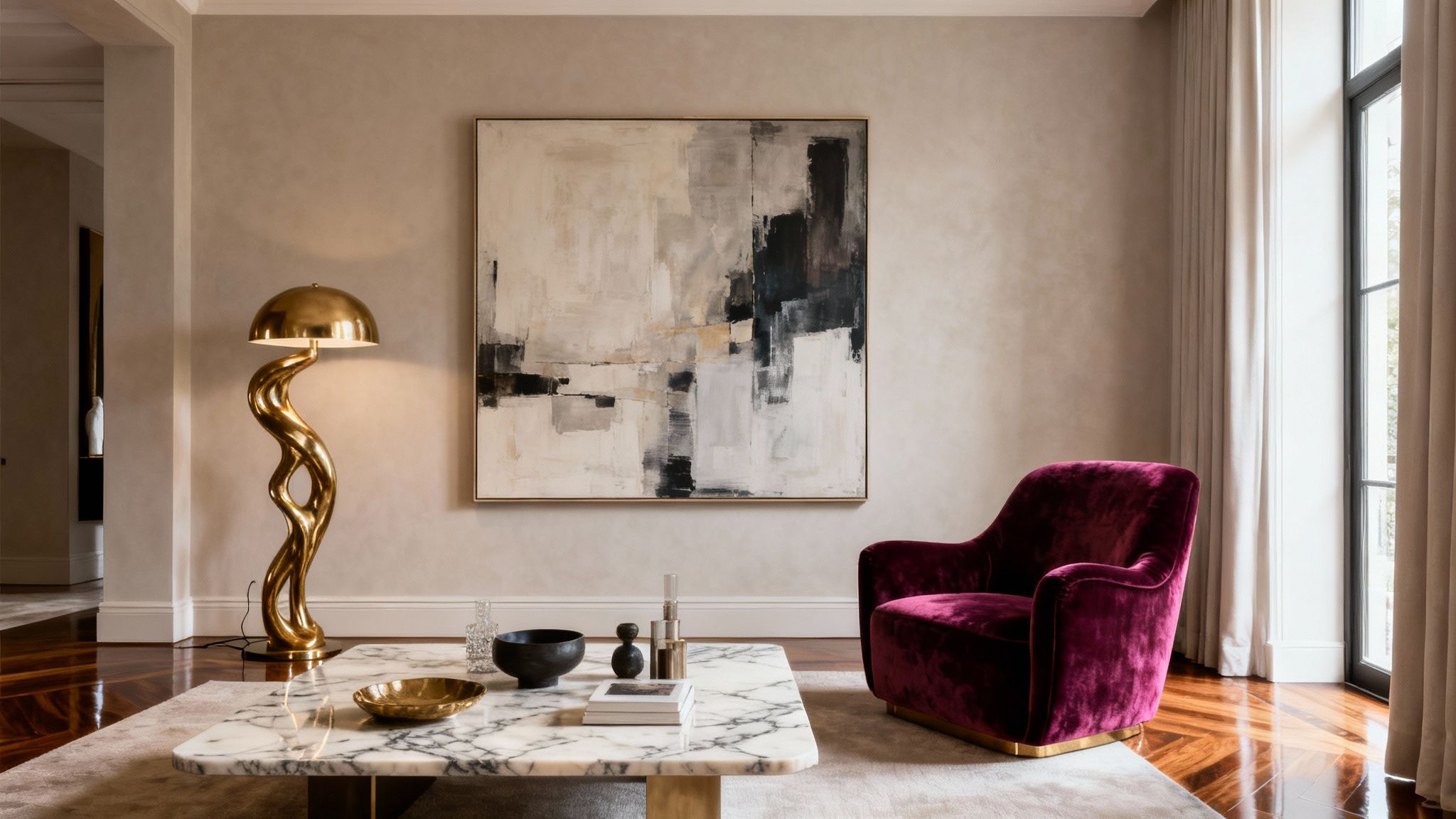
Often seen in high-rise penthouses and exclusive residences, this style is one of the most aspirational modern interior design ideas. It’s defined by an atmosphere of understated elegance, where every object has a purpose and a pedigree. The result is a space that is not just visually stunning but also deeply comfortable and personal.
Key Elements & Implementation
To achieve a luxury modern look, focus on curated, high-impact details.
- Color Palette: Use a sophisticated neutral base of ivory, charcoal, and taupe. Accent with deep jewel tones like emerald green or sapphire blue, and add warmth with metallic finishes like brass, gold, or bronze.
- Materials: Combine sumptuous textures. Think marble countertops, velvet upholstery, silk rugs, polished hardwoods, and high-gloss lacquered surfaces.
- Furniture: Invest in iconic, timeless pieces from renowned designers or custom-made furnishings. The emphasis is on sculptural forms, superior comfort, and impeccable construction.
- Focal Points: Create visual interest with large-scale contemporary art, a statement chandelier, or a collectible design object. These pieces should act as the soul of the room.
Before investing in high-value items, use a visualization tool to test different luxury layouts and material combinations. This ensures your final design is cohesive and perfectly tailored to your vision.
7. Rustic Modern Design
Rustic modern design masterfully blends the rugged charm of country living with the clean, sophisticated lines of contemporary aesthetics. This approach celebrates natural imperfections and raw materials, creating spaces that feel both grounded and refreshingly current. It balances weathered wood, stone, and organic textures with minimalist forms and modern functionality, resulting in an inviting and lived-in atmosphere.
This style has gained immense popularity as it offers a warm, comfortable alternative to stricter modernism without sacrificing elegance. It’s one of the most adaptable modern interior design ideas, seen in everything from Colorado mountain homes to Scandinavian country houses, proving its widespread appeal.
Key Elements & Implementation
To achieve a successful rustic modern look, focus on creating a harmonious contrast between the old and the new.
- Color Palette: Build upon a base of warm, earthy neutrals like cream, beige, brown, and deep gray. Introduce muted, nature-inspired colors such as forest green or terracotta for subtle depth.
- Materials: The soul of this style lies in its materials. Combine reclaimed or distressed wood and exposed stone with sleek metals like matte black steel or brushed brass. Integrate soft, durable textiles like leather, wool, and linen.
- Furniture: Pair substantial, rustic pieces like a live-edge wooden table with furniture that has clean, modern silhouettes. For instance, a worn leather armchair can be beautifully juxtaposed with a minimalist sofa.
- Lighting: Modern lighting is crucial to keep the space feeling current. Use sleek, industrial-style pendants or contemporary track lighting to illuminate and contrast with the rustic textures.
You can easily visualize this blend by using a design tool to test rustic elements, like a reclaimed wood accent wall, within your existing modern layout. This ensures the balance feels intentional rather than accidental before you commit to any changes.
8. Scandinavian Design
Scandinavian design is a beloved aesthetic rooted in simplicity, functionality, and a deep connection to nature. Originating from Nordic countries, it balances minimalism with a profound sense of warmth and coziness, often referred to as "hygge." This approach prioritizes light-filled, airy spaces and clean lines, creating an environment that is uncluttered, calming, and exceptionally livable.
Popularized by icons like Arne Jacobsen and democratized by brands such as IKEA, this style is one of the most enduring modern interior design ideas because it makes sophisticated design accessible. It proves that a practical, everyday living space can also be elegant and inspiring by focusing on craftsmanship and natural beauty.
Key Elements & Implementation
To achieve the inviting and functional feel of Scandinavian design, focus on these core components.
- Color Palette: Build upon a foundation of white, soft grays, and muted blues to maximize natural light. Introduce warmth with natural wood tones and add subtle contrast with black accents in lighting or hardware.
- Materials: Light-toned woods like ash, pine, and beech are central. Combine these with cozy, natural textiles such as wool, mohair, shearling, and linen to add layers of texture and comfort.
- Furniture: Select pieces with clean lines, expert craftsmanship, and a focus on function. Look for multi-purpose or elegantly simple furniture that promotes an uncluttered layout.
- Lighting & Accessories: Emphasize natural light by keeping window treatments minimal. Layer ambient, task, and accent lighting with simple, sculptural fixtures. Incorporate greenery and ceramics sparingly but meaningfully to add life and character.
You can easily visualize how to balance warmth and minimalism by using a design tool to experiment with different wood tones and textile combinations. This helps ensure your space feels both open and cozy, perfecting the Scandinavian aesthetic before you commit.
9. Art Deco Modern Design
Art Deco Modern revives the glamorous geometric aesthetic of the 1920s and reimagines it for contemporary spaces. This style celebrates symmetry, bold lines, and decorative richness through rich colors, strong patterns, and luxurious materials. It is a fusion of opulence and functionality, bringing a sense of drama and sophistication into the modern home.
This revival is gaining traction as homeowners seek distinctive aesthetic personalities that move beyond minimalism. It stands as one of the most expressive modern interior design ideas, perfect for those who want their space to make a bold statement with historical weight and refined glamour.
Key Elements & Implementation
To successfully integrate Art Deco Modern, focus on balancing its inherent boldness with contemporary restraint.
- Color Palette: Build upon a foundation of deep, rich colors like emerald green, sapphire blue, and burgundy. Contrast these with black, cream, and striking metallic accents such as gold, brass, and chrome.
- Materials: Embrace luxury. Use materials like velvet, lacquer, polished wood, marble, and glass. High-shine surfaces are essential to achieving the Art Deco look.
- Furniture: Select pieces with strong, streamlined silhouettes and geometric forms. Look for curved sofas, sunburst mirrors, and furniture with fluted or reeded details.
- Patterns: Incorporate iconic Art Deco motifs. Geometric patterns, fan shapes, chevrons, and stylized animal prints on textiles, wallpaper, or rugs add authentic character.
Before committing to its bold patterns, use RoomStudioAI to test a statement wallpaper or a striking geometric rug. This allows you to see how these powerful elements interact with your existing architecture and lighting, ensuring a balanced and sophisticated result.
10. Eco-Friendly Modern Design
Eco-friendly modern design is an approach that integrates sustainability into every aspect of a home's aesthetic and function. This philosophy prioritizes environmental responsibility by selecting renewable materials, energy-efficient systems, and non-toxic finishes. It proves that beautiful, contemporary spaces can be created while minimizing ecological impact, aligning a home's design with conscious, value-driven living.
This style moves beyond trends, focusing on longevity and health. Inspired by movements like cradle-to-cradle design and biophilia, it demonstrates that sustainability and sophisticated modern interior design ideas can coexist beautifully. The focus is on creating a space that is not only good for the planet but also healthier for its inhabitants.
Key Elements & Implementation
To successfully adopt an eco-friendly approach, focus on materials, consumption, and energy.
- Color Palette: Use low-VOC or zero-VOC paints in natural, earth-toned palettes. Think shades of green, brown, clay, and muted blues to reflect the natural world.
- Materials: Prioritize renewable resources like bamboo, cork, and reclaimed wood. Choose textiles made from organic cotton, linen, hemp, or recycled fibers.
- Furniture: Invest in high-quality, durable furniture made from sustainable sources or opt for vintage and secondhand pieces to reduce waste and production demand.
- Energy Efficiency: Maximize natural light to reduce reliance on artificial lighting. Use LED bulbs, and select energy-efficient appliances to lower your home's carbon footprint.
You can virtually test how sustainable materials like reclaimed wood flooring or cork walls will look in your space using a tool like RoomStudioAI. This allows you to visualize the aesthetic impact of eco-conscious choices before committing to them, ensuring the final design is both beautiful and responsible.
11. Warm Modern Design
Warm modern design offers a compelling bridge between the starkness of pure minimalism and the coziness of traditional styles. This approach softens the clean lines and open spaces of contemporary architecture with an inviting palette of warm materials, rich textures, and earthy colors. It’s a design philosophy that prioritizes comfort and livability without sacrificing modern simplicity, creating spaces that feel both sophisticated and welcoming.
Popularized by designers like Amber Lewis, this style proves that modern spaces can be deeply personal and comfortable. It swaps the cool, sterile elements often associated with modernism for materials that evoke warmth and character, making it one of the most sought-after modern interior design ideas for creating a home that feels both current and timelessly inviting.
Key Elements & Implementation
To cultivate a warm modern aesthetic, focus on balancing clean forms with tactile, inviting materials.
- Color Palette: Build upon a neutral base with earthy tones like terracotta, olive green, warm beige, and deep browns. These colors add depth and a sense of connection to nature.
- Materials: Layering is key. Combine primary warm wood tones with natural stone, quality leather that develops a patina, and soft textiles like wool, linen, and boucle. Introduce warm-toned metals like brass or copper for hardware and fixtures.
- Furniture: Select pieces with simple, modern silhouettes but crafted from warm, organic materials. A streamlined oak dining table or a clean-lined sofa upholstered in a textured, warm-hued fabric are perfect examples.
- Character: Incorporate vintage or artisan pieces like handmade ceramics or a weathered wooden bench. These elements add unique character and a story to the space, preventing it from feeling generic.
12. Mid-Century Modern Design
A timeless favorite, Mid-Century Modern (MCM) design captures the optimistic spirit of the post-war era, from roughly the mid-1940s to the late 1960s. This enduring style blends clean lines, gentle organic curves, and a deep appreciation for natural materials. It emphasizes function over fuss, creating spaces that feel both sophisticated and comfortably livable, making it one of the most beloved modern interior design ideas today.
Popularized by iconic designers like Charles and Ray Eames and George Nelson, MCM design is defined by its purposeful simplicity and seamless connection between indoors and outdoors. Its uncluttered and sleek aesthetic remains profoundly influential, celebrated for furniture that is as beautiful as it is practical.
Key Elements & Implementation
To integrate the warm, functional appeal of Mid-Century Modern design, focus on these signature characteristics.
- Furniture: Look for pieces with iconic tapered legs, simple silhouettes, and a lack of ornamentation. Statement seating, like an Eames lounge chair or a womb chair, often serves as a room's centerpiece.
- Materials: Warm woods, particularly teak, walnut, and rosewood, are fundamental. These are often paired with non-traditional materials like plastic, metal, vinyl, and glass.
- Color Palette: A foundation of neutral and earthy tones like olive green, mustard yellow, and burnt orange is common. These colors are used as accents against a backdrop of white or wood.
- Functionality: Each piece serves a clear purpose. The design philosophy champions uncluttered spaces where form gracefully follows function.
Before investing in iconic pieces, use a tool like RoomStudioAI to test their scale and placement. This ensures your chosen furniture complements the room's proportions, allowing you to mix vintage originals with quality reproductions for a balanced and authentic look.
12 Modern Interior Design Styles Compared
| Style | 🔄 Implementation Complexity | ⚡ Resource Requirements | 📊 Expected Outcomes | 💡 Ideal Use Cases | ⭐ Key Advantages |
|---|---|---|---|---|---|
| Minimalist Design | Low–Moderate — simple execution but needs careful curation | Low — fewer pieces; emphasis on quality | Clear, calm, visually larger spaces | Small apartments, staging, architecture-focused projects | Timeless, low-maintenance, cost-effective |
| Industrial Design | Moderate–High — requires exposing/celebrating structure with balance | Moderate — reclaimed materials, lighting, possible retrofit costs | Dramatic, gritty, highly photogenic spaces | Loft conversions, urban renovations, architectural showcases | Distinctive, celebrates architectural bones |
| Japandi Design | Moderate — careful balance of Japanese and Scandinavian principles | Moderate — natural materials and quality furnishings | Serene, warm minimalism that promotes wellbeing | Sophisticated residential projects, designers seeking hybrid looks | Warm minimalism, refined and highly livable |
| Maximalist Design | High — intensive curation to prevent visual chaos | High — many textiles, art, decor and styling effort | Rich, personality-driven interiors; can reduce mass appeal | Creatives, collectors, eclectic showrooms, bespoke residences | Strong personal expression; forgiving of eclectic mixes |
| Modern Coastal Design | Low–Moderate — straightforward palette; needs natural light balance | Moderate — natural fabrics, durable finishes | Light, airy, universally appealing environments | Beach houses, vacation rentals, staging for aspirational lifestyle | Relaxing, broadly marketable, easy seasonal updates |
| Luxury Modern Design | High — bespoke coordination and expert design required | Very High — premium materials, designer pieces, skilled labor | High-end, investment-quality aesthetic that elevates value | High-net-worth homes, luxury real estate marketing | Prestige, longevity, highly photogenic and marketable |
| Rustic Modern Design | Moderate — balance warm rustic elements with clean modern lines | Moderate — reclaimed wood, stone sourcing may be needed | Warm, lived-in contemporary spaces with broad appeal | Rural homes, farmhouse renovations, cozy retreats | Warmth with contemporary functionality; sustainable options |
| Scandinavian Design | Low — clear rules (light, function) but needs good natural light | Low–Moderate — widely available, affordable pieces | Light-filled, functional, cozy interiors with mass appeal | First-time homeowners, renters, universal staging | Accessible, timeless, highly livable |
| Art Deco Modern Design | High — bold patterns and symmetry require confident execution | Moderate–High — luxe materials and statement fixtures | Distinctive, glamorous focal spaces that attract attention | Statement rooms, hospitality, high-end residential projects | Memorable glamour and strong visual impact |
| Eco-Friendly Modern Design | Moderate — requires research, certifications, and technical choices | Moderate–High — sustainable materials and efficiency investments | Lower environmental impact, healthier indoor environments, long-term savings | Sustainable builds, LEED/Passive House projects, eco-conscious homes | Sustainability and health benefits; values-aligned design |
| Warm Modern Design | Moderate — requires careful palette and texture layering | Moderate — quality woods, warm textiles, warm metals | Comfortable contemporary spaces that feel inviting | Families, mainstream buyers, livable modern homes | Cozy yet modern; highly livable and broadly appealing |
| Mid-Century Modern Design | Low–Moderate — well-defined vocabulary, easier to execute | Moderate — vintage originals can be costly; reproductions accessible | Timeless, functional, photogenic interiors with resale appeal | Period homes, collectors, modernist architecture projects | Timeless design, functional furniture, strong market recognition |
From Concept to Creation: Implementing Your Vision
We have journeyed through a comprehensive spectrum of modern interior design ideas, from the disciplined simplicity of Minimalism and Scandinavian design to the rich, layered complexity of Maximalism and Art Deco Modern. Each style offers a distinct language for expressing personality and creating functional, beautiful living spaces. You've explored the raw, textural honesty of Industrial and Rustic Modern, the serene fusion of Japandi, and the sustainable consciousness of Eco-Friendly design. The goal was never to present a rigid catalog of rules, but rather a vibrant palette of possibilities.
The true art of interior design lies not in perfect replication, but in thoughtful adaptation. The most compelling spaces often borrow elements from multiple aesthetics. A predominantly Warm Modern living room might incorporate the clean lines of Mid-Century Modern furniture. A Luxury Modern bedroom could be softened with the natural, organic textures characteristic of Modern Coastal design. This guide serves as your foundational toolkit, empowering you to mix, match, and modify these concepts to create a home that is authentically yours. The key is understanding the core principles of each style so you can blend them cohesively.
Synthesizing Your Personal Style
Identifying your ideal aesthetic begins with introspection. Before you select a single piece of furniture or a can of paint, consider how you want your home to feel. Do you crave a sanctuary of calm and order, or a vibrant hub of energy and creativity? Your lifestyle is the ultimate design brief. A busy family might gravitate towards the durable, low-maintenance materials of Industrial design, while a professional working from home may prefer the uncluttered focus of a Japandi-inspired office.
Let's distill the core takeaways:
- Function First: Modern design, in all its forms, prioritizes functionality. Your layout, furniture choices, and lighting plan should support your daily routines.
- Materiality Matters: The interplay of textures is crucial. Juxtaposing smooth metal with rough-hewn wood, or plush velvet with sleek marble, adds depth and sophistication.
- The Power of the Palette: Color is a powerful tool for setting the mood. Whether you opt for a monochromatic scheme or a bold, eclectic mix, your color choices should be intentional and unified.
- Lighting as a Layer: Good design relies on a multi-layered lighting strategy. Combine ambient, task, and accent lighting to create a space that is both practical and atmospheric.
Bridging Imagination and Reality
The most significant barrier between a great idea and a successful project is often the uncertainty of the final outcome. Committing to a design direction, a color scheme, or an expensive piece of furniture can feel daunting. This is where modern technology becomes an indispensable partner in the design process. Visualizing your modern interior design ideas is no longer a guessing game.
Instead of relying solely on mood boards and fabric swatches, you can now generate a photorealistic preview of your transformed space in moments. This ability to prototype your vision is a game-changer. It allows you to experiment with confidence, comparing how a Scandinavian-inspired palette looks versus a Warm Modern one in your actual living room. You can test different furniture layouts, see the impact of new lighting, and make informed decisions, saving both time and money. This crucial step removes the risk from renovation, ensuring the concept you fell in love with translates perfectly into your physical space. Embracing these tools empowers you to move from inspiration to implementation with clarity and conviction. Your ideal home is not just a dream; it's a design waiting to be realized.
Ready to stop imagining and start visualizing? Bring your modern interior design ideas to life with RoomStudioAI. Upload a photo of your room, select a style from this guide, and receive a stunning, photorealistic redesign in seconds. Try RoomStudioAI today and create your perfect space with confidence.
Ready to redesign your space?
Try our AI interior design tool and see your room transformed in seconds.
Try Free Design

