An interior design mood board is the strategic blueprint for any beautiful space, translating abstract ideas into a tangible visual plan. It aligns color palettes, materials, and furniture, ensuring a cohesive and intentional result before a single item is purchased. This guide explores 10 distinct interior design mood board examples, providing a deep dive into the strategy behind each aesthetic.
We will break down the core components, analyze the tactics that make them work, and offer replicable steps for creating your own. This process transforms your design journey from guesswork into a clear, confident workflow. Whether you're a homeowner seeking inspiration, a DIY renovator planning a project, or a professional streamlining client presentations, these examples will equip you with the insights to build compelling and executable design concepts.
Each entry serves as a practical toolkit, dissecting popular styles from modern minimalist and coastal to Japandi and luxury contemporary. You will learn not just what elements to choose but why they work together, gaining the ability to adapt these principles to your unique space. Prepare to move beyond simple inspiration and start creating rooms with clarity and purpose.
1. Modern Minimalist Living Room: The Art of Intentional Simplicity
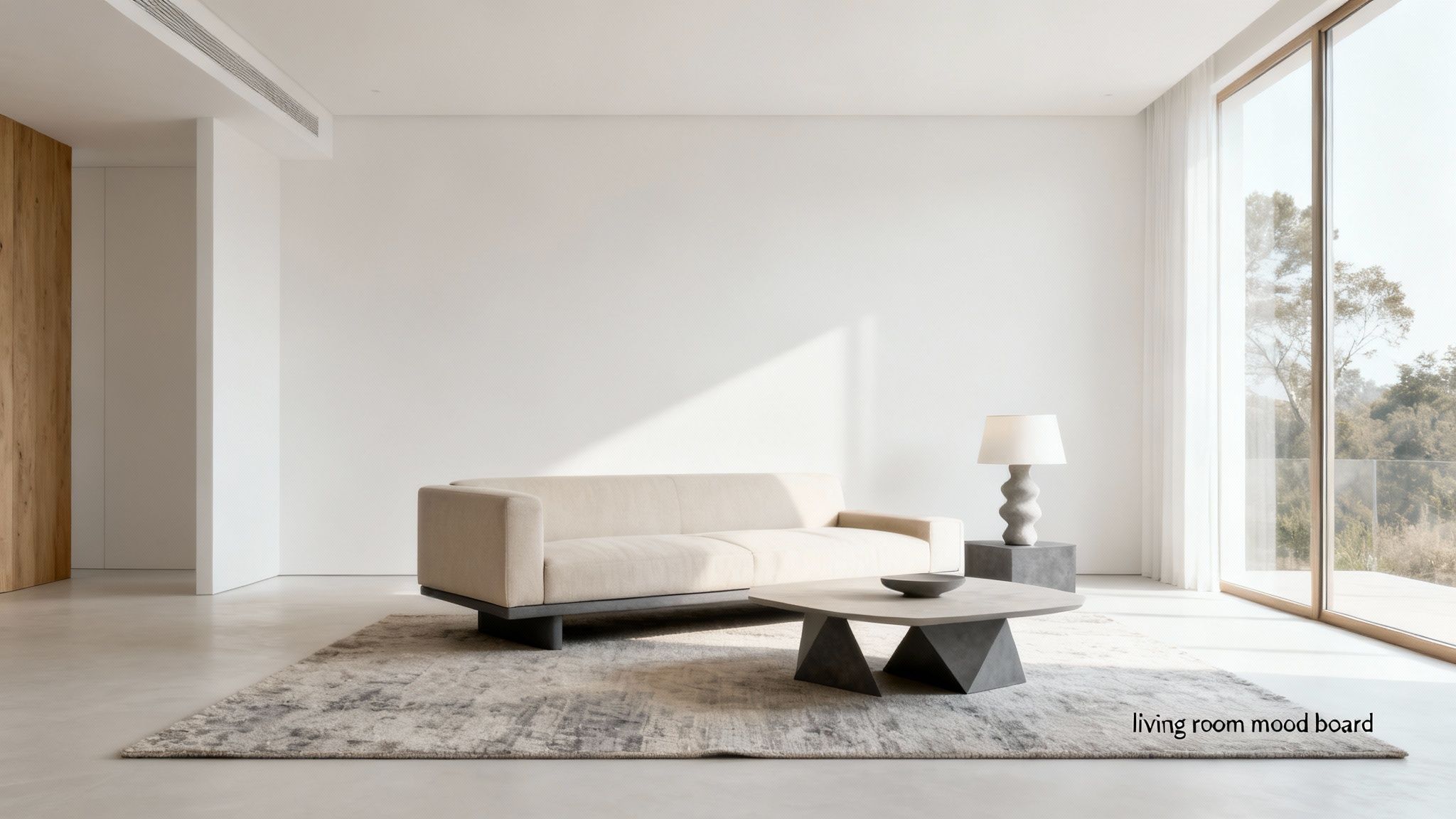
This mood board exemplifies the core principle of modern minimalism: every element serves a purpose. The strategy is to create a serene and sophisticated atmosphere by stripping away non-essentials, focusing instead on form, material quality, and the strategic use of negative space. This approach transforms a room into a calming sanctuary, where clean lines and an uncluttered layout promote tranquility and mental clarity.
Strategic Breakdown
The power of this mood board lies in its intentional restraint. It avoids trends in favor of timeless design, ensuring the space feels relevant for years. The limited color palette creates a cohesive and expansive feel, while the emphasis on natural light and structural forms adds depth and character without adding clutter.
Key Takeaway: In minimalist design, the absence of an item is as important as the presence of one. The board's success comes from what it deliberately leaves out.
How to Recreate This Look
To apply this minimalist vision, focus on curating a few high-impact pieces rather than filling the space.
- Color Palette: Stick to a tight range of neutrals like Alabaster White, Cool Gray, and Deep Charcoal. Use black as a sharp, graphic accent.
- Key Furniture: Select a low-profile sofa with clean, geometric lines. Add a simple, unadorned coffee table made from a natural material like light wood or concrete.
- Materials & Textures: Introduce warmth and prevent sterility with subtle textures. Think raw linen cushions, a soft wool rug, and smooth concrete or light oak flooring.
- Lighting: Prioritize natural light. For artificial lighting, choose architectural fixtures with simple, sculptural forms.
2. Coastal/Beach House Aesthetic: Capturing Seaside Serenity
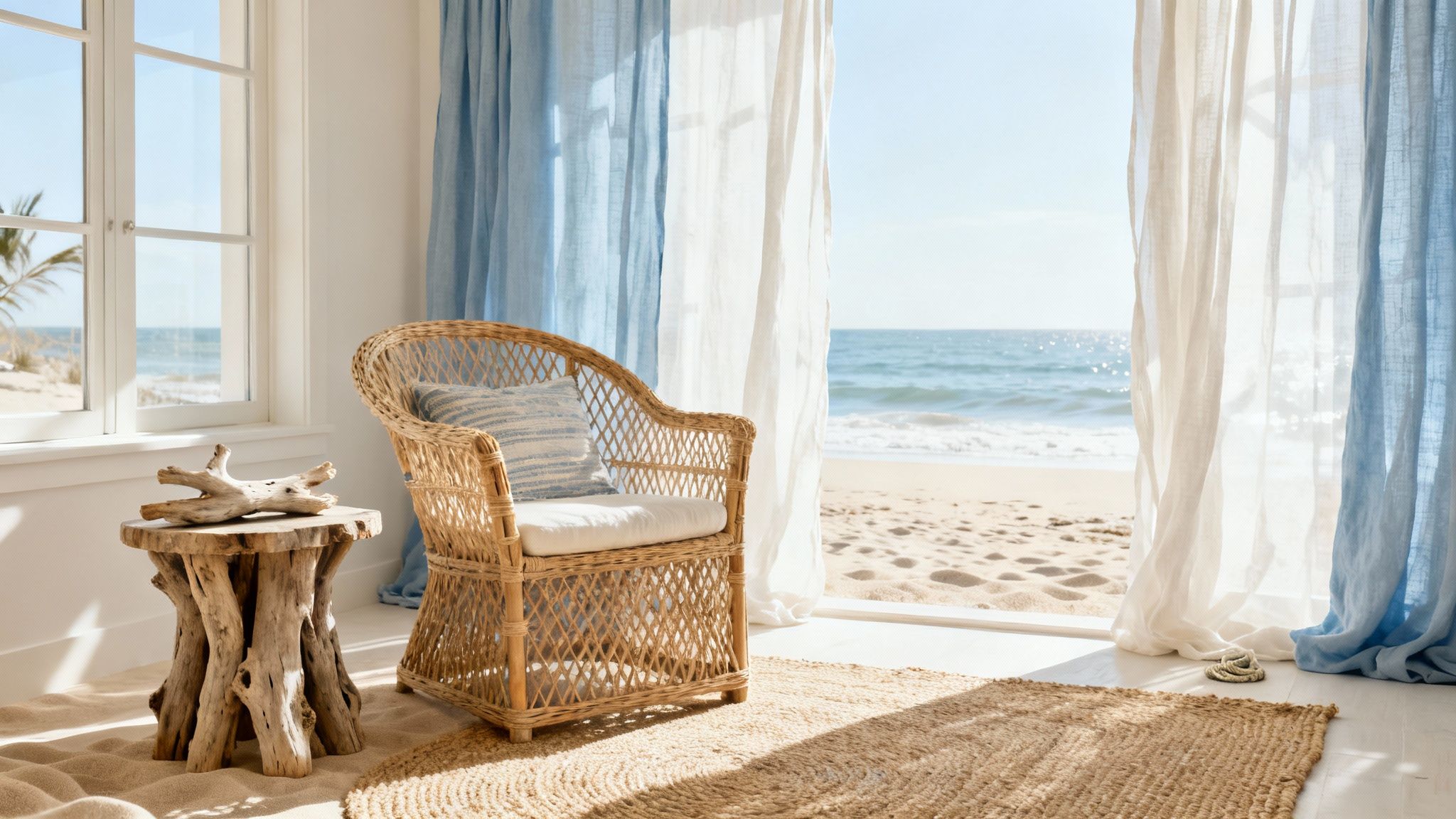
This mood board captures the essence of coastal living, a style that translates the light, airy, and relaxed atmosphere of the seaside into an interior space. The strategy is to evoke a sense of calm and connection to nature through a specific palette, natural materials, and an emphasis on comfort. It’s about creating an effortless, vacation-like retreat that feels both casual and sophisticated, making every day feel like a getaway.
Strategic Breakdown
The strength of this coastal mood board lies in its ability to feel bright and open, even in rooms with limited natural light. It balances soft, water-inspired hues with warm, sandy neutrals to mimic the coastal landscape. The design avoids overt beach-themed kitsch, instead using texture and natural elements to suggest a seaside location in a more refined and timeless way.
Key Takeaway: Authentic coastal design is about evoking a feeling, not just displaying nautical symbols. Texture, light, and color are your most powerful tools.
How to Recreate This Look
To bring this breezy, relaxed aesthetic home, focus on layering natural textures and maintaining a light color scheme.
- Color Palette: Build your design around a foundation of Crisp White and Sandy Beige. Use Soft Aqua, Seafoam Green, and Navy Blue as accent colors.
- Key Furniture: Opt for comfortable, casual pieces like a slipcovered sofa, rattan or wicker chairs, and weathered wood tables. Keep silhouettes simple and inviting.
- Materials & Textures: This is crucial. Layer textures like jute rugs, linen curtains, woven baskets, and driftwood accents to create depth and warmth.
- Lighting: Maximize natural light with sheer window treatments. Supplement with fixtures made from natural materials like rope, woven seagrass, or weathered metal.
3. Industrial Chic Warehouse Loft
This mood board celebrates the raw, unfinished beauty of industrial architecture. The strategy is to embrace and highlight structural elements rather than concealing them, creating a space with a strong sense of history and character. By juxtaposing raw materials like brick and metal with modern comforts, this approach crafts an environment that feels both expansive and grounded, perfect for urban living.
Strategic Breakdown
The strength of this industrial chic mood board comes from its authentic embrace of imperfection. It finds beauty in the patina of aged wood, the texture of exposed brick, and the utilitarian forms of metal fixtures. This design isn't about creating a flawless interior; it's about curating a narrative told through materials and architectural honesty, resulting in a space that is both stylish and soulful.
Key Takeaway: Industrial design succeeds when it balances raw, hard surfaces with soft, comfortable furnishings. The contrast creates a dynamic yet inviting atmosphere.
How to Recreate This Look
To achieve the industrial loft aesthetic, focus on showcasing the 'bones' of the space and layering in functional, well-worn pieces.
- Color Palette: Build upon a foundation of Exposed Brick Red, Concrete Gray, and Matte Black. Use Cognac Leather and Warm Wood tones to add warmth.
- Key Furniture: Opt for a large, comfortable leather or dark fabric sofa. Incorporate pieces made from reclaimed wood and black metal, such as a coffee table or open shelving units.
- Materials & Textures: This style is defined by its materials. Feature exposed brick walls, polished concrete or dark wood floors, and steel or iron accents in lighting and window frames.
- Lighting: Use vintage-style Edison bulbs in exposed fixtures. Pendant lights with metal shades and track lighting are ideal for highlighting architectural features and art.
4. Japandi (Japanese + Scandinavian) Fusion
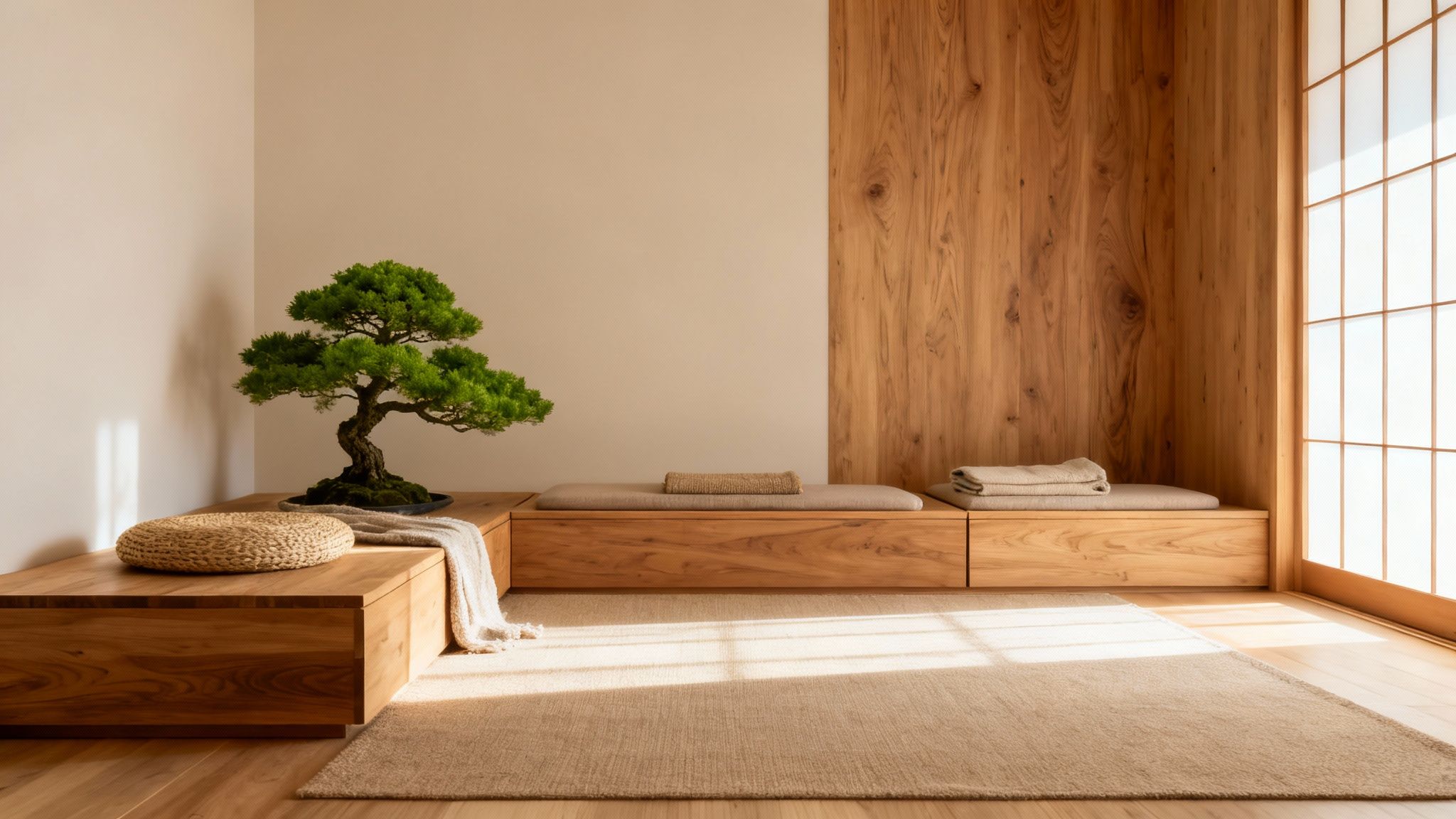
This mood board showcases the harmonious blend of Japanese minimalism and Scandinavian functionality. The Japandi strategy centers on creating serene, purposeful spaces by combining the rustic warmth of Scandi design with the refined elegance of Japanese aesthetics. This approach fosters an atmosphere of tranquility and mindful living, where craftsmanship and natural materials are celebrated over ornamentation.
Strategic Breakdown
The power of this mood board lies in its balanced imperfection, often referred to as "wabi-sabi." It embraces natural materials and functional, uncluttered layouts to create a space that feels both sophisticated and deeply calming. By prioritizing craftsmanship and organic forms, the design achieves a timeless quality that feels both intentional and effortlessly connected to nature.
Key Takeaway: Japandi design is a conversation between two cultures. The board’s success comes from balancing Scandinavian hygge (coziness) with Japanese wabi-sabi (finding beauty in imperfection).
How to Recreate This Look
To achieve this fusion, focus on creating a thoughtful dialogue between clean lines and natural, organic textures. For a deeper dive, explore these Japandi living room ideas for inspiration.
- Color Palette: Use a muted, earthy palette of Light Oak, Stone Gray, Warm Beige, and Muted Sage Green. Incorporate contrasting accents of Deep Indigo or Charcoal Black.
- Key Furniture: Choose low-profile furniture with clean lines, like a simple wooden bench or a minimalist sofa. Prioritize pieces showcasing exceptional craftsmanship and natural wood grain.
- Materials & Textures: Combine light woods like oak or ash with darker tones like walnut. Introduce textures through bamboo, rattan, paper lanterns, and unglazed ceramics.
- Lighting: Emphasize soft, diffused lighting. Use shoji-style screens or paper pendant lights to create a warm, gentle glow that enhances the natural materials.
5. Luxury Contemporary/High-End Modern: The Art of Curated Opulence
This mood board showcases a design strategy centered on exclusivity and superior craftsmanship. The approach is to create an environment that feels more like a private gallery than a mere living space, where every object is chosen for its artistic merit and material integrity. It moves beyond simple comfort, aiming for a sophisticated atmosphere that communicates status and a deep appreciation for high design.
Strategic Breakdown
The power of this interior design mood board example lies in its confident curation. It masterfully layers premium, often bespoke, elements without creating a sense of clutter. The design relies on the inherent beauty of materials like polished marble, rich woods, and lustrous metals to create visual interest. This is a design of investment pieces, where quality and brand heritage are paramount.
Key Takeaway: Luxury contemporary design is an exercise in restraint and curation. The goal is to let a few exceptional, high-impact pieces define the entire space.
How to Recreate This Look
To achieve this high-end aesthetic, prioritize quality over quantity and focus on creating a rich sensory experience through materials.
- Color Palette: Build a sophisticated base with deep, moody tones like Obsidian Black, Rich Emerald, and Warm Taupe. Use polished brass or chrome as a brilliant accent.
- Key Furniture: Select statement pieces from iconic brands like B&B Italia or Knoll. A sculptural sofa with unique lines or an architecturally significant armchair serves as a functional art piece.
- Materials & Textures: Layer opulent materials for depth. Combine the cool smoothness of Calacatta marble with the warmth of book-matched wood veneers, plush velvet upholstery, and silk rugs.
- Lighting: Treat lighting as sculpture. Choose large-scale, artistic chandeliers or pendants that act as a central focal point and cast a warm, inviting glow.
6. Modern Farmhouse Kitchen: Nostalgic Comfort Meets Clean Lines
This mood board captures the essence of modern farmhouse design by blending rustic warmth with contemporary simplicity. The strategy is to create a welcoming and functional space that feels both lived-in and thoughtfully curated. It balances the nostalgia of traditional farmhouse elements with the clean, uncluttered aesthetic of modern design, resulting in a timeless and family-friendly atmosphere.
Strategic Breakdown
The strength of this design lies in its skillful fusion of old and new. It uses textural contrasts like smooth quartz countertops against rough reclaimed wood to create visual interest. The design avoids becoming overly themed by pairing vintage-inspired pieces, such as an apron-front sink, with sleek, modern hardware and appliances. This balance ensures the space remains sophisticated and practical for everyday life.
Key Takeaway: Modern farmhouse isn't about creating a historical replica; it's about evoking a feeling of comfort and authenticity within a clean, modern framework.
How to Recreate This Look
To achieve this blend of rustic charm and modern polish, focus on layering materials and balancing key elements. If you're looking for more inspiration, explore these farmhouse living room ideas for ways to extend the style.
- Color Palette: Build upon a foundation of Creamy White and Soft Gray. Use Matte Black for striking contrast in hardware and fixtures, and add warmth with Natural Wood Tones.
- Key Furniture: Opt for a large, sturdy wooden dining table as a central gathering point. Pair it with simple, clean-lined chairs or a classic bench.
- Materials & Textures: Combine shiplap walls, reclaimed wood beams, and butcher block accents with smooth, durable surfaces like quartz or soapstone. Introduce softness with linen tea towels and woven jute rugs.
- Lighting: Mix vintage-style pendant lights over an island with modern recessed lighting. A large, simple chandelier over the dining area can serve as a beautiful focal point.
7. Maximalist Eclectic/Bohemian: The Art of Curated Abundance
This mood board champions a "more is more" philosophy, celebrating personality through a vibrant fusion of colors, patterns, and global influences. The strategy is to layer diverse elements, textures, and personal treasures to create a space that feels collected, artistic, and deeply individual. This approach rejects rigid rules, instead focusing on creating a rich, narrative-driven environment that tells a unique story.
Strategic Breakdown
The genius of this mood board is its controlled chaos. While it appears spontaneous, it relies on underlying principles of scale, color theory, and repetition to feel cohesive rather than cluttered. By mixing vintage finds with modern pieces and high-end items with humble treasures, it creates a dynamic and authentic atmosphere that reflects a well-traveled, artistic life.
Key Takeaway: Maximalism isn't about accumulating random items; it's about the intentional curation of meaningful objects. The board's success lies in its ability to balance bold expression with a unifying thread.
How to Recreate This Look
To master this look, focus on layering and personal expression. Start with a foundational color and build upon it with items you love. Explore more maximalist living room ideas for additional inspiration.
- Color Palette: Be bold. Use rich jewel tones like Emerald Green, Sapphire Blue, and Ruby Red as a base. Weave in pops of Marigold Yellow and Fuchsia for energy.
- Key Furniture: Choose anchor pieces with character, like a velvet-upholstered chesterfield sofa or a carved wood cabinet. Don't be afraid to mix furniture styles from different eras.
- Materials & Textures: Layering is crucial. Combine mismatched textiles like Moroccan rugs, Indian block-print pillows, and macrame wall hangings. Introduce natural elements like rattan, wicker, and an abundance of houseplants.
- Lighting: Mix your light sources. Use a statement chandelier, vintage table lamps with ornate shades, and strands of fairy lights to create a warm, ambient glow.
8. Transitional Classic: The Art of Timeless Elegance
This mood board demonstrates the balance of transitional design, a sophisticated blend of traditional comfort and modern simplicity. The strategy is to create a space that feels both classic and current, merging ornate details with clean lines. This approach produces an interior that is inviting, elegant, and enduring, avoiding fleeting trends in favor of lasting style.
Strategic Breakdown
The power of this mood board lies in its curated synthesis of old and new. It pairs the graceful curves of traditional furniture with the understated profiles of contemporary pieces. This thoughtful combination ensures the room feels collected and intentional rather than eclectic or mismatched, achieving a look of quiet luxury and refined comfort.
Key Takeaway: Transitional design is a conversation between eras. The board's success comes from balancing ornate, traditional elements with the crispness of modern aesthetics.
How to Recreate This Look
To achieve this timeless vision, focus on creating harmony between classic and contemporary elements through a neutral foundation and selective accents.
- Color Palette: Build upon a foundation of warm neutrals like Creamy Beige, Mushroom Gray, and Soft Taupe. Introduce a classic accent color like Deep Navy or Forest Green for depth.
- Key Furniture: Select pieces with classic silhouettes but simple upholstery, like a rolled-arm sofa in a solid linen fabric. Pair it with a modern, clean-lined coffee table.
- Materials & Textures: Combine rich, traditional materials like dark wood and polished metal with modern textures. Think velvet cushions, a sisal rug, and brushed nickel or brass fixtures.
- Lighting: Use a mix of lighting styles. A traditional chandelier can serve as a focal point, complemented by modern table lamps with simple drum shades.
9. Mid-Century Modern Retro Revival
This mood board celebrates the timeless appeal of Mid-Century Modern (MCM) design, an iconic style from the 1950s and 60s. The strategy involves blending organic shapes, clean lines, and natural materials to create a look that is both nostalgic and profoundly modern. This approach focuses on function-driven forms, creating a space that feels uncluttered, warm, and effortlessly sophisticated.
Strategic Breakdown
The strength of this interior design mood board example is its masterful balance between form and nature. It showcases how iconic furniture silhouettes, defined by designers like Charles and Ray Eames, can anchor a room. The design avoids feeling dated by pairing authentic vintage forms with contemporary textures and a refined color scheme, proving the style's enduring relevance.
Key Takeaway: Mid-Century Modern design succeeds by making function beautiful. The board emphasizes that the elegant, clean lines of the furniture are the primary decorative element.
How to Recreate This Look
To capture the MCM spirit, prioritize furniture with distinctive silhouettes and a warm, inviting material palette.
- Color Palette: Build upon a foundation of Warm Walnut and Teak wood tones. Introduce pops of period-specific color like Burnt Orange, Mustard Yellow, or Deep Teal.
- Key Furniture: Select pieces with signature tapered legs, such as a low-profile credenza or a streamlined sofa. An iconic accent chair, like an Eames Lounge Chair replica, serves as a perfect focal point.
- Materials & Textures: Mix warm woods with textured fabrics like tweed and bouclé. Incorporate graphic, geometric-patterned rugs or cushions to add visual interest.
- Lighting: Choose sculptural lighting with atomic-era shapes. Think sputnik chandeliers or arc floor lamps to make a bold statement. For more inspiration, explore these Mid-Century Modern living room ideas.
10. Scandinavian Light & Airy Wellness: Designing for Hygge
This mood board captures the essence of Scandinavian design, which prioritizes functionality, simplicity, and a deep connection to nature to foster wellbeing. The strategy, often described by the Danish concept of "hygge," is to create a bright, uncluttered, and cozy atmosphere that serves as a tranquil retreat. It emphasizes natural light and organic materials to craft spaces that feel both calming and life-affirming.
Strategic Breakdown
The effectiveness of this mood board lies in its balanced approach to minimalism and comfort. Unlike sterile minimalism, Scandinavian design intentionally layers soft, natural textures to add warmth and prevent the space from feeling cold. The focus on pale colors maximizes the reflection of natural light, which is crucial in Nordic regions with long winters, making the room feel larger and more open.
Key Takeaway: Scandinavian design is a functional art form that proves simplicity doesn't have to be stark. The goal is to create a practical, beautiful, and emotionally comforting environment.
How to Recreate This Look
To achieve this light and airy wellness aesthetic, focus on creating a harmonious blend of form, function, and natural elements.
- Color Palette: Build upon a foundation of Crisp White and Light Dove Gray. Introduce soft, muted accents like Dusty Blue, Pale Sage, or Warm Beige.
- Key Furniture: Choose pieces with clean lines and a clear function, made from light-colored woods like ash, pine, or birch. A simple sofa with tapered legs is a classic choice.
- Materials & Textures: Layer cozy textiles to create warmth. Think chunky knit blankets, shearling or faux fur pillows, and a soft wool rug. Natural fibers like linen and cotton are essential.
- Lighting: Maximize daylight with sheer, unadorned window treatments. For evening, use layered lighting with simple, modern fixtures and plenty of candles for a hygge glow. Add living plants to purify the air and add a touch of vibrant nature.
10 Interior Design Mood Board Comparison
| Style | 🔄 Implementation Complexity | ⚡ Resource & Efficiency | ⭐ Expected Outcome Quality | 📊 Ideal Use Cases | 💡 Key Tip |
|---|---|---|---|---|---|
| Modern Minimalist Living Room | Low–Moderate — simple layouts but needs discipline | ⚡ High — low item count, quick staging | ⭐ Timeless, high photographic appeal | Real estate staging, small apartments, busy professionals | 💡 Prioritize lighting and one statement piece |
| Coastal / Beach House Aesthetic | Low — layering textures and light tones | ⚡ Moderate — affordable coastal pieces, easy to source | ⭐ Calming, broadly appealing visuals | Vacation rentals, waterfront properties, resort-like spaces | 💡 Layer textures; use subtle nautical accents |
| Industrial Chic Warehouse Loft | Moderate–High — depends on existing architecture | ⚡ Moderate — fewer decor pieces but material authenticity matters | ⭐ Bold, high-impact character | Loft conversions, creative studios, historic renovations | 💡 Balance raw materials with soft furnishings |
| Japandi (Japanese + Scandinavian) Fusion | Moderate — restraint and material authenticity required | ⚡ Moderate — quality materials, some specialized pieces | ⭐ Serene, restorative aesthetic with strong wellness appeal | Meditation/yoga spaces, bedrooms, wellness-focused marketing | 💡 Combine one Japanese element with Scandinavian simplicity |
| Luxury Contemporary / High-End Modern | High — expert curation and precise execution | ⚡ Low — expensive materials and pro photography needed | ⭐ Highest perceived value; attracts affluent buyers | Luxury property listings, high-net-worth projects, hotels | 💡 Use pro 4K imagery and fewer statement pieces |
| Rustic Farmhouse / Modern Farmhouse | Low–Moderate — mix vintage with modern functionality | ⚡ Moderate — affordable with thrifted finds | ⭐ Warm, family-oriented and broadly appealing | Rural/suburban properties, family-oriented staging, cottages | 💡 Balance vintage finds with modern function; avoid clutter |
| Maximalist Eclectic / Bohemian | High — complex layering and careful curation | ⚡ Moderate — sourcing varied pieces is time-consuming | ⭐ Highly expressive and social-media friendly | Creative studios, artist homes, personal projects | 💡 Anchor with one dominant color and test combos first |
| Transitional Classic / Timeless Elegant | Moderate — quality execution to avoid generic look | ⚡ Moderate — needs higher-quality furnishings for impact | ⭐ Broadest market appeal; safe for listings | Mainstream real estate, professional spaces, suburban homes | 💡 Select one quality statement piece and refine lighting |
| Mid-Century Modern Retro Revival | Moderate — requires balance with contemporary elements | ⚡ Moderate–Low — authentic pieces can be costly | ⭐ Distinctive, nostalgic appeal with strong trend following | Urban markets, curated design projects, younger buyers | 💡 Emphasize furniture silhouettes and period lighting |
| Scandinavian Light & Airy Wellness | Low–Moderate — needs excellent natural light and texture layering | ⚡ High — affordable options (IKEA), efficient staging | ⭐ Calming, wellness-oriented; maximizes perceived space | Bedrooms, wellness spaces, home offices, light-starved rooms | 💡 Layer cozy textiles and add plants to avoid coldness |
Turning Inspiration into Action with a Clear Workflow
The diverse collection of interior design mood board examples we've explored, from the serene simplicity of Japandi to the bold expression of Maximalism, all share a common thread: they are strategic blueprints for a cohesive space. A well-constructed mood board is not merely a collection of pretty pictures; it is the foundational document that defines your project's direction and prevents costly design detours. It transforms abstract feelings and ideas into a tangible visual language.
This process ensures every element, from the largest sofa to the smallest decorative accent, works in harmony. By clearly defining your color palette, material choices, and key furniture silhouettes upfront, you create a powerful reference point. This guiding star simplifies decision-making throughout the entire design process, ensuring the final result is a true and intentional reflection of your initial vision.
Key Takeaways for Building Your Own Mood Board
Mastering the art of the mood board empowers you to design with confidence. Here are the most critical strategies to remember:
- Define Your Core Concept: Before you gather a single image, pinpoint the primary feeling or function of the space. Is it a "calm coastal retreat" or a "vibrant, energetic hub"? This core concept will act as your filter.
- Balance is Essential: A successful board balances inspiration with practicality. Include not just aspirational images but also specific material swatches (wood grains, fabrics), paint colors, and potential furniture pieces.
- Embrace the Edit: The most effective mood boards are often the most edited. Don't be afraid to remove elements that don't perfectly align with your core concept. Curation is just as important as collection.
By internalizing the methods demonstrated in these examples, you move beyond simple inspiration-gathering. You learn to think like a designer, strategically layering texture, color, and form to build a comprehensive and actionable plan. This strategic approach is what elevates a space from simply decorated to thoughtfully designed. It’s the critical first step in creating a home that not only looks beautiful but also feels uniquely yours.
This structured workflow, moving from broad inspiration to a focused mood board, is the most reliable path to a successful interior design project. It provides the clarity and direction needed to execute your vision flawlessly, turning a collage of ideas into a beautifully realized living space.
Ready to see your mood board come to life in your own home? Stop guessing and start visualizing with RoomStudioAI. Upload a photo of your room, select a style inspired by these interior design mood board examples, and generate a stunning, photorealistic redesign in seconds at RoomStudioAI.
Ready to redesign your space?
Try our AI interior design tool and see your room transformed in seconds.
Try Free Design

