To get your home ready for the market, you first have to create a blank slate. This is the crucial, non-negotiable groundwork that makes all the other staging efforts worthwhile. It's about letting potential buyers see the house, not your stuff, and allowing them to imagine their own life unfolding within its walls.
This all comes down to three core actions: a top-to-bottom deep clean, a ruthless decluttering of every single room, and thoroughly depersonalizing the space. Nail these, and you've set the stage for a fantastic first impression.
Building the Foundation for a Successful Home Sale
Before you start shifting furniture or picking out new throw pillows, the real work begins. I'll be honest, this isn't the glamorous part of staging, but it is without a doubt the most important. A beautifully arranged room will completely miss the mark if a buyer is distracted by a scuffed baseboard, a cluttered countertop, or a dripping sink.
Think of it like preparing a canvas for a masterpiece. Your job is to erase every possible distraction that could pull a buyer out of the dream. This initial phase really boils down to cleaning, decluttering, and depersonalizing. Let's get into it.
This simple visual breaks down the three essential prep steps.
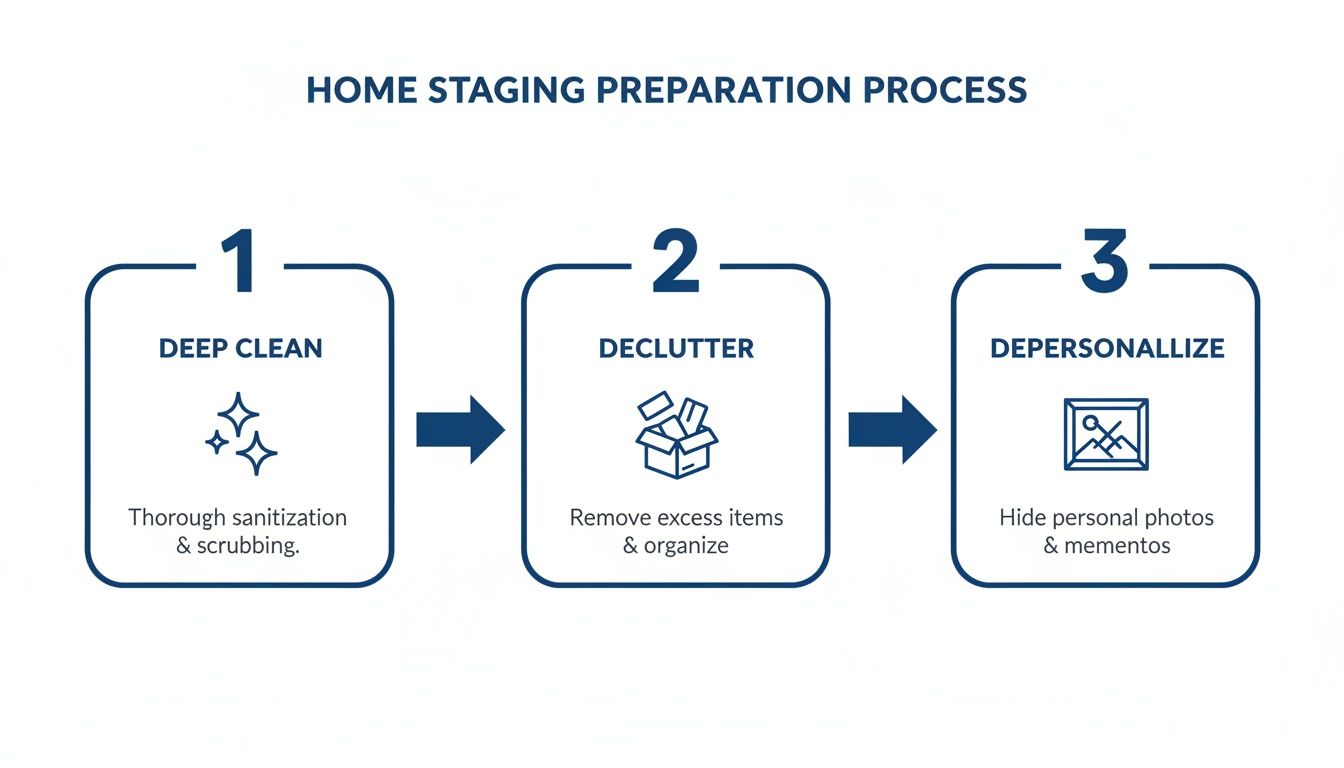
As you can see, each step builds on the one before it, creating that pristine, neutral backdrop that’s ready for styling.
Create a Spotless Environment
A true pre-sale deep clean goes way beyond your regular weekend tidy-up. I'm talking about a level of clean that makes every surface gleam and leaves the whole house smelling fresh. Buyers have an eagle eye for dirt, and in their minds, grime often equates to poor maintenance.
Here’s what your deep-clean checklist should cover:
- Walls and Baseboards: Wipe them all down. A magic eraser can be a lifesaver for scuffs and smudges on trim.
- Windows and Fixtures: Clean every window, inside and out. Don't forget to dust and polish all light fixtures, ceiling fans, and even the doorknobs.
- Floors and Carpets: It's almost always worth it to get carpets professionally cleaned. You want to eliminate any lingering stains or odors. Mop and polish hard floors until they shine.
- Kitchen and Bathrooms: These rooms get the most scrutiny. Scrub grout lines, descale faucets and showerheads, and make sure every appliance is sparkling clean, inside and out.
Pro Tip: A deep clean isn't just cosmetic. It sends a powerful message to buyers: this home has been meticulously cared for. That builds immediate trust and helps them feel more comfortable.
The Art of Decluttering and Depersonalizing
Clutter is the number one enemy of a successful showing. It shrinks rooms visually and distracts buyers from appreciating the home's actual features. Your goal here is to create a feeling of bright, open space. A good rule of thumb is to remove at least a third—or even half—of the items in every room.
Depersonalizing is just as vital. Buyers need to mentally move in, and that’s tough to do when they're staring at your family vacation photos or your kid's finger paintings on the fridge.
Follow these guidelines to create that welcoming, neutral vibe:
- Pack Away Personal Items: This means family photos, trophies, souvenirs, and any distinct collections.
- Clear All Surfaces: Countertops, nightstands, and desks should be almost entirely clear. A single lamp or a small, intentional decorative piece is enough.
- Organize Closets and Cabinets: Yes, they will look inside! You want closets to look spacious, not stuffed. Aim to have 20-30% open space to give the impression of ample storage.
- Remove Excess Furniture: Is that extra armchair making the living room feel cramped? Move it out. Removing bulky or unnecessary pieces is a key tenet of professional interior design and dramatically improves a room's flow.
Addressing Minor Repairs
Finally, walk through your home with the eyes of a critical buyer. Look for all the little things you’ve stopped noticing over the years. That leaky faucet, squeaky closet door, or cracked light switch cover can feel like red flags, hinting at bigger, more expensive problems.
Make a "handyman list" and knock out these small but impactful repairs. Patching nail holes and giving a room a fresh coat of neutral paint is one of the highest-ROI improvements you can make. These simple fixes show pride of ownership and reassure buyers that they're looking at a solid, well-maintained property.
Here’s a room-by-room guide to staging that sells. Once the deep cleaning and decluttering are behind you, it's time to bring your home's story to life. This is where you shift from just preparing a space to presenting a lifestyle.
Let's walk through the most influential rooms, applying specific staging techniques that forge an emotional connection. You want buyers to walk in and immediately feel like they're home.
This isn’t about staging every single corner of the house. It's about a strategic focus on the areas that truly matter. In my experience, and the data backs this up, buyers need help picturing themselves in a new space. In fact, a staggering 83% of buyer's agents agree that staging makes it far easier for a buyer to visualize a property as their future home.
So, where do you focus your energy? The living room is the top priority for 47% of buyers, followed closely by the primary bedroom (42%) and the kitchen (35%). Nail these three, and you're well on your way.
The Living Room: An Inviting Welcome
The living room is your first impression, setting the tone for the entire tour. The goal here is simple: create a welcoming, comfortable, and spacious atmosphere that makes people want to sit down and stay awhile.
The key is to define the space and create an easy, intuitive flow. I always tell clients to pull their furniture away from the walls and arrange it into conversational groups. Here’s a simple test: imagine two people on the sofa and two in armchairs. Can they chat comfortably without shouting? This little exercise helps create a layout that feels both intimate and functional.
A few more tricks of the trade:
- Anchor the Space: An area rug is non-negotiable for defining the main seating area. Make sure at least the front legs of your sofa and chairs are on the rug. It pulls everything together.
- Balance is Key: Don't shove all the big pieces to one side. Balance a large sofa with two smaller chairs opposite it to create visual harmony.
- Add Softness and Texture: A few neutral throw pillows and a neatly folded blanket on the sofa add a layer of warmth and coziness that feels aspirational, not sloppy.
A well-staged living room shouldn't just look good; it should tell a story. It should say, "This is a place where you can relax, entertain friends, and build memories."
The Primary Bedroom: A Serene Retreat
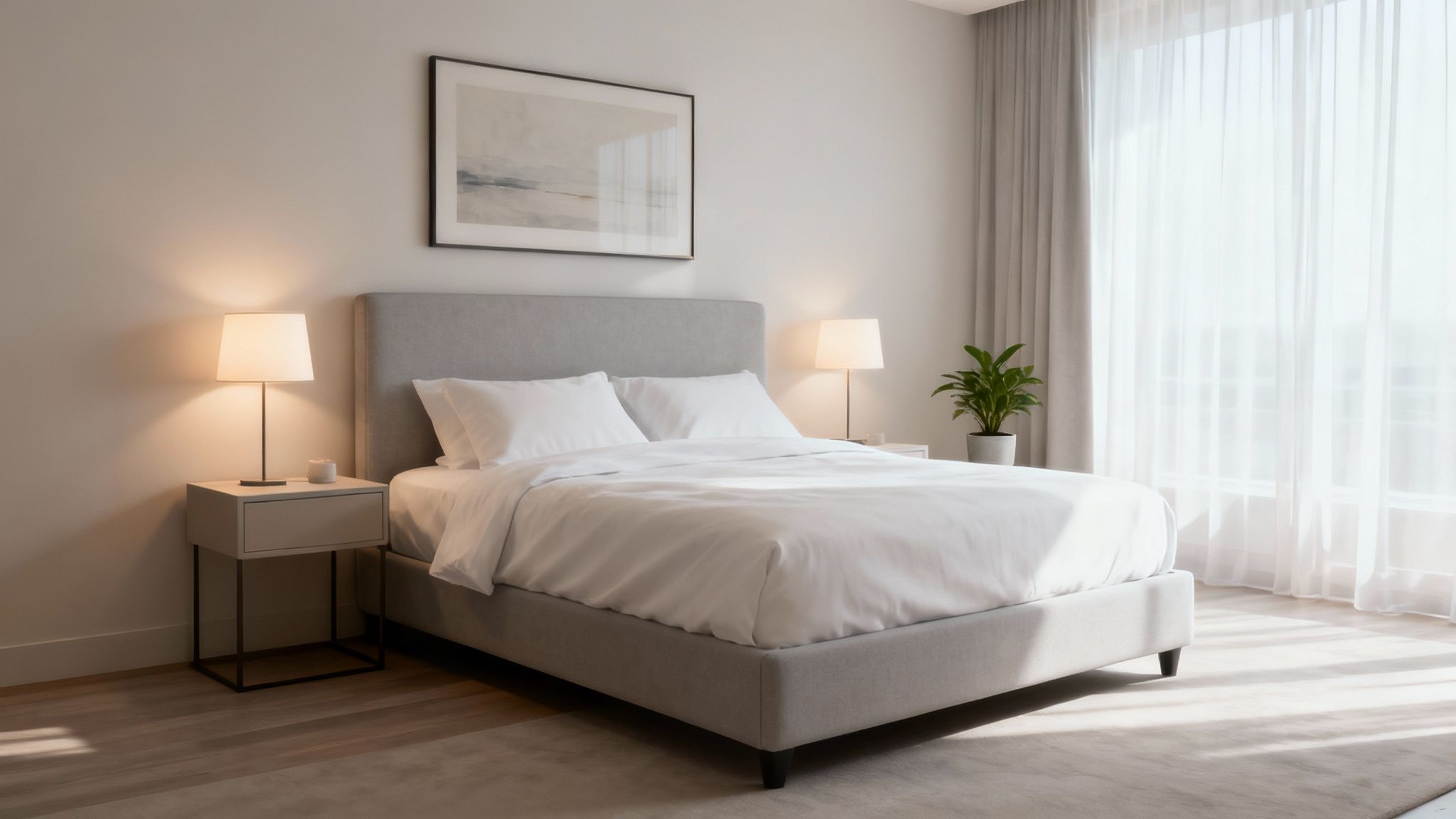
Buyers view the primary bedroom as a deeply personal space. They need to see it as a tranquil escape from the chaos of daily life, not just another room with a bed. The vibe you're after is "luxury hotel suite."
Start by making the bed the undeniable star of the show. Use crisp, neutral bedding—white is almost always a winner—and layer it with pillows of varying sizes. I usually go with two standard sleeping pillows, two shams, and a couple of smaller decorative pillows to create a plush, irresistible look.
From there, it's all about balance and keeping things clear.
- Place matching nightstands on either side of the bed, each with a simple, elegant lamp. Symmetry is calming.
- Clear all personal items off dressers and nightstands. A single decorative tray or a small stack of books is more than enough.
- Buyers will open the closets. If you have a walk-in, organize it meticulously. A tidy, half-full closet screams "plenty of storage space."
Creating this serene atmosphere is crucial for buyers to connect emotionally. While they are different rooms, many of the principles for creating flow and balance are universal. You can explore our guide on refreshing your living room design ideas for more inspiration that can be adapted for the bedroom.
The Kitchen: A Functional Hub
The kitchen is the heart of the home, and buyers will scrutinize it for both function and style. Your main job here is to highlight its best features—countertop space, appliances, storage—by removing everything else.
I mean it: clear every single item off the countertops. The toaster, the knife block, the coffee maker. Pack them all away. This one action will instantly make your kitchen feel twice as big and ten times cleaner.
Once you have a clean slate, add back just a few intentional, decorative touches.
- A bowl of fresh lemons or green apples adds a perfect pop of natural color.
- A small pot with a fresh herb like basil or rosemary near a window brings life and a pleasant scent into the space.
- A new, neatly folded dish towel hanging from the oven handle is a simple finishing touch.
This minimalist approach ensures buyers are looking at your granite countertops and stainless steel appliances, not your clutter.
The Bathroom: A Spa-Like Escape
Bathrooms should feel like a personal spa—a clean, bright, and relaxing space. Just like in the kitchen, the first step is a radical declutter. Remove all personal hygiene products from the countertops, shower, and tub.
Next, swap your used towels for a set of fresh, fluffy white towels. Fold one bath towel and a hand towel neatly over the rack. On the counter, create a small vignette with a bottle of nice-looking hand soap, a small faux plant, and maybe a candle. These simple touches transform a utilitarian room into a mini-retreat, helping buyers see your house not just as a property, but as a place they'd love to live.
Creating Space, Light, and a Killer First Impression
With the clutter gone and the basic styling in place, it's time to zero in on the elements that trigger a real emotional response in buyers: light, flow, and that all-important first impression. This is where you move beyond simply tidying up and start shaping how a potential buyer feels as they walk through your home.
Truly great staging is more art than science. It's about using furniture and light to show off a room's best features and its hidden potential. Get this right, and you'll turn your property from just another listing into a place people can't wait to see in person.
Let There Be Light (And Lots of It)
Lighting is, without a doubt, a game-changer. I’ve seen it time and time again—dark rooms instantly feel smaller, older, and less inviting. Your mission is to make every single space feel as bright and airy as humanly possible. The trick is to use a three-layered approach that blends natural light with well-placed artificial sources to create a warm, welcoming glow.
Here's how to make it happen:
- Embrace Natural Light: First, clean every window until it’s spotless. Then, pull back all curtains and open every blind. If you have heavy, dated drapes that block the sun, take them down completely. You want every bit of daylight flooding the room.
- Layer Your Lighting: Don’t rely on a single overhead fixture. Every room should have at least two sources of light—think an overhead light plus a floor lamp or a couple of table lamps. And for showings? Turn on every single light in the house, even if it's a sunny afternoon. It makes a huge difference.
- Work Magic with Mirrors: A well-placed mirror is one of the oldest tricks in the book for a reason. Hang a large mirror directly across from a window or in a poorly lit hallway. It will bounce light all over the place, making the area feel significantly larger and brighter.
Lighting does more than just illuminate a room; it creates a mood. The right combination of warm light makes a house feel like a home, encouraging buyers to linger and connect with the space on a deeper level.
Create a Flow That Feels Right
Just as crucial as lighting is how people navigate the space. You have to arrange furniture to create clear, intuitive pathways. A potential buyer should never have to awkwardly sidestep an ottoman or squeeze past a chair. The path from the door through the room should be completely obvious and unobstructed.
This often means pulling furniture off the walls. It sounds counterintuitive, but floating your furniture creates more defined, functional arrangements. In the living room, for example, group your sofa, chairs, and coffee table into a comfortable conversation area. This not only looks more sophisticated but also makes the room feel bigger by showing off the usable floor space.
Nail the First Impression with Curb Appeal
Long before a buyer sets foot inside, they've already started judging your home from the curb. That first glance—your curb appeal—is non-negotiable. A sloppy exterior can telegraph to buyers that the inside has been neglected too, which might kill their interest before they even get out of the car.
Fortunately, boosting curb appeal doesn’t have to break the bank. It's all about sending a message of care and pride of ownership through simple, high-impact tasks.
Here’s a quick-win checklist to get your exterior in shape:
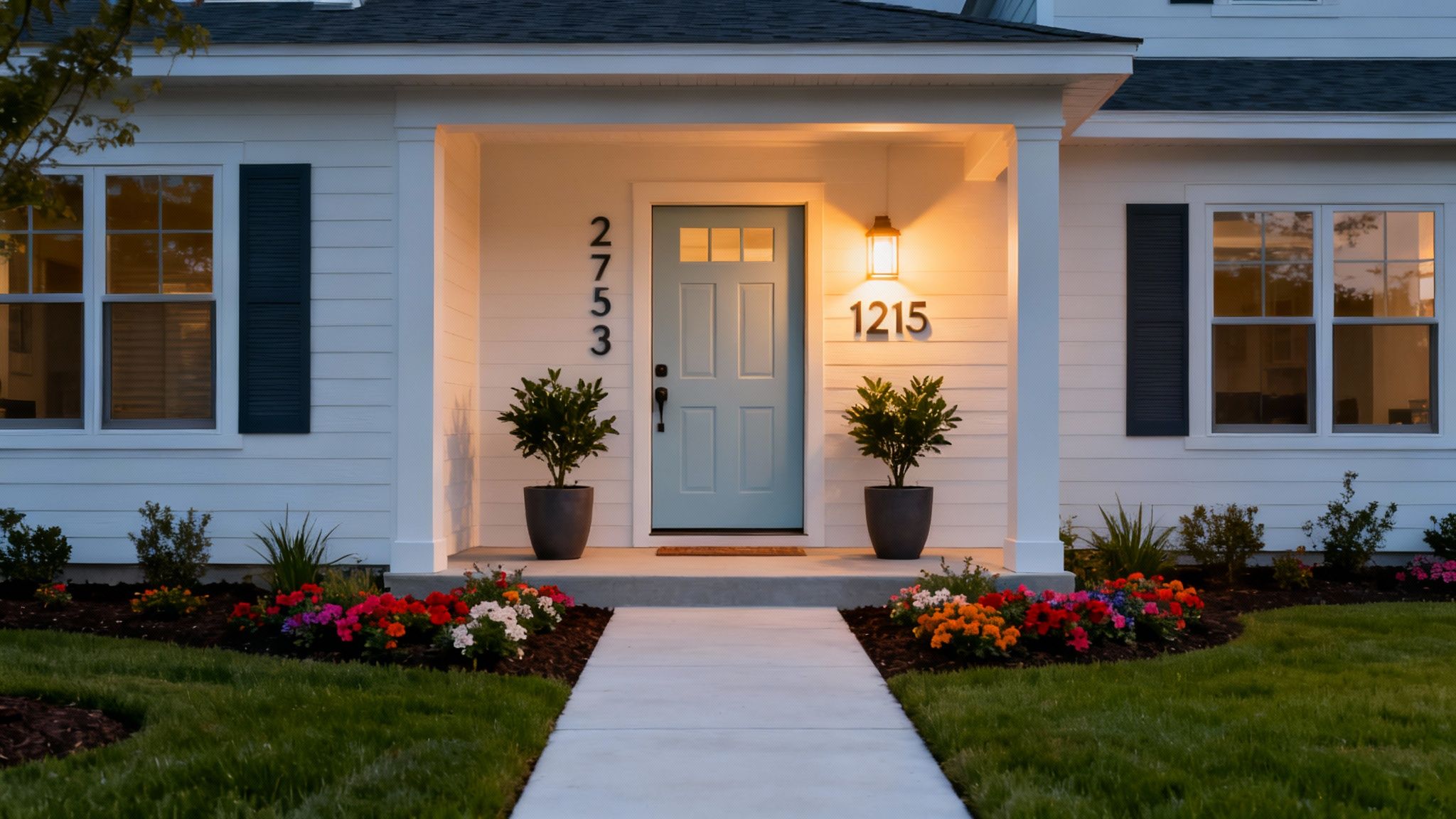
- Tidy Up the Landscaping: Mow the lawn, pull every last weed, and trim back any unruly shrubs. A fresh layer of dark mulch in the flower beds provides a clean, professional finish.
- Focus on the Front Door: A fresh coat of paint on the front door offers one of the best ROIs in home improvement. Go for a classic, appealing color like a deep red, a stately black, or a welcoming navy blue.
- Refresh the Details: Polish or replace the house numbers, door handle, and mailbox so they shine. Make sure all your exterior light fixtures are clean and have working bulbs. A few solar-powered lights along the walkway are a great touch for evening viewings.
- Add a Welcoming Touch: A new, simple welcome mat and a pot of vibrant seasonal flowers by the entrance are small details that make a huge impact.
These touches signal to buyers that your home is well-loved. If you're struggling to picture the final result, you can play around with ideas for virtual exterior home design to see how even minor tweaks can dramatically transform your home's look.
DIY or Professional Staging: Which Path Is Right for You?
So, you’ve decided to stage your home. Great move. The next big question is: do you roll up your sleeves and do it yourself, or do you bring in a pro?
Honestly, there’s no single right answer here. The best choice really comes down to your budget, your timeline, the current real estate market, and just how much of your own time and energy you're willing to put in. Both DIY and professional staging can deliver fantastic results, but understanding the trade-offs is crucial before you start moving furniture.
Let's unpack both options so you can make a smart, informed decision that benefits your bottom line.
The Do-It-Yourself Staging Approach
Going the DIY route is a fantastic option if you're working with a tighter budget or naturally have a knack for design. This strategy is all about using what you already have, supplemented with a few smart, low-cost purchases, to make your home look its absolute best.
The secret to successful DIY staging is objectivity. You have to learn to see your home not as your home, but as a product. That means being a little ruthless when it comes to decluttering and tucking away those personal family photos.
Here’s where to focus your DIY efforts:
- Rethink Your Layout: Work with the furniture you have, but rearrange it to improve traffic flow and create clear, defined spaces. One of my favorite tricks is to pull furniture a few inches away from the walls—it instantly makes a room feel more open and spacious.
- Make Small, Strategic Upgrades: You don't need a complete overhaul. A simple $100 shopping trip for new throw pillows, a cozy blanket for the sofa, and a fresh set of fluffy white towels for the guest bath can dramatically change the feel of a room.
- Add a Touch of Life: Nothing makes a home feel more inviting than a bit of greenery. A few simple houseplants or even a single vase of fresh flowers on the kitchen counter adds a pop of color and life that resonates with buyers.
The most powerful tool in DIY staging is your ability to edit. It’s less about what you add and more about what you take away. The goal is to let your home's best features take center stage.
When to Call in a Professional Stager
While a DIY approach can work wonders, there are times when hiring a professional stager is one of the smartest investments you can make. These pros are part designer, part real estate psychologist—they know exactly what buyers in your area are looking for and how to showcase your home to create an irresistible emotional pull.
You should seriously consider hiring a professional if:
- Your Home is Vacant: Empty rooms are a real challenge. They often feel smaller and colder than they actually are, and buyers struggle to visualize how their own furniture will fit. A professional can bring in perfectly scaled furniture and decor to define each space and make it feel like a home.
- Your Furniture Doesn't Fit the Bill: If your decor is a bit dated or doesn't quite match the price point of your home, a stager's inventory can provide an instant upgrade. They'll furnish the space with pieces that feel aspirational and modern.
- You're Overwhelmed or Short on Time: Let's face it, selling a house is stressful. If the thought of planning and executing a full staging project feels like too much, a professional can handle everything. They manage all the logistics, freeing you up to focus on everything else.
The cost for professional staging can range from a few hundred dollars for a detailed consultation to several thousand for furnishing an entire vacant home. But don't think of it as an expense—think of it as a business decision.
Staging Investment vs. Potential Return
Deciding how much to invest in staging can feel like a gamble, but the data consistently shows it's a calculated risk that pays off. Both DIY and professional staging require an investment of either time or money, but the returns can be significant. Here's a quick look at what you can expect.
| Staging Approach | Typical Cost Range | Potential Sale Price Increase | Key Benefits |
|---|---|---|---|
| DIY Staging | $100 - $750 | 1-5% | Maximizes your existing assets; low cash outlay; full creative control. |
| Professional Staging | $500 - $6,000+ | 5-15% | Expert design knowledge; access to high-end inventory; faster sale; saves you time. |
Ultimately, staged homes almost always sell faster and for a higher price than their competition.
And if you're looking for a middle ground, you can explore virtual tools to help plan your approach. Experimenting with our free AI interior design generator is a great way to visualize different layouts and styles before you commit any real time or money.
Winning the First Impression with Virtual Staging
In real estate, the first showing doesn't happen at the front door anymore—it happens on a screen. Buyers scroll through hundreds of listings, and your property has just a few seconds to grab their attention. This digital debut is where virtual staging becomes one of the most powerful tools in your selling arsenal, turning empty or outdated rooms into compelling, must-see spaces.
This technology allows you to digitally furnish and decorate photos of your home. It’s a brilliant, cost-effective alternative to physical staging, especially for vacant properties where empty rooms can feel cold, sterile, and surprisingly small online. Instead of hauling in expensive rental furniture, you can create a stunning, fully furnished look that helps buyers build an emotional connection before they even step inside.
What Is Virtual Staging and How Does It Work?
Think of virtual staging as a high-tech makeover for your listing photos. The process is pretty straightforward: you take high-quality photos of your empty rooms, and a designer or an AI-powered service like RoomStudioAI digitally adds realistic furniture, art, rugs, and even architectural finishes.
The key to success is realism. The best tools can accurately match lighting, shadows, and scale, making the staged photos look incredibly authentic and natural.
- For vacant homes: It fills the void, showing buyers the true potential of each room and helping them visualize where their own furniture could go.
- For outdated spaces: It can digitally "paint" walls a fresh, neutral color, replace old carpet with virtual hardwood, or swap dated furniture for modern pieces that appeal to today's buyers.
This approach effectively answers a buyer's biggest unspoken question: "Could I see myself living here?" It bridges the imagination gap that so often stalls interest in empty homes.
The impact of staging—whether physical or virtual—is undeniable. Data consistently shows that staged homes sell dramatically faster, often moving 5 to 11 times quicker than their unstaged counterparts. This isn't just about speed; it's about psychology. An impressive 77% of buyers' agents agree that staging helps buyers visualize themselves in the space, a critical step toward making an offer. As virtual tours and high-quality photos dominate the home search, digital staging ensures your listing captivates online viewers.
The Power of a Perfect Online Listing
A vacant house might seem like a blank canvas, but for many buyers, it’s an intimidating one. They struggle to gauge a room’s true size or envision how their own belongings will fit. Virtual staging completely removes this guesswork. It presents a turnkey vision that is both aspirational and practical, telling a story of comfort, style, and possibility.
Here’s a perfect example of how an empty living room can be transformed into a warm, inviting space.
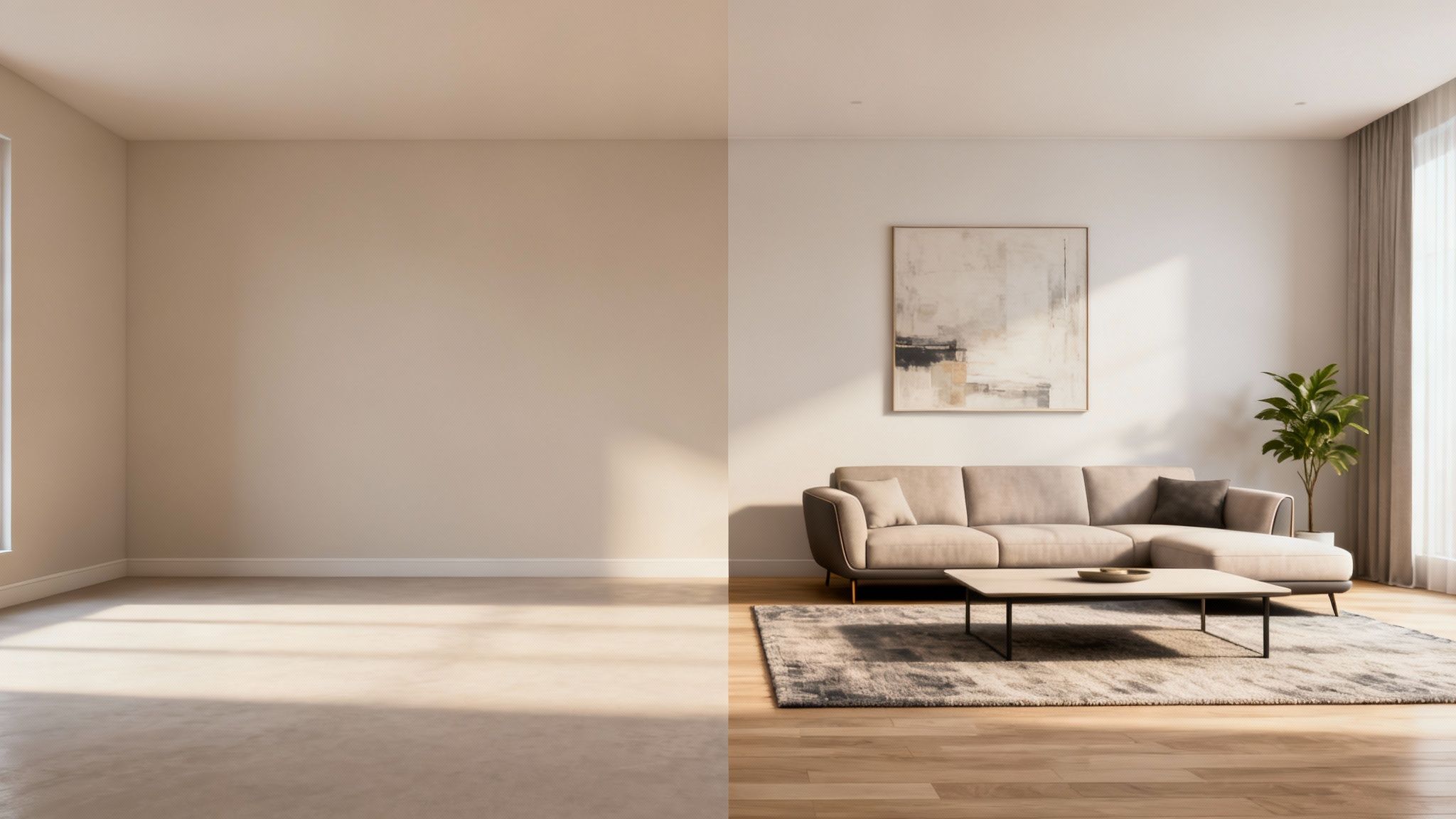
The "after" shot immediately communicates a functional layout and a welcoming atmosphere, making it infinitely more appealing to someone scrolling through listings. That single visual upgrade can be the difference between a buyer clicking away and one booking a showing.
Cost and Return on Investment
One of the most compelling advantages of virtual staging is its affordability. While physically staging a home can run into thousands of dollars for rental fees and design services, virtual staging typically costs just a fraction of that. This makes it an accessible strategy for almost any seller's budget.
Let’s look at the numbers:
- Physical Staging: Costs can easily range from $2,000 to $7,000+ to furnish just the key rooms for a few months.
- Virtual Staging: Often priced per image, the total cost for an entire property can be just a few hundred dollars.
The return on investment is fantastic. By presenting a more attractive and emotionally resonant listing online, you generate more interest, which leads to more showings, faster offers, and potentially a higher final sale price. For anyone exploring this option, you can see how straightforward the investment is by reviewing various virtual staging pricing models. It’s a smart, strategic way to maximize your property's appeal without the significant upfront cost and logistical headaches of traditional staging.
Common Home Staging Questions Answered
As you get closer to listing day, the big-picture prep starts to give way to smaller, more specific questions. Staging can feel overwhelming, and it’s natural to wonder about the nitty-gritty details. Let’s tackle some of the most common questions that pop up for sellers.
Think of this as the final fact-check before you dive in. Getting these details sorted out now will help you move forward with a clear, confident strategy.
How Much Does It Actually Cost to Stage a Home?
This is always the first question, and the honest answer is: it really depends. The final price tag is entirely based on your home’s specific needs and how hands-on you want to be. The good news is, you can make a huge impact on almost any budget.
Here’s a realistic look at what you can expect to spend:
- The DIY Route: This is your most budget-friendly option. For just $200 to $700, you can work wonders by strategically rearranging your existing furniture and picking up a few key accessories—think fresh pillows, plush new towels, or a couple of nice plants.
- A Professional Consultation: If you want expert guidance without the full price tag, this is a great middle ground. For about $300 to $600, a professional stager will walk through your home and give you a detailed, room-by-room to-do list. You do the work yourself, but you’re following a pro’s playbook.
- Full-Service Professional Staging: This is where you hire a team to bring in rental furniture and decor for the most important rooms. You're typically looking at an initial design fee plus $500 to $2,500 per month. For a completely empty house, the total investment often falls between $2,000 and $7,000+.
- Virtual Staging: A fantastic modern alternative, especially for vacant homes. Instead of physical furniture, you digitally add furnishings to your listing photos. This gives you the look of a staged home for a fraction of the price, often just a few hundred dollars for the entire property.
Should I Stage My Home or Sell It Empty?
While selling an empty home might feel simpler, my experience is that staging almost always yields a better result. Vacant rooms are deceiving—they often feel cold, uninspired, and surprisingly smaller than they actually are. Buyers really struggle to visualize where their sofa would go or if their bed would fit.
An empty house asks buyers a lot of questions. A staged house tells them a compelling story. Even just a few pieces of furniture can define a room's purpose and help buyers form an emotional connection. If your own furniture is a bit worn or dated, renting a few key items or using virtual staging for your photos is a smart move.
A staged home removes the guesswork for buyers. It demonstrates a room's potential and helps them mentally move in—a crucial step on the path to making an offer.
Which Rooms Are Most Important to Stage?
You absolutely do not need to stage every single inch of your home to see a great return on your investment. The key is to be strategic. Focus your time, money, and energy on the rooms that hold the most weight in a buyer’s decision-making process.
Insights from the National Association of Realtors consistently point to the same high-impact areas:
- The Living Room: It’s usually the first big space buyers walk into, and it sets the tone for the entire home. This is where they picture themselves relaxing and hosting friends.
- The Primary Bedroom: Buyers are looking for a sanctuary—a peaceful, private space to unwind.
- The Kitchen: Often called the heart of the home for a reason. Buyers want to see a functional, inviting space where they can imagine their daily lives unfolding.
If you have the budget to do more, the dining room and a well-defined home office are also powerful spaces to stage.
Can I Live in My Home While It Is Staged?
Yes, you can! In fact, most people do. It definitely requires a new level of discipline and a daily commitment to keeping things "show-ready," but it’s completely manageable for the short time your home is on the market.
The trick is to start thinking of your home as a model home. That means beds are made perfectly every single morning, countertops are always clear, and you have a go-to system for quickly stashing away daily life clutter. Many families I've worked with use a designated bin or laundry basket for a last-minute sweep of toys, mail, and toiletries right before they head out for a showing. It’s a temporary hassle that pays off in a big way.
Ready to create stunning, scroll-stopping visuals for your listing? With RoomStudioAI, you can virtually stage your property in minutes, turning empty rooms into beautifully furnished spaces that captivate buyers. See how it works and start your project today.
Ready to redesign your space?
Try our AI interior design tool and see your room transformed in seconds.
Try Free Design

