Arranging furniture in a small space isn't just about making things fit; it's about making your home work for you. The secret is to think strategically before you even think about moving a single piece. A thoughtful layout can transform a cramped room into a home that feels functional, comfortable, and surprisingly spacious. It’s all about making every square inch count.
Why Smart Furniture Arrangement Is Key for Small Spaces
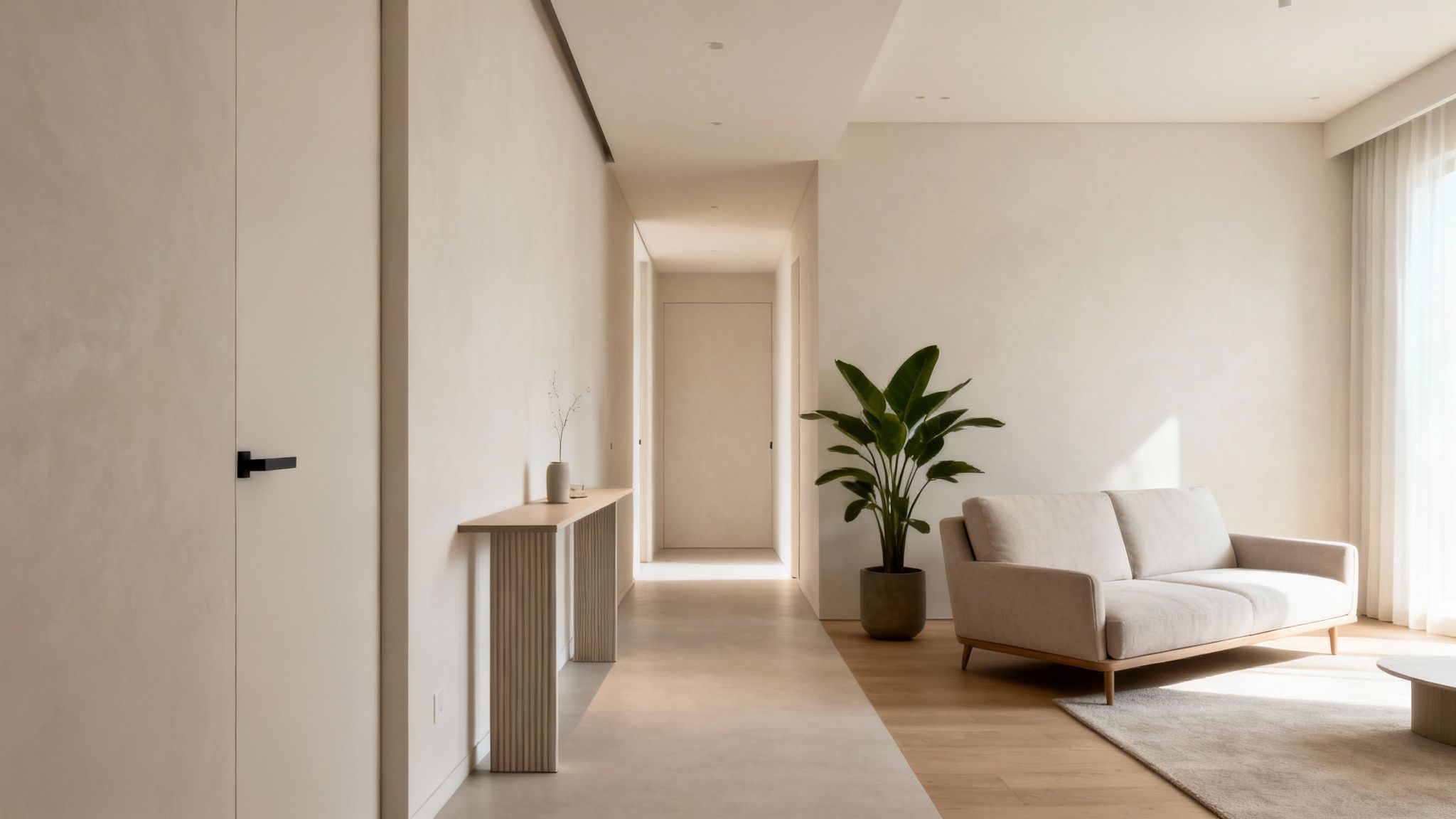
Living in tight quarters brings its own unique design puzzle. We’ve all been in rooms where the furniture placement feels like an afterthought—creating awkward pathways, wasting precious floor space, and just making the whole area feel chaotic and smaller than it really is.
The goal is to design a space that feels intentional, not accidental. By learning to think like a designer, you can turn those spatial limitations into creative opportunities. This isn't about following a strict set of rules, but rather understanding the principles of flow, function, and scale to build a layout that truly supports your lifestyle.
The Foundation of a Great Layout
Before you start shoving the sofa against a different wall, let's nail down the fundamentals that make any small room work. Think of these as your guiding principles for every decision you make.
To get started, here are the three core strategies we'll be exploring. They provide a solid foundation for creating a layout that is both practical and visually appealing.
| Three Core Principles for Arranging Furniture in Small Spaces | ||
|---|---|---|
| Principle | Core Action | Why It Matters |
| Plan & Measure | Create a floor plan before moving anything. | Saves you hours of physical labor and prevents you from buying furniture that won't fit. |
| Define Zones | Use furniture and rugs to create distinct areas. | Makes even a small studio feel organized and multi-dimensional, signaling different uses. |
| Embrace Versatility | Choose multi-functional furniture. | Maximizes utility without cluttering the space; every piece serves at least one purpose. |
These principles are the bedrock of any successful small-space design, ensuring you create a room that is as functional as it is beautiful.
This approach is becoming more essential than ever. The market for small-space furniture hit USD 23.4 billion in 2023 and is expected to climb to USD 41.2 billion by 2032. With city apartments often ranging from just 400-600 square feet and more people living alone, smart design is no longer a luxury—it's a necessity.
The secret to mastering how to arrange furniture in small spaces is to stop seeing the walls as boundaries and start seeing the entire volume of the room as usable space. Your layout should promote movement, create visual harmony, and serve your daily needs without compromise.
Ultimately, a thoughtfully arranged small space dramatically improves your quality of life. By applying these foundational strategies, you're not just decorating; you're creating a home that’s both beautiful and incredibly practical. And with today's technology, bringing your vision to life is easier than ever. It's fascinating to see how AI is helping homeowners with interior design by allowing them to test layouts virtually.
Mastering the Fundamentals of Space Planning
Before you even think about pushing a sofa across the room, let's talk strategy. Just jumping in and moving furniture around is a surefire way to end up with a sore back and a layout that just doesn't work. The secret to arranging furniture in a small space starts with a good plan—one built on solid measurements and smart design thinking.
This planning phase is all about avoiding those classic small-space mistakes. You know the ones: buying a gorgeous sofa that completely swallows the room, or realizing your favorite armchair now blocks the only clear path to the door. We're going to be proactive, not reactive.
Start With a Detailed Floor Plan
First things first, you need a map of your space. Don't worry, you don't need to be an architect for this. A simple tape measure and a sheet of graph paper are your best friends here.
Begin by getting the room's total length and width. Then, start noting down every permanent fixture that’s going to get in your way. I'm talking about:
- Doors and Windows: Get their location and width. Most importantly, measure how much clearance a door needs to swing fully open.
- Architectural Features: Don't forget about fireplaces, built-in shelves, radiators, or any of those quirky nooks.
- Outlets and Vents: Knowing where your power sources are from the start will save you a headache when you need to plug in a lamp or set up your TV.
Once you have all these numbers, sketch everything out on your graph paper. You can set a simple scale, like one square equals six inches. This little map is your new canvas.
A well-drawn floor plan is your most powerful tool. It lets you test-drive dozens of layouts without breaking a sweat, helping you find the perfect arrangement before you commit to the heavy lifting.
If you want to get a bit more high-tech, digital tools can be a game-changer. Platforms like RoomStudioAI let you upload a photo and create a digital twin of your room to play with. It takes the guesswork out of the equation and gives you an incredibly accurate preview of the final look.
Respect the Rules of Flow and Scale
With your floor plan in hand, it's time to think about two make-or-break design concepts: circulation and scale. These principles are all about how you move through a space and how your furniture's size relates to the room itself.
Circulation is just a fancy word for traffic flow. You need to create clear, unimpeded pathways. As a rule of thumb, leave at least 30 to 36 inches for major walkways, like the route from a doorway into the main seating area. For tighter spots, like the gap between your coffee table and sofa, 14 to 18 inches is the sweet spot.
Following this single guideline will keep the room feeling open and accessible, not like a cluttered obstacle course.
Finding the Right Proportions
Scale is all about proportion—making sure your furniture fits the room it's in. That massive, overstuffed sectional might look incredibly comfy in the showroom, but in a tiny living room, it will dominate the space and make everything feel even smaller.
Instead, look for pieces with a lighter visual footprint. Think loveseats instead of sprawling sofas, or armchairs with exposed legs that create a sense of airiness underneath. For more inspiration on choosing the right furniture, our guide on small bedroom ideas has some great examples that work for any tight space.
Here’s a quick look at how scale can dramatically change a room:
| Furniture Choice | Impact on a Small Room |
|---|---|
| Bulky, Dark Sofa | Tends to absorb light and visually shrink the space. |
| Slim, Light-Colored Loveseat | Reflects light and helps create an illusion of openness. |
| Solid, Blocky Coffee Table | Becomes a heavy visual anchor that can weigh down the room. |
| Nesting Tables or a Glass Table | Offers flexibility and a much lighter, less intrusive feel. |
By taking the time to measure properly and keeping flow and scale in mind, you're setting yourself up for success. This thoughtful prep work is what really transforms a challenging small room into a home that's comfortable, functional, and beautifully designed.
Strategic Layouts for Every Type of Small Room
General design principles are a great starting point, but the real magic happens when you apply them to your specific room. Every small space has its own personality—and its own challenges, from awkward corners to a frustrating lack of wall space. Let’s get into the nitty-gritty and break down some practical layout strategies for the most common small living areas.
The goal isn't to find a single "correct" layout. It’s about discovering an arrangement that genuinely works for how you live, unlocking your room's full potential to feel both functional and incredibly inviting.
Creating a Cozy and Functional Living Room
The living room is the heart of the home, but in a small footprint, it can start to feel more like a cramped closet. The trick is to arrange your furniture in a way that invites conversation while still allowing people to move around easily. You’ve really got two main paths you can take here.
First, there's the classic conversational nook. This is where you place a loveseat or a compact sofa against the longest wall and then position one or two armchairs opposite it. The key is keeping everything close enough to feel connected—don't go more than eight feet apart—with a coffee table or a few nesting tables grounding the space in the middle.
Your second, more adventurous option is a floating layout. This means pulling all your seating away from the walls and grouping it on a large area rug. By creating walkways behind the furniture, you trick the eye into seeing more space, which makes the entire room feel wider. This works wonders in long, narrow rooms where pushing everything against the walls creates that dreaded "bowling alley" vibe.
This simple visual breaks down the core process for planning any room layout.
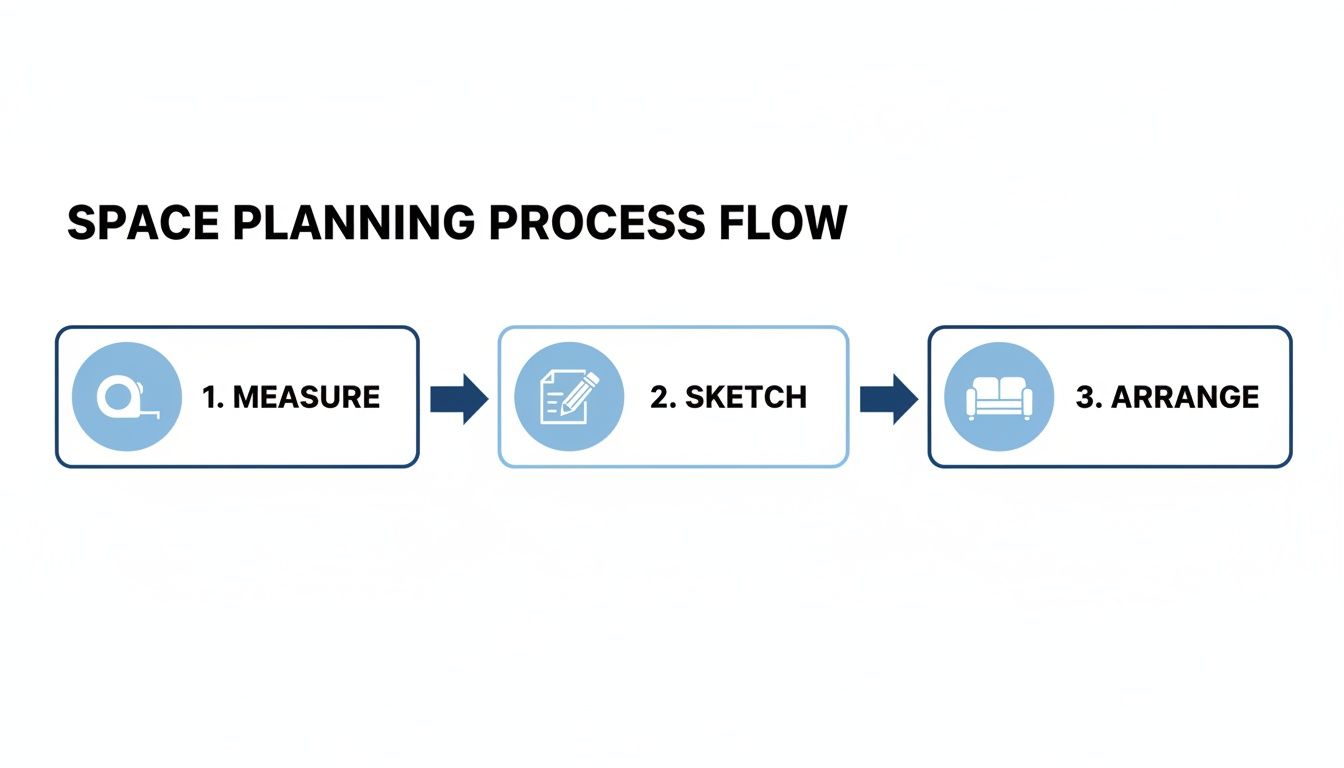
This three-step flow—Measure, Sketch, Arrange—is your best defense against making costly mistakes or ending up with a layout that just doesn't work in real life.
Designing a Serene and Space-Savvy Bedroom
In a tight bedroom, the bed is the star of the show. There's no getting around it. Where you decide to put it will dictate the flow of the entire room, forcing a trade-off between maximizing floor space and creating visual balance.
A go-to for really tiny rooms is the corner bed placement. Shoving the bed into a corner instantly opens up a huge chunk of central floor space. Suddenly, you have room for a small desk, a reading chair, or just the simple luxury of not feeling crowded. Yes, making the bed can be a bit of an athletic event, but the gain in usable square footage is often a worthy trade-off.
Alternatively, a centered bed delivers a more formal, symmetrical aesthetic. By placing the headboard against the middle of the main wall, you create an undeniable focal point. Flank it with two small nightstands, and you’ve got a sense of order and calm. This arrangement works best when you have at least 24 inches of clearance on both sides for comfortable passage.
Expert Tip: No matter where you place it, opt for a bed frame with a low profile or one that has storage drawers built in. This reduces the bed's visual bulk while sneaking in extra storage without taking up another inch of floor space.
The trend of living in smaller spaces is only growing. In 2023, Taskrabbit saw a 13% spike in people downsizing to cope with rising living costs. Designers quoted by Furniture Today point out that blocking pathways can shrink a room's usable area by up to 25%. The solution? Keep at least 36 inches clear for main walkways—a simple strategy that makes a small room feel dramatically larger.
Tackling the Ultimate Challenge: The Studio Apartment
Studio apartments demand the most from our creativity. You're asking one room to do the job of three or four, and you have to do it without creating total chaos. The secret weapon here is zoning. Your mission is to carve out distinct areas for living, sleeping, and dining, even when you have no walls.
Here are a few ways I’ve seen this done masterfully:
- Use Area Rugs to Define Territory: This is the easiest trick in the book. A rug under your sofa and coffee table immediately defines your living area. A different, smaller rug can do the same for a little dining table and chairs.
- Let Furniture Do the Dividing: A sofa is a natural room divider. By floating it in the middle of the room with its back to your bed, you create a powerful visual cue that separates your sleeping and living zones.
- Bring in Open-Backed Shelving: A tall, étagère-style bookcase is a brilliant partition. It creates separation without blocking light, which is crucial for keeping a studio feeling airy. It also adds a ton of storage. Position it between your bed and seating area for maximum effect.
To make sure your zoned studio feels cohesive instead of cluttered, stick to a consistent color palette and style throughout the space. This helps tie the different "rooms" together. For inspiration on creating a unified look, you can find tons of great visuals in our collection of small living room ideas that translate perfectly to studio layouts.
Using Multi-Functional Furniture and Vertical Space
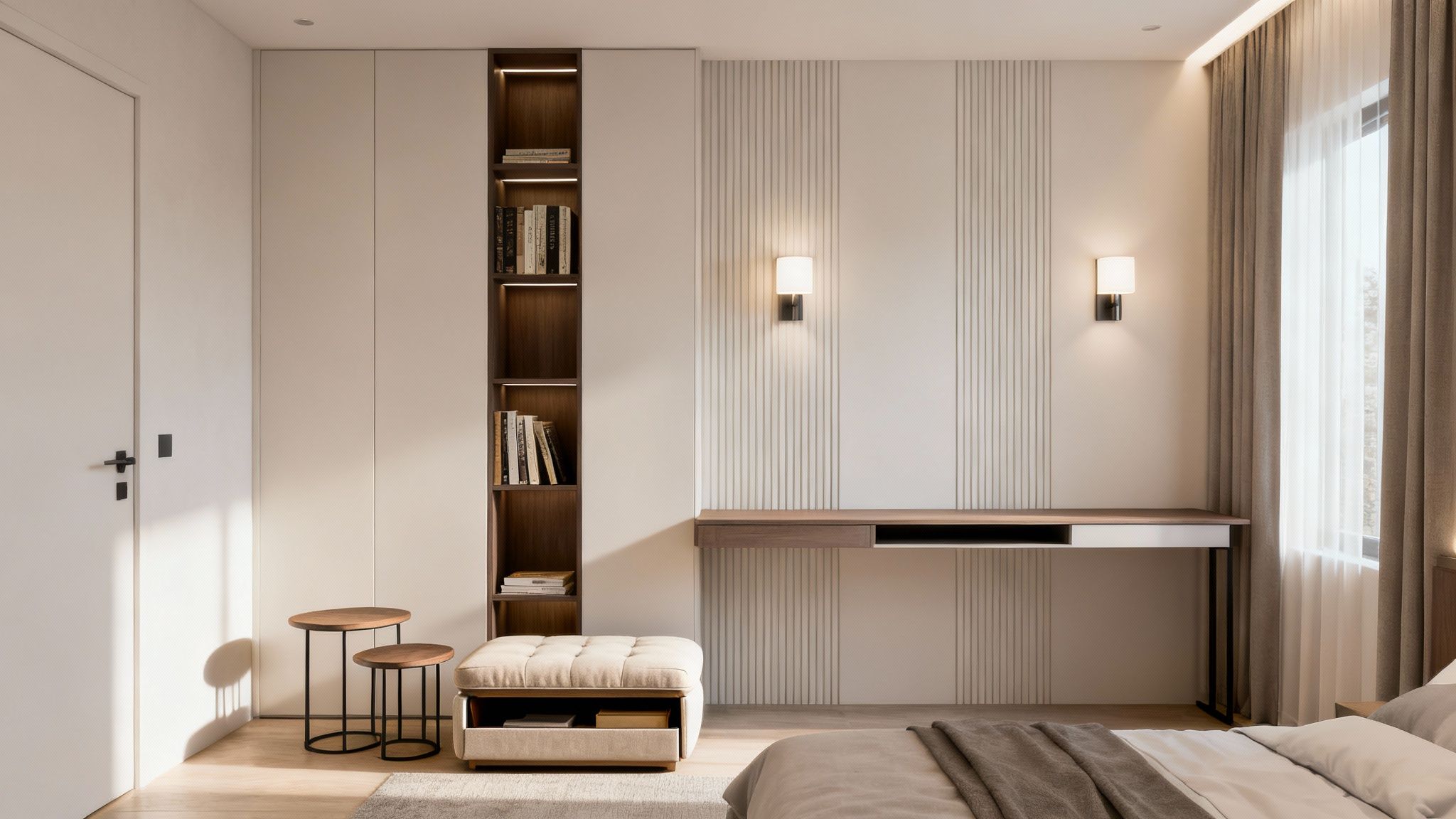
Once you’ve got a solid layout planned, the next layer of strategy is choosing pieces that work smarter, not harder. In a compact home, every square inch of your floor and walls is prime real estate. Think of it this way: every item must earn its keep, and every vertical surface is an opportunity to reclaim valuable floor space.
This isn’t just about finding a sofa that fits; it's about curating a collection of pieces that can pull double or even triple duty. The goal is to draw the eye upward and create an atmosphere that feels open and efficient, not cramped.
Making Every Piece Count With Multi-Functional Design
The single most effective way to cut down on clutter is to simply have fewer things. This is where multi-functional furniture stops being a "nice-to-have" and becomes a core part of your design strategy.
We all know the classic sofa bed, but the world of versatile furniture has come a long way. Here are a few clever options I’ve seen make a huge difference in small layouts:
- Storage Ottomans: These are the unsung heroes of small-space living. They can be a footrest, extra seating for guests, or a makeshift coffee table with a tray on top—all while secretly stashing blankets, board games, or electronics.
- Nesting Tables: Instead of one large, clunky coffee table, a set of nesting tables offers incredible flexibility. Spread them out when you have company over, then tuck them away neatly to open up the room for everyday life.
- Expandable Dining Tables: If you love to host but don't have a dedicated dining room, an expandable table is a game-changer. Keep it compact for daily meals and extend it only when you need to seat a crowd.
A single piece of furniture that serves two or three functions can eliminate the need for several other items, instantly making your room feel larger and more organized. This shift in mindset is fundamental to mastering how to arrange furniture in small spaces.
This approach really pays off. For example, a slim console table in an entryway can serve as a drop zone for keys, a mini-bar when entertaining, and even a compact workspace in a pinch. If you need more inspiration on carving out a work area, check out our guide on small home office ideas that can be adapted to just about any room.
The Untapped Potential of Vertical Space
When you've maxed out your floor plan, the only place left to go is up. “Going vertical” is a classic design trick that works every time. It draws the eye upward, creating an illusion of height and spaciousness, but it’s also an incredibly practical way to add storage without eating up more of your footprint.
Instead of a wide, low-slung bookcase that hogs floor space, opt for tall, narrow shelving units. These pieces put the often-neglected wall space above eye level to work, giving you tons of storage while maintaining a slim profile.
Here are a few other powerful vertical strategies:
- Floating Shelves: These are perfect for displaying decor, books, or kitchen essentials without the visual bulk of a traditional shelving unit. They create a clean, minimalist look that feels light and airy.
- Wall-Mounted Lighting: Ditch the bulky floor lamps and table lamps. Sleek wall sconces free up both floor and surface space, giving you more room for what really matters.
- Leaning Ladders: A stylish leaning ladder can hold blankets in the living room or towels in the bathroom, adding a touch of functional decor with a minimal footprint.
The impact of vertical zoning is huge. I’ve seen tall shelves that climb 8-10 feet store two to three times more than standard floor units simply by using overlooked airspace. In one project, we fit a slim, 15-inch-deep sideboard right next to a sofa, which kept the walkway clear while adding desperately needed storage. It's no surprise that versatile pieces like sofa beds are popular in 60% of small-space redesigns, effectively halving the furniture count. You can find more insights on these trends over at Furniture Today.
Visualize Your Perfect Layout with AI Design Tools
After all the measuring and planning, we get to the fun part—seeing your ideas come to life. But before you do any of the heavy lifting, what if you could test-drive every layout idea risk-free? This is where modern design tech becomes an absolute game-changer.
Instead of just trying to imagine how a floating sofa might look, you can see it in seconds. Digital tools let you play with different arrangements and styles, which takes the guesswork out of the process and helps you sidestep those "oops, that doesn't fit" moments. You can finally get answers to questions like, "Will that armchair completely block the walkway?" or "Does this layout actually make the room feel bigger?"—all without moving a single thing.
Bring Your Vision to Life Digitally
Tools like RoomStudioAI are designed for exactly this. They let you move beyond a simple floor plan and see a photorealistic preview of your finished space. Honestly, it's one of the best ways to get confident in your design choices before you commit.
The process itself is surprisingly simple:
- Upload a photo of your current room—clutter and all. Don't worry about staging it.
- Digitally empty the space with a click, giving you a clean slate to work with while keeping the room’s true dimensions.
- Experiment with layouts by dragging and dropping new furniture into the scene. You can test that conversational nook against the floating layout, or see how placing a bed in the corner really impacts your bedroom’s flow.
Here’s a look at the interface, where you can apply different design styles to your layout in an instant. The platform makes it incredibly easy to visualize how different aesthetics, like 'Minimalist' or 'Japandi,' will completely change the atmosphere of your space, right down to the way the light hits.
From Virtual Mockup to Real-World Plan
Seeing a layout is one thing, but getting a feel for how a certain style changes a room’s vibe is another. These tools let you apply different aesthetic themes to your arrangement. You can instantly see how a minimalist approach creates that airy feel you were after, or how a rustic style adds a sense of warmth and texture you hadn't considered.
This virtual sandbox gives you the freedom to make bold decisions. By previewing the final look, you can be sure your layout not only fits physically but also nails the exact look and feel you’re aiming for.
This visualization step is remarkably accurate. For example, you can snap a picture of a cluttered studio apartment, select a Japandi style, and get multiple AI-generated layouts in seconds. These aren't just generic renders; they show clutter-free zones, lighting that matches your actual room, and sometimes even include "shop the look" links for the furniture pieces shown. It’s about turning a real-life photo into a photorealistic redesign, all while respecting your room's true proportions. You can learn more about the tech impacting the small space furniture market to see how big this trend is becoming.
This ability to bridge the gap between a virtual design and the real world is what makes these tools so powerful. Many platforms even identify furniture in the renders and suggest similar products from actual retailers. It closes the loop, taking you all the way from an initial idea to a complete, actionable plan.
If you’re ready to start playing around with your own space, you can try a free AI interior design tool and begin experimenting right away.
A Few Lingering Questions on Small Space Layouts
Even with a solid plan, you'll inevitably hit a few snags when you're physically moving furniture around. It's one thing to know the rules of thumb for traffic flow and scale, but it's another thing entirely when you're staring at your own quirky room, trying to make it all fit.
Let’s tackle some of the most common questions that pop up. This is your go-to guide for those last-minute adjustments that will take your layout from just okay to truly functional and polished.
How Do I Pick the Right Size Rug?
This is a big one. So many people default to a rug that’s way too small, and it ends up looking like a tiny island in the middle of the room. Instead of tying things together, it actually makes the space feel fragmented and even smaller.
A rug’s job is to anchor your furniture and create a defined zone. The golden rule? At least the front legs of your main furniture pieces should sit on the rug.
- For the living room: Make sure the front legs of your sofa and any armchairs are resting comfortably on the rug. This is what visually pulls them together into a cohesive conversation area.
- For the bedroom: The rug should stick out at least 18 inches from the sides and foot of your bed. It gives you a soft spot to land in the morning and makes the entire bed setup feel more substantial and grounded.
- Under the dining table: You need a rug big enough that the chairs stay on it, even when they’re pulled out. Nothing is more annoying than a chair leg catching on the edge of the rug every time you sit down.
What Should Be the Focal Point of My Room?
Every room needs a star player—a place your eyes naturally go when you walk in. In a small space, having a clear focal point is crucial because it keeps the layout from feeling random and cluttered.
Sometimes, the room gives you one for free, like a beautiful fireplace or a big window with a great view. If not, you can create one yourself. A large, striking piece of art, a sleek media console, or a thoughtfully styled bookshelf can easily command attention.
Once you know what your focal point is, arrange your primary seating to face it. This creates an immediate sense of purpose and makes the whole room feel more welcoming and intuitive.
A strong focal point gives your furniture a reason to be where it is. Instead of just placing things, you’re creating a conversation around a central point, which brings a sense of order to a tight space.
Is It Really Okay to Float Furniture Away From the Walls?
Yes! In fact, you absolutely should. Pushing all your furniture up against the walls is a gut reaction in a small room, but it’s a classic mistake. It often creates a weird, unused dead zone right in the middle.
Pulling your furniture away from the walls—even just a few inches—lets the room breathe and makes it feel more open and airy. Think about a 300-square-foot studio: a bulky sofa jammed against the wall might block 20-30% of your main walkway. Design pros will often float a slim loveseat 18-24 inches off the wall to create a cozy conversation nook that makes the room feel larger.
This is especially effective in those long, narrow rooms common in city apartments. Here, zoning with a rug becomes your best friend. A 5x7-foot rug under a small sofa and chairs can anchor the seating area and dramatically improve the sense of openness. You can see how designers are tackling these challenges by checking out the latest in the small space furniture market.
This one move can completely change the dynamic of your room, improving traffic flow and creating a far more inviting layout.
Ready to stop guessing and see what actually works in your space? With RoomStudioAI, you can upload a quick photo of your room, drag and drop furniture, and get photorealistic visuals of different layouts in seconds.
Try RoomStudioAI for free and bring your vision to life today!
Ready to redesign your space?
Try our AI interior design tool and see your room transformed in seconds.
Try Free Design

