In the highly competitive real estate market, first impressions are not just important; they are decisive. A strategically staged home consistently sells faster and often for a higher price point. However, the art of home staging has expanded far beyond just renting furniture and decluttering. Modern techniques now range from traditional hands-on design to hyper-realistic AI-powered transformations that can be completed in minutes.
This guide provides a deep dive into eight distinct before and after staging case studies. We will meticulously break down the specific strategies, costs, timelines, and measurable results for each project. You will see firsthand how a vacant, cluttered, or dated space is transformed into a highly desirable property that resonates with target buyers.
We will analyze the techniques behind both physical and virtual staging, offering actionable insights for real estate agents, designers, and homeowners. You will learn not only what was done but why it was done, and how to replicate these successful outcomes. Discover how advanced tools like RoomStudioAI are revolutionizing the process, delivering stunning results with unprecedented speed, affordability, and creative control. Let’s explore the transformations that capture buyer imagination and close deals.
1. Traditional Physical Home Staging
Traditional physical home staging is the foundational method for transforming a property from an empty or personalized space into a market-ready home. This classic approach involves bringing in real furniture, artwork, and decor to showcase a property's best features, define its spaces, and create an emotional connection with potential buyers. A professional stager curates and arranges every element to appeal to the widest audience, helping them visualize their future life in the home.
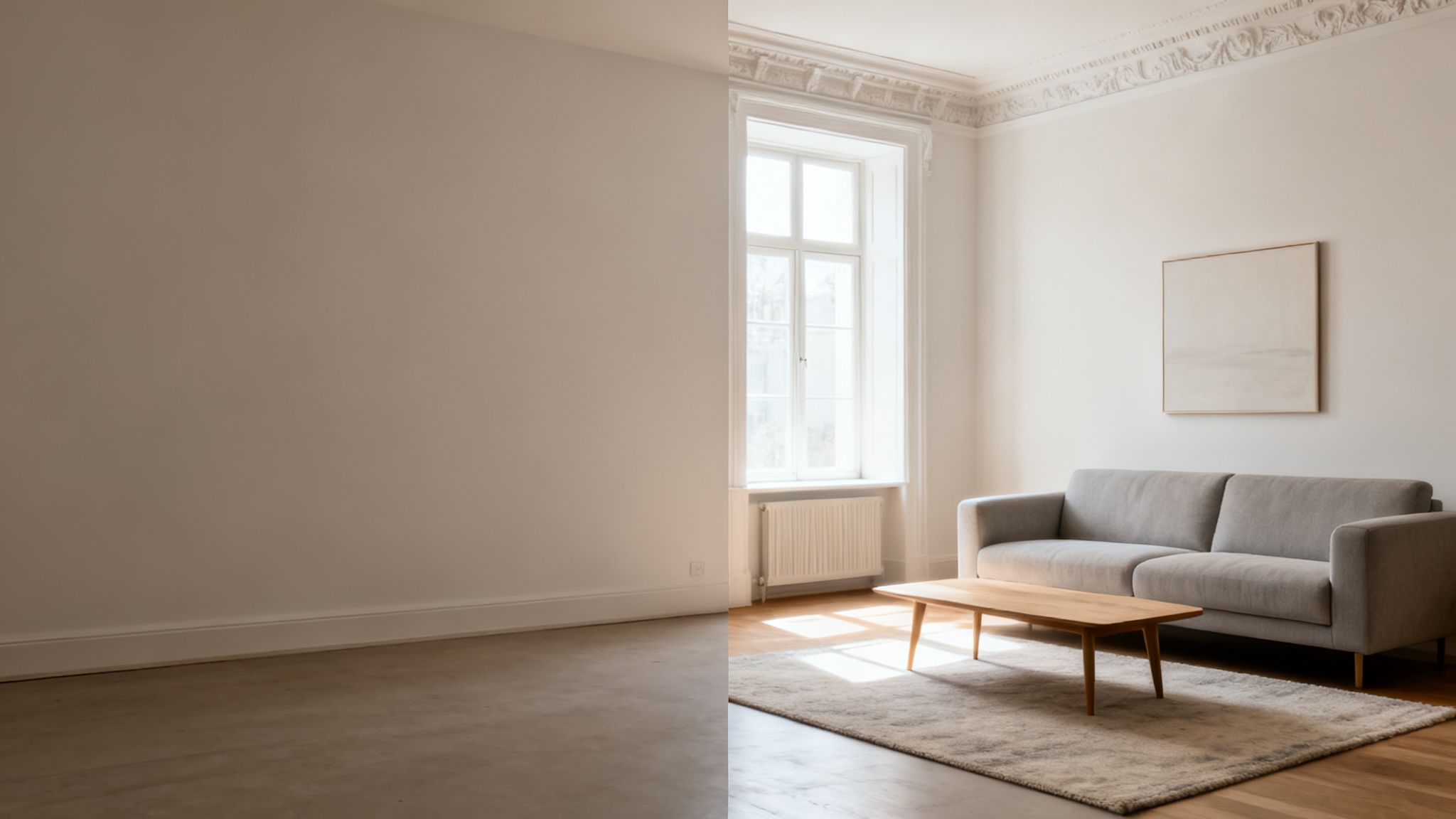
The primary goal of this technique is to add warmth, scale, and function to vacant rooms. By physically occupying the space, staging eliminates guesswork for buyers, demonstrating how a living room can accommodate a full-sized sofa or how a dining area can be set up for entertaining. These tangible setups often lead to higher offers and faster sales, making it a powerful marketing tool.
Strategic Application & Key Benefits
The "before and after staging" transformation achieved through physical staging is often dramatic and highly effective for high-end properties or listings where in-person showings are the primary focus.
- Tactile Experience: Buyers can touch the furniture and experience the flow of the room firsthand, creating a powerful sensory impression that digital methods cannot replicate.
- Scale and Proportion: It definitively answers questions about room size. A well-placed area rug, sofa, and chairs provide immediate visual context for how much space is available.
- Emotional Appeal: Staging creates a welcoming, aspirational lifestyle that buyers can connect with on an emotional level, helping them mentally move in.
Actionable Tips for Physical Staging
To maximize impact, focus on a clean, neutral, and universally appealing aesthetic. You can find inspiration and explore layout possibilities with these traditional living room ideas before committing to furniture rentals. When executing the plan, prioritize decluttering and deep cleaning to create a blank canvas. If working with a limited budget, concentrate your efforts on the most impactful areas: the entryway, living room, kitchen, and primary bedroom.
2. 3D Virtual Staging
3D virtual staging is a cutting-edge digital technique that uses advanced modeling software to place photorealistic furniture and decor into photographs of empty rooms. This method provides a cost-effective and flexible alternative to physical staging, allowing real estate professionals to transform a vacant property into a beautifully furnished home entirely on-screen. A designer digitally adds, arranges, and styles every element to highlight the home's potential and appeal to online browsers.
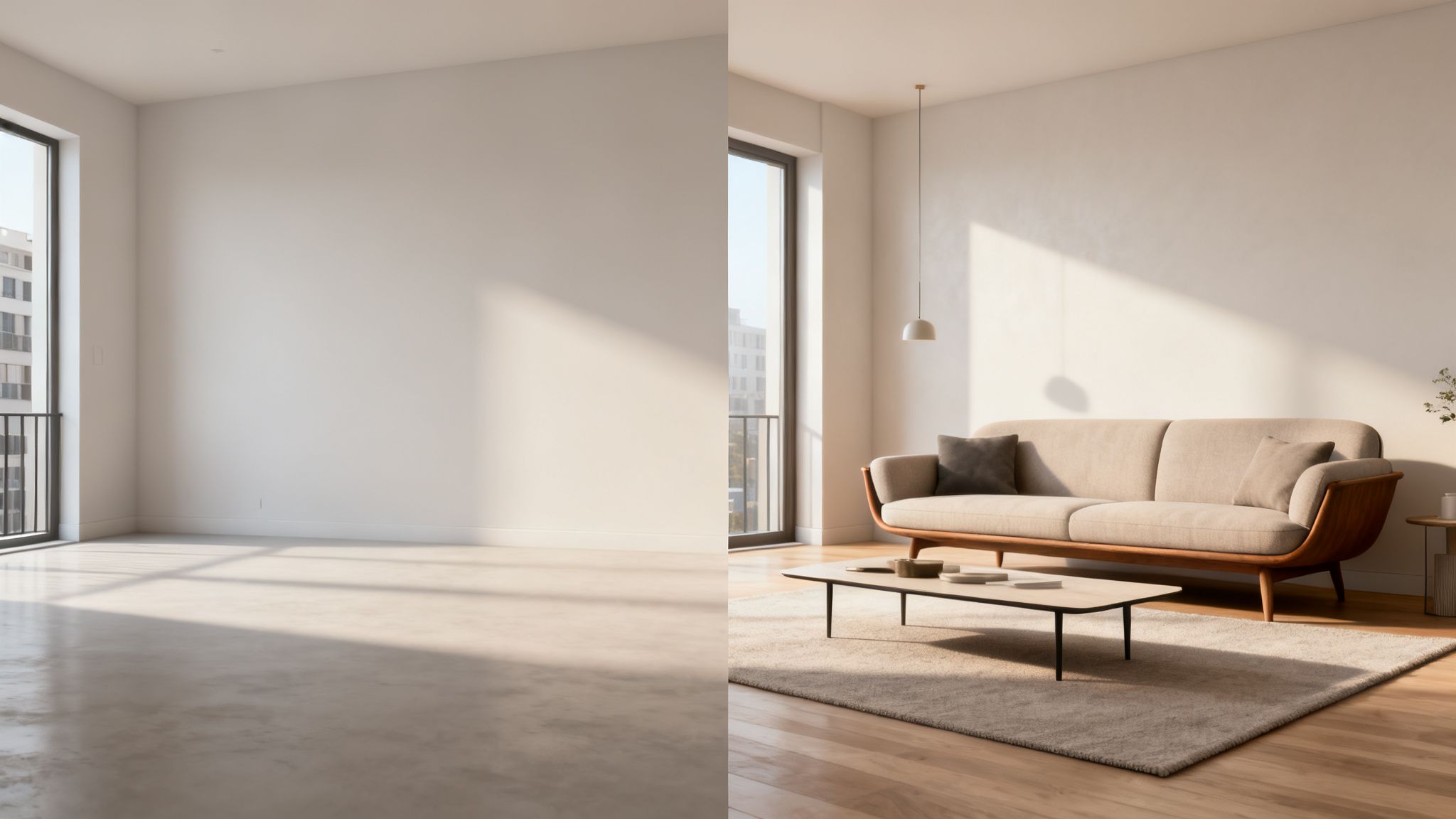
The primary goal of this technology is to solve the "empty room problem" without the logistical challenges of moving physical items. It helps buyers understand a room's scale, layout possibilities, and lifestyle potential directly from the online listing. By showcasing a compelling vision of the property, virtual staging helps capture buyer interest early in their search, making it an essential digital marketing tool in today's market.
Strategic Application & Key Benefits
The "before and after staging" effect created with 3D virtual staging is ideal for marketing vacant properties online or for sellers still occupying the home. It offers unparalleled flexibility and speed compared to traditional methods.
- Cost and Time Efficiency: Virtual staging eliminates expenses related to furniture rental, moving crews, and in-person consultations, often delivering final images within 24-48 hours.
- Design Versatility: It allows for easy customization of styles, from modern to farmhouse, to target specific buyer demographics. Changes can be made quickly without physical effort.
- Enhanced Online Presence: High-quality virtually staged photos make online listings stand out, increasing clicks, engagement, and the likelihood of scheduling an in-person tour.
Actionable Tips for Virtual Staging
To achieve a convincing result, start with high-resolution, professionally lit photographs of the empty space. For those exploring design concepts, you can find more inspiration with these modern living room design use cases to guide your virtual decor choices. Ensure the digital furniture's scale, shadows, and lighting perfectly match the room's existing conditions for a seamless, realistic look. Disclosing that images are virtually staged is an important ethical practice to maintain transparency with potential buyers.
3. AI-Powered Virtual Staging (RoomStudioAI)
AI-powered virtual staging represents the cutting edge of property marketing, leveraging artificial intelligence to rapidly transform photos of any room. Platforms like RoomStudioAI automate the redesign process, allowing users to upload an image of a cluttered, dated, or empty space and generate a photorealistic, fully furnished render in a specific style within seconds. This technology can digitally remove clutter, furnish vacant rooms, or completely reimagine a space to match modern design trends.
The core advantage of this method is its incredible speed and cost-effectiveness. Instead of coordinating furniture rentals and photoshoots, agents and homeowners can produce multiple design concepts for a single room, appealing to different buyer tastes without any physical effort. This makes it an invaluable tool for creating compelling "before and after staging" visuals for online listings, where first impressions are critical.
Strategic Application & Key Benefits
AI staging is ideal for quickly and affordably marketing properties online, offering limitless creative options to showcase a home's potential. It excels at overcoming visual objections like clutter or dated decor that might deter online browsers.
- Speed and Efficiency: Generate dozens of high-quality staged images in the time it takes to get a single quote for physical staging, enabling faster listing times.
- Cost-Effectiveness: Drastically reduces staging expenses by eliminating the need for furniture rental, moving crews, and professional stager fees.
- Creative Versatility: Effortlessly test various styles, from minimalist to coastal or Japandi, to find the perfect look that will resonate with the target buyer demographic.
Actionable Tips for AI Staging
To get the most out of AI staging, start with high-quality source images. Good lighting and clear angles produce the most realistic and convincing results. You can explore how different styles will look in your space with a free AI interior design tool to experiment before finalizing your listing photos. Always use high-resolution photos and shoot from a straight-on angle to provide the AI with the best possible data to generate a stunning transformation.
4. Augmented Reality (AR) In-Situ Staging
Augmented reality (AR) in-situ staging bridges the gap between digital visualization and the physical world. This mobile-app–based technology overlays virtual 3D models of furniture and decor onto a live camera view of an actual room. Users can walk through a space with their smartphone or tablet, placing, moving, and swapping virtual items in real time to see how they fit and look within the existing environment.
The primary advantage of AR staging is its immediacy and interactivity. It empowers potential buyers or homeowners to participate directly in the design process, personalizing a space to their own tastes without any physical effort. Pioneered by apps like IKEA Place and Houzz's "View in My Room" feature, this method provides a powerful "try before you buy" experience, helping users make confident decisions about furniture scale, color, and style.
Strategic Application & Key Benefits
The "before and after staging" effect created with AR is uniquely personal and effective for engaging tech-savvy buyers or for homeowners planning a redesign. It excels at answering the crucial question: "Will this actually fit in my space?"
- Real-Time Visualization: Users get instant visual feedback, seeing how a specific sofa or dining table looks against their own walls and flooring. This removes the abstract nature of floor plans or purely digital renders.
- Accurate Scale and Fit: AR technology accurately scales virtual objects to the real-world environment, preventing costly mistakes like buying furniture that is too large or small for a room.
- Interactive Engagement: It offers a hands-on, memorable experience that keeps potential buyers engaged with a property listing longer. They can experiment with layouts, fostering a stronger sense of ownership and connection.
Actionable Tips for AR Staging
To achieve the most realistic and compelling results, preparation is key. Ensure the room is well-lit with even, diffused light to help the app's object tracking technology work effectively. Before placing items, use an AR measuring tool within the app to record key dimensions, ensuring your virtual choices are practical. When possible, download high-quality 3D assets, as they will have more realistic textures and lighting, creating a more convincing final image.
5. Sketch-to-Image Staging
Sketch-to-image staging represents a cutting-edge approach that bridges the gap between a rough concept and a polished, photorealistic visualization. This rapid ideation technique allows designers, agents, and homeowners to convert simple hand-drawn or digital sketches into fully rendered, staged images using AI-powered tools. The process involves outlining room layouts and furniture placements, which the software then interprets and transforms into a compelling visual.
The primary goal of this method is to quickly test and communicate design ideas without the need for complex 3D modeling software. It empowers users to visualize the potential of a space from a basic floor plan or even a doodle on a napkin. This immediate "before and after staging" transformation is invaluable for client presentations, personal project planning, and exploring multiple design options efficiently.
Strategic Application & Key Benefits
Sketch-to-image staging is ideal for the early phases of a project when speed and creative exploration are paramount. It democratizes the design process, making sophisticated visualization accessible to everyone, regardless of technical skill.
- Rapid Prototyping: Instantly translate abstract ideas into tangible visuals, allowing for quick iterations and feedback on layouts, color schemes, and furniture styles.
- Enhanced Communication: Provides a clear, photorealistic concept to share with clients, contractors, or collaborators, ensuring everyone is aligned with the design vision.
- Cost-Effective Exploration: Test dozens of design directions without investing time or money in physical staging or manual 3D rendering, minimizing financial risk.
Actionable Tips for Sketch-to-Image Staging
For the best results, clarity in your initial sketch is key. Keep your drawings simple with clear bounding boxes for walls and major furniture pieces. Labeling elements directly on the sketch, such as "wooden floor" or "velvet sofa," can help guide the AI for a more accurate outcome. Platforms like RoomSketcher and generative AI tools are at the forefront of this technology. You can learn more about how these visuals support the entire design process by exploring various interior design use cases.
6. Remote/Virtual Collaboration Staging
Remote or virtual collaboration staging moves the design process into a shared, cloud-based environment. Instead of sending files back and forth, this method utilizes online platforms where real estate agents, designers, and clients can simultaneously view, comment on, and approve staging designs in real time. This approach streamlines the entire workflow from initial concept to final approval, making the "before and after staging" process faster and more efficient.
The core purpose of this technique is to centralize communication and eliminate the version control issues common with email attachments and disconnected feedback. Platforms like RoomStudioAI and Coohom provide dedicated portals where stakeholders can leave pinpointed annotations directly on the design renders. This clarity ensures that everyone is on the same page, significantly reducing misunderstandings and accelerating revision cycles.
Strategic Application & Key Benefits
Virtual collaboration is ideal for teams working across different locations or for agents who need to get quick client sign-off on staging concepts. It transforms a potentially lengthy feedback loop into a dynamic and interactive session.
- Streamlined Feedback: Centralizes all comments and revisions in one place, creating a single source of truth and preventing lost feedback from emails or text messages.
- Faster Turnaround: Real-time collaboration allows for immediate adjustments, shortening the project timeline from days to hours and getting properties to market quicker.
- Enhanced Transparency: All stakeholders can see the project's progress and contribute their input, fostering a more inclusive and transparent design process that avoids last-minute changes.
Actionable Tips for Virtual Collaboration
To ensure a smooth collaborative experience, establish clear protocols from the beginning. Define roles and set firm deadlines for feedback to keep the project moving forward. Use consistent naming conventions for different versions to avoid confusion. Most importantly, invite all key decision-makers to the platform at the project's start to prevent unexpected changes late in the process.
7. Curb Appeal Digital Enhancement
Curb appeal digital enhancement is a specialized form of virtual staging focused entirely on a property's exterior. This technique uses software to digitally alter listing photos, showcasing potential improvements like fresh paint, updated landscaping, new walkways, or modern lighting. It allows real estate agents and sellers to present a home’s full potential without the immediate time and expense of physical renovations.
The core purpose of this method is to make a powerful first impression online, where buyers often decide whether to tour a property. By digitally correcting a patchy lawn, visualizing a new front door color, or adding seasonal flowers, you can overcome exterior flaws that might otherwise deter interest. This “before and after staging” for the outdoors helps buyers see past current imperfections and envision a polished, welcoming home.
Strategic Application & Key Benefits
Curb appeal enhancement is highly effective for listings where the exterior needs work but physical changes are planned for later or are being left for the new owner. It’s a cost-effective way to boost online appeal and communicate a property's hidden value.
- First Impression Power: It grabs buyer attention immediately in online portals like Zillow or Redfin, preventing them from scrolling past a listing due to a lackluster exterior.
- Visualize Potential: It demonstrates how simple cosmetic changes can dramatically improve the home's aesthetic, inspiring buyers and justifying the asking price.
- Cost-Effective Marketing: Digitally "painting" a house or "planting" a garden is thousands of dollars cheaper than the real thing, providing a high-impact marketing visual for a minimal investment.
Actionable Tips for Digital Enhancement
To ensure your digital enhancements are realistic and effective, start with high-resolution photos taken on a clear day. For inspiration on what’s possible, you can explore various digital exterior design use cases to see how professionals transform properties. When executing your project, anchor changes around key focal points like the front door and windows to create a cohesive look. Always match the render’s season (e.g., green grass for a summer listing) to the time of sale to maintain authenticity.
8. Hybrid Staging (Physical + Virtual)
Hybrid staging offers a powerful middle ground, blending the tangible benefits of physical staging with the flexibility and cost-effectiveness of virtual enhancements. This approach involves placing a few essential, real furniture pieces in a room to establish scale and texture, then digitally adding the remaining decor, artwork, and accessories in post-production. It provides a foundational real-world element that helps ground the virtual additions, creating a more believable final image.
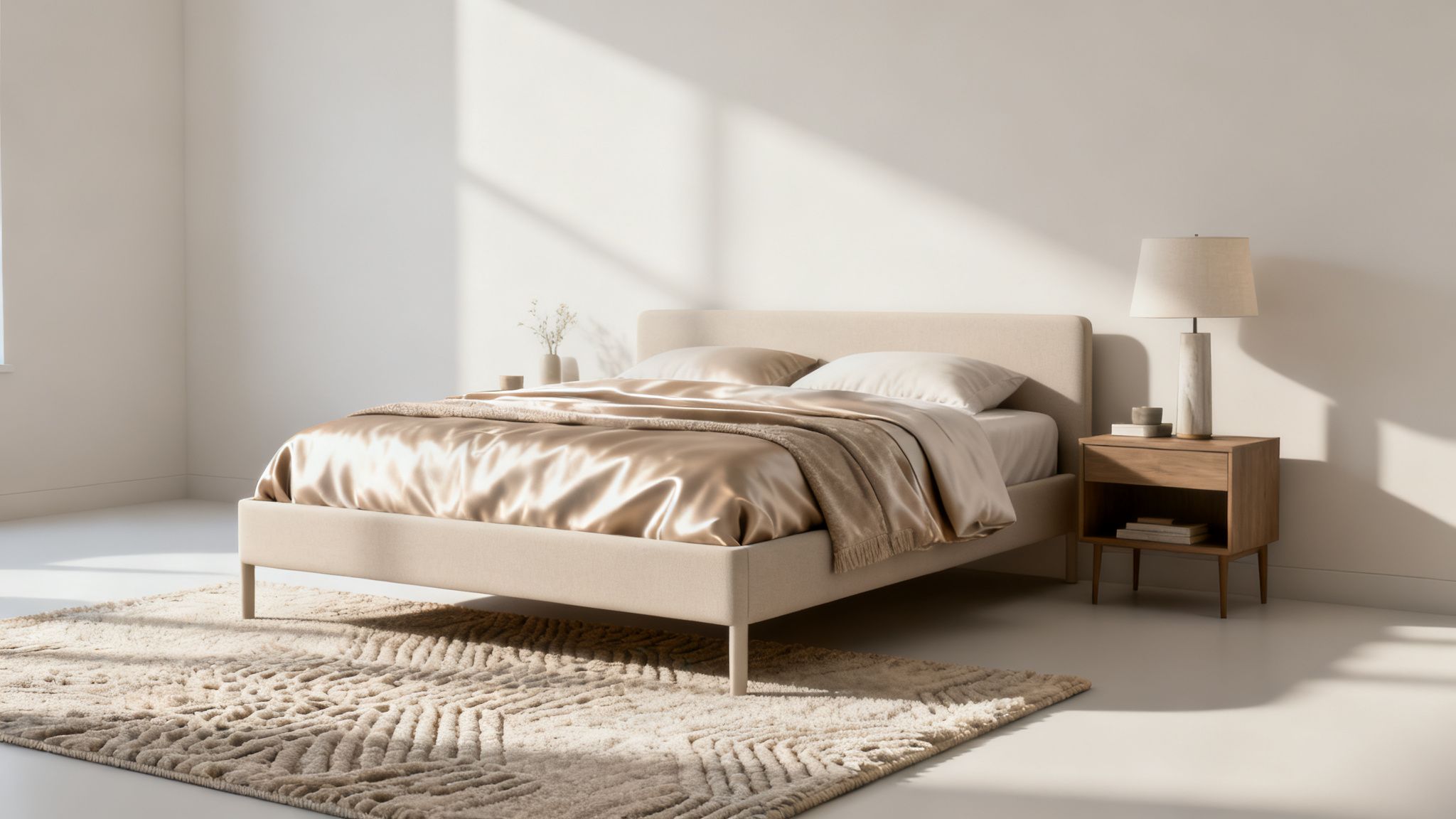
The primary goal of the hybrid method is to create an authentic "before and after staging" effect without the expense and logistics of fully furnishing a property. For instance, a real estate agent might place a bed frame and a nightstand in a primary bedroom, then virtually add luxurious bedding, lamps, a rug, and wall art. This gives buyers a crucial real-world anchor point while still showcasing the room’s full potential through digital artistry.
Strategic Application & Key Benefits
Hybrid staging is an ideal strategy for mid-range properties or listings where a full physical stage is not financially viable, but an empty room photo feels too sterile. It balances authenticity with aspiration.
- Cost-Effectiveness: Significantly reduces rental and moving costs associated with full physical staging by only requiring a few key anchor pieces.
- Authentic Foundation: The presence of real furniture adds realistic shadows, textures, and depth that can be challenging to replicate perfectly with 100% virtual staging.
- Creative Flexibility: Allows for multiple design styles to be presented digitally using the same physical base, appealing to a broader range of buyer tastes.
Actionable Tips for Hybrid Staging
To execute a successful hybrid stage, select neutral, foundational furniture pieces that can easily complement various virtual decor styles. Capture high-dynamic-range (HDR) photos of the room with the physical items in place; this provides the best lighting and detail for seamless digital compositing later. It is crucial to ensure the lighting direction on the virtual objects matches the natural light in the photograph to maintain realism and create a convincing final image.
Before-and-After Staging: 8-Point Comparison
| Method | 🔄 Implementation Complexity | ⚡ Speed & Scalability | 💸 Resource Requirements | ⭐ Expected Outcomes (quality / ROI) | 📊 Ideal Use Cases — 💡 Key Advantages |
|---|---|---|---|---|---|
| Traditional Physical Home Staging | High — logistics, delivery, onsite setup/teardown; requires pro stagers | Slow — days to weeks; poor scalability across large portfolios | High — furniture rental, labor, storage, transport | Very high emotional impact; strong ROI (often 5–10× staging cost) | High-end listings, show homes; tactile experience, fixes odors/lighting; stage primary rooms |
| 3D Virtual Staging | Medium — needs 3D skills and careful photo matching | Fast — 24–48 hrs; highly scalable per image | Low per image; software licenses and skilled renderer required | Good photorealism when matched correctly; cost-effective | Vacant listings and large portfolios; economical alternate to physical staging |
| AI-Powered Virtual Staging (RoomStudioAI) | Low — automated workflows; minimal manual editing | Very fast — seconds to minutes; extremely scalable | Low — subscription-based; no 3D artists needed; needs quality photos | High-quality, template-driven photorealism; predictable pricing; occasional minor errors | Rapid A/B styling, mass listings, remote collaboration; great for fast turnaround |
| AR In-Situ Staging | Low–Medium — user-friendly apps but requires device proficiency | Real-time interactivity; good for single-user trials, less for bulk assets | Low — smartphone/tablet + 3D asset library; minimal cost to try | Immersive, interactive experience; less photorealistic for listing imagery | In-home trials, shopper engagement, retail/tenant decision-making; great for visualization |
| Sketch-to-Image Staging | Medium — depends on sketch clarity and AI interpretation workflow | Quick ideation; iterative cycles may slow polished outputs | Low–Moderate — AI tools or software; no full-room photography required | Useful for concept exploration; accuracy varies with sketch quality | Early-stage design, floor-plan exploration; encourages layout experimentation |
| Remote/Virtual Collaboration Staging | Low — cloud platforms are simple to adopt but require setup | Speeds approvals and feedback loops; highly scalable across teams | Low — collaboration tools and reliable internet; stakeholder access required | Indirect impact on visual quality; strong process improvements and faster decisions | Distributed teams and client approvals; centralizes feedback and version control |
| Curb Appeal Digital Enhancement | Medium — exterior modeling, seasonal/lighting considerations | Moderate — per-property turnaround; scalable with templates | Moderate — specialized tools/design time; needs dimensioned photos | Effective for visualizing planned exterior work; may raise buyer expectations | Listings with planned renovations or landscaping; good for early design proposals |
| Hybrid Staging (Physical + Virtual) | High — coordination between on-site photographer and digital artist | Moderate — single photoshoot can yield multiple virtual options | Moderate — anchor furniture + post-production compositing | High realism with flexible styling; cost-saving vs full physical staging | Mid-market listings; combines real textures + virtual variety; stage neutral anchors and shoot HDR photos |
From Vacant to Valuable: Your Staging Blueprint
The transformative power showcased in these before and after staging examples is undeniable. We've journeyed through the tactile, lived-in appeal of traditional physical staging, the cost-effective scalability of 3D virtual staging, and the revolutionary speed of AI-powered design. Each case study, from digital curb appeal enhancements to sophisticated hybrid models, reinforces a central truth: staging is a strategic marketing investment, not merely a decorative expense. It’s the art of translating a property's potential into a tangible vision for prospective buyers.
The most critical takeaway is that there is no single "best" method. The optimal choice depends entirely on your specific goals, budget, timeline, and the unique character of the property. A vacant new construction might benefit immensely from the rapid, versatile options of AI, while a historic home with quirky charm could demand the nuanced touch of physical staging to highlight its authenticity. The key is to diagnose the property's weaknesses and strategically deploy the right staging solution to turn them into strengths.
Key Strategic Insights Distilled
Reviewing the diverse examples, several core principles emerge as the foundation for successful staging:
- Clarity Over Clutter: Every successful transformation began with decluttering and depersonalizing. This creates a neutral canvas that allows buyers to project their own lives onto the space, a crucial psychological step in the home-buying process.
- Defining the Space: From the sketch-to-image render defining an awkward nook to the virtual staging that gave a cavernous living room a clear purpose, defining each area's function is paramount. Buyers purchase solutions, not just square footage.
- Emotional Connection is the Goal: Whether using real furniture or pixels, the objective is to evoke a feeling of "home." This is achieved through cohesive color palettes, strategic lighting, and layouts that suggest a comfortable, aspirational lifestyle.
- Technology as an Accelerator: Tools like AI-powered virtual staging and AR previews are no longer novelties; they are essential accelerators. They democratize high-end design, reduce logistical friction, and empower sellers to create compelling visuals in a fraction of the time and cost.
Your Actionable Blueprint for Success
Mastering the art of before and after staging means moving from passive observation to active implementation. The examples in this article provide a blueprint. Begin by critically assessing your property and identifying its primary selling points and potential buyer objections. Match those needs with the staging techniques we’ve explored, whether it's a simple digital clean-up or a comprehensive physical-virtual hybrid plan.
Ultimately, the most compelling listings are those that tell a story. They don't just show rooms; they present a future. By leveraging these modern staging strategies, you are not just preparing a house for sale. You are crafting a powerful narrative that captures attention, inspires imagination, and drives buyers to make their best offer. The first impression you create is the final word on your property's perceived value.
Ready to create your own stunning before and after staging visuals in minutes? Harness the power of artificial intelligence with RoomStudioAI to instantly transform any empty or cluttered room into a beautifully staged masterpiece. Visit RoomStudioAI to start designing today and unlock your property's full potential.
Ready to redesign your space?
Try our AI interior design tool and see your room transformed in seconds.
Try Free Design

